Zoom to Fixed

 © 2012, Peter Marshall

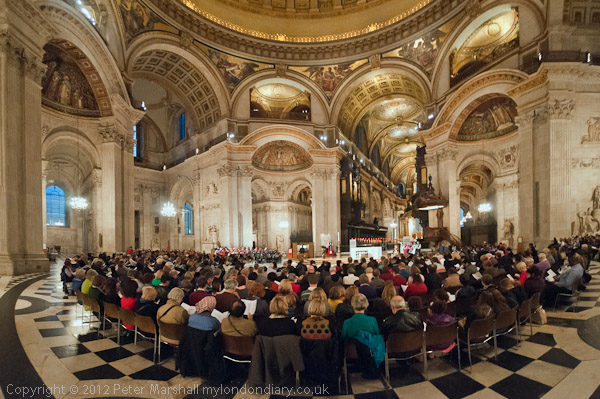
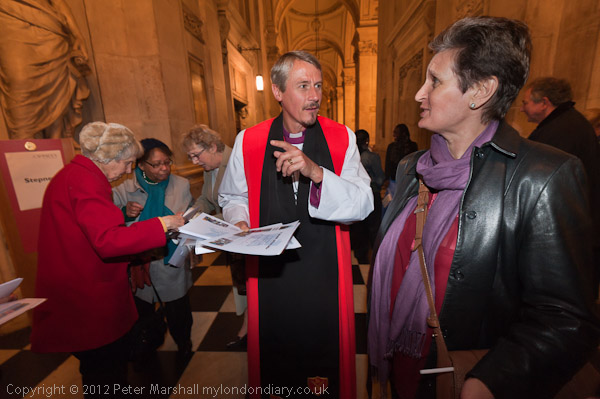
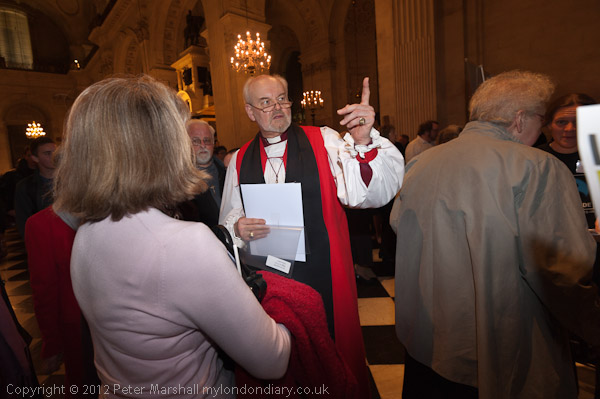
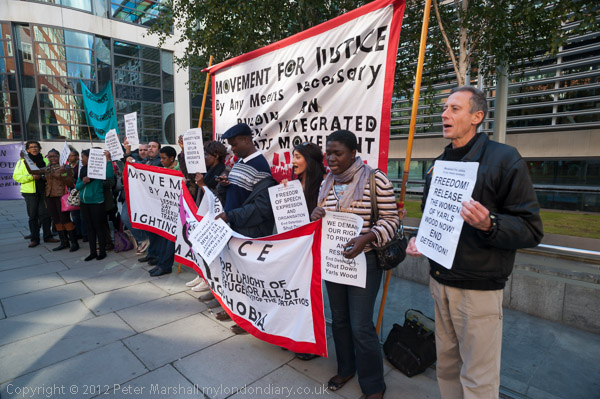
One of my favourite lenses, though not one that I’ve used a great deal for a while is the 20mm f2.8 AF Nikkor, which is a relatively small and light lens. Even with its lens hood it doesn’t make a huge impact on the front of the camera. I had it for a couple of years before I bothered with the hood, as I’d bought it on e-Bay without one, but more recently I’d got round to getting a cheap version of the HB-4 for hardly more than the cost of postage from Hong Kong. The main purpose of lens hoods for lenses this wide is of course to stop your fingers walking onto the lens and leaving their greasy prints to leave their marks on your images, invisible until you see the image large on your computer screen.
© 2012, Peter Marshall

I thought the 16-35mm had recovered from its soaking a couple of days before, but the next time I tried it out the electronics had completely gone – now autofocus would never work and there was no tiny buzz from the VR whether it was switched on or off. The time had definitely come to take it in for service.

It was a few days later that I got the bad news from the repair company. It had, the report said, been subject to impact and water damage and was in need of a new body. I was disappointed – surely one point of pro lenses is that they should take a bit of hard wear and not go legs up; what this lens had been subjected to was what I’d think of as normal professional use. If I can get away without having to have a new body after it (though there are a few bits I could do with a replacement for) surely a lens should.  The repair cost was almost half that of a replacement, which was a blow, and it would take around a week to get the parts and get the job done.

So for the next week or so – it turned out to be a little longer before I could go and collect it – I was without the 16-35mm. I had a choice of lenses available. I still have the old Sigma 12-24mm which covers the full 35mm frame, but is better used on DX, where it becomes an almost direct replacement in terms of focal length – an 18-36mm. I’ve also got a Sigma DX 10-20mm – which is a little smaller and lighter and gives me a 15-30mm equiv.

It was the weather that put me off the 12-24mm, which has a bulbous front element and can’t have a front filter fitted. I’ve been worried about this since I had to have another expensive repair to replace a scratched front element. All the wiping that you need to do in the rain isn’t healthy for optical glass, and while I don’t mind replacing a £2.50 best Chinese UV filter I baulk at the £250 or so for a new front element – as well as the 6 weeks it took Sigma to get one from Japan to London. The 10-20mm was more of a possibility, but although it was fine on a D200 body, I’m not sure about it on the D800E which is more demanding because the sensor is more crowded. Using it on the D700 was perhaps better, but the files are rather small, under 6Mp. So in the end I decided to try working with the 20mm f2.8 as my only wide-angle.
© 2012, Peter Marshall

The 20mm on the D700 was teamed with my usual 18-105mm DX lens on the D800, which may seem a strange way to use the D800E, but one that I really do like. At the wider end it’s a fairly mild 27mm equivalent and at the long end a useful but not extreme telephoto, but the real advantage is in the viewfinder where you can see outside the image area. I’ve moved from using it  with just a frame line for the smaller format to having the non-image area greyed over but still visible. It is incredibly useful to be able to see outside the frame – like with a rangefinder camera, though I’d perhaps like an option to make the grey area just a little less dull compared to normal.
© 2012, Peter Marshall

The only problem I found was that the 20mm wasn’t quite wide enough for a few things I wanted or needed to do, particularly when working as I sometimes have to with a pack of photographers. You do need 16mm at times – and there are even times when that isn’t wide enough, which is why I usually pack the 10.5mm DX semi-fisheye. If that isn’t wide enough you are trying to do the impossible. And that does work pretty well on the D800E, so well I’ve hardly though about replacing it by the 16mm FX equivalent.

During the couple of weeks I used it as my main wideangle I really got to like working with a fixed rather than a zoom lens again, and the smaller bulk and weight certainly felt better around my neck. But it is just a little less versatile.

Though I’ve also been using it at times when I’m not really working but just want to go out without a camera bag, just one camera around my neck. The 20mm on the D800 is a bit like a Tri-Elmar on a Leica (not that I’ve ever afforded one) but by switching from FX to 1.2x to DX you have a 20mm, a 24mm and a 30mm all from the one lens.

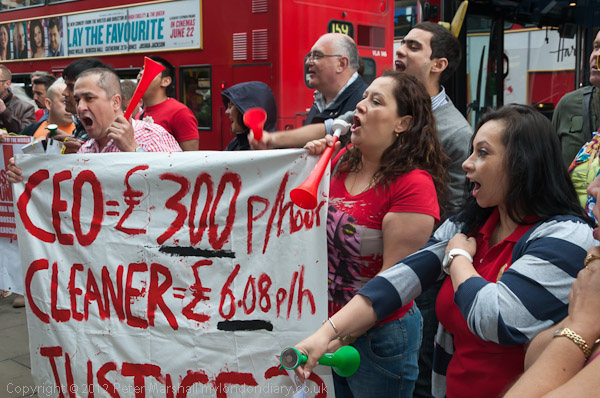
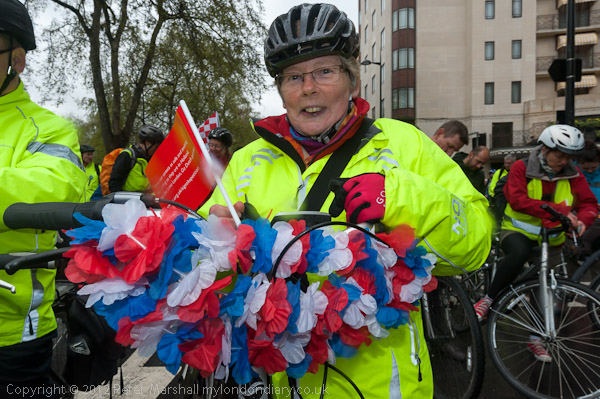
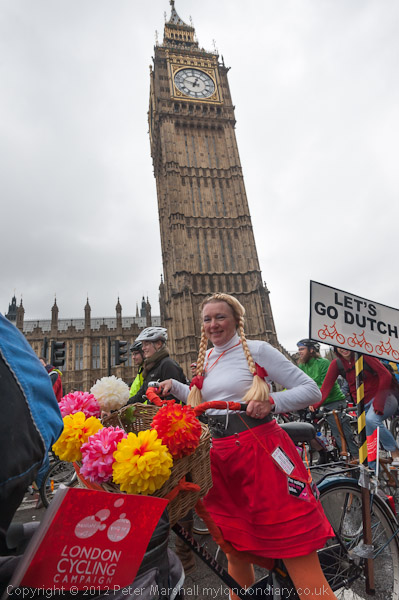
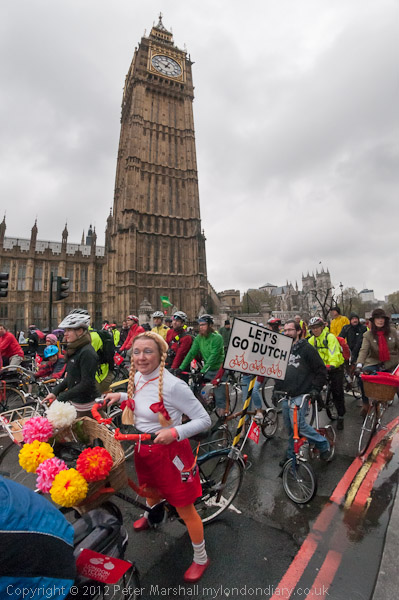
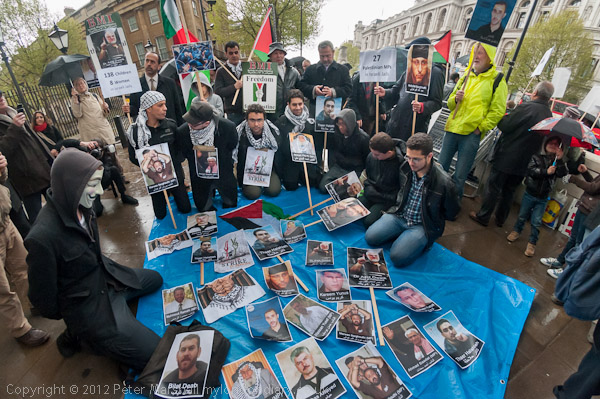
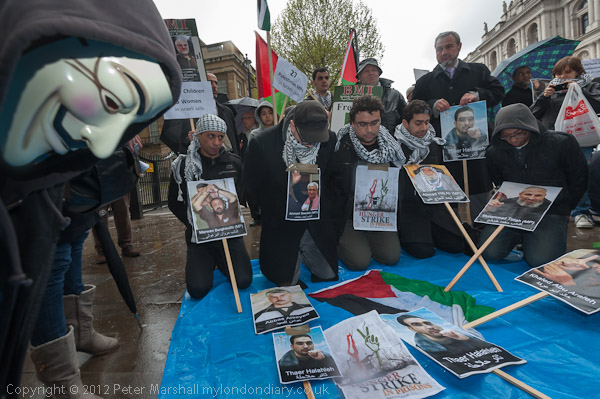
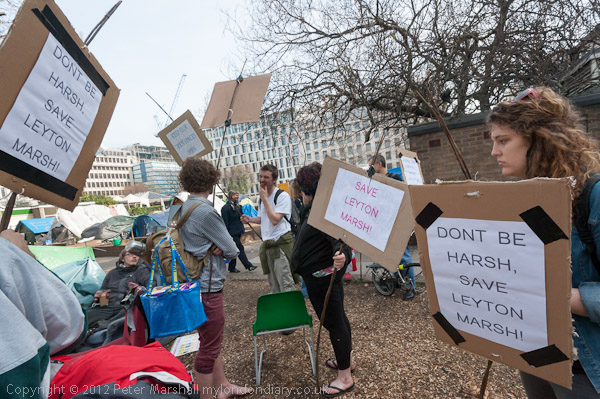
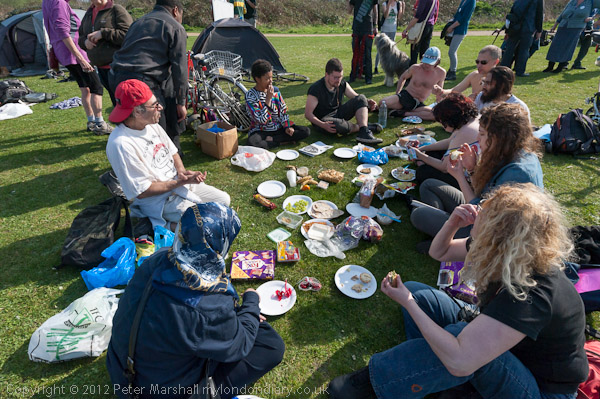
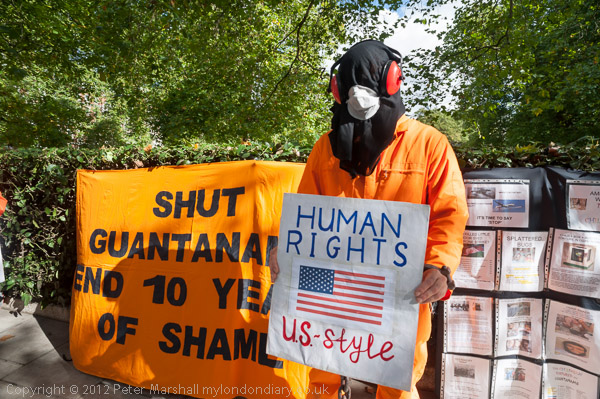
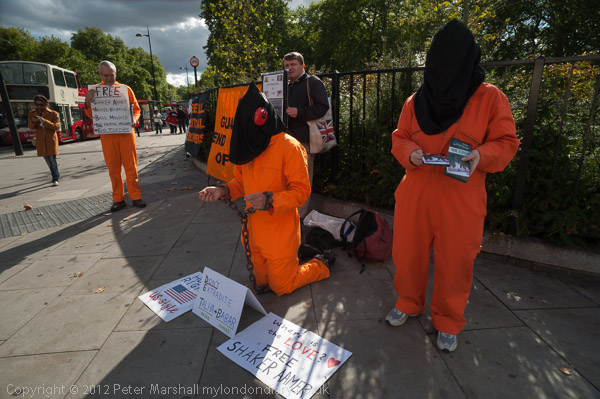
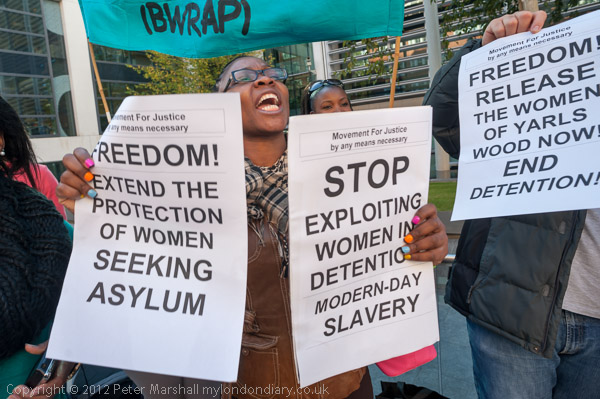
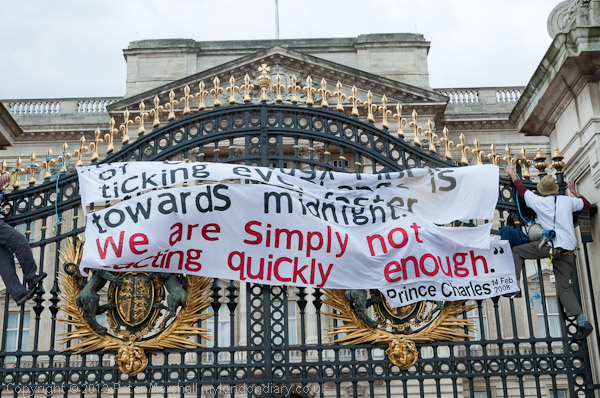
All the pictures on this post were taken with the 20mm f2.8 in FX format on the D700 and come from two stories, Shut Down Guantánamo, Halt Extraditions and Justice For Yarl’s Wood Women which you can see on My London Diary.
Continue reading Zoom to Fixed

Apologies For Nonsense – Again

Unfortunately someone has hacked into this blog, and added long lists of counterfeit/pirate software offers on the bottom of some recent posts. You will only have seen them on the RSS feed rather than if you read the blog directly because they have a tag in the code which hides them when you actually read the pages from my own site.

I don’t know how this has happened. I’ve deleted the rubbish from the pages where I found it, and will try to stop it happening again. But if you have suffered please accept my apologies.

I will slightly change the format of the posts which I hope will make this a little more difficult. It will mean that some posts on the RSS feed will end with

(more…)

even when there really isn’t any more.

Continue reading Apologies For Nonsense – Again

Grot on Royal Protest

© 2012, Peter Marshall

I’m not a big fan of rules of composition. My approach has always been rather more pragmatic, like “put the subject where it looks right” or as Minor White* put it rather more elegantly “Let the subject generate its own composition.”  I suppose I might sometimes quibble about terms like subject or argue that everything in the frame is the subject; certainly that photographs are a very democratic space in which all pixels are equal, and that the photographer has to take the same responsibility for every one of them.

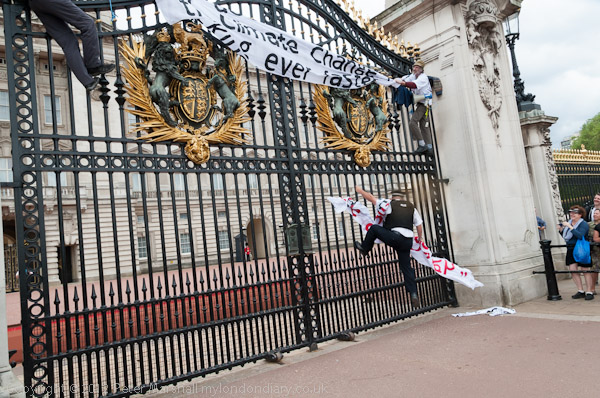
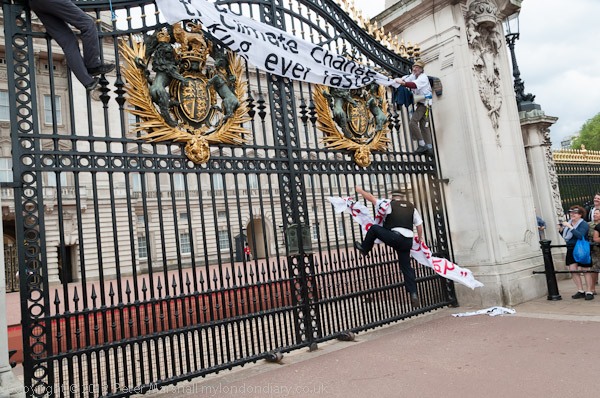
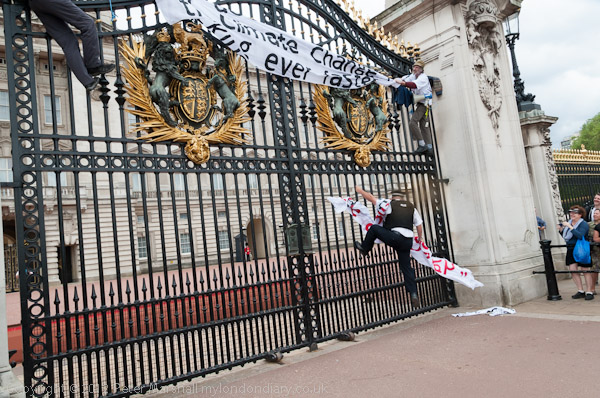
So I don’t go big on the “rule of thirds” or even the underlying “golden section” of which it is a crude simplification. But while photographing Climate Siren’s Royal Protest on the gates of Buckingham Palace, the unnoticed presence of a small lump of greasy substance on the filter of my 18-105mm lens in somewhere around that position (and appropriately it had a slightly golden translucence) did manage to make its presence felt in an important location in many of the pictures I took.

Here is an uncorrected short sequence of pictures which might have made a nice little story, when an officer decided to try to climb up and pull part of the banner down. His first try took Prince Charles’s name from a small attachment at the bottom of the the banner and then he got more ambitious:

© 2012, Peter Marshall

© 2012, Peter Marshall

© 2012, Peter Marshall

© 2012, Peter Marshall

© 2012, Peter Marshall

© 2012, Peter Marshall

© 2012, Peter Marshall

The final two frames are cropped and the ‘blob’ is larger and closer to the centre of the frame.

Whether bits of much on the front of the lens make a real mess of pictures does seem to very much depend on the subject matter and the aperture at which you are working. I still hadn’t noticed it later in the day when I was photographing another event and its actually hard to find on most of the pictures, taken at a wider aperture with subjects with more random detail. It shows up more in areas of even tone – such as the sky or the largely white banner held by the protesters – or on the regular high contrast black painted gates of the palace against the stone of the building behind.

It was a story I was in a hurry to file, as I’d been one of the first photographers present, having gone to join some of the members of the group at another location earlier. Unfortunately they had arrived at the palace just a few minutes too late for me to catch the start of the event, and there was little for me to take pictures of that wasn’t still happening when more press arrived after I left, as it apparently took around 2 hours before police got the four guys down off the gate. If I’d been able to send the sequence above off straight away it might have got used; not that they are great pictures, but they might make people laugh. Of course I took a few more frames before and after these, and the policeman was unhurt and later joked with me about his fall.

Dirt, or at least translucent dirt like this, diffuses light, and given time you can correct this to some extent in Lightroom with the adjustment brush. I find a combination of around contrast 25 and clarity 20 a good starting point, using a brush with fairly high degree of feathering (now added to my user presets with the title ‘grot-off’.) In suitable areas – as in most of these pictures – a little desaturation could be used to lessen the yellow shift I was getting, and in some images I could use a little of the complementary blue as LR4 enables you to brush with Color. There were one or two pictures where the splodge was in the sky and I could simply clone it out.

Look carefully at some of the images on My London Diary, most of which I’ve tried to correct, and you can see where the blob was, though in others I’ve been considerably more successful in getting rid of it. Every time after something like this happens I get paranoid about checking that my lenses are clean, but after a while without problems the effect wears off and I’ll forget again. Of course most days recently here we’ve had rain or at least showers, and so I’ve been more or less constantly wiping the lenses with a clean absorbent microfibre cloth (or sometimes a handkerchief or my shirt when I can’t find the cloth.)

I do have a standard set of checks on my way to take photographs, either while I’m packing my bag or often when I’m in a rush, on the train to London, although then I can’t do this when the train is crowded and I can’t get a seat.

  • Check for any old images on CF cards and format them
  • Set ISO to suitable value for likely light conditions
  • Check quality is RAW (or RAW + JPEG if I need images fast)
  • Check White Balance is Auto
  • Clean Image sensor
  • Check flash setting and flash compensation
  • Check exposure compensation
  • Check lens filter is clean, use Lens Pen if necessary to clean it
  • Set Manual exposure to sensible settings, eg 1/60 f8
  • Restore my standard custom settings

*perhaps the least widely quoted part of Minor White’s text from ‘Three Canons’ central to his major publication ‘ Mirrors Messages Manifestations‘.
 Three Canons

Be still with yourself
Until the object of your attention
Affirms your presence

Let the Subject generate its own Composition

When the image mirrors the man
And the man mirrors the subject
Something might take over

Minor White 1968
________________________________________________________

My London Diary : Buildings of London : River Lea/Lee Valley : London’s Industrial Heritage

All photographs on this and my other sites, unless otherwise stated are by Peter Marshall and are available for reproduction or can be bought as prints.

To order prints or reproduce images

________________________________________________________

Big Ride And More

It was a gloomy and damp day, the rain varying between the occasional spot and heavy downpour as I rushed from what for me counts as a early morning event – 10.30am at Tower Hill for Workers Memorial Day with speeches and wreath-laying at the statue of the Building Worker there to Park Lane in Mayfair for the Big Ride. Of course 10.30am isn’t really early, and only meant me leaving home around 8.45am, but I’ve long got out of the habit of early rising (and had not got to bed until after 1am.) On weekdays I don’t like to travel in the morning rush hour if I can avoid it, because it costs me two or three times as much for the privilege of often standing in a crowded train for 30 or 40 minutes. But this was a Saturday, so at least I was travelling rather cheaper and got a seat.

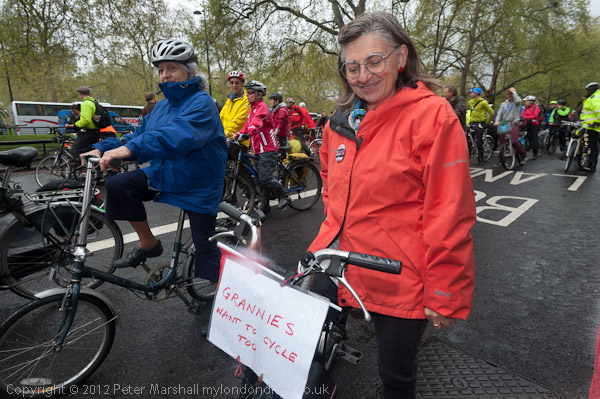
I arrived at Park Lane just a few minutes after the time I’d been told people would start gathering at Brook St, to see everyone around there cycling away, and thought I might have missed it.  Running with a fairly heavy camera bag isn’t my idea of fun, and I could have done without the 700 yard dash to find where the front of the ride was actually assembling and I was able to take some pictures.  The rain wasn’t too heavy, though it did cause some problems, and working as I do most of the time with a very wide-angle means their is no way to stop drops of rain getting on the lens, its effects usually impossible to spot on the small images on the back of the camera, and this made a few images unusable. Sometimes you are lucky and it isn’t in a really critical area of the picture, as in this case:

© 2012, Peter Marshall

You can clearly see the diffusion it has given on the top left of the sign reading ‘Grannies Want To Cycle Too’  although I’ve reduced the effect considerably in post-processing in Lightroom by darkening the area and increasing contrast and sharpness. You can see it again on the bottom of the flag in this picture:

© 2012, Peter Marshall

I was also trying hard to remember that 16mm is usually a mistake with bicycle wheels at the edges of the frame, and trying to work more towards the 35mm end of the lens.

Although the SB700 flash unit’s instructions are very clear about not letting it get wet, it seemed to keep working fine, and I needed a little fill from it for most of these pictures of people. I still am not quite used to the various buttons and switches on this unit, and after seeing the results  when I got home reached for my black tape.  Since I take more than 99% of the pictures on the TTL setting the unit now has a small piece of tape preventing me from shifting it from that position accidentally. It does take a bit of doing without the tape, but I found I had managed it. Similarly the switch which changes from even to standard and centre-weighted coverage is fixed at the even end. It’s easy to peel off the tape should I need to change the setting.

Incidentally I’ve been pleased so far with the SB700, though even on the wide setting I don’t think it has the same evenness of coverage I got with the SB800. But a little fall-off around the edges is often a good thing. Using the built-in ‘wide panel’ or  the clip on diffusion dome should give more even coverage for those pictures that need it. Without the wide panel in place on the full-frame camera the flash is reasonably even only for focal lengths of 28mm and above. With it the 17mm indicated on the panel isn’t quite true, but using this or the diffusion dome is generally pretty even, and with the two together, things are excellent. But there is a catch. Using the panel or the dome makes the unit much less efficient and increases the recycling time. So almost all the time I work without either.

It is largely a myth that these things make your flash softer. Neither greatly increases the size of the light source, and diffusion without an increase in size simply reduces the amount of the light emitted that misses the subject – unless there are suitable surfaces around to bounce some of it back. To get a softer effect you need a large diffuser or reflector.

For using as fill I now have the flash usually set at -0.3EV and the two camera bodies also with some negative setting, typically also -0.3 or -0.7EV. Often I seem to want a little less fill with the longer lens on the D300, so it’s convenient to use the flash compensation on the bodies to allow for this. Quite why Nikon hide away what is probably the most important information on using the flash in pages E23-E24 of the manual, after a lot of esoteric stuff on advanced wireless operation is hard to understand.

As usual I was spending almost all of the time between actually taking pictures holding my microfibre cloth over the front of the lens to keep it dry, though occasionally using it to wipe the flash too. Mostly it worked, as you can see in Big Ride for Safe Cycling on My London Diary, where there are some better pictures than in this post.

Continuing on the vaguely tech side of thing, here is a pair of pictures, one take on the D700 at 16mm with its normal rectangular perspective and the other on the D300 with the 10.5mm fisheye (almost impossible to keep raindrop free) and then converted to cylindrical perspective.

© 2012, Peter Marshall

© 2012, Peter Marshall

Of course they are from a different viewpoint but give a good idea of the different ways the two depict more or less the same subject.

After then end of the Big Ride (and again I was annoyed to find that while the organisers had said the finish would be near Blackfriars it was actually more or less at Temple, another unnecessary 700 yards I could have done without and which meant me arriving a few minutes too late) I dried out and warmed up in one of my favourite London galleries, the Courtauld Gallery.To be honest I wasn’t that impressed by the current show there, Mondrian || Nicholson In Parallel, though I did feel that while Nicholson’s work looked better for actually seeing the works, Mondrian is actually more impressive in reproduction. But the Courtauld has one of the finest collections anywhere of Impressionist and Post-Impressionist works.

Then, feeling rather better I took a bus to my final event for the day, in Whitehall, opposite Downing St, Support For Palestinian Hunger Strike. By this time the rain had almost stopped too. Again here is a pair of pictures taken with the 10.5mm and 16-35mm from a very similar position which I think demonstrate the uses of both lenses. It was of course a tableau set up for the media, the kind of thing I don’t generally relish.

© 2012, Peter Marshall

© 2012, Peter Marshall

________________________________________________________

My London Diary : Buildings of London : River Lea/Lee Valley : London’s Industrial Heritage

All photographs on this and my other sites, unless otherwise stated are by Peter Marshall and are available for reproduction or can be bought as prints.

To order prints or reproduce images

________________________________________________________

Apologies For Nonsense

More nonsense than usual that is.  Somehow early this morning four posts appeared on the blog that I hadn’t published. This was most likely an error by my ISP who host this blog rather than a hacking attempt.

Thanks to ‘tdar’ who pointed this out to me in a comment to one of the pieces, all of which were from the ‘drafts’ folder on the site where I had cut and pasted things from various articles that were waiting for my comments, along with a few of my thoughts on some of them.

Lightroom 4

I’ve now been using Lightroom 4 for a couple of weeks, and although there are many things I’ve yet to find out, generally I think it is a very useful improvement over the previous version, though I’m hoping it won’t be long before 4.1 is out – and a release candidate is already available. There are a few bugs, but it generally works pretty well. If you are already a Lightroom user, you will almost certainly have upgraded already to LR4, but if not there is no reason to wait. If you are a photographer and don’t use LR,  LR4 means you are missing out more.

LR4 now does almost everything that the digital photographer could want and has become considerably more affordable, while Photoshop becomes more expensive every time I look at the prices.  Very few photographers now really need it rather than the more reasonably priced Elements and if you think you do you are spending far too much time on post-processing and not enough on taking pictures :-) Though I still find my ancient Photoshop 7 easier to use than the much flashier latest Elements. For me it’s a simple basic sharp knife compared to some fancy new toolset that tries to make things easy for those who don’t understand what they are doing. But if I had to I would get used to Elements and get the same results.

LR does take a little time and effort to learn, and that has put some photographers off, but I’d have to agree with another reviewer who noted that their were only two classes of photographers who didn’t like it and use it. Those who had never tried it and those who had played with it for a short time and given up without making the effort.

Perhaps I’d add just a little to that. LR does need reasonably powerful hardware – the difference when I moved from a five year old 32 bit system to my current 64bit machine with roughly 3 times the usable RAM was noticeable, and the change to a good USB 3.0 card reader made a truly huge difference in the time taken to ingest a card full of images into the catalogue – from an hour or two down to perhaps 10 minutes. So if you need to file on location with an underpowered notebook, there are better choices such as Photo Mechanic, though you will probably still want to have LR on you main machine.I’m not sure that the results I’m getting are any better on average than those from LR3, but certainly it is taking me less time to process them, with considerably fewer images needing local modifications (which can be very time-consuming.) The most important changes for me are in the Develop module, where the sliders now work rather differently, even where the names are the same – which takes some getting used to.

LR3 had an Exposure slider and a Brightness one, and LR4’s Exposure slider seems to work rather more like the Brightness in LR3, increasing the brightness of the image without pushing many more pixels beyond the end of the histogram.

The good news is that they have got rid of ‘Fill Light’ and ‘Highlight Recovery’  neither of which really worked properly. Fill light seldom gave good results at values of over 20 and almost never greater than 30, while Highlight Recovery was always best kept at zero (with local highlight areas being taken out by suitable local treatment.) I even  feel a little cheated however, as it had taken me a lot of time and effort to find ways of getting around these limitations and the new version lets anyone do the job properly!

As with LR3, you should work from top to bottom in the Basic panel. The first step seems to be to get the colour balance right, and then mid-tones right (and particularly flesh tones) using Exposure and Contrast.  While in LR3 you then had to burn down excessive highlights locally and get the required shadow detail with a combination of the Fill and local brightness, you can usually get a usable result with the Highlights and Shadows sliders and adjusting the White and Black sliders to fill the whole span of the histogram. The Auto button actually does the job for you more often than not, certainly much more often than in LR3.  Occasionally some local adjustment is still necessary, and often you will in any case want to do a little dodging and burning.

When using the brush or the gradient tool there are some very useful new options – colour temperature and noise, and one that will probably attract any buyers of the Nikon 800E, Moire. The colour temperature is a really useful change, enabling you to deal with images where mixed colour lighting is otherwise a tricky problem.

Also in the Develop module there are welcome changes in the Lens correction, with a better removal of Chromatic Aberration, and when set this this works automatically on any image and isn’t dependent on having a lens profile as in LR3. It’s particularly worth importing old images taken with my compact cameras and using this on them, as well as the Defringe box on the Manual panel of the Lens Correction set to all edges. Along with a little noise reduction it really does improve them, and you can make them almost look as if they were taken with a larger camera.

The Tone Curve is also improved, with much greater flexibility, though it isn’t something I use much. My standard import preset used to give it a little tweak of extra contrast. but in LR4 it defaults to ‘Linear’. When I update images I’ve processed before to the new 2012 process they often benefit from just a little more contrast than this provides, though not quite as much as that provided by going into the Tone Curve panel and choosing ‘Medium Contrast’. If you select this and then adjust the curve to get the effect you want it is possible to save this as a User development preset, but I can’t find a way to add it to the options in the Tone Curve section itself.

There are many more new features (and existing ones of LR3) that I’ve still to investigate. I don’t yet do much printing from LR, but if I did the soft proofing would certainly be useful, and it may be good enough for me to switch to using this in place of Photoshop. Something I am going to try is the new Book module, which can produce either a Blurb book or a PDF. It looks a very easy way to produce image-based books, and appears to handle captions and titles better than Blurb’s Booksmart, as well as allowing you to print a proof copy without an annoying watermark. But for anything with much text – or where you want true flexibility of design – InDesign will continue to be the answer.

In the UK at least it’s actually slightly cheaper to buy LR on disk than download it, a small issue I think Adobe should address. I’m not even quite sure about the legality  involved in charging it’s UK customers VAT at the higher Irish rate, and certainly I’ve had to pay the UK vat rate on some downloads from countries with lower tax rates. But surely they could supply software from a UK server if necessary. Personally I like to have a disk on my shelf, much handier should I have to re-install on this or a replacement computer, and would expect at least a small discount on downloaded software.

Lea Bridge Road

 © 2012, Peter Marshall
Preparing to leave Finsbury Square for the march to Leyton Marsh

Astute observers reading my account of the Leyton Marsh Olympic Protest which took place ten days ago (and was posted at the time with around half the number of pictures on Demotix) will have noticed the curious omission of what might perhaps have been expected to be the climax of the day, the arrival of the marchers from Occupy Finsbury Square at Leyton Marsh.

I’d seen this as the key moment of the day, and had gone on ahead by bus to Leyton Marsh (my knee was in no state to walk the four miles or so in any case) and had been busy taking pictures of the local residents and the site, and of another group of Occupy protesters who had made it separately (and had got very lost on their way.)

I’d actually left the Marsh to meet the marchers, but had become involved in other things, and when they actually arrived I was thirty years away in my own dream space of when I first visited the area, photographing some of the ways it had changed and completely failed to notice the small group passing by me a couple of hundred yards away. Fortunately a straggler from the march saw me and came over to tell me they had gone past and I hurried with her after them, but was just too late to photograph their arrival at the site.

© 2012, Peter Marshall
Marchers from Finsbury Square enjoy a picnic on Leyton Marsh

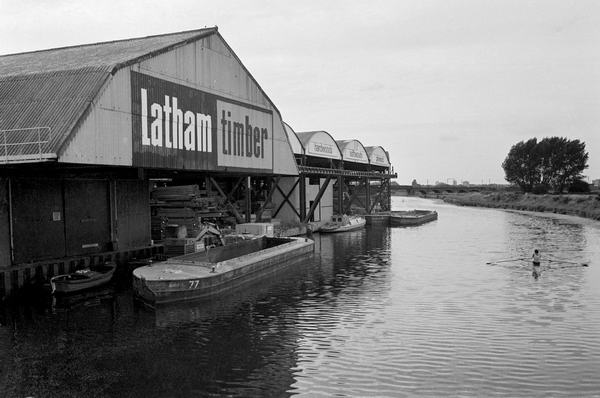
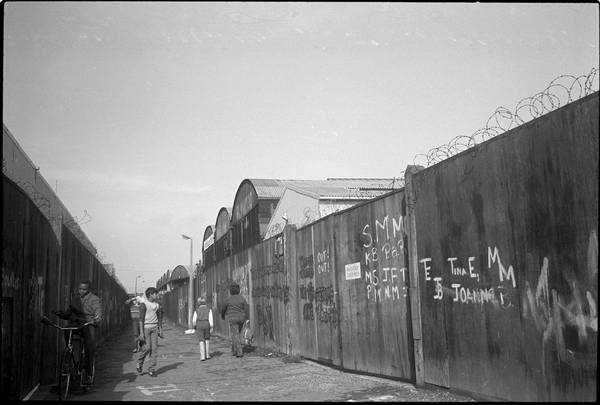
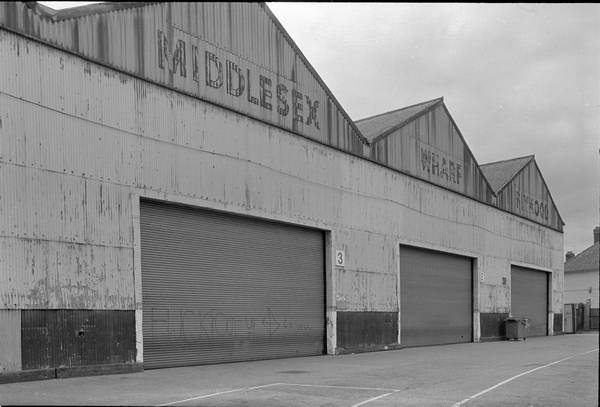
Here are a some views of what used to be on the Middlesex bank opposite Leyton Marsh (which is on the Essex side) but is now occupied by some fairly boring flats and grassed open space.
© 1983, Peter Marshall

© 1983, Peter Marshall

© 1983, Peter Marshall

You can see these (cleaned up a bit) and some other pictures from the area in my book ‘Before The Olympics‘ – with a full preview available on Blurb.

I hadn’t done wandering down memory lane for the day. One of the first times I remember coming to London took me along the Lea Bridge Road where Leyton Marsh is, to the shop of  Marston & Heard Photographic, then at 378 Lea Bridge Rd. In the mid-70s they purchased large remnant stocks of Ilford Bromide paper after Ilford started producing RC materials and also the entire remaining stock of Agfa Portriga Rapid. Those of us who were around at the time will find the page on Phototec on Maurice Fisher’s Photomemorabilia site of interest, and I had dealings with most of the companies mentioned over the years.

Photography at the time was still expensive and those of us who weren’t bankers, city merchants or company directors (as some leading amateur photographers were) relied on companies like Marston & Heard for cheap paper (they also sold benzotriazole, an anti-foggant that was often needed with it) and for tins of cheap film, which I think was often ends of 35mm movie stock.

I don’t remember how I got there at the time, perhaps by the same bus route as I used to get to Leyton Marsh from central London (though many buses then had much longer routes than they do now) but I do remember that I got off at one end and discovered that Lea Bridge Road was a very long road, though I think I probably only walked along half of its 5 km or so. Coming back loaded down with heavy boxes I took another bus.

Although most of their Agfa stock was the very warm-toned chloro-bromide Portriga Rapid, only available in a limited grade range, they also had smaller amounts of Brovira and Record Rapid. Brovira was a cold black and it’s only good point was that it was supposedly available in a very high contrast Grade 5, though by the time it got remaindered and sold to me I think it had lost a grade or two. But the small amounts of warm black Record Rapid were the beginning of a love affair that was later to take me to Muswell Hill and Goldfinger, and finally to Silverprint, ending when they had to remove the cadmium in the late 80s because of its health and safety issues. I never got on with the reformulated paper and soon switched to Ilford Multigrade FB – until Jon Cone showed the world how to print with inkjets for the new millennium.

His latest Piezography2, coming shortly, may even tempt me to buy a new printer to run it, perhaps the Epson Stylus Photo 1500 (which I think is known in the US as the Epson Artisan 1430) and has the big advantage of a wi-fi interface and could thus sit in my old darkroom as I’ve no room for another printer next to my computer. Cone says that the smaller drop size of these printers enables them to give comparable results to the top of the range Epson PRO 9900 printer while running with fewer shades of gray. With Piezography2 you will be able to print on both matt and glossy media without having to change over cartridges – it will include both matt and gloss blacks.

________________________________________________________

My London Diary : Buildings of London : River Lea/Lee Valley : London’s Industrial Heritage

All photographs on this and my other sites, unless otherwise stated are by Peter Marshall and are available for reproduction or can be bought as prints.

To order prints or reproduce images

________________________________________________________

Fuji X100 Firmware Update

Today I downloaded and applied the latest firmware update, 1.20, for the Fuji X100 and although the list of new features in the manual update seems short and unimpressive – the ability to assign the ‘RAW’ button to other purposes, a slightly handier menu position for auto ISO, the ability to zoom in on the focus area in AF-S mode and a playback zoom that may automatically detect faces – the actual differences in operation seem a little more impressive.

Fuji do actually give a slightly longer list elsewhere, where the earlier improvements in previous firmware updates are also listed. But somehow the camera just seems a little ‘snappier’  (sorry:-) and even the start up delay seemed a little shorter. Or perhaps I was just imagining it. Perhaps it was just the good weather (and a little good wine) that made everything feel better.

But it’s certainly good news that Fuji are continuing to improve what was from the start a fairly impressive camera in most ways. It’s interesting to see how the DxOMark ratings for this camera compare with those for the Leica M9 – which it outranks on every score, if not always by a great deal. My own experience puts it between the Nikon D300 and D700 for overall quality and also for use in low-light, and the DxO figures are also in agreement with this. Of course with a fixed lens it is limited in some ways compared to these other cameras.

But perhaps the most surprising of DxOMark ratings I’ve seen are those recently published for the D800, with the highest score of any “35mm” camera and which put it up into the large-format league. Most surprising of all, and something that has wrong-footed most of the pundits is its low-light rating, more or less the same as the D4 and only slightly below the leading D3S.

St Paul’s – An Inside Job

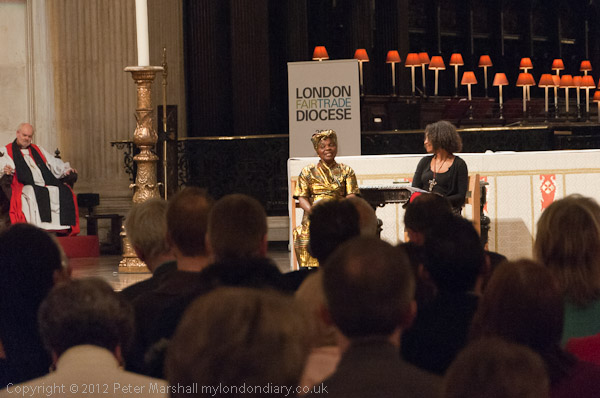
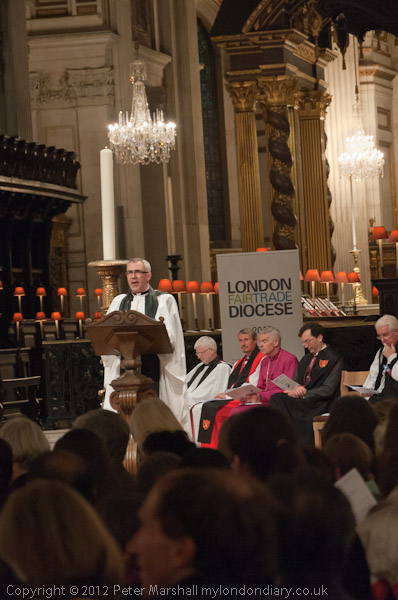
I’ve done two rather unusual jobs for me this week (along with several protests), and both presented me with something of a challenge. But here I’ll just deal with the first, last Sunday evening, when I covered a church service. Not in any old church, but in perhaps the best known old church in Britain, St Paul’s Cathedral.

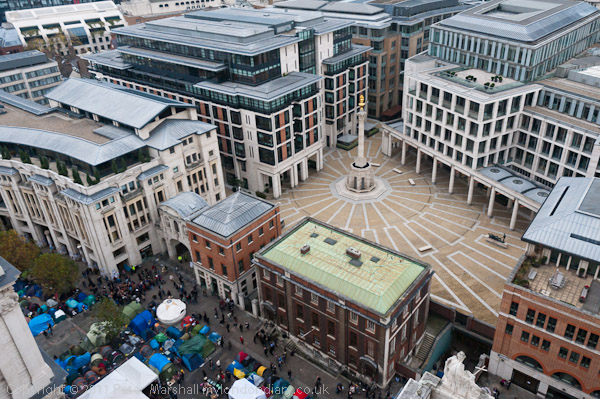
If you’ve been to St Paul’s in recent years, one of the first things you will see when you enter an pay the small fortune to look around the place is a sign saying ‘no photography’. About the only place it is usually allowed is when you get outside around the dome, something I took advantage of when I visited the Cathedral on one of the two days a year when entry is free last year – as you can see in London From St Paul’s on My London Diary.
© 2011, Peter Marshall
Occupy London and Stock Exchange from St Paul’s.  Nov 2011

Some years ago, I was asked by a charity to photograph an event they were organising inside St Paul’s, but they had problems in getting permission from the cathedral authorities. Although when I arrived a helpful verger escorted me to a suitable position, shortly afterwards a more senior official came to escort me outside again, as they had an agreement with an agency who objected to other photographers taking pictures.

So this time, I made very sure that I would be able to take pictures, and had a talk with the Press Office there about how I would be able to work. I would be allowed to stand in an area with my back to one of the pillars of the dome, where I would have a good view to the centre of the cathedral, and during the service I would not be allowed to move around or use flash. There were some events at the end of the service and I could move to cover them, although again they weren’t too happy about flash, suggesting I should ask for permission at the time if I needed to use it.

And it was in some ways a good position, but there were several problems. First was the lighting, which as this was an evening event was pretty dim. The cathedral is a very large space and the general light levels are low, although there are a few better lit areas where some of the action takes place. But even at ISO 3200 I was still only getting exposure readings like 1/40 f5.6.

I should have borrowed a long fast lens for the event as I don’t own one. I’d hoped to get by with a Sigma 24-70 f2.8, but it wasn’t long enough, and in any case the pictures I was getting weren’t quite sharp enough. The Sigma 28-300 f3.5-6.3, a perfectly adequate performer in good light, also proved hopeless in these conditions. I tried using the Nikon 18-105 on the D300, but that wasn’t too great either, but then I had a thought and switched it to the D700 and things began to work much more sweetly. It wasn’t quite long enough (a 157mm equivalent) and being a DX lens it reduces the camera to 6Mp, but it was still fine – and I found I could even get better results by using it at ISO 2000. They weren’t great pictures, but they did what was needed – and I could even crop them a bit later.

© 2012, Peter Marshall
From my viewpoint with the 18-105mm at full stretch (slightly cropped)

The following day I spent some time trying to work out why the two Sigma lenses hadn’t done the job. Testing them in decent light they seemed to have no problems, but I had noticed that part of the problem in the cathedral was getting accurate focus. I realised that because I’d not had problems before I’d not got around to using the ‘AF Fine Tune’ for either lens (it’s in the Set up Menu), so I spent some time adjusting that – and it did make just a little difference.

But I think the biggest difference is probably that the 18-105 is the only one of the three that is a ‘VR’ lens (and for once I remembered to make sure it was on.) Most of the time I don’t notice any difference with VR, but these are the kind of conditions where it really does become useful.

© 2012, Peter Marshall

The other lens that was really useful was the 10.5mm, which let me take some overall views, stretching up at arms length to see well over the section of the congregation sitting in front of me. Who were another major problem. For those parts of the service where they remained seating I could see over them to the various bishops and others leading the event, at least at waist level and above. But once the congregation stood up, I might as well have been outside the building. And they did a lot of standing.

© 2012, Peter Marshall

Camera shake is seldom a problem with the 10.5mm, and the f2.8 maximum aperture helps. As often, I’ve converted the image to a cylindrical perspective to get the pillars of the dome upright and straight. Framing is a little tricky when holding the lens well above your head, but it was easy to take a few tries until I got it right, holding the camera more or less level and getting a little of the curve of the dome at the top of the frame. As well as the perspective change I also used Lightroom’s manual lens corrections to tidy the image up a little and get the verticals more or less vertical.

Despite the cathedrals ‘no photography’ rule – and a note in the order of service reminded people of it – there were people much closer than me to what was taking place using cameras and phone cameras through most of the event, and when the children’s choirs started singing around fifty people rushing forward in front of me to get closer and take pictures. So at that point, despite my instructions I joined them, though unlike quite a few of them I didn’t use flash because I didn’t have it on my camera at that time.
© 2012, Peter Marshall

I had a long list of things the organisers wanted me to photograph at the end of the service, but there were so many people milling around it was impossible to follow the instructions. Given that everyone else was taking pictures in the chaos, I just stuck my flash on the camera and got on with things as best I could, now using the 16-35mm.

© 2012, Peter Marshall

Bishop of London, Richard Chartres, waving a finger in the air in this picture, is now in the news as one of the leading candidates to succeed  Rowan Williams as Archbishop of Canterbury. Chartres, who lost out to Williams in the last round is now listed by William Hill at 7/4, narrowly trailing the 6/4 favourite, John Sentamu, Archbishop of York.

Simmery Axe

© 2012, Peter Marshall
London, Feb 2012 – Peter Marshall – see text

This isn’t by any means a perfect panorama*, though I’ve just spent over an hour trying to put it in order.  There are still few fairly obvious problems, and though with perhaps another half hours work I could eliminate most of them by appropriate masking of the images, I decided I’d done enough for what is only really a preparatory sketch, make when I just happened to have a spare few minutes in a location I’d been meaning to visit as part of a joint project with an artist friend I’ve been working on for some time.

I hadn’t gone out to take panoramas, and didn’t have a tripod with me, and it isn’t easy to keep a hand-held camera in the same position over the 13 frames that made up this 360 degree image. So it isn’t possible to get quite everything joining perfectly, as you can see in the jump in the yellow line at the right of the image around a quarter of the way up the frame and the sweep of the steps at bottom centre.

There are also problems with the various people who walked through the area while I was making the set of exposures. Some of them were recorded several times in different frames, and I wanted to avoid showing them more than once in the final image. More annoyingly, there were different people occupying the same space in different frames, and I had to choose between the woman clutching her blue folder and a man with a banana, whose image I obliterated.

There was also a problem with changing lighting, with the sun disappearing behind small clouds as I took the pictures. The main problems this gave me were in some sky areas, where white clouds rather dramatically darkened. There is also an interesting lighting effect here with strong reflections from the ‘Gherkin’ at centre right giving one man a strong visible shadow although like the rest of the figures in the scene he is actually in the shade, and the shadow is pointing in the direction of the sun.

I seldom find 360 degree panoramas very interesting as prints, although it’s often interesting to explore them through a small viewing window on-line. This square on St Mary Axe known to Londoners as ‘Simmery Axe’ (that church was demolished in 1561) in the business district opposite Lloyds is surrounded by tall modern buildings (and the cranes where another is being added) along with some  older architecture, notably St Andrew Undershaft. Until recently a maypole (the ‘shaft’) was kept horizontally on hooks on the side of one of the now-demolished buildings. The original maypole was taken down in 1517 after violent May Day rioting by London’s apprentices in which several foreigners were killed and was sawn into pieces around 30 years later after an inflammatory sermon against the excesses of May Day preached at St Paul’s. It was replaced st the Restoration in 1660 and finally taken down in 1717. Although the maypole was said in medieval times to tower above the surrounding buildings, it would look rather smaller now.

Working in the middle of large buildings such as those around the square needs a very wide view to encompass the tops of them all, but with a very wide view – particularly 360 degrees – it is then difficult to give a real impression of height. Working with a very large vertical angle also gives huge problems with distortion when producing flat prints. Some of the possible projections for smaller angles of view become unusable. For this image I chose an equi-rectangular projection, which works fairly well but used ‘neat’ seems to rather squash the taller buildings. A variable slider in PtGui (the best panorama stitching software) allows you to stretch everything out a bit.

Lightroom added to my problems by forgetting the profile setting that I had saved for the Nikkon AF DX Fisheye-Nikkor 10.5mm lens. For some unknown reason the default profile that comes with it attempts to convert the images to rectilinear perspective – which really doesn’t work, at least not without considerable cropping, as there are simply not enough pixels in the corners when the image is straightened out. It’s best not to remove the distortion at all, or at most around 20-30%, or to use other software such as my favourite Fisheye-Hemi plugin or other ways to convert to a cylindrical perspective. For working with PtGui, it’s pretty well essential to leave the images without conversion. So my first step this morning was to go back to Lightroom and rework the source images for the panorama.

With a proper rig for taking panoramas I think the 10.5mm should be able to create a spherical panorama with only six images, but working hand-held you need more even if you are satisfied – as I am – with a relatively narrow strip image. Thirteen is far more than needed, but I wanted to be sure not to get any gaps in the strip I wanted. But there may be some I could eliminate completely and get more accurate joins.

I made around half a dozen test panoramas while I was there, and I think my final picture if I decide to make one will be rather less than 360 degrees. Perhaps more like this one.
© 2012, Peter Marshall
Stitched from many exposures with the 16-35mm rectilinear lens at 16mm

or even this

© 2012, Peter Marshall
Stitched from two exposures with the 10.5mm semi-fisheye


*
A decent browser will display this image twice the size – right click and select ‘View Image’
________________________________________________________

My London Diary : Buildings of London : River Lea/Lee Valley : London’s Industrial Heritage

All photographs on this and my other sites, unless otherwise stated are by Peter Marshall and are available for reproduction or can be bought as prints.

To order prints or reproduce images

________________________________________________________