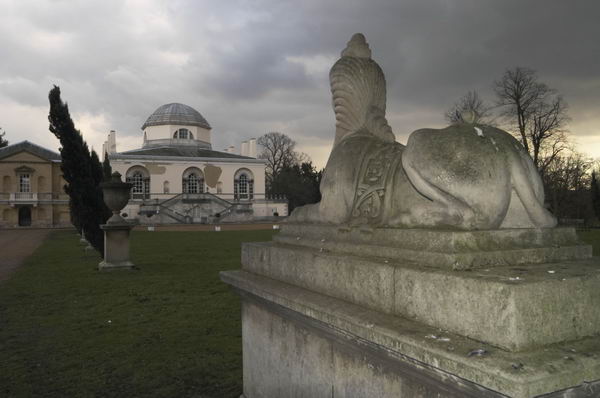
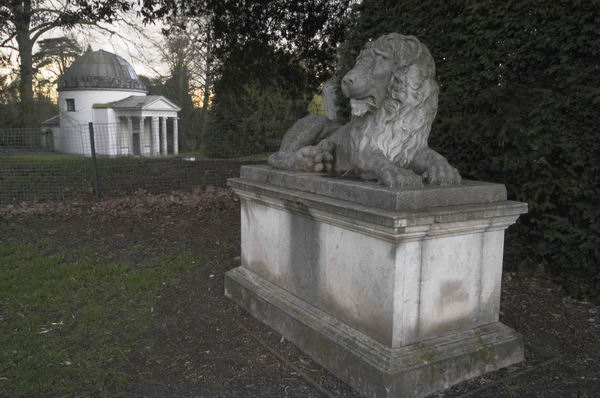
Chiswick House Gardens

© 2004 Peter Marshall
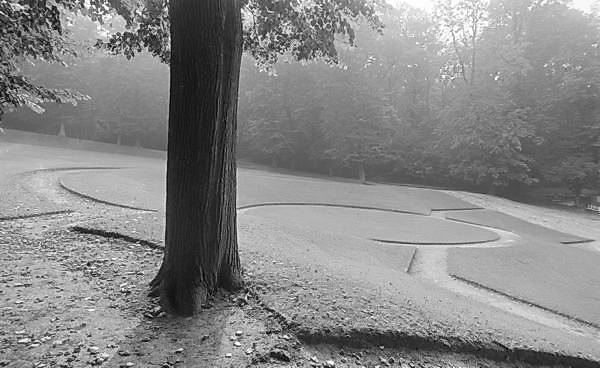
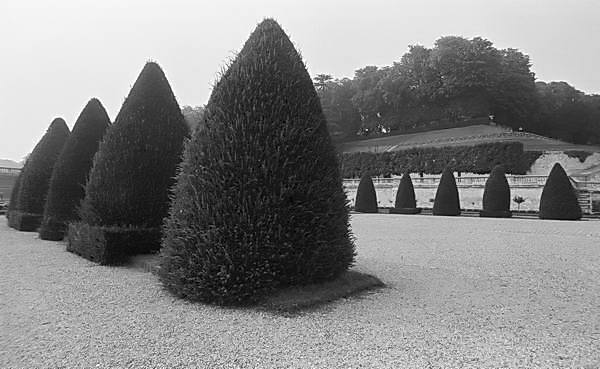
Chiswick House Gardens, 2004

For some years Raymond Moore lived in a room in a house on the riverside at Chiswick overlooking the Thames and just a short walk from Chiswick House Gardens, where Bill Brandt created some memorable images in the 1940s (but I can’t find them anywhere on the web) – though there are some by (Edwin Smith.) It’s only a fairly short train or bike ride from where I live, and was a place I occasionally took students to photograph in the past. My last visit there – on my own- was in 2004 and here are a couple of my images from then.

© 2004 Peter Marshall
Chiswick House Gardens, 2004

You can see more of my pictures from a walk in March 2004 from Brentford to Chiswick House. So far as I know, Raymond Moore didn’t make any pictures there.

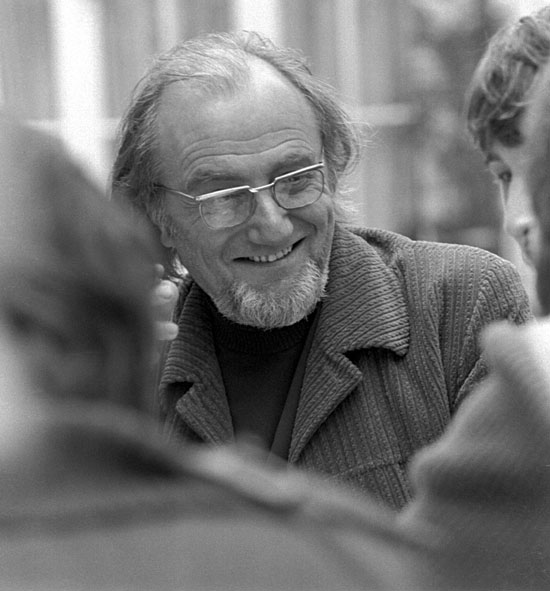
Remember Ray Moore

For several reasons I’ve been thinking about Raymond Moore recently. Just before the New Year I was up in Derbyshire for a few days, and went through some of the places I visited with him in the 1970s while I was at one of several workshops with him, and this brought back a few memories of Ray and the other photographers I met there.

© 1976-7, Peter Marshall

It’s only too likely that many reading this will be scratching their heads and wondering who Raymond Moore was. If there was an award for great photographers who have disappeared most completely off the critical radar he would certainly be in the running for it. Yet Ray was certainly one of the great British photographers of the twentieth century, up there with guys like Bill Brandt, and his work stands comparison with rather better remembered American photographers such as Aaron Siskind and Harry Callahan.

Moore (1920-87) was the first living photographer to have a truly British show at the Art Council’s flagship Hayward Gallery in London; Brandt had beaten him to it by eleven years, but Brandt’s show was from John Szarkowski at MoMA rather than a home-grown enterprise. Earlier, Ray’s work had been shown by the Welsh Arts Council, the first living photographer to be given a show by by any of the UK Arts Councils.

But there are reasons why Ray’s work has drifted out of our sight. He was a painstaking printer, one of the best (like me largely self-taught from the Ansel AdamsBasic Photo‘ books) but made relatively few prints, and sold few during his lifetime, so virtually none appear in the art market, probably now the major driver of photographic visibility.

The largest collection of his work has for years been the subject of legal dispute and thus unavailable for museum shows. And the genre in which he worked was outside the traditional British obsession with social documentation (nothing wrong with that, but it isn’t all of photography) and in an area largely abandoned by academia in the UK in the 1970s in its Gadarene rush to  theory.

British institutions have never had any real faith in photography and the kind of enthusiasm and support systems that exist in some other countries have never really developed here. Ray did have a few shows, but they were relatively few and far between, and few buyers, institutional or collectors, were buying work by contemporary British photographers in the 1970s and 80s.

Ray wasn’t well served by publication either, although his pictures appeared in various magazines, including Creative Camera, who also published a major portfolio of his work as the lead portfolio in their 1977 year book.  Murmurs at Every Turn came at the time of his Hayward show in 1981. But these publications – and the slim Welsh Arts Council catalogue – were printed in the style of their time, with heavy blacks that lose the shadow detail on which Ray was always so insistent. His final publication, Every So Often, represents his work rather better, but all these are now relatively rare and expensive second-hand. However you can see them even if they are not on your shelves, as Weeping Ash has a tribute to Ray that includes virtually every magazine article and photograph published by Ray – and you can page through his books. The site  also includes an essay which was the basis of a talk I gave about Ray in 2005.

By the time I met him around 1976, Ray had simplified and perfected his technical approach. Although in earlier years he had worked with medium format (and occasionally with larger cameras) he now worked with a Nikon camera and a single standard lens (I’m not sure whether it was a 50 or 55mm.) He chose to use a Nikon macro lens not because he wanted to photograph close-up but because he felt it was sharper and had a flatter field of view at normal distances. He mainly worked with Ilford FP4 film, relatively slow and fine-grained and a favourite with many photographers, espeically those doing portraits for its smooth tonality, exposing it around 2/3 stop more than its normal rating and I think preferring to develop to a slightly lower contrast than normal.

He had decided he didn’t need a larger negative to get the print quality he wanted, always printing essentially from the whole negative on an old Leitz enlarger (simple but one of the best ever produced for 35mm), making final prints around 14 inches wide.  Ray liked to print with open shadows, and although he was a master of the craft always aimed to make prints that made people look at the images rather than trying to dazzle them with the print quality.

Although he admired the work of Brandt, he was not an admirer of the prints that he made when he moved to a more graphic approach, using higher contrast and often blank shadows.

Also on-line is a 2002 dissertation on Moore by photographer Neil Shirreff which looks at “his positioning in Britain’s photographic history, the perspective of Moore himself, and the perspective of a viewer engaging with one of his photographs.

A new book on Moore is long overdue, although unlikely to emerge before the legal problems surrounding his work are resolved.  It would also be good to see his work in exhibitions. The V&A does have a number of his pictures which can be viewed on request by visitors to the print room.

Ten years ago I wrote a short piece on my experience of attending the workshops with Ray and Paul Hill at Hill’s ‘Photographers Place‘ in the Derbyshire village of Bradbourne for William Bishop’s ‘Inscape‘ magazine, accompanying a few of my pictures of the people concerned – including some of Ray.  I began to put this on-line at the time, but somehow the pages never got finished – until I found them and did the job this afternoon! Now on-line as Darbis Murmury.

New Year’s Day

I’ve been doing a lot of walking in the last week, which isn’t unusual. A few years ago I was being interviewed for a photographic magazine and was asked to name my most useful photographic accessory and my answer was “a good pair of shoes.” It wasn’t the kind of answer he wanted  (though I think they did print it)  and he continued, “No, not clothing, what’s your favourite accessory“, so I told him it was my Brompton folding bicycle, which as well as getting me to places (and folding so I can put it on trains and the Underground for longer distances) also enabled me to see and photograph over walls and fences by standing on it.

But mostly the walking I’ve done recently has been in cities, often with a few hundred or thousand other people on demonstrations (and quite a bit of it I’ll be walking backwards, which gets a little tiring.) There are some streets in London where it now feels a little odd if I have to walk along the pavement rather than marching down the centre of the road, although when I’m on my own the traffic would make that suicidal.

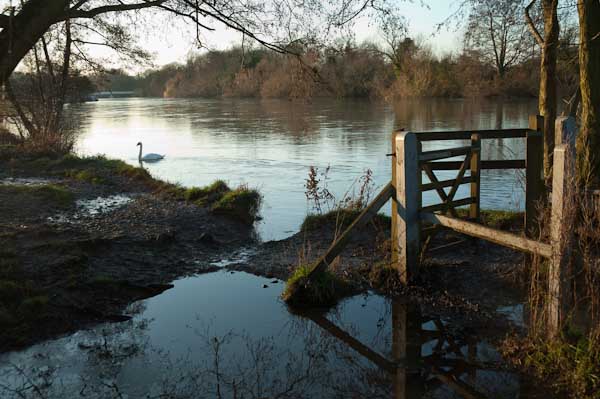
But New Year’s Day I took a walk in the country with some of my family along a part of the Thames Path. There was a cold wind and the temperature was around freezing and I froze at times, despite a warm jacket, woolly hat, scarf and gloves.  I find it hard to imagine how (and even harder to imagine why) people live in really cold climates.

Our walk from Reading to Pangbourne was a relatively short one, though we made a few detours, mainly at both ends of the walk, giving us a total of around 7 miles. Mostly – as you might expect from the name – the path was alongside the river, although we did at one point have to make a rather lengthy detour through a rather boring housing estate at Purley.  And we were lucky it was so cold, as much of the mud that would otherwise have made walking difficult was frozen solid. Otherwise much of the Thames Path is best walked in reasonably dry weather rather than after some of the wettest months on record.


Thames Path at Pangbourne

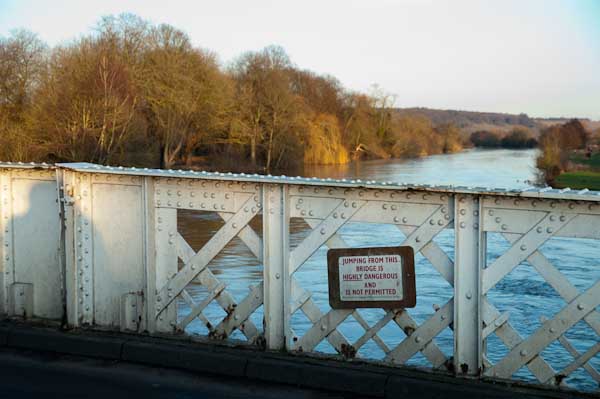
I can never get too worked up about photographing landscape, and this certainly lacked the spectacular, though I’m not a great fan of that either. But I did rather like the sign on the bridge which states:


JUMPING FROM THIS

BRIDGE IS

HIGHLY DANGEROUS

AND

IS NOT PERMITTED”


Thames Path at Pangbourne

Although given the weather I didn’t feel at all tempted to do so.

More from the Thames Path another day.

A New Year

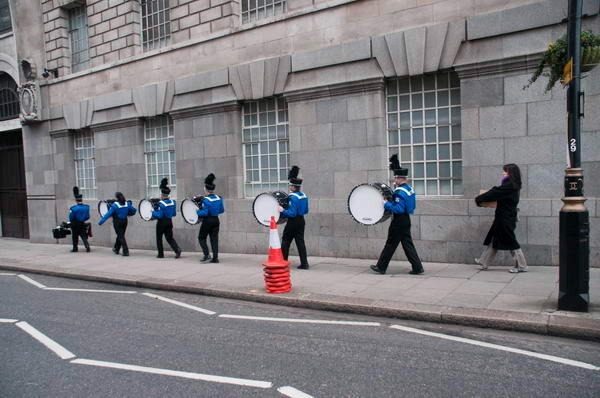
I decided to start the new year differently in 2010.  Almost every year this millennium I’ve made a start with the London Parade, a rather curious annual event that started almost 25 years ago, and at least in the early years that I photographed it was made up almost entirely of US teenagers either marching in uniformed bands or jumping up and down to music waving pom-poms. Here’s one I took in the previous century:

© 1999, Peter Marshall
London Parade, 1999

When I first photographed it, quite a while ago, it was called the Westminster Parade, involving only one of London’s three cities but it has since broadened to include not only the other two cities (the City of London and Southwark, south of the river) but also the Greater London boroughs, a number of which now have floats or groups in the parade, along with various other organisations from around the country.  But although 9/11, the London bombings have resulted in rather fewer US kids flying in, others have taken their place to give a more varied event.

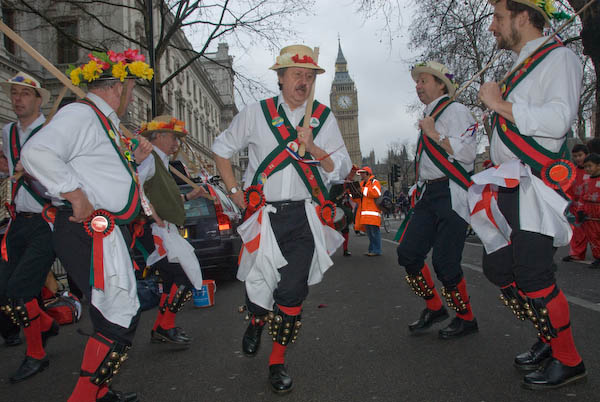
It’s also become increasingly controlled, and arranged more for the benefit of a worldwide TV audience than for those watching on the streets, and I’ve found it less interesting to photograph. One of the things that helped to retain some interest was that the parade assembled around Westminster, giving some nice backgrounds for pictures – such as these Morris Men from the London Borough of Harrow:

© 2008 Peter Marshall
Merrydowners Morris from the London Borough of Harrow, 2008

But this year the procession was to go around the route in the opposite direction – apparently the TV companies had pressed for the change as  they had decided it allowed them to show some of London’s landmarks better in their coverage. So rather than starting at Westminster it would be starting on Piccadilly.

Perhaps I’ll photograph it again another year, but once TV gets to call the tune I’m not sure it is worth bothering. I’ve felt that the last few years, though I’ve taken a few pictures I like, the only thing that has kept me going back is that it has become a little bit of a social occasion for some of my photographer friends, where we meet up and go to the pub as the last of the parade moves to the start line.  And I was sorry to miss that, though I imagine there will be a few opportunities later in 2010.

© 2009 Peter Marshall.
Westminster, 2009

My best wishes to all for 2010.  No long list of resolutions for me, but I’m going to try and do things a bit differently to 2009. Time for a change.

Season’s Greetings

© 2009 Peter Marshall

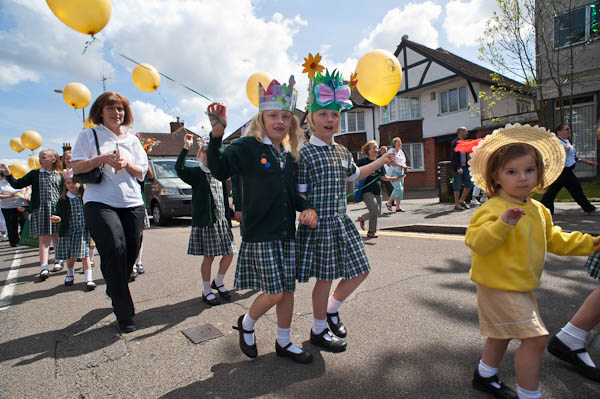
It’s often hard for photographers to choose an image for their Christmas card, and this is my choice for 2009, which some of you on my various card lists will already have seen. It’s a picture I like and it has a bit of a festive spirit about it, and it’s also from suburbia, if a rather more lush and leafy part than where I live. It’s not very Christmassy, but after several years in which I’ve sent out cards with Santa pictures I felt I needed a change.

I did think briefly about writing a post on the cards that other photographers send, but decided I’d rather like all my friends to keep talking to me! Seriously I do like to get cards – and increasingly e-cards to remind me of old friends, and it’s so much better to have something with someone’s work on it than a more standard Christmas card.

Seriously too, for many of us 2009 has not been entirely smooth and prosperous, so let’s all hope for the best for 2010. I shall be busy with various things other than photography over the next few days, so there may be rather less posts on the blog than usual (our first Christmas guests arrive in a few minutes) and it could even be 2010 before I post again.

So, my best wishes for a merry Christmas and a happy New Year, however and wherever you celebrate the season.

More Walks through Paris 1896 & 2006

2006

In 2006 I was in Paris in November for the three days of Paris Photo but spent roughly a week there staying at a very pleasant (and cheap) hotel towards the north of the 9e. It was a healthy 25 minutes walk from Paris Photo and a little closer than that to the Gare du Nord, making it handy for those of us who travel on Eurostar (and fortunately that November we didn’t have snow, so the Eurostar was working well.)


Paris

I wrote a few pieces related to the show for the company I was then working for, About.com, which have long disappeared from the web, but  the first real post I wrote for this blog, on Friday, December 1st, 2006 at 11:51 pm was also on Paris Photo. It was only a short note, but it ended with the sentence:

 But fortunately, there was much more in Paris than Paris Photo.

You can get some idea what that more was (though without the food and wine) from a set of pictures I put on the web shortly after, Paris: November which is now linked in from my new Paris site.  These pictures were taken with a Nikon D200 in Paris and Stains, just to the north of the city.

© 2006 Peter Marshall
Stains

On the revised front page of my Paris Photos site you’ll find a rather untidy list of links to most of the sets of Paris pictures that I have on line. There are a few more sets almost ready to add, but rather more waiting until I have time to do more scans.

© 2006 Peter Marshall

An Early Amateur

Luminous Lint, an extensive collection of material assembled on-line by Alan Griffiths, now based in Canada, has an interesting album of photographs from An Unknown Street Photographer in Paris, 1896, curated and introduced by John Toohey who now owns the ‘small, olive green Kodak album with the handwritten inscription on the inside cover, “Paris, 1896“‘. It was thus taken when the Kodak revolution which brought photography to the middle-class masses had just begun.

Although I’ve not studied the work at the length that Toohey has (nor seen the other roughly 60 pictures not included in the generous selection on the site), I find his introduction to the album far-fetched. Looking through it I don’t think we can read in any great intentions by the photographer, although certainly it is produced with someone who at least occasionally had an idea of what they were trying to do. But I remain convinced that the more interesting accidents of the work are simply accidents, not least because the viewfinder on these cameras would hardly allow the kind of control that he suggests. Whenever you photographed anyone close to the camera you were likely to get pictures without heads or with only a part of them in the picture, and while you were concentrating on taking your picture on the street, people were only too likely to walk partly into them as you pressed the button.

Of course such accidental cuttings of the subject by the edge of the photograph were quickly recognised as a part of the machine’s syntax, and it has been suggested that they had some influence on the painters of the day, such as Degas, although similar effects also were to be found in some of the earlier Japanese artworks that more certainly affected artists of the late nineteenth century.

I grew up when family pictures were still taken on cameras not much different to the 1895 Pocket Kodak, larger but essentially similar models making small ‘snapshots’, though by then it was possible to get larger ‘en-prints’, but most of those in the albums were carefully posed, even if intention and result were even then not always close. In those distant days a 12 exposure film usually did families like mine for a couple of annual holidays (in Worthing or Lowestoft rather than Paris) and we relied postcards for the sights rather than photographing them ourselves.

Amateur photography was of course a craze of the 1890s, and by 1898 there were estimated to be around 1.5 million roll film cameras like the Pocket Kodak in use, with clubs springing up to support them. And there is good evidence that this unknown photographer was a part of one of these informal or formal groups that sprang up, as in some pictures we see seriously suited men with cameras.  Most likely he looked rather like one of these, although Kodak from the start marketed their cameras to women also, and this small and lightweight camera would fit readily as into a handbag as into a large jacket pocket. Of course many soon lost interest in photography and took up that other craze of the age, the bicycle, which also features strongly in these images (and even a tandem!)  Some Camera Clubs even voted to become Cycle Clubs, leading Alfred Stieglitz to comment in 1897 “Photography as a fad is well-nigh on its last legs, thanks principally to the bicycle craze.”

It was also obviously the album of someone with a serious interest in photography, as well as the income to be able to afford to indulge it. There are 92 pictures in the ‘Paris 1896’ album, showing the use of at least 9 rolls of the size 102 film which gave 12 exposures (it was one of the first models to have a red window to read markings on the back of the paper film backing.)  Probably he (or, less likely, she) took more, but not many more, as even these small 1.5×2″ pictures were relatively expensive and few other than outright technical failures were discarded.

The Pocket Kodak at around 51 x 76 x 102mm was reasonably compact cameras even by today’s standards, with a weight of around 170 grams, could as the name suggests be carried in a pocket. But it’s real selling point was ease of use –  as the Kodak slogan said, “You press the button and we do the rest”.

There was nothing to set – focus was fixed, the single shutter speed was “instantaneous” (usually around 1/100s)  and so long as you kept to the instruction only to work on sunny days and held the camera steady it would work.  The hardest thing was to remember to wind on the film after each exposure and so avoid double exposures.

Of course other things could go wrong and very often did.  The viewfinder was a small window on the top of the box which you looked into as you held the camera steady against your stomach, seeing a clear and bright but tiny image – which was usually rather less than would appear in the picture. Accurate framing was impossible (and a concept that hardly existed before the invention of the ‘miniature’ camera using 35mm film.)  If you took pictures from a sitting position, unless you thought instead to rest the camera on your knee, it would probably also appear in your picture.

There is no doubt that this is an interesting album, but I think it is best to see it for what it is, rather than to drag in the names of Walker Evans, J H Lartigue or Andre Kertesz. And if you are going to do so, why stop there; surely the wishful mind could glimpse the harbinger of Cartier-Bresson and Friedlander here too?

A Walk through Paris 1

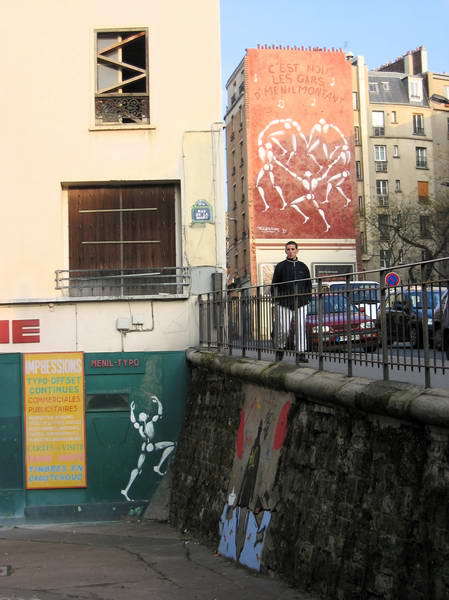
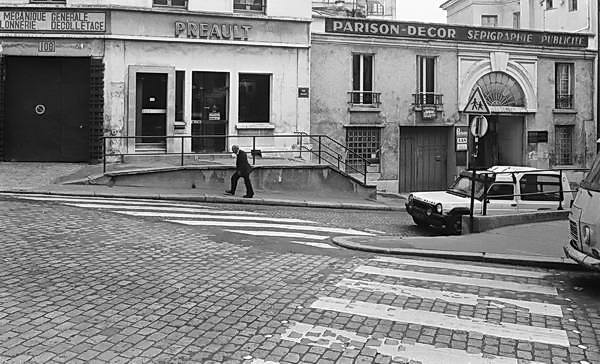
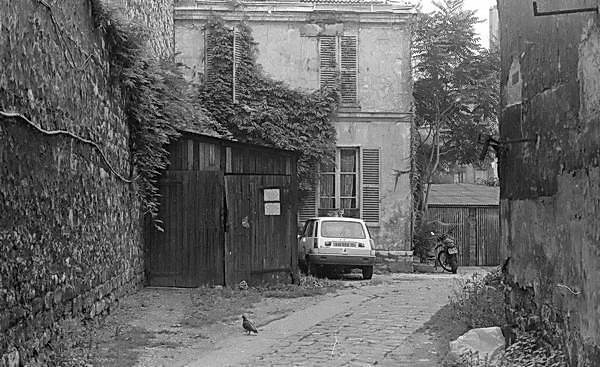
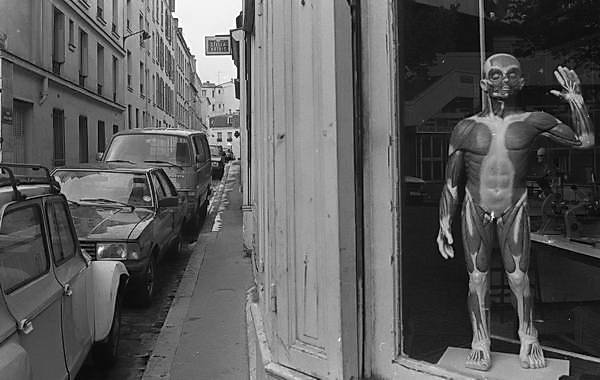
Let me invite you to come with me on a walk through Paris, or rather several walks. In Feburary 2004 I spent around a week there with my wife, staying in a hotel just off the Place de la Republique. We’d chosen the hotel largely because it was cheap and we didn’t expect to spend much time in it other than when we were in bed. There are plenty of things to do in Paris, even in winter.

Paris 2004 © Peter Marshall

I’d chosen the area to be reasonably close to some of my favourite areas of Paris – the Canal St Martin, Belleville, Menilmontant, the Marais… – and also not far from the centre. Although there were museums and exhibitions I wanted to visit, its good to be handy to stroll around when you’ve an hour or two to spare.

I hadn’t particularly gone to take photographs, no particular project in mind, and I didn’t take my camera bag. No real camera, no SLR or DSLR, just a pocketable digital compact. I’d just bought a Canon Digital Ixus 400 , a 4.0 MP
2272×1704 pixel camera with a 36–108mm f/2.8–4.9 lens that would fit in a jacket pocket and weighing under 200 grams –  then a relatively new model, now obsolete technology (mine gave up the ghost a few years ago and was replaced by a slightly smaller Fuji.)

I’d not had it long enough to find out some of its problems before I went to Paris. It wasn’t a bad camera, but autofocus was slow, so slow that I occasionally failed to keep it at my eye long enough for it to take a picture, and ended up with exposures of grass or pavement as I put it away in my pocket. And I’d unfortunately failed to realise that by default it applied an excessive amount of in-camera sharpening to its jpeg files – after I got home and tried making some A3 prints this failing was unfortunately obvious.  For small prints – perhaps up to A4 – it probably improved the appearance. After that I made sure that I always used the camera with the sharpening reduced to the minimum possible – still rather more than I would like.

Paris 2004 © Peter Marshall
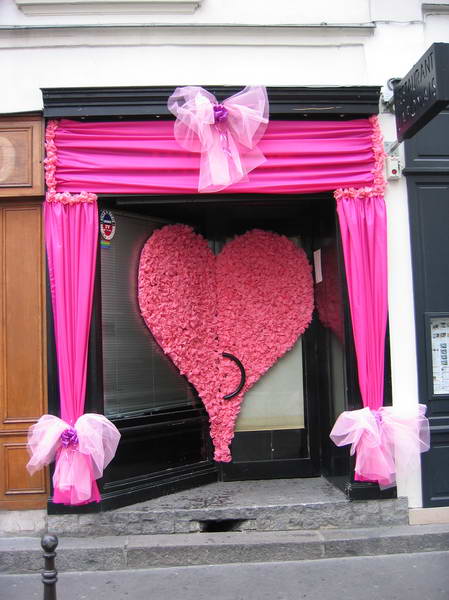
We were there for St Valentine’s Day

2272×1704 is an aspect ratio of 1.333 to 1, rather than the 1.5:1 of 35mm and most DSLRs, and I didn’t particularly warm to the difference. I’ve never much liked using 6×6, 6×7 or 4×5 formats either.  Wider formats such as 16:9 and true panoramics are much more fun. I’d also prefer a camera with a wider angle lens – my favourite focal lengths are in the 24-28mm range. On digital I don’t like using JPEG – so much more is possible with RAW formats, but the Ixus 400 could only shoot in jpeg. The Canon lens was pretty sharp, but it gave some noticeable distortion. So all in all the camera was very much a compromise, and I wasn’t taking my photography on this visit too seriously.

In fact the results were very much better than I expected, though I did make quite a few mistakes and deleted many unsharp and otherwise failed images while I was taking them. Even later, after several years of use I still didn’t find the camera and the menus easy to use, and in Paris I often got the settings completely wrong. My most embarassing moment came in one of the museums, where a large official notice prohibited the use of flash while photographing a priceless medieval tapestry- and somehow I didn’t get the settings right!

Paris 2004 © Peter Marshall
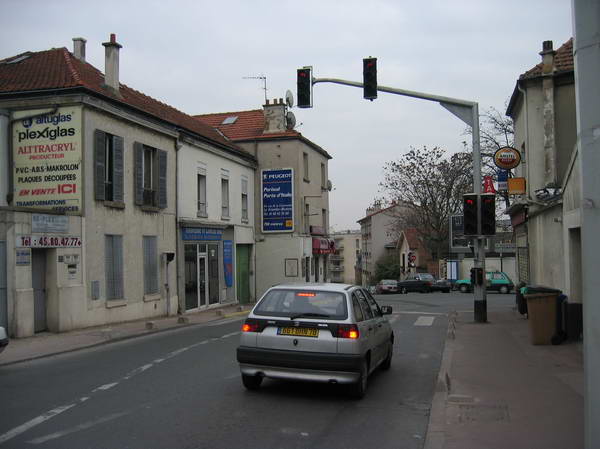
A photographically important suburb

Of course after the Christmas pudding it would be best to go out for a real walk to burn some of it off. But if it’s snowing hard or cold or windy, or you are just feeling lazy you might try and take a few virtual walks through Paris on this site. And for those of you who know Paris, you can exercise a few brain cells by trying to identify the locations of some of the pictures, as I haven’t yet captioned any of them. It might help a little to know they are on the site in the order in which I took them.

More from Paris

Paris 1984 © Peter Marshall

I’ve photographed this little crossing in the 10e – just along from the famous Hotel du Nord – many times and this is one of my favourite images. Last month when I stayed at home rather than going to Paris I got out some of those old negatives and scanned several hundred of them using the Epson V750.

The scans, despite what’s often said about flatbed scanners and 35mm film aren’t bad at all, and I could certainly make decent 10×8 prints from them, probably larger.  As a compromise I chose to scan at 2400 dpi. The scanner has a maximum optical 4800dpi, but at that resolution scan times get a little too long for volume production – roughly 4 times as long as with 2400. Of course I could have gone a little faster at a lower resolution, but given the time taken in removing and replacing the film from the filing sheets, putting them in the film holder, cleaning the negs and various glass surfaces  etc, the process as a whole wouldn’t be a lot faster.

Just for rough proofing of course you can scan  negatives still in their filing sheets – so long as you used the fairly clear transparent type, and its something I’ve done for making digital contact sheets. A normal full filing sheet doesn’t quite fit on the scanner bed, so you need to make two scans for each sheet – which I then usually join in Photoshop. Working at 600 dpi gives reasonably sized files where you can view individual images at roughly the size of an 8×10 print on screen, but aren’t too great for printing, though you can make postcard sized images.

Paris 1984 © Peter Marshall
One of several ‘corners’ that Atget probably photographed

After a few experiments with the Epson software, I scanned the 35mm negs in 16 bit grayscale mode and saved them as TIF files. These are around 13Mb and roughly 3300×2050 pixels. I then made any basic corrections needed to the levels and/or curves as well as using the Polaroid dust removal filter and in a few cases a little bit of work with the clone tool, and saving them as 8bit gray scale jpeg files for use. Any I want to do much more work with I can start again with the TIF, archived on external storage. Although the files need some cleaning up if looked at 1:1, most are fine for use if reduced to web size, and I’ve now started to put some of them on line.

Paris 1984 © Peter Marshall
I think I took this a little straighter – and certainly printed it so

The main problem I’ve had with the scans is cropping. Although the Epson film holder can show more or less the whole negative, the automatic location of the images by Epson Scan seems to prefer a little cropping, especially with images where the edges of the negatives aren’t quite parallel to the edge of the film, which seems to be the case with quite a few of my negatives (I think it was a speciality of Leicas that it was easy to load the film slightly out, though working with M series cameras I never managed it quite as obvious as M Henri Cartier-Bresson occasionally did with the older models.

Paris 1984 © Peter Marshall

If I want to make new prints (and I hope some people may want to buy them) my first step would be to find the negatives and scan them at higher resolution in my dedicated film scanner, A Minolta Multiscan Pro. Especially when used with two devices made available by enthusiasts, this model produces some of the best possible film scans, as good and sometimes possibly better than drum scan.  Unfortunately the scanner is no longer available, but the idea of the Scanhancer, produced by Erik de Goederen from Holland, has been incorporated into some later scanner designs – though without acknowledgement. The other thing that improves the quality of the scans are some custom-designed and specially machined masks from another member of the user group, the MultiPro Xpander from Drazen Navratil in Zagreb. These hold the negs as flat as possible and the oversized 35mm mask allows the entire negative to be scanned. Altogether the Multipro group is a good example of how the Internet enables people from around the world to gain from each other’s ideas and experience.

Using the Epson V70 you can of course locate the negative edges more accurately manually, but it would slow down the whole process to a snail’s pace and isn’t really feasible when scanning several hundreds of negatives. I did recently get a mailing from Silverfast who claim that their latest software does the job better, but an upgrade to that supplied with the scanner was at a special offer price of 299 Euros, which I found not in the least attractive.  Of course I did install Silverfast when I bought the scanner, but soon decided I preferred to use the Epson software. Though some people do swear by Silverfast, I found myself more swearing at it.

So far I’ve put the first set of 28 black and white pictures from my visit to Paris in 1984 onto the web, where you can already see 45 of my colour images from the same year:

Paris 1984 © Peter Marshall

as well as more black and white work from 1973.  More from Paris later.

While thinking about Paris, I can’t help but think of some of my friends there who I missed seeing in November, among them Jim and Millie Casper.  The LensCulture web site has been running since 2004 , establishing an enviable reputation in the world of photography, and attracting around three or four times as many visitors a day as this site.

I’ve often linked to audio interviews and other features on Lens Culture from this site, and I’m happy to give another link to the site, this time to a request for donations to keep Lens Culture going.  Like these pages, it carries no advertising – as the site says:

Since our inception in 2004, Lens Culture has been completely self-funded, without revenue from advertising or any other outside source. We prefer to keep Lens Culture “content-rich and clutter-free”, and your contribution today will help it stay that way.

Advice to Met Officers

On Monday, a statement by Assistant Commissioner John Yates was issued by the Metropolitan Police Press Bureau which details the advice sent by him to all MPS officers and staff. It clearly repeats the tone of the advice contained in the Home Office circular in September, and I’ll repeat it in full at the end of this piece.

Photographers may even feel it is worth carrying a copy with them, but I think should you do so that you should make use of it tactfully if you are approached by the police or even police community support officers while taking pictures.  If you adopt a confrontational or evasive attitude when you are questioned it will only serve to escalate the situation – and can be a trigger for some very inappropriate behaviour by PCSOs and police, as I think two reports from the Guardian clearly demonstrate.

One was a deliberate attempt by Guardian reporter Paul Lewis to get himself harassed while taking what were misleadingly described as “Casual shots of London’s Gherkin“and the second was the considerably more serious and inexcusable harassment of Italian art student Simona Bonomo at Paddington, described in a story and video “Italian student tells of arrest while filming for fun” a month ago which they published last Tuesday.

Had Lewis, when approached by security staff told them – or the off-duty police officer who came along – he was a Guardian journalist working on a story about the harassment of photographers while photographing buildings and shown them his press card there would of course have been no story. But it seems pretty clear to me from his own video that he was behaving at best rather curiously and in a way that was clearly intended to arouse suspicion.  If you poke the animal with a stick you should really be hardly surprised that it bites.

Of course the response of the police was stupid and in some respects over the top, but hardly unexpected. The least defensible part of their response seems to have been the stop and search carried out on the photographer who was recording the event from a distance with a telephoto lens, for which there appears to be no remotely believable justification.

I have considerably more sympathy for Simona Bonomo, particularly as she was both assaulted with obviously unreasonable and entirely unnecessary force by police officers and was then stitched up with a fixed penalty fine of £80 for a public order offence of which she is obviously innocent.

But again I think it was an incident that need not have happened, and that the Guardian’s report of it is again in some respects misleading though they deserve credit for bringing it to public attention.  Their headline that says she was arrested “while filming for fun” is incorrect. Although her first rather offhand response to the PCSO was to say that she was filming “just for fun” it is clear that this was not true, both from the actual video footage which starts with her filming security cameras (which probably alerted the PCSOs) on the buildings and what she says later on in her exchange with the PCSO. She is an art student at a London university and was working on a project on surveillance (and rather painfully this incident produced some only too real material for it,)  Had she made that clear when she was first approached the situation would almost certainly not have escalated as it did – the PCSO himself says so on the video.

Of course the police – and the PCSO – got it seriously wrong. But while photographers should stand up for their rights,  we should also generally be open and clear about what we are doing. If anyone asks me why I’m taking pictures – by a member of the public or the police force – I try to explain briefly and politely (usually but not always entirely truthfully), and when appropriate show my press card or offer my business card.

Of course sometimes you need to explain to people about your rights – and for some years my camera bag contained a personal letter from the Met which clearly explained that like all other photographers I had a right to take photographs on the public highway which sometimes came in  handy (and arose from a rather unpleasant run-in I had with two officers in the ’90s.)  But it’s generally more effective to do so in a polite and reasonable rather than a confrontational way. Experience tells me that arguing the law with the police at street level is unlikely to be productive – if they don’t know it they certainly won’t admit it.

Back when I taught photography – mainly to rather younger students than Simona Bonomo –  we advised students how to work in public, and in particular that telling people who asked that you were “working on a project for your photography course” was often a good way to get their cooperation.  I know a number of working photographers who still sometimes use this excuse – just as the great ‘Eisie’ – Alfred Eisenstaedt – would sometimes assure the people he was photographing that he was “just an amateur.”

Some of my students did occasionally decide to work on projects that might be contentious in some way and it was then my job to discuss the possible risks with them,  and at times suggest other ways of approaching the subject. For a project like this I would have provided a student with an official letter signed by the head of department “to whom it may concern” giving brief details of the student and the project with a request for their cooperation and of course a phone number they could ring if they had any concerns, and have asked the student to ensure they had this with them when working outside college on the project.
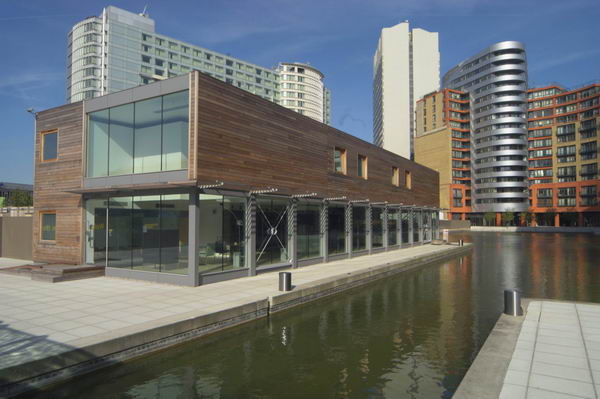
© 2004 Peter Marshall
Paddington Basin, 2004. Peter Marshall

I’ve photographed around new developments in Paddington and the surrounding area on several occasions over the years without permissions or problems, though I was approached by a security man on one occasion. I told him what I found interesting in the particular view I was taking and he went away thinking I was mad but harmless.  I suspect that much of the land here is actually private – like so many new developments, but I wasn’t asked to stop taking pictures.
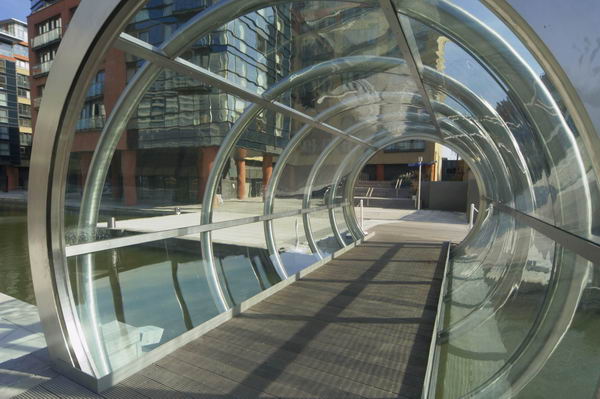
© 2004 Peter Marshall

Anyway, here’s the statement from the Met in full:

Statement by Assistant Commissioner John Yates

John Yates, Assistant Commissioner Specialist Operations, has today reminded all MPS officers and staff that people taking photographs in public should not be stopped and searched unless there is a valid reason.

The message, which has been circulated to all Borough Commanders and published on the MPS intranet, reinforces guidance previously issued around powers relating to stop and search under the Terrorism Act 2000.

Guidance on the issue will continue to be included in briefings to all operational officers and staff.

Mr Yates said: “People have complained that they are being stopped when taking photographs in public places. These stops are being recorded under Stop and Account and under Section 44 of TACT. The complaints have included allegations that people have been told that they cannot photograph certain public buildings, that they cannot photograph police officers or PCSOs and that taking photographs is, in itself, suspicious.

Whilst we must remain vigilant at all times in dealing with suspicious behaviour, staff must also be clear that:

  • there is no restriction on people taking photographs in public places or of any building other than in very exceptional circumstances
  •  there is no prohibition on photographing front-line uniform staff
  • the act of taking a photograph in itself is not usually sufficient to carry out a stop.

Unless there is a very good reason, people taking photographs should not be stopped.

An enormous amount of concern has been generated about these matters. You will find below what I hope is clear and unequivocal guidance on what you can and cannot do in respect of these sections. This complements and reinforces previous guidance that has been issued. You are reminded that in any instance where you do have reasonable suspicion then you should use your powers under Section 43 TACT 2000 and account for it in the normal way.

These are important yet intrusive powers. They form a vital part of our overall tactics in deterring and detecting terrorist attacks. We must use these powers wisely. Public confidence in our ability to do so rightly depends upon your common sense. We risk losing public support when they are used in circumstances that most reasonable people would consider inappropriate.”

++++

The guidance:

Section 43 Terrorism Act 2000

Section 43 is a stop and search power which can be used if a police officer has reasonable suspicion that a person may be a terrorist.

Any police officer can:

– Stop and search a person who they reasonably suspect to be a terrorist to discover whether they have in their possession anything which may constitute evidence that they are a terrorist.

– View digital images contained in mobile telephones or cameras carried by the person searched to discover whether the images constitute evidence they are involved in terrorism.

– Seize and retain any article found during the search which the officer reasonably suspects may constitute evidence that the person is a terrorist, including any mobile telephone or camera containing such evidence.

The power, in itself, does not permit a vehicle to be stopped and searched.

Section 44 Terrorism Act 2000

Section 44 is a stop and search power which can be used by virtue of a person being in a designated area.

Where an authority is in place, police officers in uniform, or PCSOs IF ACCOMPANIED by a police officer can:

– Stop and search any person; reasonable grounds to suspect an individual is a terrorist are not required. (PCSOs cannot search the person themselves, only their property.)

– View digital images contained in mobile telephones or cameras carried by a person searched, provided that the viewing is to determine whether the images contained in the camera or mobile telephone are connected with terrorism.

– Seize and retain any article found during the search which the officer reasonably suspects is intended to be used in connection with terrorism.

General points

Officers do not have the power to delete digital images, destroy film or to prevent photography in a public place under either power. Equally, officers are also reminded that under these powers they must not access text messages, voicemails or emails.

Where it is clear that the person being searched under Sections 43 or 44 is a journalist, officers should exercise caution before viewing images as images acquired or created for the purposes of journalism may constitute journalistic material and should not be viewed without a Court Order.

If an officer’s rationale for effecting a stop is that the person is taking photographs as a means of hostile reconnaissance, then it should be borne in mind that this should be under the Section 43 power. Officers should not default to the Section 44 power in such instances simply because the person is within one of the designated areas

So the Met at least have clear advice on the law – though it remains to be seen how well this will permeate down to street level. I hope someone has given a copy to the guys in the City of London force too, and elsewhere around the country.