William Klein

William Klein is a photographer I’ve written about on several occasions, though not recently. He found his home in Paris, and his work does appear to have had a particular resonance with the French rather more than on this side of the channel. I’ve made brief references to him in some of my pieces on Paris Photo in past years, and in particular the comparison between his work and that of Japanese photographers particularly Daido Moriyama.

Here are a couple of paragraphs from a longish essay about him I polished for publication in 2000:

One man, Henri Cartier-Bresson, with his idea of the ‘decisive moment’, catching that fleeting instant when everything in the frame was dynamically balanced, dominated photography, particularly in Europe, in the early 1950s. Although he appreciated this work, Klein wanted to photograph in his own way; in the spirit of the defiant iconoclasm he had acquired from Leger he determined to turn Cartier-Bresson’s approach on its head. Rules were there only to be broken.

Cartier-Bresson had attempted to melt into the background, to become an ‘invisible man’ or ‘fly on the wall’, unnoticed by his subjects. Klein often talked to the people as he was photographing them, sometimes almost literally pushing the camera in their face to generate a reaction. Cartier-Bresson never cropped, so Klein often or always did. Klein abandoned the idea of careful and considered composition in favour of chance and the grabbed shot, often blurred or out of focus. His printing was harsh and gutsy, at times more graphic than photographic in effect, often extremely grainy as his negatives were often severely over-exposed (few photographers used a meter in those days, relying on experience – and Klein was short on this.) The pictures that resulted were raw, edgy, vibrant and nothing like most people at the time expected of a photograph.

Of course it isn’t quite true that HC-B never cropped – possibly his best-known image is of a man trying to jump a puddle is quite severely cropped. But  it was a part of the legend – just like the ‘fact’ he always used a standard lens.

On The Online Photographer you can read Klein and the Anti-Technicians, the most recent of the two features a year that John Kennerdell contributes to the site, which places Klein in the history of photography, particularly for his influence on the ‘Provoke‘ group of Japanese photographers. It’s well worth reading.

On the Reporters sans frontières web site, William Klein pour la liberté de la presse, one of a series by a number of photographers appears still to be available for €5.79 EUR and the ‘Books on Books’ Errata edition of his William Klein: Life is Good & Good for You in New York can still be found for a reasonable price, although the original sells for over $500.

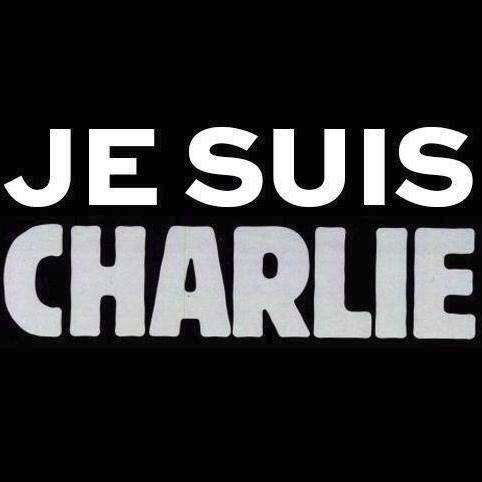
#JeSuisCharlie

charlie-1
Shared from Facebook – image by Lucille Clerc

By the time I heard the details of the protest in Trafalgar Square last night over the shooting at Charlie Hebdo it was a little late for me to drop what I was doing and get there, though this morning I regret my absence. I should have been there, at least with a pen if not with a camera.

It isn’t a matter of religion, but one of humanity. Something that we can all abhor, whether we read the Quran, the Bible or other religious texts, or are agnostics or atheists.  You, like me will probably have read many of the comments about the attack from people around the world, so I’ll only quote two of them. On the radio this morning I heard a leading Muslim scholar Tariq Ramadan being interviewed, and his comment (also on Democracy Now!) was “This is just a pure betrayal of our religion & our principles”  and my own union statement ends “Supporters of free speech and civil liberties must stand together with governments to condemn this act and defend the right of all journalists to do their job without fear of threats, intimidation and brutal murder.

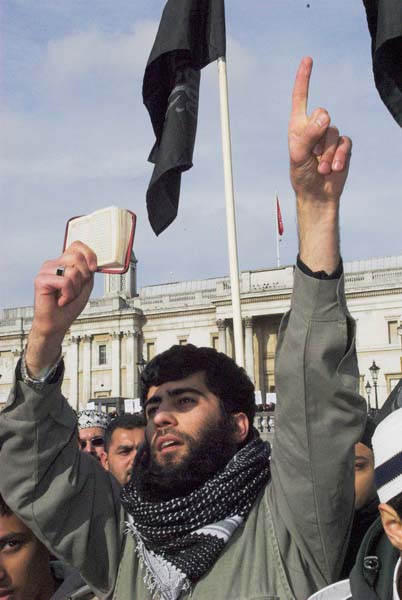
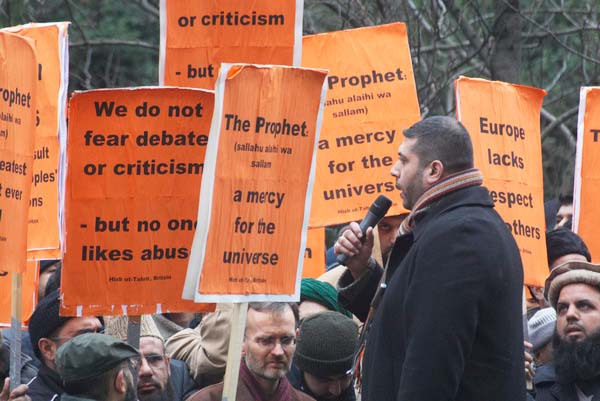
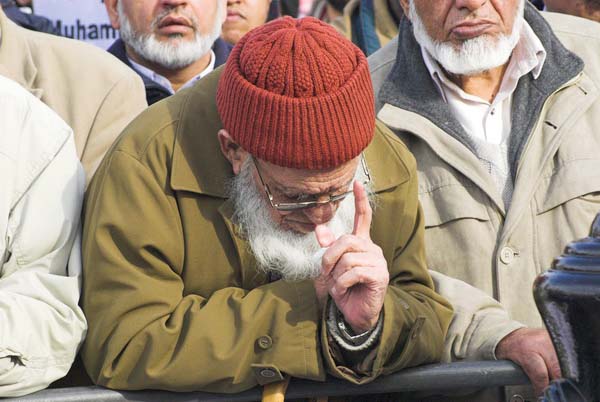
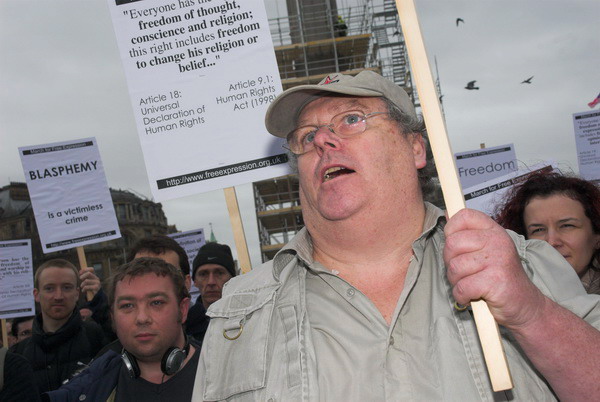
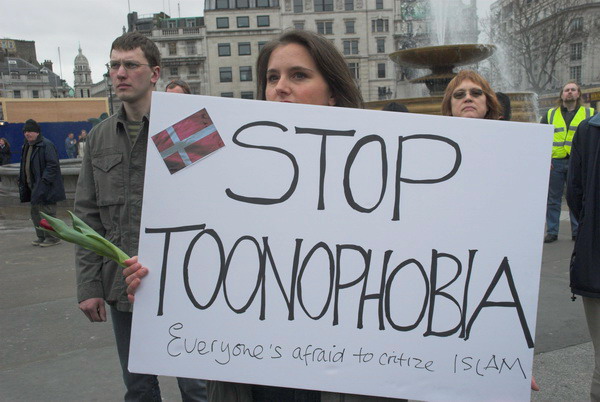
The news of the killing took my mind back to 2006 and the protests then against the publication of cartoons by a Danish magazine.

Of course I respect the right to peaceful demonstration, but the call for ‘global civility’ steps over my right to free speech once there is any suggestion it should be imposed.

The following month I was back in Trafalgar Square, photographing a protest to ‘protect free expression’ at which some of those present held up placards containing some of the Danish cartoons – which were republished in France by Charlie Hebdo in 2005.

Charlie Hebdo was certainly not afraid to criticize Islam. Or Christianity or any other religion or politicians of all colours or anything else, but I’m sorry to have to admit that I censored some of the images that I took on that day to avoid offending people, blurring the cartoons. I should not have done so and will not do so again.

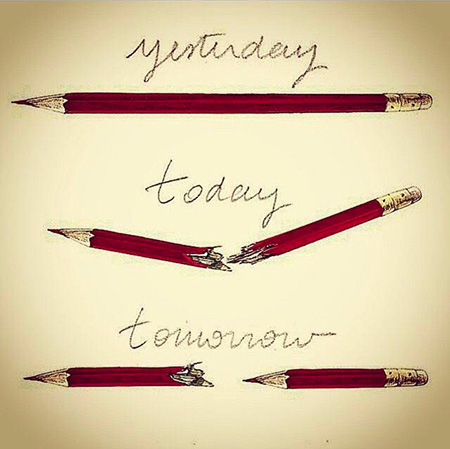
I hope that all journalists and publications around the world will stand up and be counted on the side of freedom of speech (though I know there are some countries where this is not possible.) Some will be holding a short silence at 11.00 am today (when I’ll join them and post this), and many newspapers have published cartoons about the shooting – including some of those from Charlie Hebdo that offended the killers. Perhaps we should name January 7 ‘Charlie Hebdo Day’ and make it an annual celebration, publishing their work again.

I hope too that Charlie Hebdo will continue, and continue to offend people of all faiths and none. And I certainly have no time at all for those who try to blame the victims rather than the perpetrators.

charlie-2
from Charlie Hebdo

Continue reading #JeSuisCharlie

Web views

I’m never entirely sure what web statistics mean, but the web host that I use provides them, so here are some of my figures for 2014.

>Re:PHOTO

The total visits to this blog in 2014: 1,603,778

Total page impressions in 2014:  3,418,124

Of course some of these were visits by robots rather than people, and some may have taken a look at the site and immediately gone away (the average time spent here per visit was almost exactly one minute)  but I’m still a little surprised by the figure, which works out at almost 4,400 per day, while the number of page impressions is over 9000 a day. Well, thanks guys.

My London Diary etc


From My London Diary, Nov 2014

It’s hard to give an exact figure for My London Diary, as it can be accessed using several different domain addresses, including mylondondiary.co.uk and mylondondiary.com along with others, some of which are shared with other of my content. My web space also contains some other web sites with my work, as well as a couple of sites hosted for other groups with very low usage – perhaps hundreds or at most a few thousand visits per year. The only significant site which is not entirely my own pictures is the Urban Landscapes site, listed below.

Using the overall figures for the web space less those for >Re:PHOTO and Urban Landscapes gives the following traffic for my own web sites

Total visits in 2014:  1,208,489

Total page impressions in 2014: 2,365,442

Which works out to around 3,300 visitors a day and around 6,480 pages viewed per day. Again figures I find surprising.

Urban Landscapes

A site with work by around a dozen photographers which I curate together with Mike Seaborne.


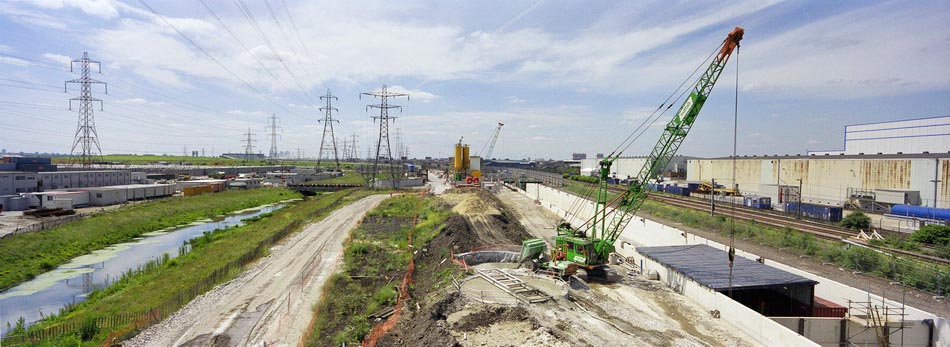
Dagenham #1, 2004 Peter Marshall
Tanya Ahmed  John Davies  Philip A Dente  Lorena Endara  Pablo Fernando  Bee Flowers  Nicola Hulett  Peter Marshall  
Paul Anthony Melhado
  Neal Oshima  Paul Raphaelson  Rabi Rashmi Roy  Herman Schartman  Mike Seaborne  Luca Tommasi

2014 :        71,310 visits
116,564 page impressions

Which works out at around 195 visits a day with 319 page views, a respectable but not high figure.


My favourite image of Brian Haw, with Babs Tucker at his right.  From Taken in London

It’s the figures for some of the less popular sites that I host that make these figures believable. Taken in London is a small site I set up for an exhibition with Paul Baldesare in 2009, and which I’ve left on line with no further publicity since then. I would not expect it to get a great deal of web traffic, and the figures of 10624 visits and 18898 page impressions for the year (29 and 52 per day) are around what I would expect.


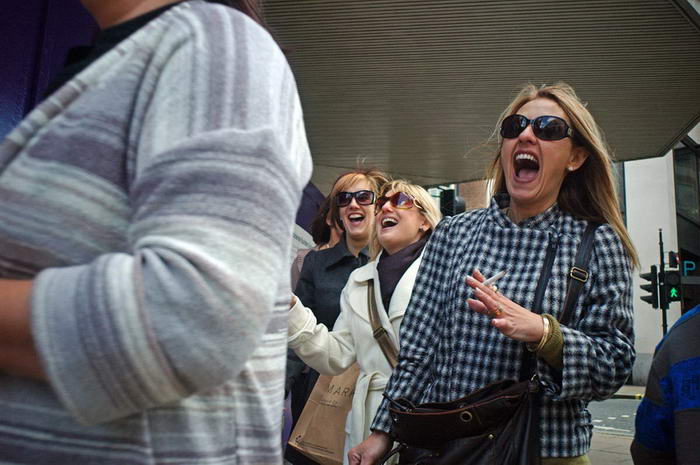
Paul Baldesare Laughing women Oxford St

Taken in London was a nice show with some fine street photography by Paul Baldesare, and some of my protest pictures that still don’t look bad, and the web site is well worth a look. Perhaps this mention will boost its figures for 2015!
Continue reading Web views

Looking Back on 2014 – Part 5

The final instalment of some of personal favourites from the pictures I took in 2014, these are from mid-October to December. As usual the links below the picture will take you to the story on My London Diary


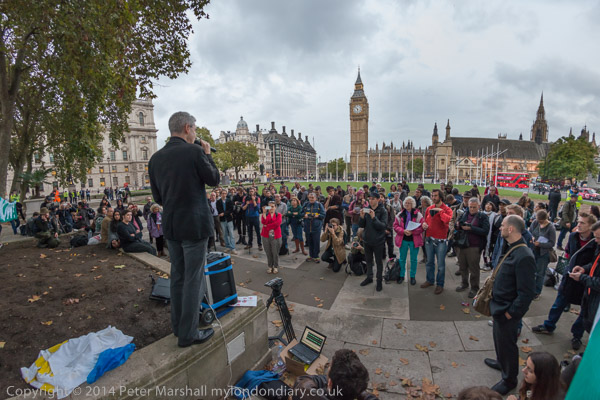
Democracy Camp starts with rally – Parliament Square, London. Fri 17 Oct 2014


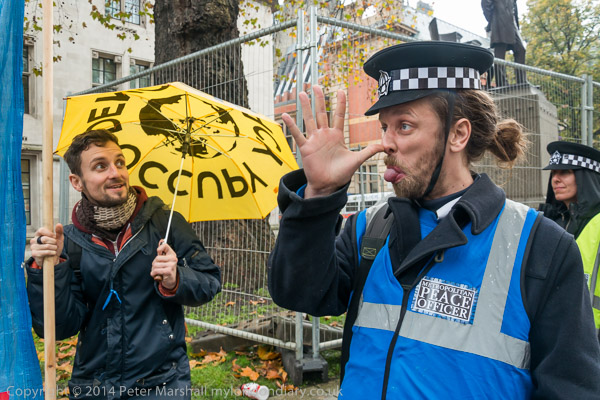
Democracy Camp takes the Square – Parliament Square, London. Sat 18 Oct 2014


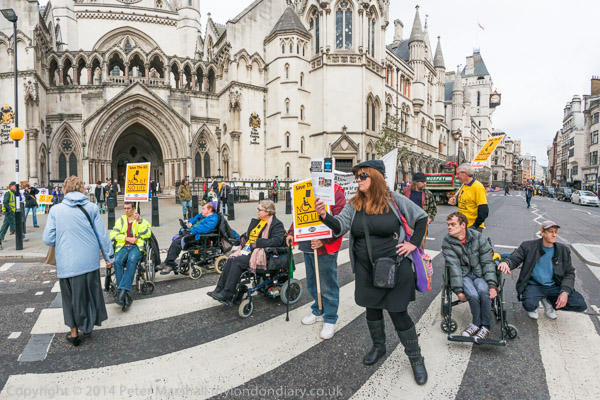
DPAC High Court Vigil for ILF – Royal Courts of Justice, London. Wed 22 Oct 2014


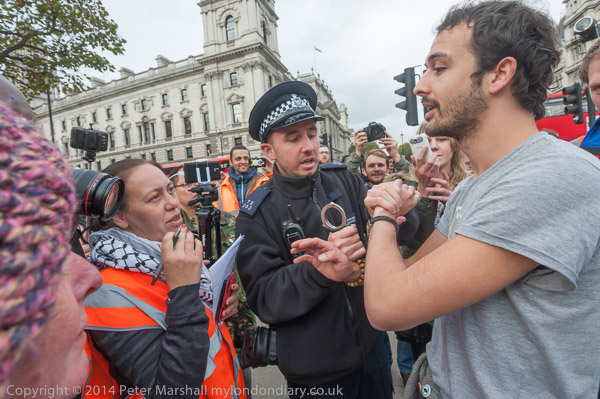
Democracy Camp – A Poet Arrested – Parliament Square, London. Wed 22 Oct 2014


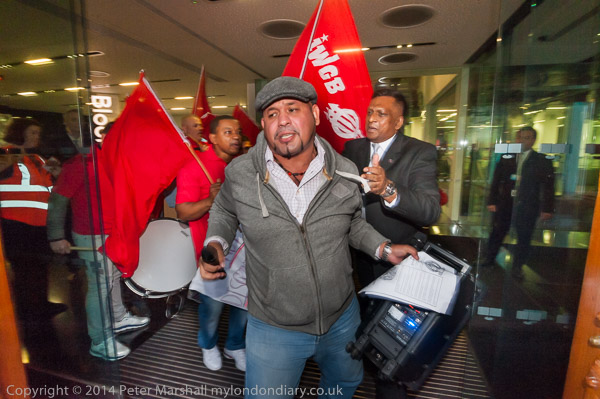
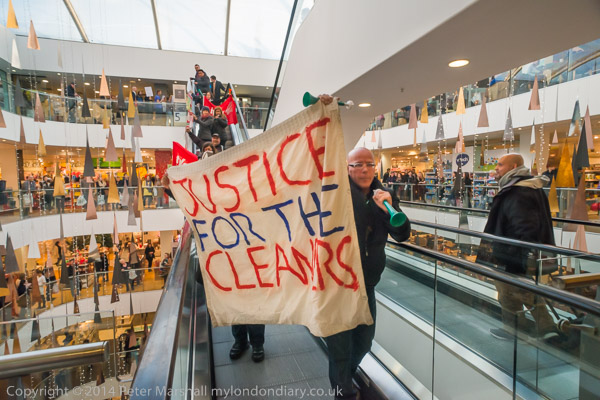
Cleaners protest at Bloomberg – Finsbury Square, London. Fri 24 Oct 2014


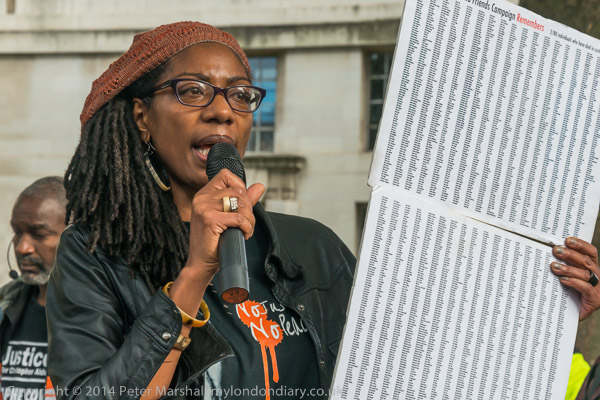
United Friends & Families March – Trafalgar Square to Downing St, London. Sat 25 Oct 2014


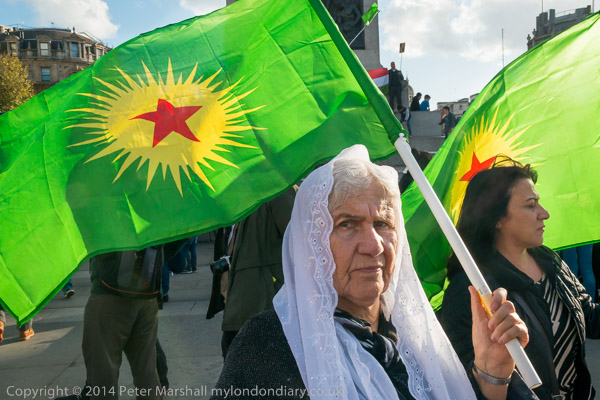
Global Solidarity With Kobane – Trafalgar Square, London. Sat 1 Nov 2014


Poor Doors Guy Fawkes burn Boris – One Commercial St, Aldgate, London. Wed 5 Nov 2014


Orgreave Truth and Justice Campaign at the IPCC – Holborn, London. Fri 14 Nov 2014


No fees, No cuts, No debt! – Malet St to Westminster, London. Wed 19 Nov 2014


‘Bye Bye Redrow’ Poor Doors Street Party – One Commercial St, Aldgate, London. Wed 19 Nov 2014


Occupy Democracy at Supreme Court – Parliament Square, London. Sat 22 Nov 2014


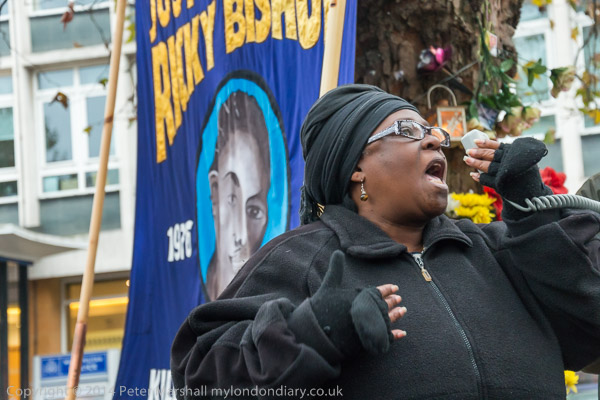
Still No Justice for Ricky Bishop – Brixton, London. Sat 22 Nov 2014


Candlelit Vigil for Michael Brown – US Embassy, Grosvenor Sq, London. Wed 26 Nov 2014


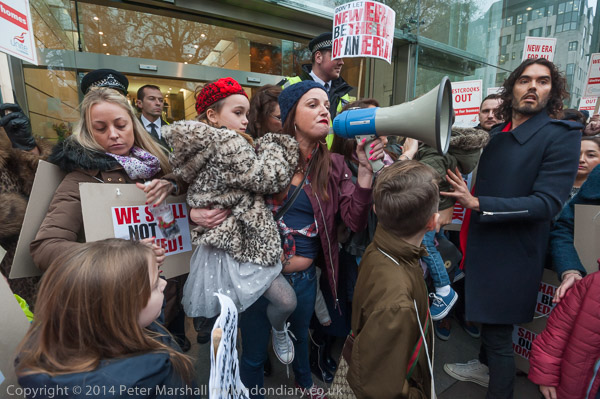
Russell Brand marches with New Era – Mon Dec 1 2014


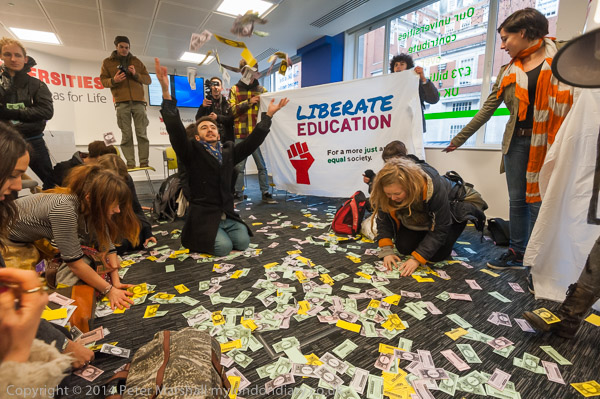
Students Occupy Universities UK – Wed  3 Dec 2014


Cleaners Xmas Protest in John Lewis – Sat 13 Dec 2014
It was a busy year for me, too many protests to keep up with. I did a few other things as well, but not as much else as I would have liked.

Looking Back on 2014 – Part 4

Continuing some of personal favourites from the pictures I took in 2014, these are from August to mid-October. As usual the links below the picture will take you to the story on My London Diary.


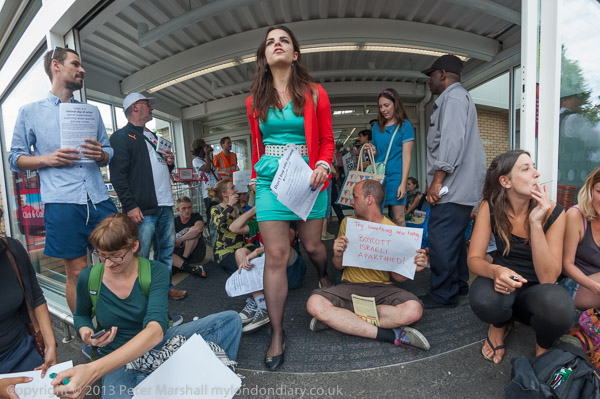
Sainsbury’s protest at illegal Israeli Goods – Brixton, London. Sat 2 Aug 2014


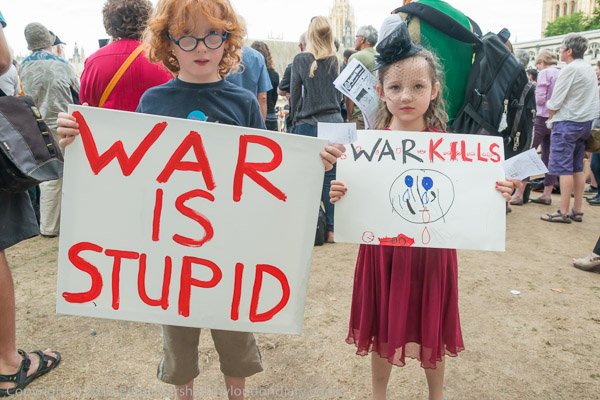
No Glory No More War – Parliament Square, London. Mon 4 Aug 2014


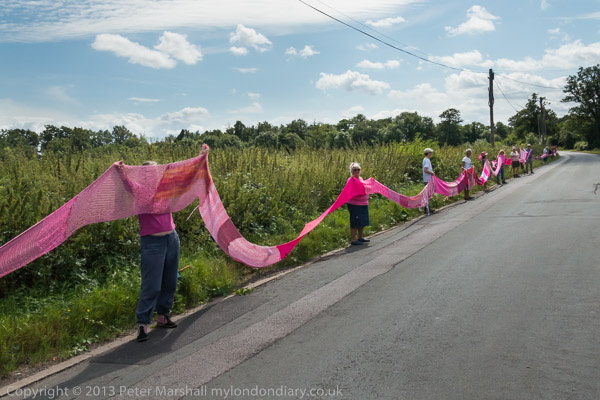
Wool Against Weapons – Burghfield to Aldermaston, Berkshire. Sat 9 Aug 2014


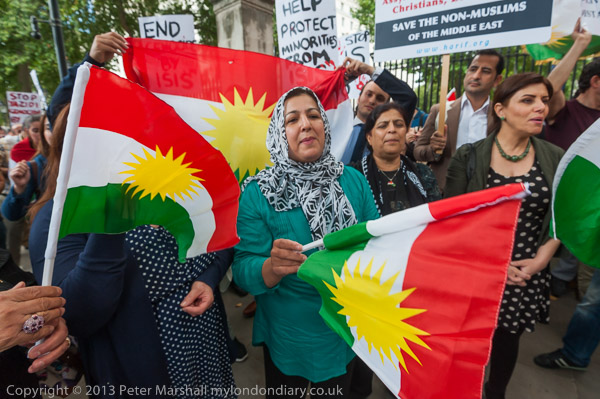
Kurds Protest against ISIS – Downing St, London. Wed 13 Aug 2014


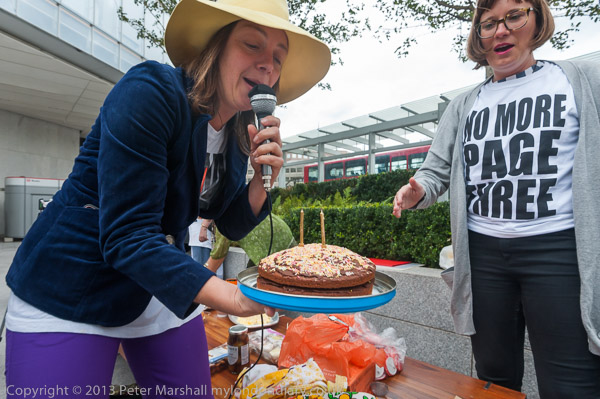
No More Page Three – London Bridge, London. Sun 24 Aug 2014


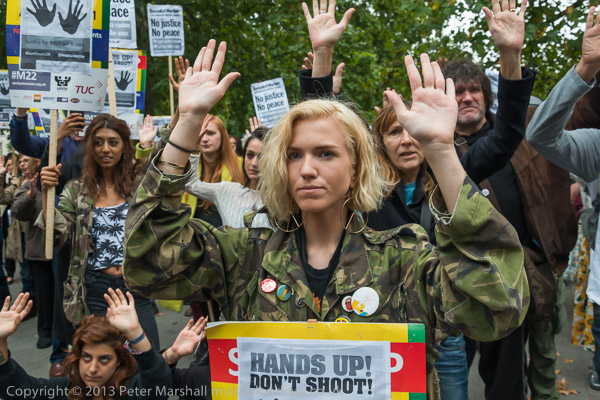
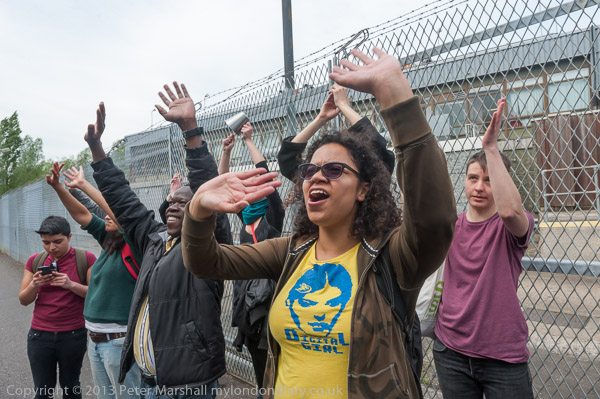
Hands Up! Against racist Police Shootings – US Embassy, London. Wed 27 Aug 2014


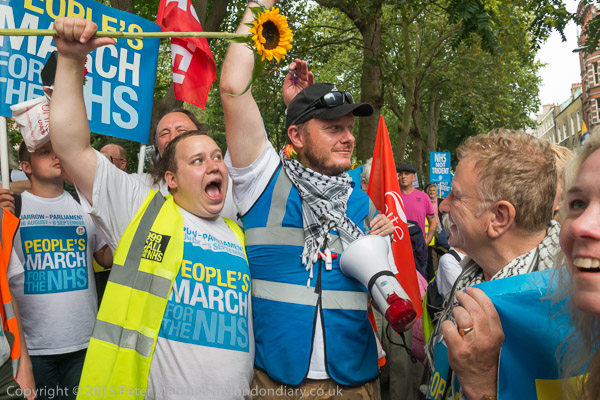
People’s March from Jarrow for NHS – Red Lion Square – Trafalgar Square, London.Sat 6 Sep 2014


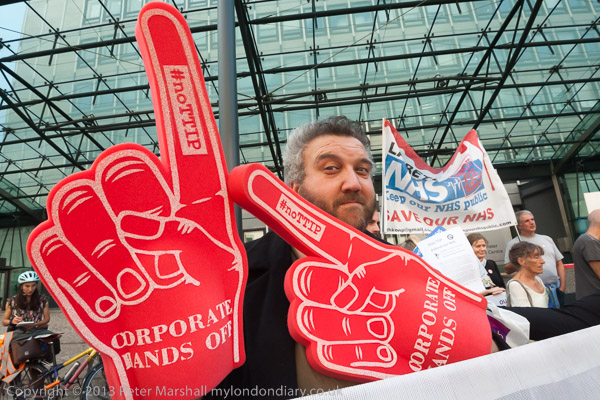
CETA (TTIP) Trade Deal – Dept Business & Skills, London. Fri 12 Sep 2014


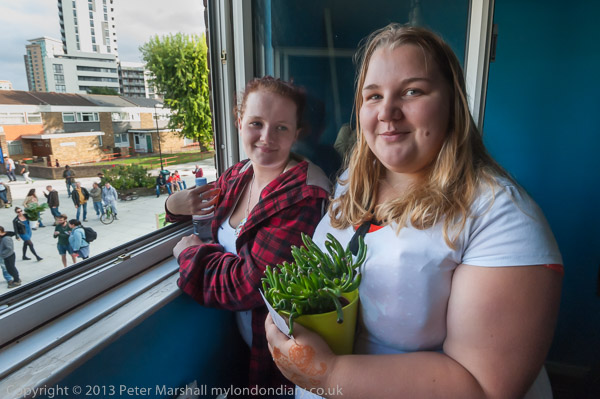
Focus E15 Open House Day – Carpenters Estate, Stratford, London. Sun 21 Sep 2014


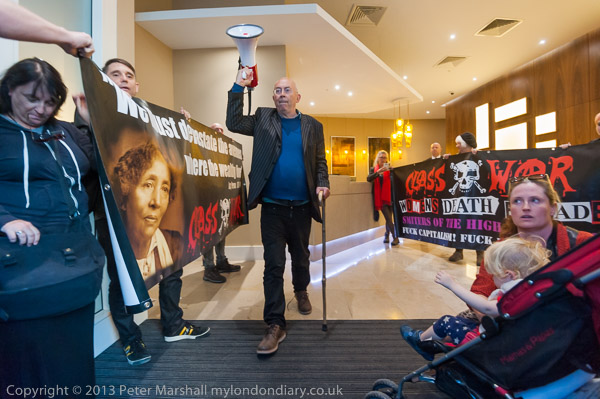
Class War Occupy Rich Door – One Commercial St,Aldgate London. Wed 24 Sep 2014


Class War Poor Doors Week 10 – One Commercial St, Aldgate, London. Wed 1 Oct 2014


Solidarity with the Umbrella Revolution – Chinese Embassy, London. Fri 10 Oct 2014


Global Frackdown at HSBC – London . Sat 11 Oct 2014


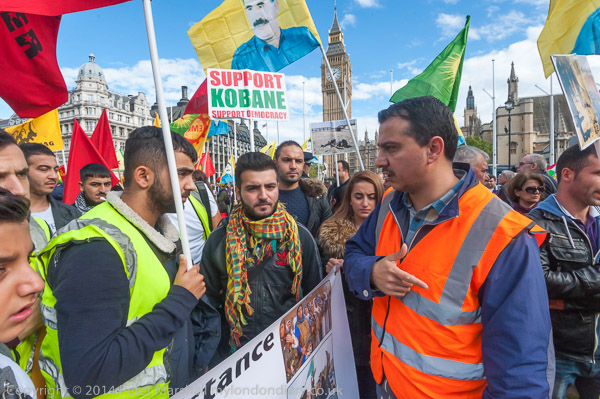
Support the Defenders of Kobane – Parliament Square, London. Sat Oct 11 2014


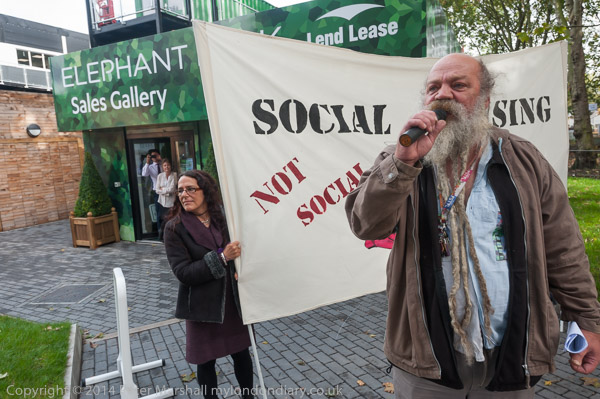
CPOs for Southwark Councillors – Elephant to Southwark Council Offices, London. Thu Oct 16 2014


Just one more set to go….

Looking Back on 2014 – Part 2

Continuing my choice of favourite images from 2014.

It’s hard for any photographer to choose his or her best images, and impossible to really view one’s own work objectively. I can’t divorce these images from the people and events and feelings when I made them. There are also some things I photograph out of duty rather than love and which I really don’t want to remember and have avoided selecting.  So these are my personal favourites. Others might make very different choices.

In making my selection – limited to landscape format pictures for the slide show – I also decided against including the portraits of politicians and others well-known to the media, though one or two have crept in. Others who appear here are well-known to those who regularly attend protests that the media usually ignore. I also have not chosen more than a single image from any event.

Today I’m posting the images I’ve chosen from the middle of March to the early in June, in date order:


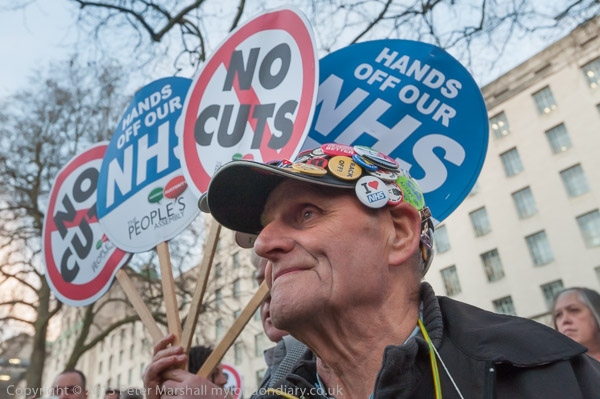
People’s Assembly Budget Day Protest – Downing St, London. Wed 19 Mar 2014


Stand Up to Racism – Westminster, London. Sat 22 Mar 2014


Teachers March on NUT Strike Day– London. Wed 26 Mar 2014


Probation Officers Strike for Justice– Old Palace Yard, Westminster, London. Tue 1 Apr 2014


Axe the Bedroom Tax at One Hyde Park– One Hyde Park, London. Sat 5 Apr 2014


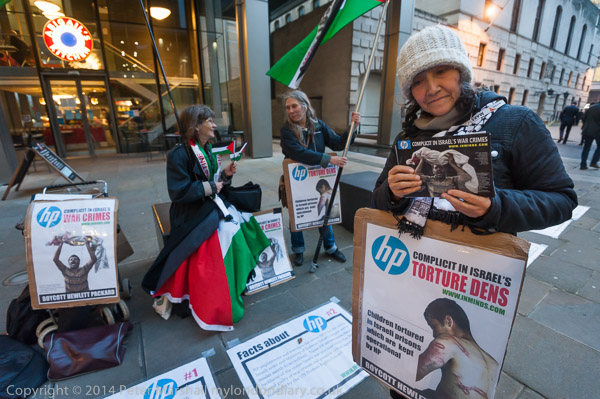
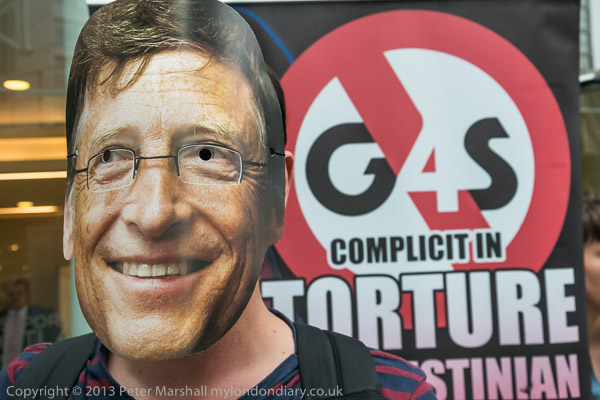
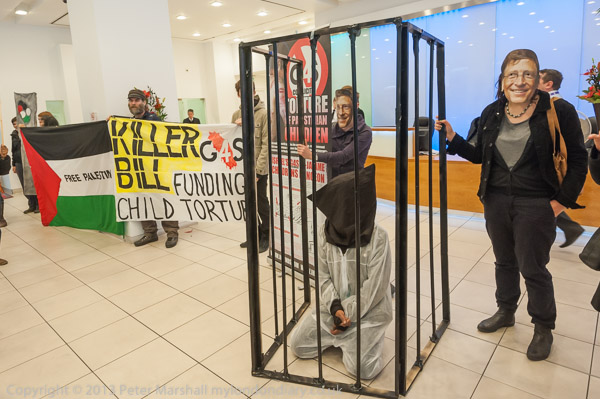
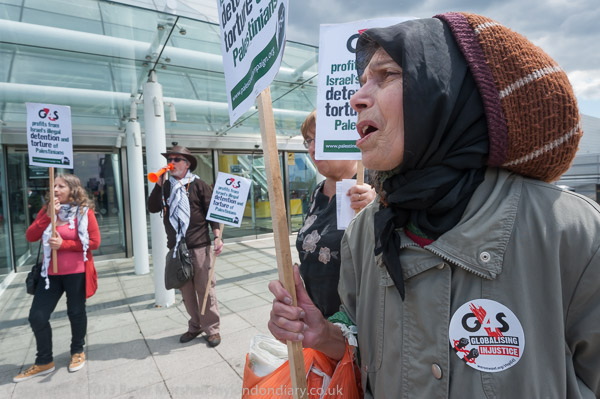
Bill Gates end support of Israeli child torture– Cardinal Place, Victoria, London. Thu 17 Apr 2014


G4S Occupied on Palestinian Prisoners Day– Victoria St, London. Thu 17 Apr 2014


May Day March for Bob Crow & Tony Benn– Clerkenwell, London. Thu 1 May 2014


IWGB Cleaners at Royal Opera– Covent Garden, London. Sat 3 May 2014


Support Harmondsworth Mass Hunger Strike – Harmondsworth, Middx. Mon 5 May 2014


Bin British Gas– QEII Centre, Westminster, London. Mon 12 May 2014


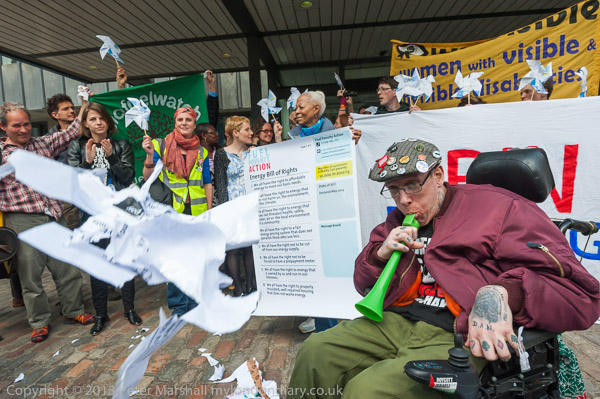
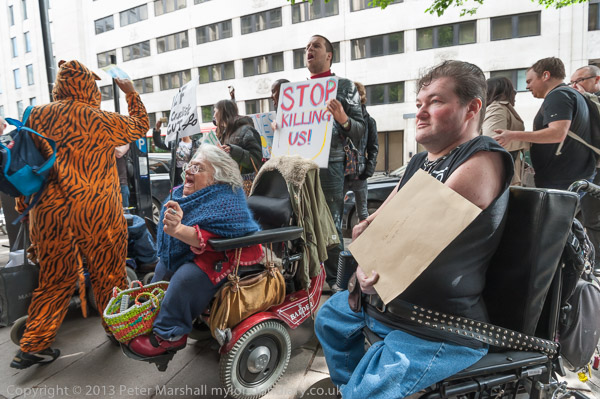
Save Independent Living Fund– Dept of Work & Pensions, London. Mon 12 May 2014


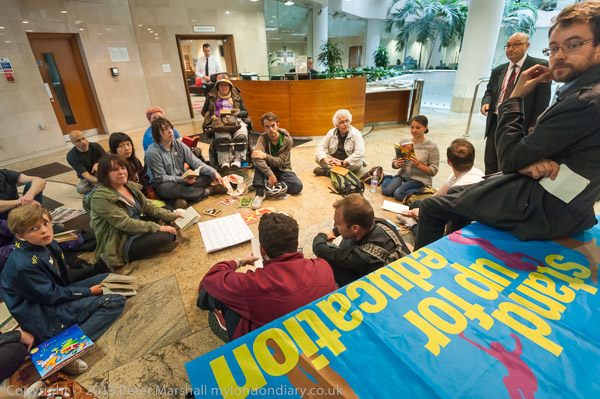
Gove “Read-In” protest in DfE– Department for Education, Westminster. Fri 30 May 2014


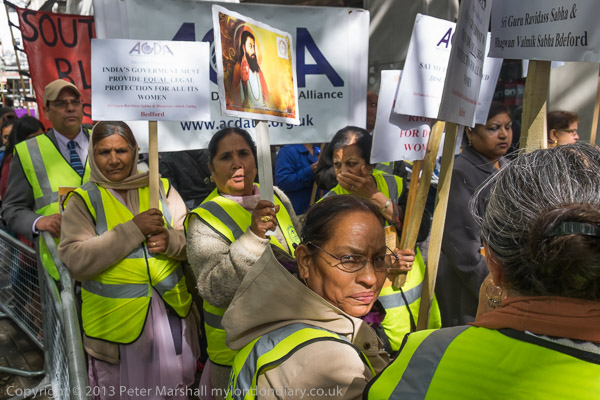
Indian Gender/Caste Violence Victims– Indian High Commission, Aldwych, London. Wed 4 Jun 2014


G4S AGM Protest Against Human Rights Abuses– Excel Centre, Victoria Dock, London. Thu 5 Jun 2014

You can find out more about the events and the people in the pictures by clicking on the links below the pictures.  As almost always on this blog you can also see the pictures a little larger by double-clicking on them when they will open on their own in this window – use the browser back button to return to this page. See below if you want to reproduce or obtain copies of any of the images.

Continue reading Looking Back on 2014 – Part 2

Looking Back on 2014 – Part1

I don’t usually go in for reviews of the year, but I got a message a few days ago asking if I wouldn’t mind sending a selection of my favourites from the pictures I’d taken in 2014 for use on a web site slide show, and I agreed to do so.

So last night I sat down and went through my work. Until some time this year I did actually keep every picture I took – except for those obvious errors, like the many I take by accident when one camera bumps on top of the shutter release of a second, or those when I grab a camera and hit the shutter release by mistake, or those that were clearly out of focus or ten stops over or under exposed…. But this was getting to be far too much as the times got busier, I got more trigger-happy and file sizes increased to the ridiculous when I used the D800E full frame. 32Mp is great for those pictures you really need to print large, but for sending to agencies is overkill. So usually I use the D800E as a DX camera, which gives much more sensible 16Mb files. But for some purposes I need the full 32Mb and then go on to produce a 16 bit tiff file. Each pixel then needs 6 bytes, ending with 192Mb, although lossless compression can reduce this somewhat.

But dealing with large numbers of large files was slowing me down too much, as well as eating up hard disk after hard disk, and finally in October I turned over to a policy of only loading the files from any set I would be happy to publish onto the computer, and where possible weeding out duplicates and near duplicate too. I still end up with more files than I want or need, but the numbers are certainly down, with perhaps typically only a quarter of what I take making it to hard disk.

I had several arguments against this kind of editing. First that I’d never done it with film, and often when I go back to old work find that I had failed to use some of the pictures I find more interesting in retrospect. Finally I decided that this was more an argument against too tight editing rather than against editing at all.

Perhaps more important was that editing was time-consuming. But as the number of exposures increased, so was importing them all. I turned over to using FastPictureViewer Pro, a piece of software that lives up to its name. I’d tried viewing and selecting pictures from the cards in my USB3 card reader in Lightroom’s import dialogue and found that although this worked for small groups of pictures, with larger groups it soon slowed to a standstill.

FastPictureViewer takes a few seconds to load, but then lets you go through them with never a hold up, pressing the ‘K’ key for those you wish to keep. It copies them to a folder I have set up on one hard disk as an ‘Input’ folder with no hold-up to the viewing process. When I’ve been through the card or cards and selected the files, Lightroom will quickly rename and copy them according to my preset to the correct folder (and make a backup on another hard disk), much faster than working from the card. Overall there is a time saving, and the only drawback is that I have to sit there selecting the files at that point, when I often want to eat dinner before working on them. But it’s a fast process and I can wait.

So far the savings in disk space and file numbers haven’t been quite as large as I had hoped, I still tend to press the ‘k’ key rather too frequently, but I’m working on it. Over the year as a whole I covered around 360 stories, with an average of around 250 images kept for each of them, making a total of around 90,000 image files on disk (next year I  hope the average will be rather smaller.) Far too many to look through individually in any sensible amount of time – even with FastPictureViewer, which says “4,000 images per hour is is realistic, with zero upfront time.” Incidentally I don’t get free copies of software, but $50 seemed reasonable for a licence to install and use on up to 3 computers, and it can do a few more things other than simply view images, without being in any way bloated.  When I get time I may well investigate it for keywording.

So I went to the lead images of the 360 stories on My London Diary, and selected my favourites mainly from these. In some cases when I saw these I remembered I’d taken other images that I might prefer and I went and looked through the story on My London Diary. I had two rules, firstly not to select more than one image from any story, and secondly to select only landscape format images, as this was for a slide show, and vertical images don’t really fit. This was a shame as some of my favourites would undoubtedly otherwise be portrait format. And the third, slightly vaguer rule, that I would only choose images from protests.

I ended up with 69 images, which seemed to be rather too many to send, though perhaps I’ll post all or most in a series of posts here. I sent off a dozen for the slide show, and received a request for another one, not on my list. Here are the first nine:


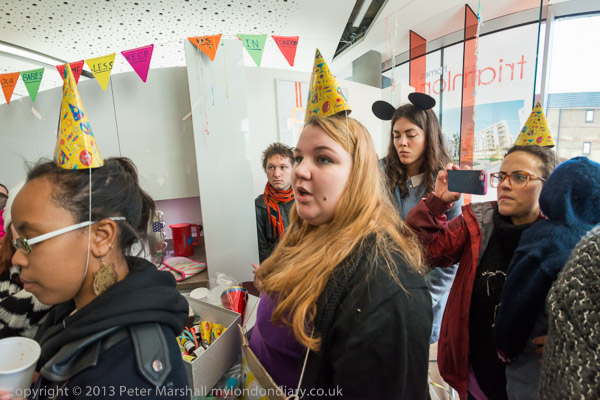
Focus E5 Mothers Party Against Eviction – East Thames Housing Assn, Stratford, London. Fri 17 Jan 2014


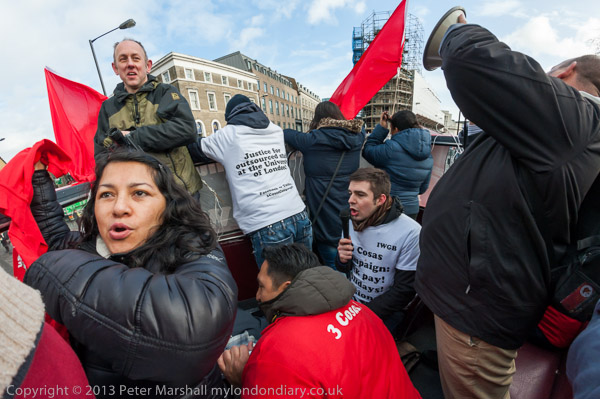
‘3 Cosas’ Strike Picket and Battle Bus– Senate House to Parliament Square, London. Tue 28 Jan 2014


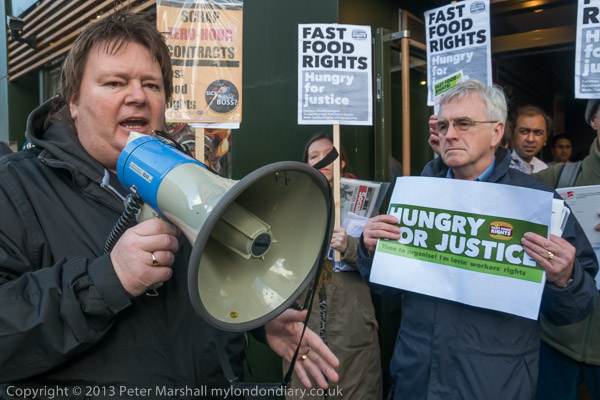
Hungry for Justice For Fast Food Workers – Oxford St, London. Sat 15 Feb 2014


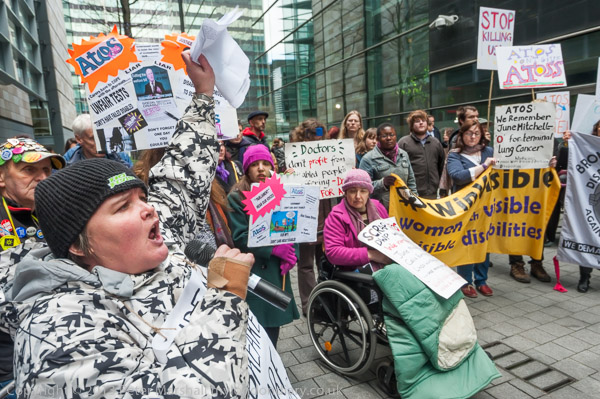
Atos National Day of Action, London. Wed 19 Feb 2014


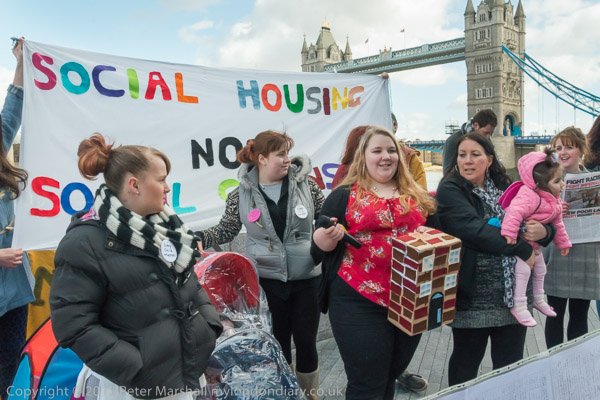
Focus E15 Mums at City Hall – City Hall, London. Fri 21 Feb 2014


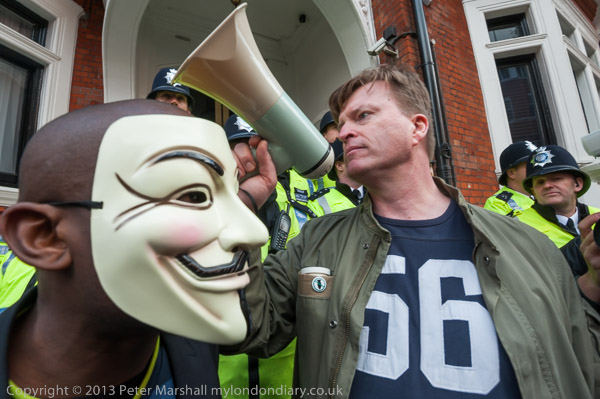
Against Worldwide Government Corruption – Trafalgar Square & Ecuadorian embassy. Sat 1 Mar 2014


Stop Hospital Killer Clause 119 – Parliament, Westminster, London. Tue 11 Mar 2014


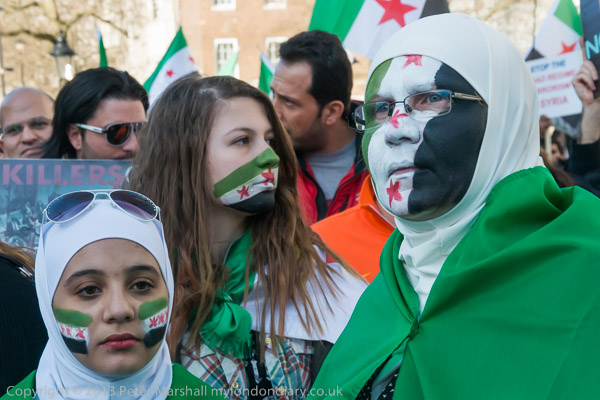
Syrians March for International Action – Hyde Park and Downing St, London. Sat 15 Mar 2014


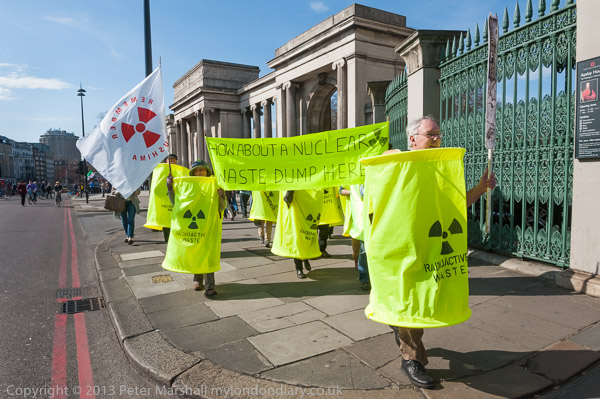
Fukushima Nuclear Melt-down Remembered – Hyde Park and Downing St, London. Sat 15 Mar 2014

Continue reading Looking Back on 2014 – Part1

Poor Doors Special

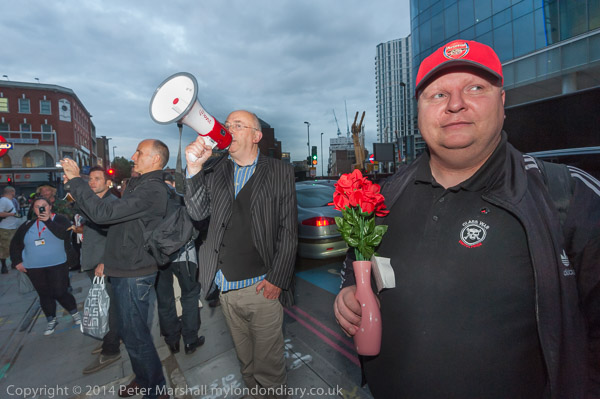
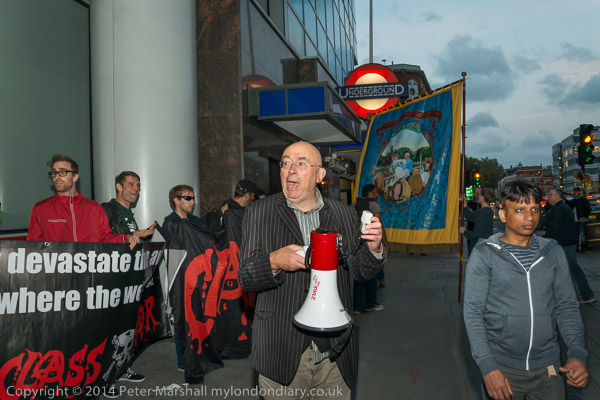
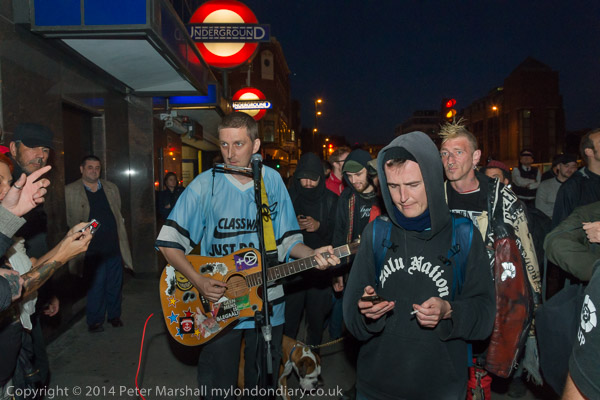
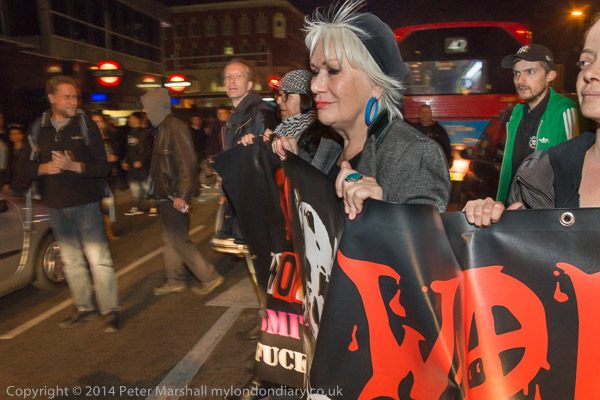
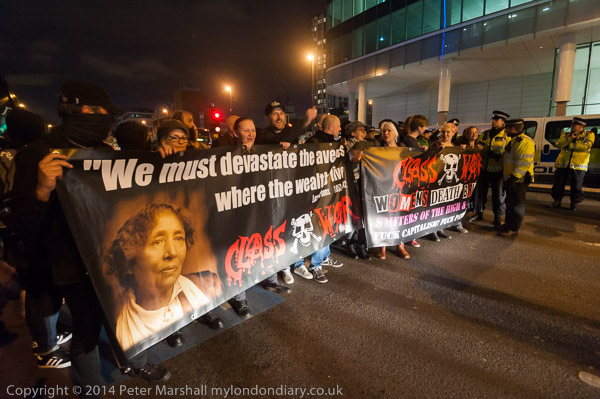
Saturday night was a special protest outside One Commercial Street against their separate doors for the rich and poor tenants of flats in the prestige block. A mile or so down the road there had been a large anarchist book fair taking place, and Class War had called on people to march from there to show their support for their campaign against ‘social apartheid’.

So this was expected to be a rather larger protest than before, and this turned out to be the case, with the wide pavement outside getting pretty crowded most of the time. It was also a more musical protest than most, with samba from Rhythms of Revolution and songs from Cosmo.

It wasn’t one of my best nights photographically. Some anarchists don’t much like being photographed, and it was dark, particularly when a group of those present went into the dark alley to look at the poor door. and I was having problems getting my SB800 flash to work consistently. I still don’t understand what the problem was, but flash often seems like that. Sometimes it works perfectly, other times you think you are doing exactly the same thing, but nothing goes right.

I’ve found over working with flash at these and other evening protests that the most reliable way with flash at protests is to use the Nikons on manual exposure, setting the aperture and shutter speed to get as much ambient exposure as possible. This generally means working at full aperture and speeds around 1/30s, or perhaps 1/60s for longer focal lengths with the 18-105mm. The flash seems then to work OK in TTL A mode. But there did seem to be intermittent problems in communication between camera and flash – and later I gave the hotshoe contacts a good clean which seemed to help a little. But whenever I test the flash at home it works, then when I’m out I have problems.

The crowding was also a problem, and when I green flare was set off, I was in the wrong place and couldn’t move to a better position quickly enough to get the pictures I would have liked.

You’ll see if you look at the pictures that some the flash has more or less worked, but quite a few exposures were either completely over or under-exposed and were deleted. Towards the end of the event, the protesters decided to block the road as a part of the protest, at which point the flash was so inconsistent that I soon gave it up and worked mainly by available light.

Most of that came from the headlights of the cars that were stopped by the protest, and car headlights work mainly at knee height or below. So quite a lot of dodging and burning was needed to even up the lighting.

I also found myself cursing my lack of fast lenses for the Nikons. Usually the f4 maximum aperture of the 16-35mm zoom isn’t a problem – just means using a higher ISO than a faster lens. But on this occasion it would have been nice to have a 35mm f1.4 on the camera.

The other problem with car headlights is that of colour temperature. Car headlights seem to vary somewhat from each other and this gave some problems colour balancing the images. But I was reasonably happy with some of the images despite the problems. You can see quite a few of them at Poor Doors Saturday Night Special.
Continue reading Poor Doors Special

Read Democracy Now


John Hilary, Executive Director of War on Want and author of The Poverty of Capitalism

One thing that recent events have made clear is that our establishment does not play fair. We may officially laud our great traditions of freedom and justice and the rule of law and be given to thinking of Britain as the mother of democracy, but underneath this veneer is a system by the rich for the rich, who when they see their interests in any way threatened are prepared to lie and cheat in any way possible to protect those interests.

We’ve seen it revealed a little in the content of the Wikileaks and the curious treatment of Assange and later Snowden, in the snooping of GCHQ and the malware they have introduced into some major computer systems, and, at a more local level in the responses to the relatively trivial scratchings of the Occupy movement, most recently over Christmas over the ‘Love Bank’ on the Charing Cross Road, when police defied a High Court order openly obtained by the protesters while enforcing two obtained by a rather doubtful and secretive company.

And we saw it too in October, with the excessive over-reaction to a smallish group of people who came to debate and hold workshops on a neglected area of grass in the middle of Westminster. I’ve long regarded Parliament Square as a national disgrace, in a World Heritage Site, surrounded by some truly iconic buildings, for many years it was only possibly to access by taking one’s life in one’s hands and dashing across three or four lanes of rather unpredictably moving traffic.

Even now, the access to the central square is poor, and those who don’t know the traffic lights and lanes well – including the many tourists who come there – often find themselves having to run for their lives as they try to get on or off it. We should long ago have had a great competition for the redesign of the square, which could well have incorporated suitable anti-terrorist measures for Parliament in a far less obtrusive and even attractive way than the ugly black metal structures the currently impede movement by visitors around Parliament.

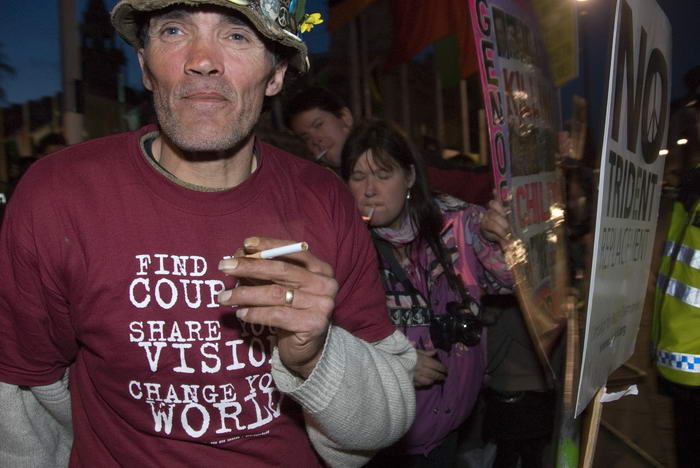
For more than ten years, the front of the square was enlivened by the presence of one man, peace protester Brian Haw, who, along with a few friends kept up a constant presence their as a reminder of the human results of some of the policies pursued by the Parliament opposite. It wasn’t always a pretty sight, though it – or rather a reconstruction of it – did for some months occupy space in the Tate Gallery – but it was always thought-provoking, perhaps why it upset our establishment so deeply. They ordered the police to bend existing laws and carry out raids on the small camp, even drafted a law almost entirely aimed at Haw’s removal (though they made a mess of it), made numerous arrests, sent round thugs and variously otherwise persecuted Haw and his fellow protesters. After stress and cancer killed Haw, they continued the persecution against Barbara Tucker, who came close to death after they removed her ‘sleeping equipment’ and protection against the winter weather.

There must be something more than meets the eye about Parliament Square. I have a small suspicion that there is something under that always poorly kept grass that we don’t know about, some secret bunker or dark and grisly secret that our authorities are in constant fear might be discovered by anyone staying there overnight. Though having once spent a rather uncomfortable night on a bench there (they have now removed them all in case anyone should follow my example) I can assure you that neither Churchill nor Mandela come alive at dead of night and walk around.
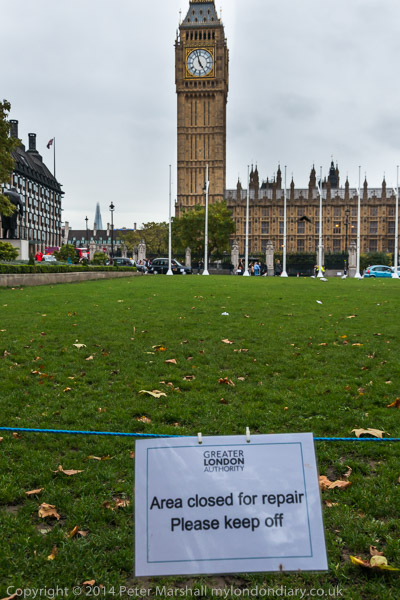
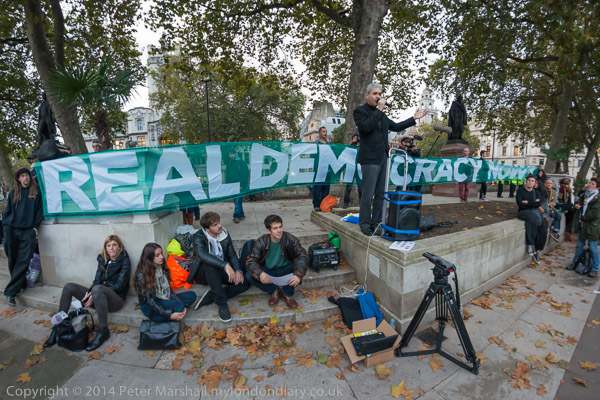
A day before the event was due to begin, the grassed area of the square – which had been neglected all year – was roped off and notices put up by the Greater London Authority (GLA) ‘Area closed for repair – Please keep off’. It was a notice that fooled no one, and there was not even any attempt to make it in the slightest convincing by having any groundsmen or gardeners working there. A month later, well after police boots had churned up the muddy surface thoroughly I could see no indications of any action to repair the area.

The policing at the start of Occupy Democracy was not particularly unreasonable, although police liaison officers did hand out notices about the unreasonable Parliament Square Garden Byelaws 2012 and Section 143 of the Police Reform and Social Responsibility Act, which make it a criminal offence to use “any amplified noise equipment”, to erect  or use tents or other structures designed or adapted for the purpose of facilitating sleeping, or to bring into or use any sleeping equipment in the square for the purpose of sleeping overnight.
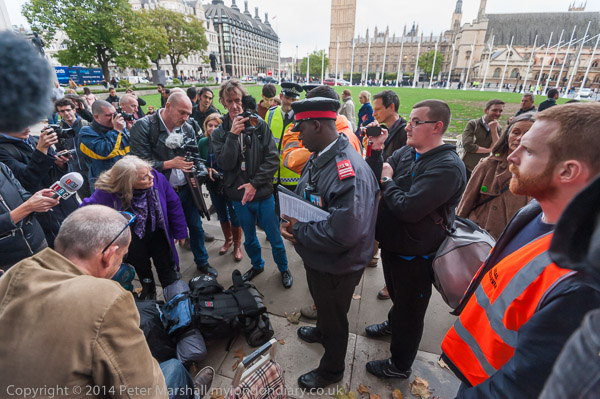
Where things started to go wrong at the beginning was when the private security guards who are provided by a company who have a contract with the GLA – misleadingly titled ‘heritage wardens’ – began telling police they should start taking rucksacks and sleeping bags from people in the square, even though at that point they were not attempting to use them in the area. And that police, rather than behaving as they should and deciding for themselves whether an offence was being committed, simply acted as the enforcement for the warden’s whims.

People rightly objected, argued and peacefully resisted – and eventually, for the moment, the police backed off, and the entirely peaceful event took place – and was still proceeding an hour or to later when I left for home.
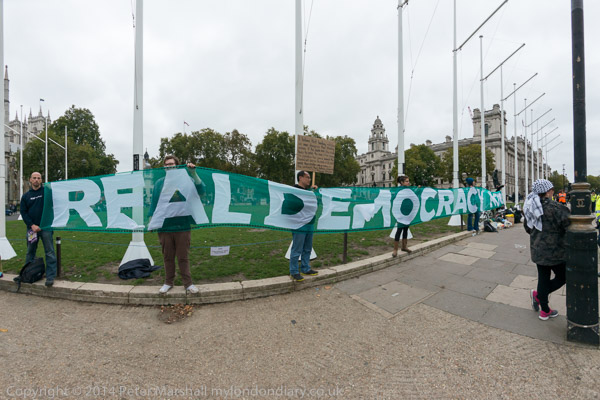

The next morning when I arrived, people were still on the square, some having spent the night not on the main grass area but on some areas around the edges, following some negotiation with police. People were still more or less keeping off the main area of the square, and most had left to join in the large TUC ‘Britain Needs A Pay Rise’ march, with a small group holding banners and placards and chalking on the pavement facing the Houses of Parliament.

I returned after watching the march leaving the Embankment  – it took over and hour for everyone to start on their way to Hyde Park, and went back to Parliament Square. Soon things began to heat up a little, especially when a Heritage Warden and Westminster Council officials attempted to seize a small amplifier playing music that some protesters were dancing to.
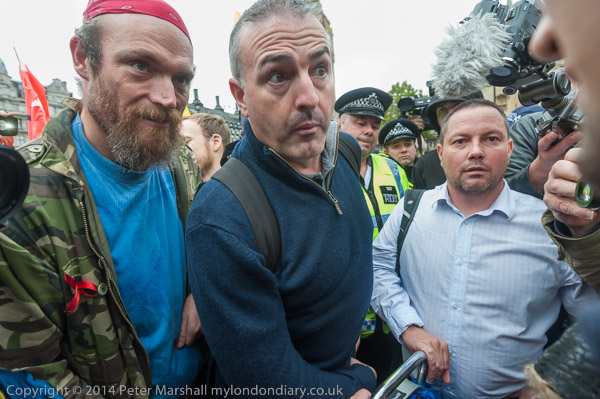

Martin Tuohy Senior Westminster Warden at Westminster City Council and another council employee grab the system

Although the bylaws prohibit “any amplified noise equipment”, it isn’t something that is generally enforced in the area and certainly not against groups that are causing no problems – as in the case of these dancers, who were unaware of the prohibition. Eventually after much argument, police intervened with the council officials and the people concerned were told to take the equipment away and not bring it into the square.
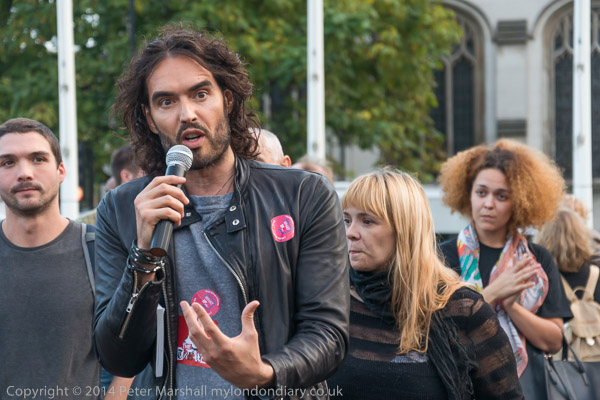

Russell Brand speaks in Parliament Square

Around half an hour later, the main group of protesters arrived, and simply ran onto the square in numbers sufficient to make it impossible to stop them. A rally then began with speeches by Labour MP John McDonnell, Occupy’s George Barda, environmentalist Donnachadh McCarthy, Russell Brand and others, while more and more police arrived and stood in blocks of twenty in various positions around the square, apparently just waiting for the order to charge. One large group of officers in blue caps seemed very much to be looking forward to a fight.
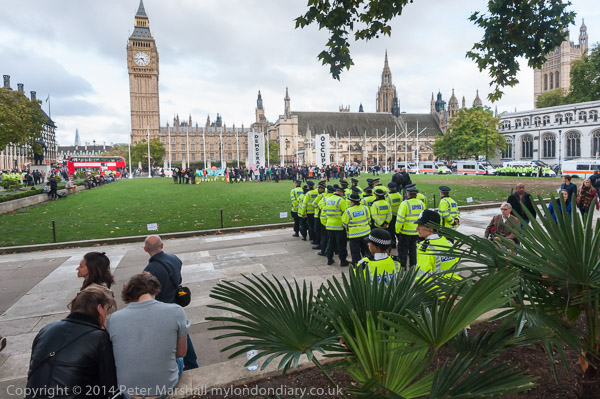
To my surprise, nothing happened. At least not while I and the rest of the press were there in force (particularly as Russell Brand was there. Suddenly I saw the officers getting into their police vans leaving the square. Where there had been perhaps 200 officers, there were now around 20.

When I left (to go to a protest elsewhere) the rally was continuing. I expected the police to take action in the middle of the night to try and remove the protesters from the grass area.

You can see more pictures from the Friday Evening and Saturday at Democracy Camp starts with rally and Democracy Camp takes the Square.
Continue reading Read Democracy Now
Banner Drops

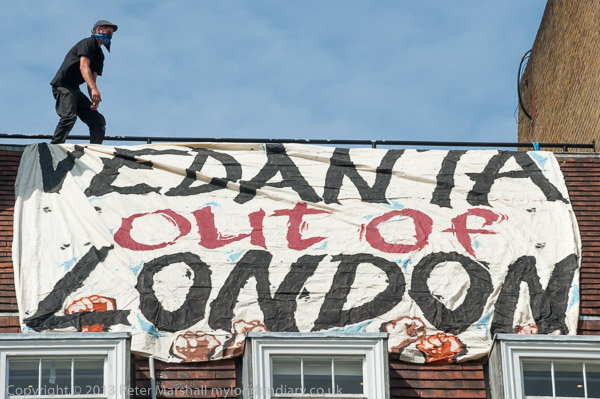
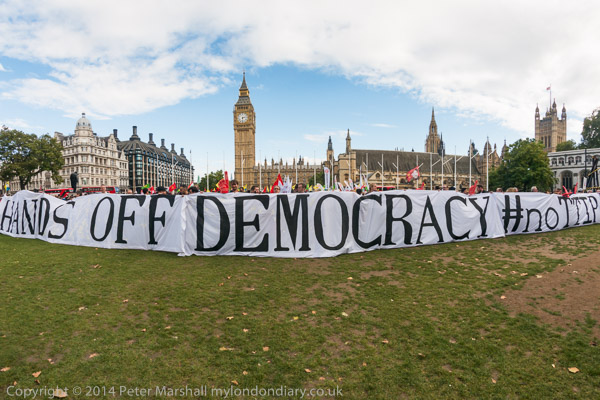
I’m never sure that ‘Banner Drops’ are ever really worth the effort. Used by protesters as a dramatic device, displaying a banner on some iconic building they may sometimes help to draw attention to a cause,and do seem to be reproduced far more often than they deserve. I suppose they are a simple idea and the editors who choose the images seem generally to be pretty simple.
I suppose the first essential is to choose an iconic location, either for the actual display of the banner or as a background. Tower Bridge yes, Chiswick Bridge probably not. Unless perhaps it is somewhere related to the protest; Trenton might have saved himself a few months in the Scrubs by doing a banner drop there rather than jumping in and swimming on boat race day. And while it certainly wouldn’t have got him quite as much press, there would have been fewer negative comments and no vindictive establishment judge.

Obviously the practicalities of actually displaying the banner are important, but also to be taken into account are the problems of photographing it. The event isn’t really the actual dropping of the banner, but the press pictures and TV footage of the banner in situ.
Nikon D800E, 16mm fisheye

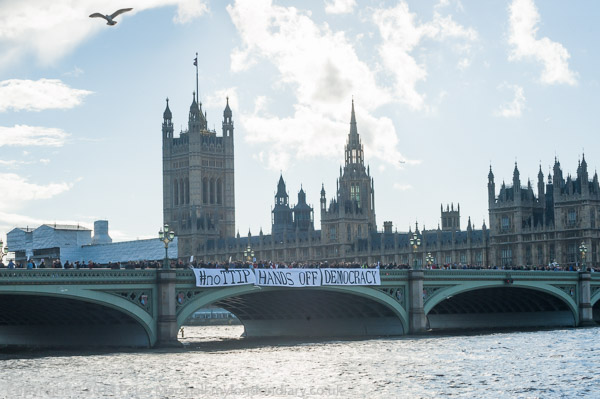
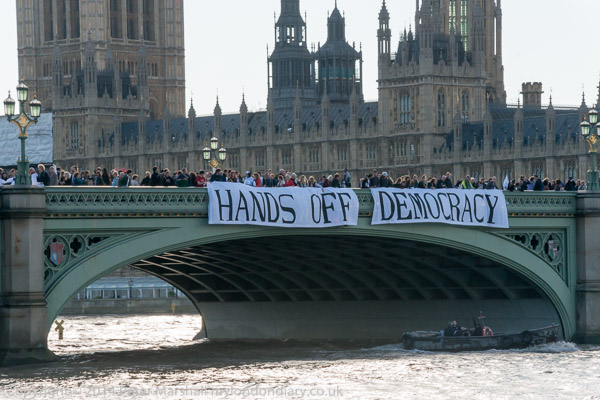
I’d photographed the three banners that made up the message ‘#noTTIP‘ ‘Hands Off‘ ‘Democracy‘ earlier on Parliament Square. They spread more or less across its full width and it was hard to get the whole message in, and even harder to get the whole area between camera and banners clear of people.

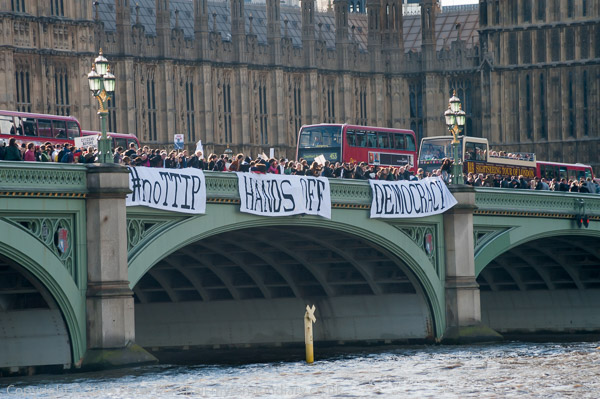
When they took the three banners onto Westminster Bridge, I realised I needed to run to get the picture I wanted. None of the photographers knew exactly where the message was going to end up (and certainly not the people taking it onto the bridge.) We ran across the bridge, and then through the crowds of tourists on the riverside walk in front of the former GLC building. I kept on until I was in a position I thought would work best, perhaps a couple of hundred yards downstream of the bridge.

Nikon D700, 250mm

The first position was in some ways the best, with a long lens I was able to get the message clearly

Nikon D700, 100mm

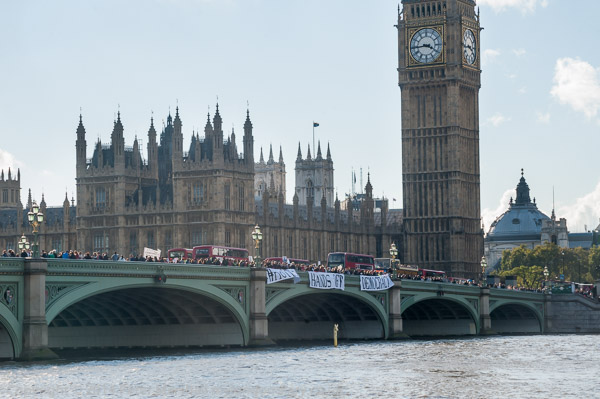
or take a wider view showing that very recognisable clock tower behind it. There were however two problems. Firstly the light, with the sun shining brightly just out of frame; flare and ghosting were hard to avoid, and because of the position of the sun it wasn’t really possible to get the wider view including the top of Big Ben’s tower. It didn’t help that I’d stupidly left the lens-hood of my 70-300 on the desk at home (the only time I’ve forgotten it), but I would still have needed to use my left hand to flag the sun and avoid excessive flare, while waiting for the moments when the wind eased off and the banners stopped fluttering up and came to rest going down from the parapet.

But the real problem was that some photographers hadn’t run far enough, and couldn’t really read the message, and were phoning for the banners to be moved further across the bridge. So before I really got the image I wanted, those banners were on the move.

Nikon D700, 70mm

The glare from the river was really making things difficult, but I took another picture and liked the seagull at the top. But then they were on the move again.

Nikon D800E, 105mm – 157mm equiv

and the #noTTIP had disappeared….

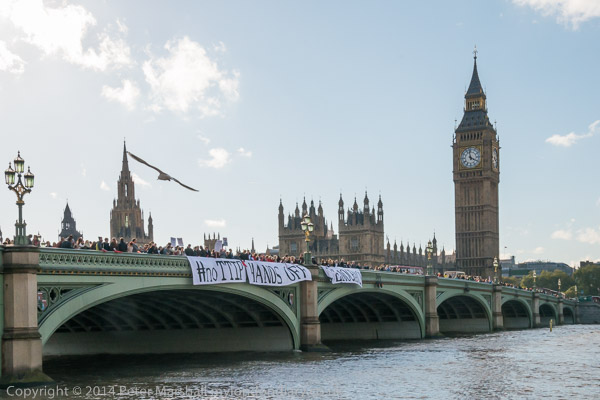
Nikon D800E, 34mm – 51mm equiv

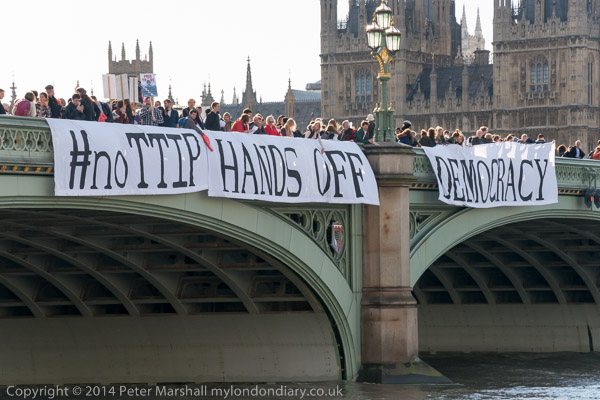
To reappear in yet another position, and again a gull made the picture more interesting for me. Possibly I might crop a little off the top and right of the image, but I like the lamps at the left and the string of people across the bridge. Again I couldn’t move the frame any more to the left as the sun was just out of picture at top left – and that area of sky needed quite a bit of burning to get any tone. The image is essentially uncropped, though I think I’ve probably corrected the verticals slightly. But the main problem with the picture is that the wind has blown the word ‘Democracy’ to make it more or less illegible.  So here’s a final image that puts across the message more clearly:

Nikon D800E, 105mm – 157mm equiv

And it is a vital message. TTIP is a commitment to a corporate future, one that gives free rein to the giant corporations to run the world their way and for the interests of the wealthy. Democracy may not be too healthy in this country, with the two major parties (an UKIP) largely supporting corporate interests, but at least there is some hope, with just a few of our politicians still championing the needs of the people as a whole.

You can see just a few more pictures of the banner drop at #NoTTIP – Banner Drop, and a few of the protest that led up to it in #NoTTIP – Hands off our democracy, though I was also busy with other events. There is more about TTIP (and its Canadian version CETA)  on My London Diary at CETA (TTIP) Trade Deal and CETA Trade Deal Threat to Democracy.

Continue reading Banner Drops