I’m missing Paris

I went to Paris for several years for what is I think photography’s largest trade fair, Paris Photo, and reading about this years Paris Photo 2016 in several places, including LensCulture and BJP I am rather missing being there this year.
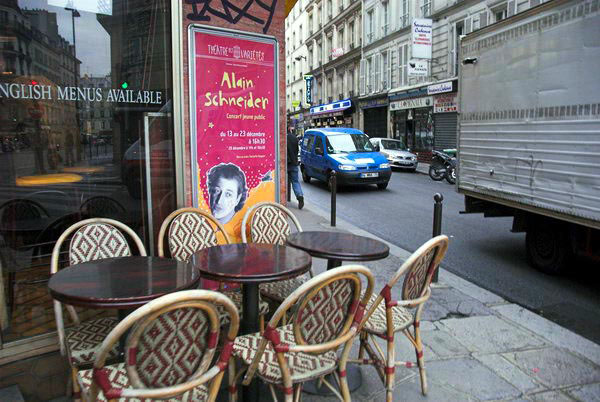

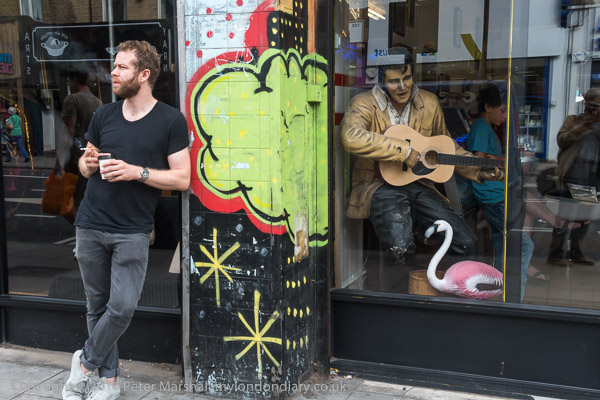
Paris, 2006

One development I welcome is the increasing emphasis on photography books in the show – again read about it on LensCulture – as I’ve long considered the best place for most photography is on the printed page rather than the wall (and have done my little bit towards this – though not of course featured at Paris.)

I’m also pleased to see the increasing emphasis on Japanese photography, something that has interested me for some years, though the book that would certainly be my choice for Photobook of the Year isn’t in the listings.
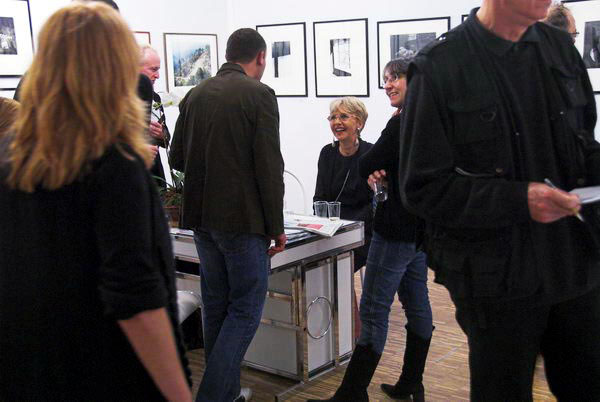

Paris Photo, 2006

The pictures above are from my first visit to Paris Photo back in 2006, when I visited Paris for a week with Linda. I spent the first evening and a couple of days inside Photo Paris, then in an underground location, going around every stall and looking at all the pictures. It was great, though there were some dealers to whom a journalist for the web was clearly of very little interest and made sure I felt it. But as you can see from the larger album of pictures here, we had an interesting week in the city, and for me the main attraction in this and the following visits were the many shows outside the dealer fair, in the Mois de la Photo and the fringe events of L’Off. I wouldn’t have gone to Paris just for Paris Photo, and  ‘the Month’ was only every two years.  Now it has evolved into ‘Le Mois de la Photo du Grand Paris‘ and won’t be until April 2017 – another reason for not going there now. But perhaps I will visit next April.

Here’s the post I wrote for this site back in 2006:

Paris was full of photographs in November, and there were some great ones at Paris Photo. But there were things that were hard to take too. Large empty wastes of dollar-rich nothingness covering the walls of some galleries. Vintage prints pulled from some photographers waste-bins and awarded stupendous price-tags. I found it hard not to burst out laughing when a dealer came up to the person next to me and told her the price of one rather ordinary ’60s fashion print was 20,000 euros. A couple of years ago we would have though 200 rather steep, and 2000 definitely well over the top.

Still, all good news for investors, and for the minority of photographers who have a place on the gravy train. There were a few other photographers around, trying to talk to dealers, but this wasn’t the place for it. “Best if you e-mail us” they were politely brushed off.

The first day I had a panic attack of sorts as the place got more and more full of people, all there for the free opening party, and had to rush out and up from the bunker into the fresh air above. The next day things were better, less crowded, but still more a place for millionaires than photographers.

But fortunately, there was much more in Paris than Paris Photo.

In 2008 I published a partial diary of my visit as a ‘Paris Supplement‘ on My London Diary and reviewed some of the shows here on >Re:PHOTO, (beginning here) and I had a great time. I only published the series of posts after I got home as I just didn’t have time to write more than notes in Paris, and they are mixed with other posts – the last, on Louise Narbo, only being published on December 5th. YOu can also find more on My London Diary from 2010 and 2012, and also on the November pages of this site.

In 2014  I was just too busy to go, and the attraction of Paris Photo had somewhat waned after seeing many of the same photographs on some dealers stalls again and again.
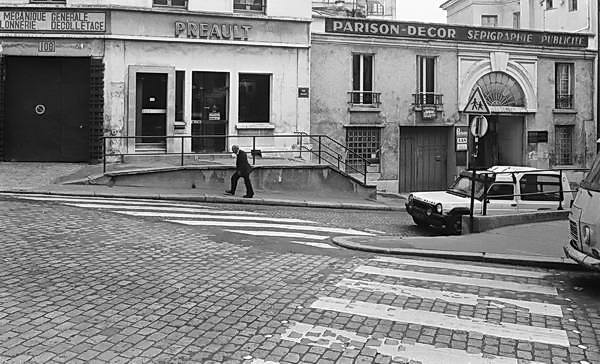

Paris, 1984

You can see more of my photographs of Paris from 1973-2007 (when I was also there for Photo Paris) on my web site Paris Photos.

There are no adverts on this site and it receives no sponsorship, and I like to keep it that way. But it does take a considerable amount of my time and thought, and if you enjoy reading it, a small donation – perhaps the cost of a beer – would be appreciated.

My London Diary : London Photos : Hull : River Lea/Lee Valley : London’s Industrial Heritage

All photographs on this and my other sites, unless otherwise stated, are taken by and copyright of Peter Marshall, and are available for reproduction or can be bought as prints.

To order prints or reproduce images

________________________________________________________

Notting Hill Revisited


Portobello Rd, Notting Hill 1987

Notting Hill has “gone up in the world”, if down in my respect, one of London’s epicentres of gentrification, and now a mega-tourist attraction post the 1999 film of the same name. When we went there in March, the language on the streets was Italian – even some of the beggars had signs in Italian. Both tourism and gentrification have had a heavy toll, and little of the old Notting Hill remains, though in some respects the setting is the same.

Class War came to Notting Hill long ago -back in 1837 when John Whyte enclosed land to form a racecourse, the Hippodrome, and closed a well-used public right of way. At the first race meeting, several thousand are said to have used the closed footpath to make holes in the fence and get in free. More legally, a gang of labourers from the local authority went and cleared the obstuctions to the path but Whyte simply restored them.The matter went to court, where Whyte lost but still kept the path closed and instead tried to get an Act of Parliament to allow him to divert it rather than let the hoi polloi disturb him and his upper class mates.

The people set up a petition and went to the newspapers, telling them about the various illegal activities going on there, unlicensed drinking, gambling, prostitution, and pickpockets – and The Times (long before Murdoch who would probably have backed the racecourse) wrote a leader condemning it as a den of vice. Eventually Whyte was forced to re-route the racetrack and restore the footpath – which he did with a high metal fence on each side so the riff-raff could not see the toffs.

The race track soon failed, not because of the footpath but the heavy soil, which made it dangerous for racing in wet conditions, and many horse owners refused to risk their mounts.  The ground was sold to a Mr Ladbroke, a developer and that disputed footpath became, more or less, Ladbrooke Grove.

The radical history of Notting Hill continued – and you can read more in Tom Vague’s ‘Bash the Rich‘ where you can read about Chartist leader Feargus O’Connor, the Campden squatters, George Orwell, the Free Republic of Frestonia, the Angry Brigade, King Mob, the International Times, the original Hustler, the Carnival riots and more.


Bash the Rich, 2007
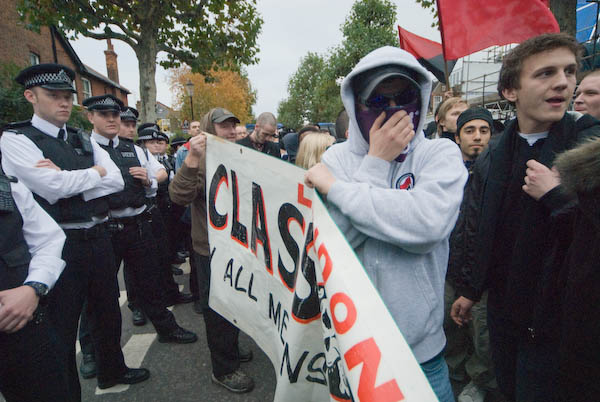
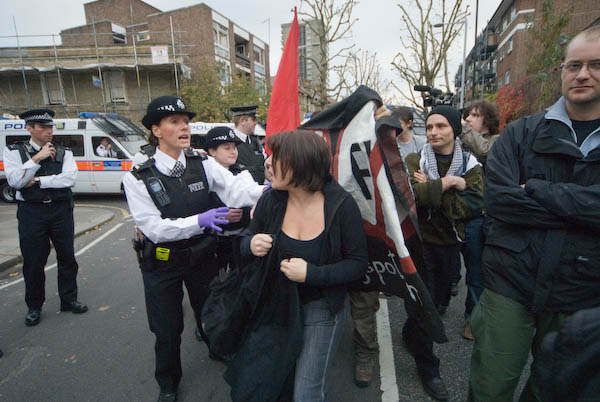
Class War returned to Notting Hill and marched through Ladbroke Grove to Holland Park on the first BASH THE RICH march in 1985. Twenty two years later they returned, and this time I went with them.


Bash the Rich, 2007

The event was heavily policed, with protesters and press getting pushed around considerably, and there were several arrests for no particular reason (mainly I think for objecting to police violence) with those arrested being released without charge after a few hours of arbitrary detention. You can see more pictures at Bash the Rich.

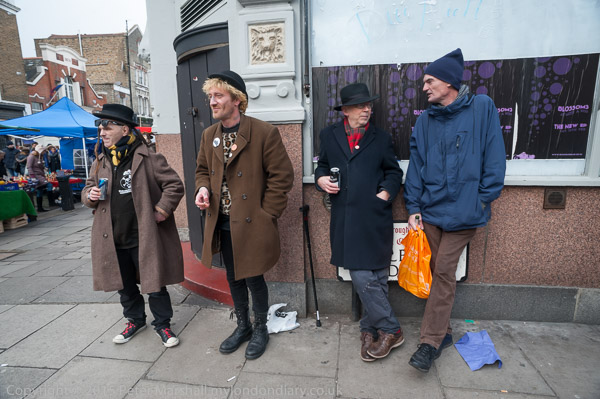
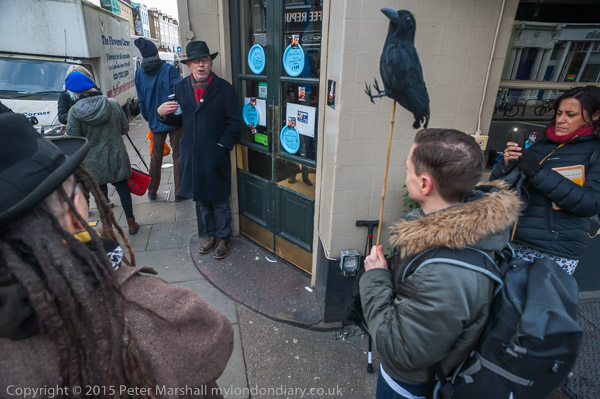
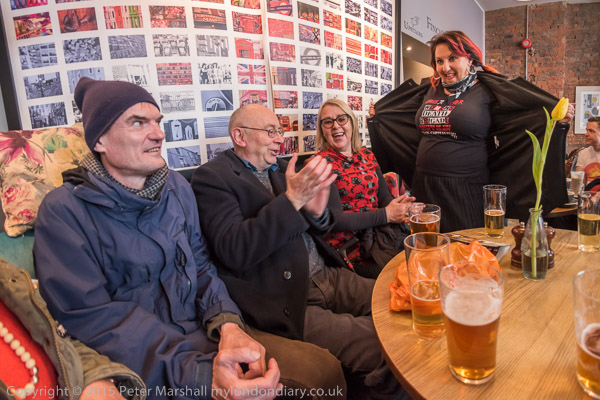
This year’s ‘historic, riotous and fun‘ Notting Hill pub crawl attracted rather fewer people and less attention from the police. It had been planned to start at the former Colville Hotel  where Class War’s first conference was held, but the few of us who had arrived on time to find the bar there boarded up and up for sale, and had to stand outside and drink from tins. With Class War’s Rita the Raven. But a close pub is no good to man, woman or beast and we didn’t hang around too long. So some late-comers missed the tour.

The next pub on the route, formerly the Warwick Castle, once the heart of Notting Hill is now gentrified out of recognition as simply the Castle, had ‘closed for maintenance‘ for a few hours having heard Class War was coming, so again we had to stand outside. There was no sign of any maintenance inside – the only thing being maintained was a very low and scared profile. People put up blue plaques (or rather blue paper plates) to mark this as the place where Ian Bone met Joe Strummer who jumped at the idea of the 1988 Rock Against the Rich tour.

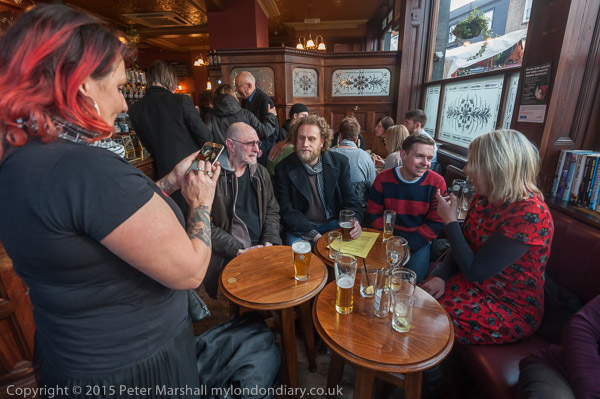
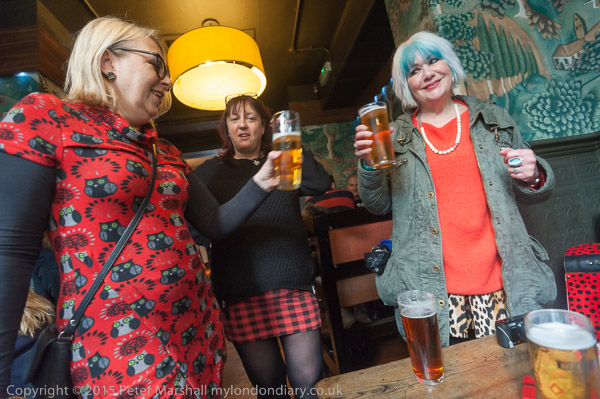
There were just a few police following us a few paces away as we walked down to the next venue, the Duke of Wellington tourist trap, once H H Finch‘s bar. They seemed to have extra bouncers on duty, but let us in and we got served, though Young’s isn’t my favourite brewery and the price was high. But I paid up and swallowed my Pride slowly. We sat for a while with a few more joining the tour, including a visit from Ray ‘Roughler’ Jones whose epic book about the Warwick Castle was titled ‘3000 Hangovers Later‘.

It wasn’t far until our next stop, one of the few real pubs left in Notting Hill, though not quite as genuine as it seems. The Earl of Lonsdale,  was once Henekey‘s, but was remodelled as Sam Smith‘s pub in a way that pretty authentically recreates the real thing – as do a number of other pubs they have worked on. It seemed we had settled down for the day, but more people were joining the tour, and onwards it went.

The next stop wasn’t a pub, but the house were George Orwell once lived – and which recently has appeared on in a faked image on Facebook with a CCTV camera Photoshopped on the the wall close to the blue plaque. As Lisa McKenzie gave us the low-down on Orwell as an upper class toff but one who understood the class war we noticed that there was indeed a small camera covering the doorway.

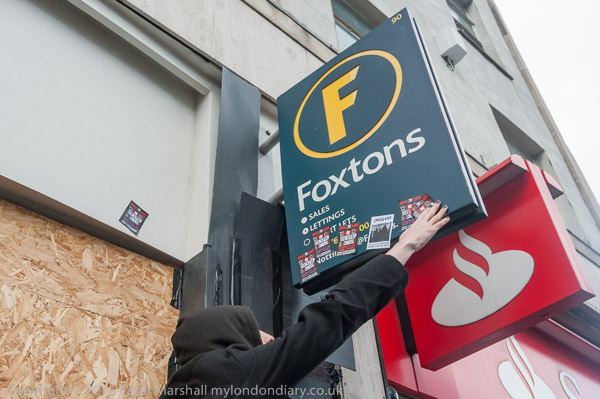
But this was Class War and we were close to a branch of Foxton’s, that arch-agency of gentrification, and it was our next stop. We were amused to find it had been closed and boarded up in anticipation of our visit, and it was duly stickered. A speech about the role of this company in gentrification had to be abandoned after a few minutes when a number of police vans came in sight and the tour melted away into the nearby Prince Albert, built in 1841 at the gate to the Hippodrome.

After we had been in there for around an hour (including a Class War make-up lesson) it became clear that this was to be the end of the tour rather than as intended the Daily Mail offices, where no food or drink was likely to be available, though probably a few police officers were still awaiting our arrival.  So I said goodbye and left as I could expect a good dinner waiting for me at home.

More pictures and text: Class War’s Notting Hill Pub Stroll

Continue reading Notting Hill Revisited

Work and Mental Health

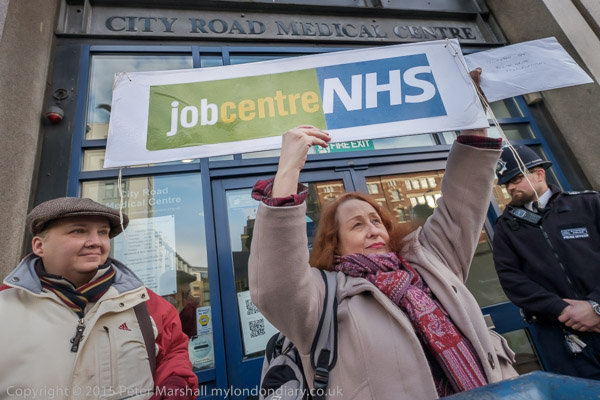
Since one of the main causes of mental health problems is workplace stress it seems odd that the current government appears to believe that somehow getting those with mental health problems into work is a miraculous cure. Of course finding suitable work can be a something which helps those who have recovered stay well, but it’s had to believe that job centres will help people find suitable work; instead they will be bullied into taking unsuitable work by advisers who get brownie points or bonuses for cutting benefits – either by forcing people into jobs or sanctioning them if they refuse.

There just are not suitable jobs for the great majority of those with mental problems or with physical disabilities, and even fewer than there used to be, both with the government closure of Remploy and other sheltered work and the removal of other support. Another major reason for many people’s mental health problems is the pressure on them to find work, the cutting of various benefits, benefit sanctions, the bedroom tax and other government policies.

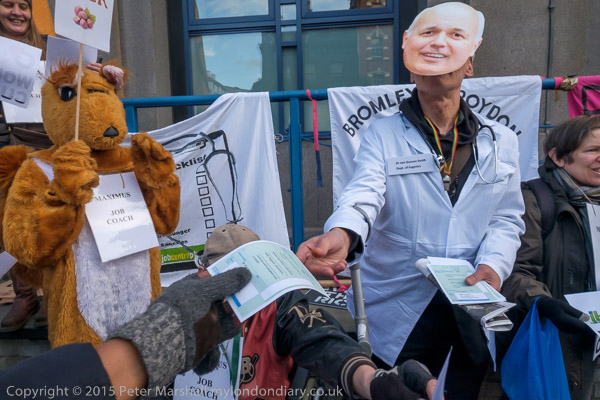
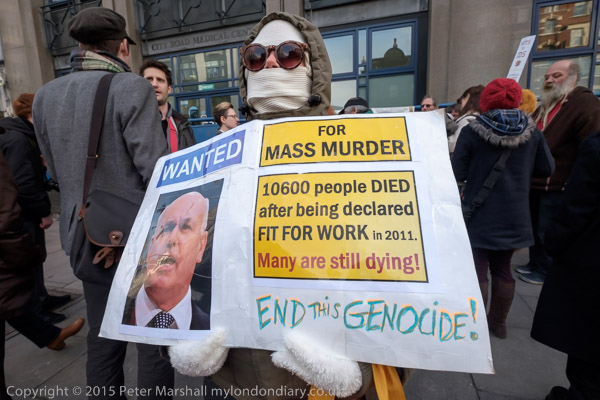
Finding disabled people fit for work through unsuitable ‘work capability assessments’ carried out by Atos and Maximus when they are demonstrably unfit is a major source of stress, and has led to many suicides. A very high percentage of those who appeal against these assessments succeed – but often only for the people concerned to be failed yet again when called in for another test. It’s perhaps an unsurprising effect of setting up a testing system that ignores medical reports and rewards the company administering the tests for failing people. It was a cruel system introduced under New Labour, but one which the coalition – even after its effects became clear – deliberately tightened the screw.

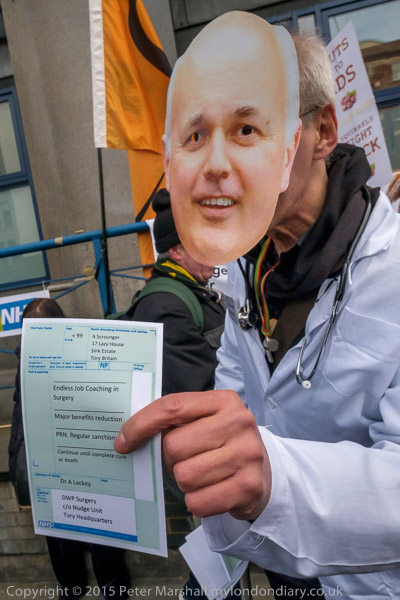
It would be hard to overstate the hate that many disabled people feel for the man who has directed the process, Iain Duncan Smith – and hard not to understand it when you hear one of them telling how eight of her friends have committed suicide thanks to his policies. He appears to combine a total lack of empathy and understanding of the problems faced by those on benefits with an outstanding incompetence.

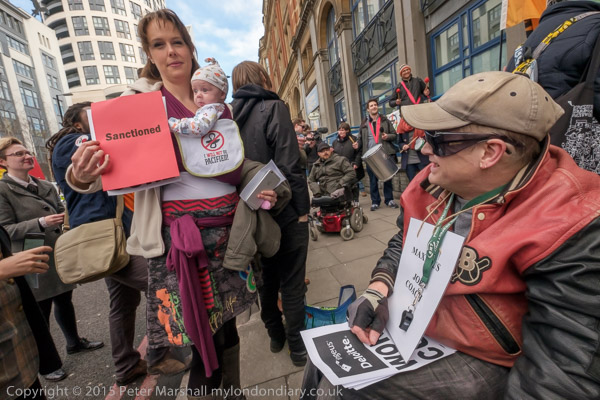
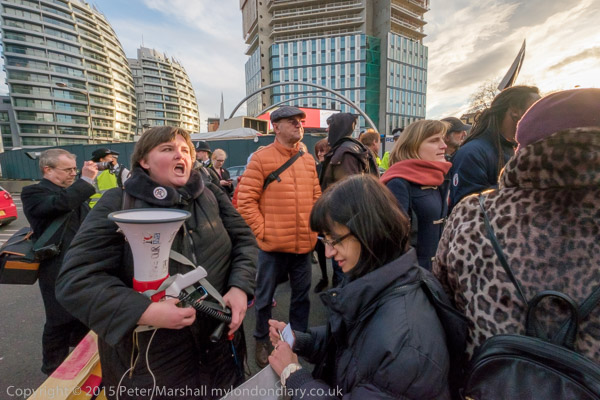
This was a difficult protest to photograph outside the job centre because the pavement it was taking place on was rather narrow and soon get very crowded. There were too many people for the space and too many of us trying to take pictures. It was good that the protesters had plenty of props and costumes, but it was perhaps too elaborate to tell the story clearly, at least visually. I think it would have been easier in video.

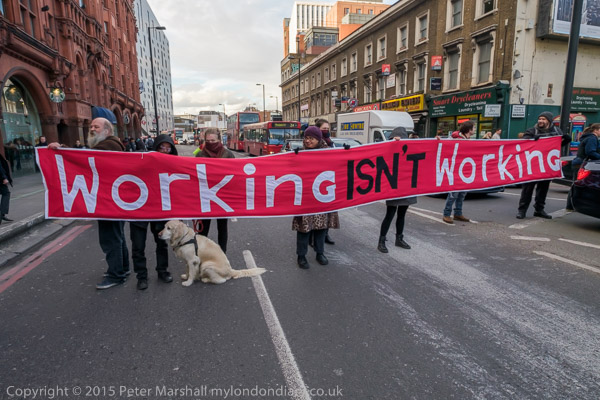
Things were simpler once the protesters began to march, and although the police didn’t seem to know what was happening, I think it was fairly obvious that they would attempt to block the Old St roundabout. Which they did for some time. As usual disabled protesters gave the police a problem; most have a genuine concern about manhandling disabled people, while others realise how it would look in the media. For both reasons they hang back from taking action for rather longer than would be the case with able-bodied protesters – though many of those taking part were not disabled.

But eventually the police would have had to take action, with one of London’s major junctions taken out, and DPAC realise they can only push things so far. After blocking the roundabout for around 20 minutes, Paula Peters of DPAC announce it was time to leave.

I wrote a fairly lengthy account of the action on My London Diary at No Job Coaches in GP Surgeries, and as usual there are plenty more pictures there. But although I took quite a few usable images, I didn’t manage to get one that really stood out and summed up the protest in the way I would have liked; but perhaps the issues were too complicated for that.

London Transport

I don’t always carry a camera when I go out, except for the one on my phone, which I very seldom use, partly because it isn’t very good but mainly that I’ve never really sorted out how to control it to get results I might like. I also find it rather hard to use; looking at images on a screen and pressing a virtual button is just not how I work.

I do still have a pocketable camera, and got it out and looked at it again a few days ago. Back when I bought it, the performance was pretty much up with the leaders for anything of its size, and the 6Mp images from the Fuji Finepix F31fd weren’t bad. Probably better quality than the larger files from my phone, but still if I took anything on it Ilooked at the images and felt it was a pity I hadn’t had a real camera with me. All the pictures here were taken when I did, on either the Nikon D700 or D810.

Usually when I’m out I do have a better camera, and most often two of them in a rather heavy bag on my left shoulder. I take them out with a specific event or place in mind to photograph – and some of those photographs go on-line in My London Diary and to one of the agencies.

Most of the time I’m out I’m not at those events, but travelling to them or returning home, and going from one event to another. Much of these in-between times there is nothing I’m interested in photographing, and I often read a newspaper or a book or occsionally hang out with other photographers. Occasionally I’ll visit a pub or a gallery, and there are quite a few of both in London, though few galleries that show decent photography. Or if there is a long gap and the weather is right there may be time to go somewhere I want to photograph and take some pictures.

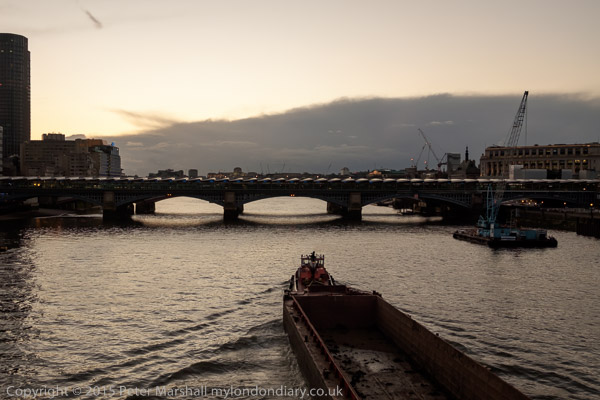
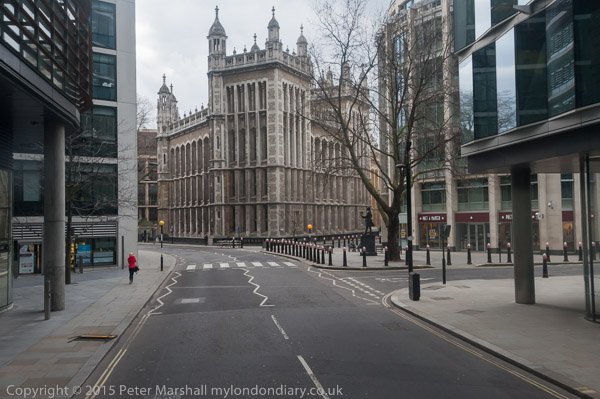
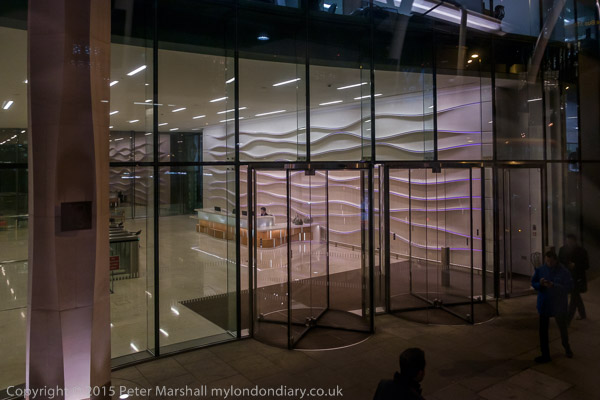
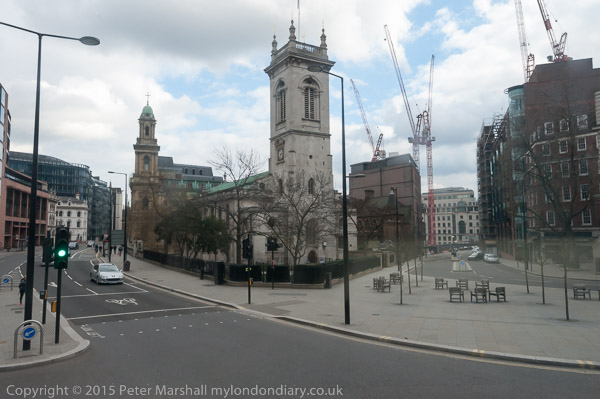
Like many other photographers I also take pictures at times on my travels around the city, through bus or train windows. Often these are rather dirty or scratched and this sometimes rather spoils the images. It can be hard to avoid annoying reflections (and even harder to get ones that aren’t annoying.) So most of these images get deleted, but a few are worth saving, and in recent months I’ve been including some at the bottom of the page on My London Diary under the title ‘London Images’. Silly really as most of the rest on the site are also from London, but I needed a title.

I like travelling on the upper floor of a double-decker bus for the views – even if most of the time I’m not taking pictures. It’s a great viewing platform for the city, though often frustrating as the buses flash post places that look interesting only to stop for ages in the least interesting of locations. I’ve always planned to do a project from the open-top tourist buses that clog our streets – which would be rather more flexible – but somehow never got around to it.

I’m still wondering whether to start carrying the little Fuji again for those time I don’t have a camera with me – or even if to replace it with a more modern and capapble device that would fit a jacket or trouser pocket. Perhaps a new compact camera – or would I be better of getting a phone with a better camera?

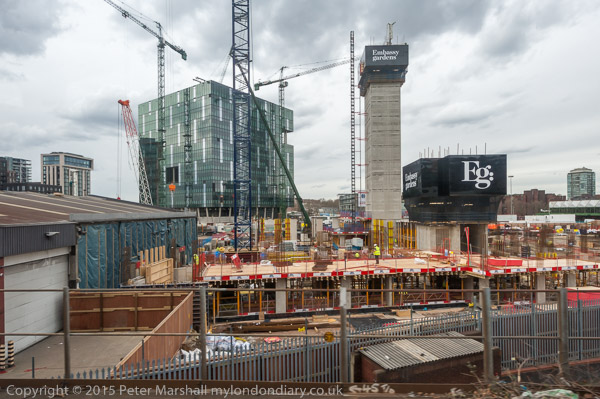
You can see more of the pictures made as I travelled around in January, Febraury and March on My London Diary. There is quite a lot of repetition, particuarly as almost every time I go to London I go past one of its largest development areas at Nine ELms and Vauxhall and have often recorded the progress, particularly on the new US Embassy building there.
Continue reading London Transport

September 2016


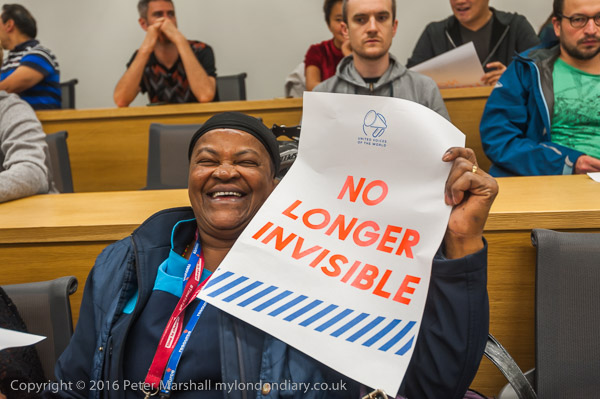
Cleaners launch their campaign at the LSE for fair treatment

It’s been harder work than usual to finish the ‘My London Diary’ entries for September, but I was determined to do so before the end of October, and have just made it. I’m not sure why, but I’m finding it harder to really get down to work, and there were quite a few things that took up rather a lot of time, both events that make the diary and those that are more personal.  Or perhaps I’m just slowing down…

I did spend quite a lot of time writing a new talk, which I’d hoped to have given by now, but the event was cancelled. It isn’t quite finished yet, but I think all except the last-minute touches. And I did get a new camera, and have been spending quite a bit of time reading the manual and trying without much success to get my head around it.  The D750 isn’t a great deal different from the ageing D700 it will eventually replace, but enough to make life a little difficult, and I don’t yet feel confident to take it out for serious work. The D700 has obviously reacted to its usurper and, with a little help from me, has decided to more or less cooperate with the SB800 flash again, at least sometimes.

September 2016

LSE Cleaners campaign launch
Simon Elmer of ASH indicts LSE
Working Class debate at LSE Resist


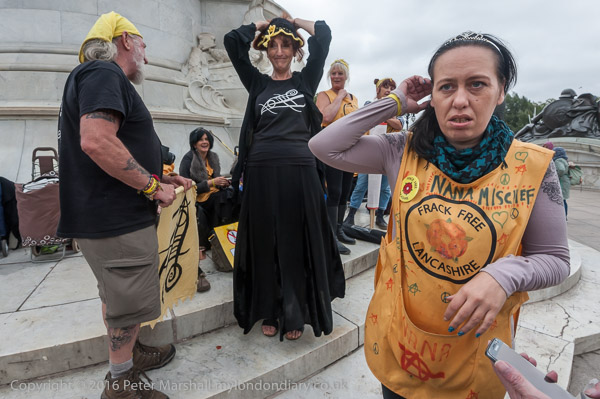
Nanas call on Queen to stop Fracking
Polish Women’s ‘Black Protest for Choice’
The Ritzy’s Back for a Living Wage
Focus E15 – 3 years of resistance
Release the Craigavon Two
London Stands with Standing Rock
Life Jacket ‘graveyard’
Brixton Railway Arches


Save Passing Clouds
Awakening Compassion’ Vegan protest
Stop CETA at Canada House
Refugees Welcome Here
London to Greenwich & back
South Hill Park again


Shut Down Yarl’s Wood
Holborn Viaduct to Bethnal Green


DPAC block bridge over benefit deaths
‘No More Benefit Deaths’ rally
Giant Banner ‘No More Benefit Deaths
DPAC at Bromley Job Centre
BMA Work Fitness Assessments protest
Druids vigil against fracking
DPAC against cuts in care & support
Rival Brexit protests at Parliament
RCG Street Stall in Brixton


Baaba Mall boycott Israel
Sports Direct Day of Shame


Justice for Dalian Atkinson at IPCC


London Images

Continue reading September 2016

Killed by Roses


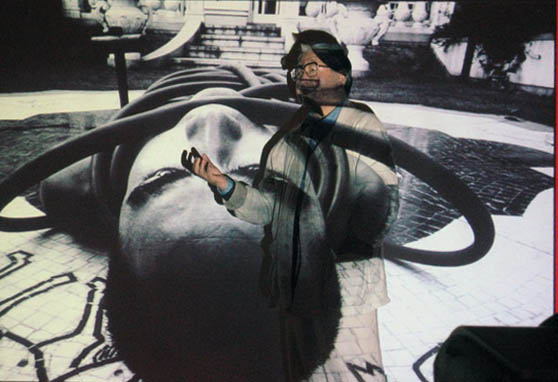
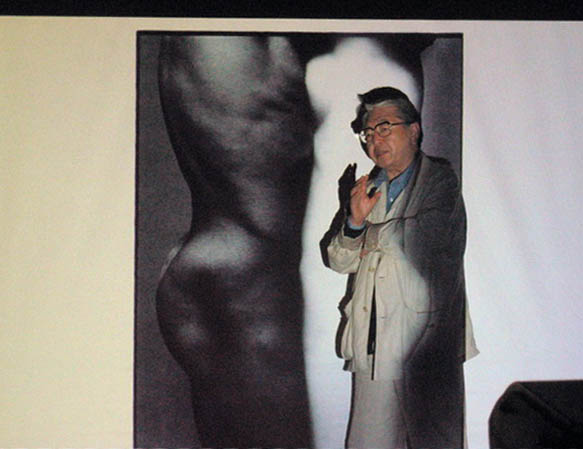
Eikoh Hosoe and one of his pictures from Ordeal by Roses

Today’s L’Œil de la Photographie with its article Eikoh Hosoe, Barakei A portrait of Yukio Mishima brought back memories to be of a few days spent in company with him and other photographers back in 2005 in Bielsko-Biala, at their first FotoArtFestival.


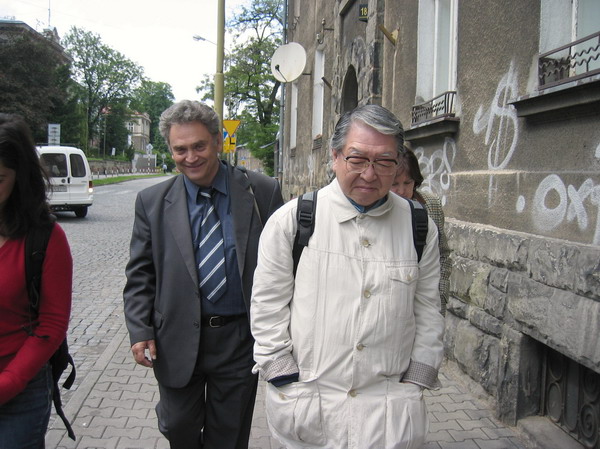
Eikoh Hosoe in Bielsko-Biala

It was a great privilege for me to be invited to show some of my urban landscape work from London’s Industrial Heritage along with such distinguished company as Eikoh Hosoe, Ami Vitale, Boris Mikhajlov and Malick Sidibe, as well as many rising stars and a few of those no longer with us, Mario Giacomelli, Inge Morath and Robert Diament, as one of 25 photographers representing 25 countries around the world.


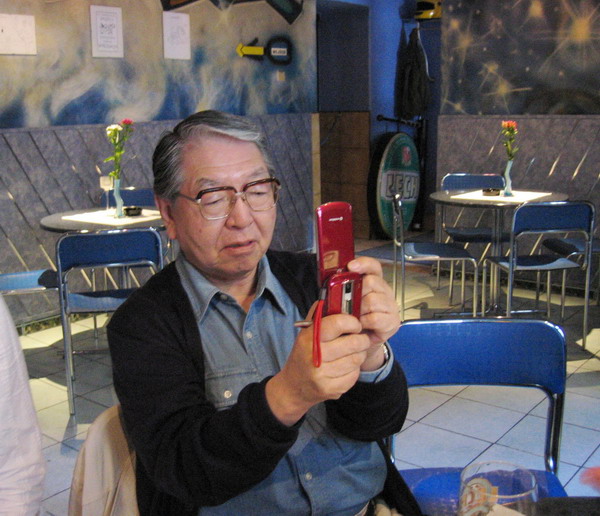
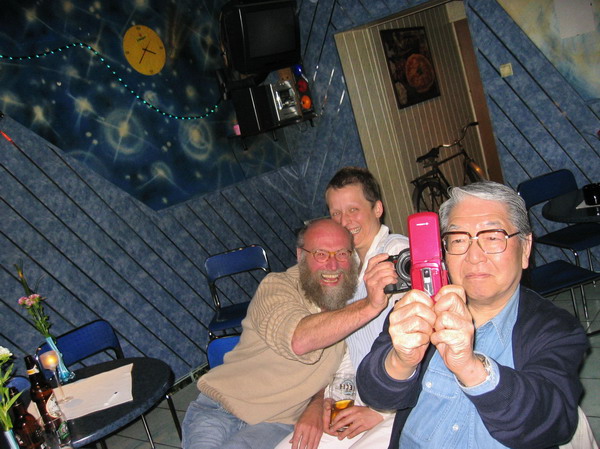
Eikoe Hosoe uses his pink phone camera

I’d travelled light to Poland, and had only taken a small digital pocket camera, a Canon Ixus. It was an excellent camera for the time, but in some of the dimly lit interiors I did find myself wishing I had brought a Nikon. But it was a small and pocketable camera, and I think did remarkably well all things considered. You can see more pictures I took with it on the trip in my FotoArtFestival Diary, along with some of one of my three talks there. As well as presenting my own work, I also gave presentations on the work of two great British photographers, Tony Ray Jones and Raymond Moore, and on the work of some of my London Friends, Paul Baldesare, Jim Barron, Derek Ridgers, Mike Seaborne and Dave Trainer.


Eikoh Hosoe photographs me photographing him

What was remarkable apart from the photography was the atmosphere and camaraderie among the group of photographers there, some of the exhibitors and a few of their friends. Any ice between us had been broken at the press conference, which was enlivened by vitriolic attack on me as a British colonialist by one vodka-fuelled photographer as I got up to speak, enabling me to reply with a robust statement of some of my own political views and working class background, a family history of being screwed by that very same ‘elite’, ending up with us embracing each other – and going to a bar with most of the other photographers. Though I stuck firmly to my own resolve not to drink vodka, the beer was good.


Eikoh Hosoe

Hosoe was certainly the most distinguished of the photographers present, and probably too the oldest, and had a typically Japanese quiet reserve which was rather at odds with his photographic work. Though as some of these pictures show, by the end of the event he was very much one of us.


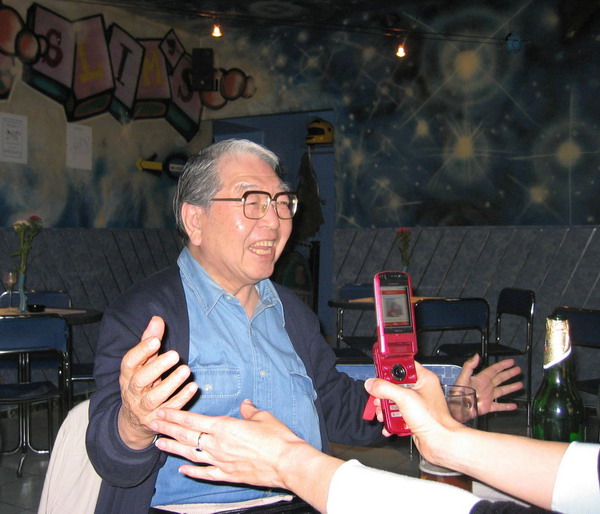
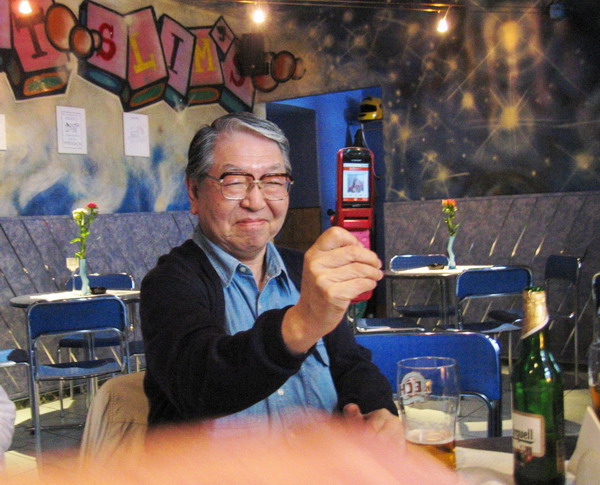
Eikoh Hosoe shows a picture on his pink phone

The ‘Eye of Photography’ feature accompanies a show of the work Bara-kei, (1961–1962) more often known in English as ‘Ordeal by Roses’, homoerotic images of melodramatic poses by the writer Yukio Mishima, one of Japan’s leading postwar writers, also a poet, playwright and actor as well as a nationalist who founded his own small right-wing student militia, the Tatenokai, taken in Mishima’s own house in TOkoyo. His work set out to break taboos and upset cultural traditions, with an emphasis on sexuality, death and political change, a delusion that led in 1970 to him with just four of his militia to perform a coup attempt to restore the power and divinity of the emperor, thought to have been a dramatic staging for his own ritual suicide with which it ended.


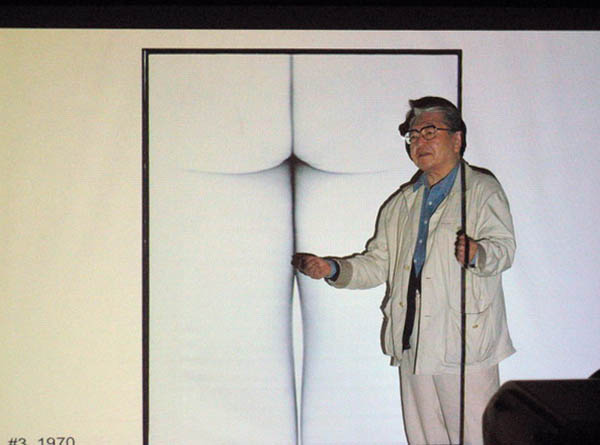
Eikoh Hosoe talks about one of his pictures

The Show ‘Barakei – Killed by Roses’ is at the Galerie Eric Mouchet in the Rue Jacob in Paris from today until December 23, 2016.


and another

You can see and hear him talking about some of his work in a video made for the Art Gallery of New South Wales.

There is a good selection of his work on Artsy – or you can search on Google Images. Although his work is on many gallery sites he does not seem to have his own web site. He has been the director of the Kiyosato Museum of Photographic Arts since its foundation i 1995. There is a nice piece on him, Eikoh Hosoe – Kamaitachi – From Memory to Dream by Rob Cook in The Gallery of Photographic History

Continue reading Killed by Roses

Devastated

Devastated.


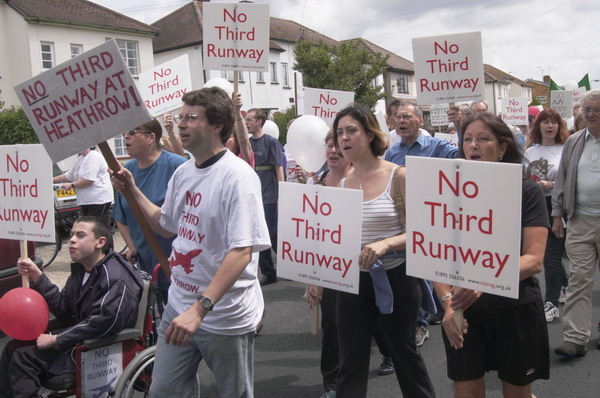
Protesters march from Sipson to Harmondsworth, June 2003

But the fight is far from over, and I think that eventually truth and reason will prevail, and that Boris and others who say the third runway is undeliverable will be proved correct. At least I hope so, and like many others will do my bit to make it so.


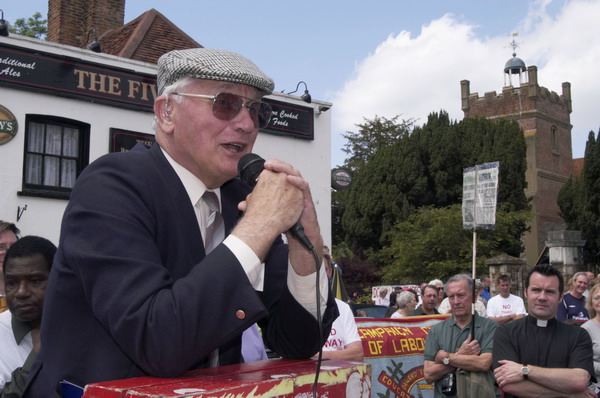
Rally against 3rd runway at Harmondswith, June 2003. In the background a placard is a newspaper report with Heathrow’s claim that T5 would be their last airport expansion

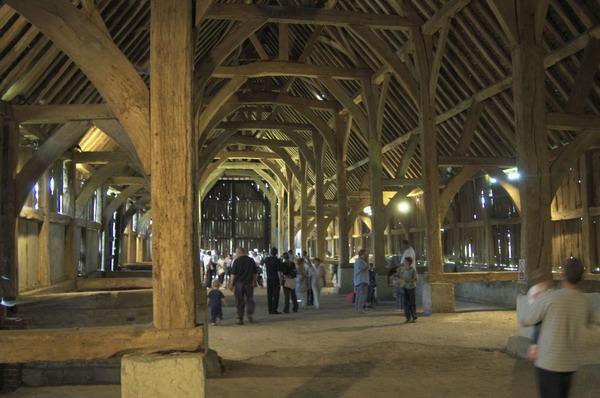
Heathrow has always been built on lies. It started as a ‘military’ airport for which there was no military need, but which in wartime allowed the airport’s proponents to get a civil scheme started which would have probably proved impossible in peacetime. The very name – that of the village it obliterated – was retained to suggest that it was a development on bare and barren land rather than, as the vast tithe barn at Harmondsworth attests, some of the richest agricultural land in the country.


Harmondsworth tithe barn, June 2003

Every major development at Heathrow has been accompanied by the lie that this would be the last – while at the same time the Heathrow bosses were already preparing for the next expansion.

I grew up and have lived most of my life in the area, much the same age as the airport. One of my late brothers at one time worked there, along with many others that I knew. I’ve grown to live with the noise and the traffic, though it can still annoy, particularly when conversation sitting in the garden during the summer becomes impossible, or a low-flying aircraft wakes me up during the times that night flights are banned.


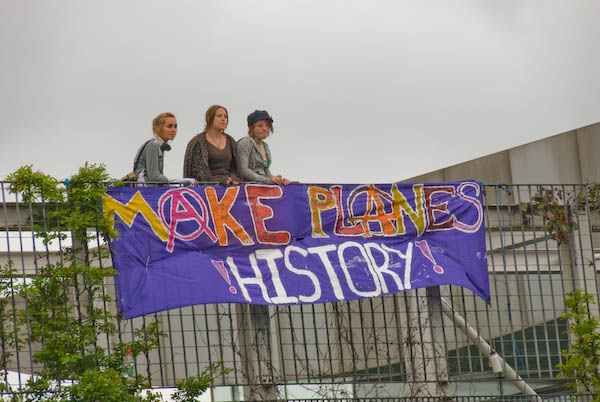
‘Make Planes History – Plane Stupid at Heathrow, August 2007

My objections to Heathrow are not a matter of nimbyism – which the government is trying to make out, though I do believe that the airport should have been moved to a more suitable location at least 50 years ago – and that its current site could be put to uses that would be of more benefit both to London and to the national economy.


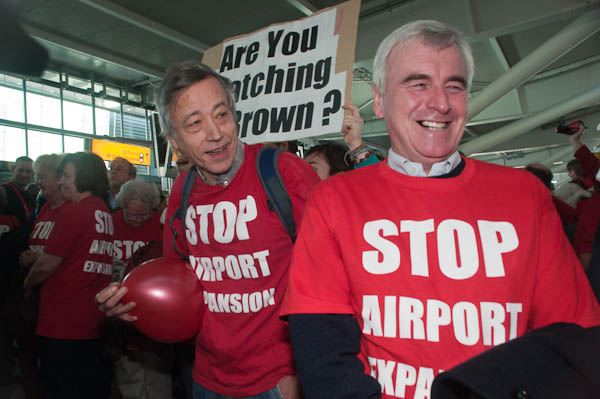
John McDonnell MP at T5 flashmob against 3rd runway, January 2009

The contribution that aviation makes to the national economy, another aspect stressed bv the government is yet another lie, conveniently forgetting the subsidies and associated costs – including those due to congestion and pollution. Also overlooked is the huge contribution that it makes to global warming.


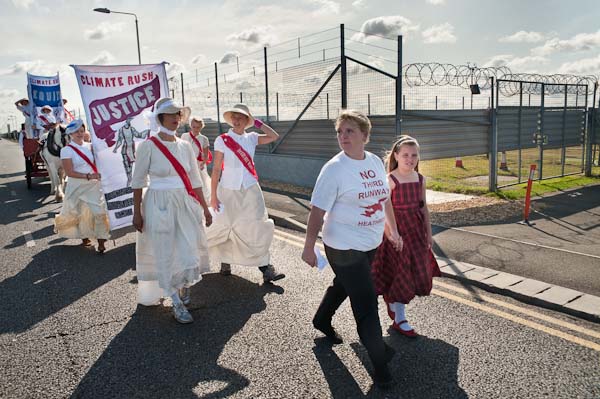
Climate Rush and local actitivists at Heathrow against 3rd runway, September 2009

Cloud-cuckoo forecasts of growth in demand are no basis for national policy on aviation or any other huge national expenditure or infrastructure development. Sooner or later the realities of climate change have to be acknowledged – though it may already be too late.


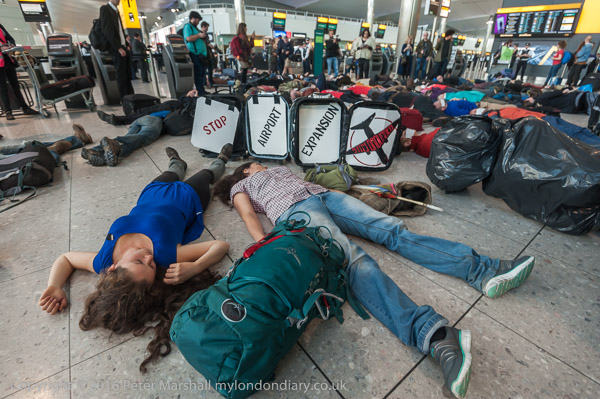
Reclaim The Power T2 flash mob against airport expansion, October 2016

There are a number of reasons why I think the scheme will be undeliverable, dogged by legal challenges and by mass protests, including some which will take new forms. It takes very little, for example, to cause total grid-lock in the very overstressed road systems of the area, which includes the M25, M4 and M3, and entirely legal forms of protest could bring the whole area to a halt and effectively close the airport – even if the construction work for Heathrow has not already had that effect.

And in the unlikely future that the new runway is built, I forecast that its opening date – probably around my 90th birthday in 2035 – will be almost immediately followed by the closure of the airport on environmental grounds.
Continue reading Devastated

Post in the Past?

I’m not against post-production. Certainly not, in fact I view it as an essential part of being professional about your photography. I still refuse to send off images without making necessary corrections just as long years ago I would have spent time in the darkroom carefully printing my images before delivering them to the library.

There are those who view professionalism as simply being about making money from your work, and it does slightly pain me to know – and to be often told by agencies – that I would make more if I sent my images in immediately, preferably within minutes or even seconds of taking them, and without what I consider to be essential care. Fortunately I can now afford to be more worried about my reputation than my income.

But I do have to agree with most of what Grant Scott writes on ‘The United Nations of Photography’ in his post ‘OPINION: Post-Production Should Be In The Past‘. In particular when he states “I have no issue with post production as a process but I do when that process leads, dictates and dominates the process of photography“, a mistake he sees in too many portrait photographers, who use Photoshop to impose their style rather than creating “an honest and truthful representation of the person being photographed“.

I take a lot of pictures of people, but have never thought of myself as a portrait photographer, perhaps mainly because I’ve never enjoyed employing the kind of artifice that many rely on. Though I can admire it in the work of others, in particular in the work of fine photographers such as Bill Brandt, Brian Griffin and many more, I’ve never wanted to work in that way. I prefer to simply watch people and to think about how I can use the elements of the situation they are in and their expressions to give what seems to me a true and accurate reflection.

But the raw file the camera saves isn’t yet a picture. It needs interpretation, some of which is provided by various computer algorithms (and rather more if you take jpegs.) My aim is always to produce a final image that I can look at and say ‘that’s how I saw it’ rather than make a striking picture. And it can take quite a lot of ‘post’ particularly on occasions when the camera has introduced its own peculiar view full of flare but otherwise treating everything in the frame with an equality that doesn’t match my vision.

Trident


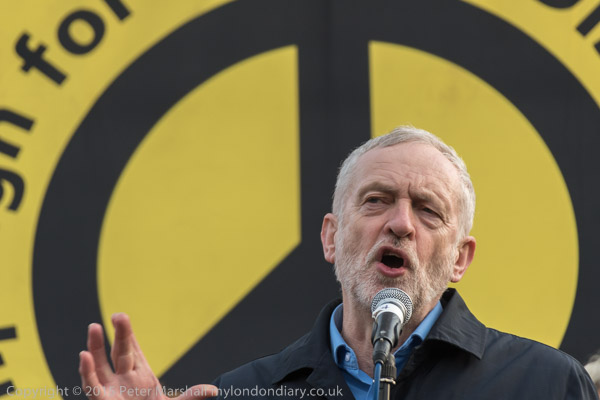
Jeremy Corbyn

I’ve seen rather less of Jeremy Corbyn since he became Labour leader, and at some events he has been surrounded by a baying crowd of photographers and TV crews that I seldom want to join.

At least when he was speaking on the platform at Trafalgar Square there was a clear view for all of us in the press area below the plinth the speakers use as a platform.

It isn’t an ideal viewpoint, and generally I like to stand some way back as otherwise you are looking rather steeply up at the speakers. Microphones also tend to get rather in the way, and sometimes the background can be rather messy. The obvious background for the speakers was of course the CND symbol on a number of banners. Depending on the angle I chose there was either a rather bright phthalocyanine blue or the mustard yellow which I chose for the image above. Mainly because of its position rather than its colour, but I do like the contrast between it and the blue of Corby’s shirt.

It’s at events like this I do and don’t wish that I had one of those military size telephoto zooms,  though Nikon’s versions are perhaps a little less impressive than their Canon counterparts. But the Nikon 200-400mm f4 G VR II AF-S ED would have been quite useful, though at only 14 inches long and around 7.5 pounds weight it is hardly in the major league.  Instead I had the 28-200mm f/3.5-5.6 G, working at its slightly soft 200mm maximum on DX format as 300mm equivalent in DX format on the D810. Taken at 1/500 f5.6 ISO 800 it isn’t bad – and the lens cost me – secondhand – around one thirtieth the cost of the 200-400 monster and weighs around a tenth as much.

I’d been standing around a couple of hours taking pictures of the many other speakers as we all waited for Corbyn to get back from Sheffield and rush from St Pancras station to speak. Even with my lightweight lens I was in pain from back ache, and I would never have lasted the wait with the heavy beast.


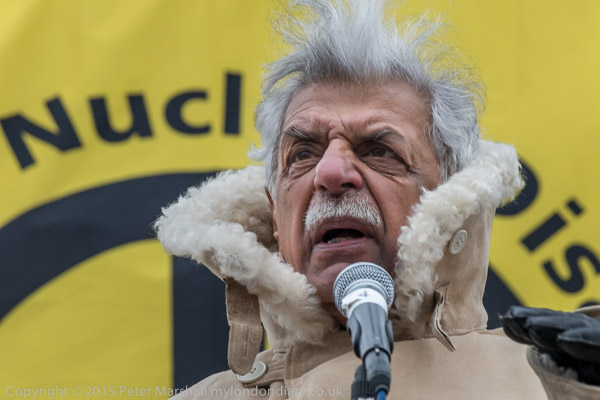
Tariq Ali in an ex-Russian Army winter coat

That lightweight lens is long obsolete, and back in 2003 was one that Nikon gear-fanatic snobs very much looked down on. But there is a lot to be said for a lens that covers such a wide range and is so light and compact. Looked at on screen at 50 inches wide (I only see around a third of the image width at a time) you can see it is slightly soft and would benefit from a little ‘smart sharpening’ but every one of Jeremy’s and Tariq’s facial hairs is clearly and distinctly visible. It would have been just a little sharper had I stopped down from full aperture, but it is still a usable lens for all but the most critical of applications (and I’m not sure what that would be – other than a reviewer’s cliché.) Although I took some photographs at these two events with the 16-35mm, all those in this post were made with this very versatile lens.

There were plenty of other faces to photograph, some very well-known and others less so, Kate Hudson, Vanessa Redgrave, Nicola Sturgeon, Leanne Wood, Caroline Lucas, Mark Serwotka, Bruce Kent, Giles Fraser, Christine Blower among them. You can see pictures of all of them and a few of the crowd at Stop Trident Rally.

It’s hard to find anyone outside the few who will profit greatly from the money spent on replacing Trident who would stand on any platform to support it. Most of the military see our so-called nuclear deterrent as an expensive and redundant side-show. It isn’t a weapon but a massive status symbol, and one we would be better off without.


On the march at Hyde Park Corner

There were (according to CND) sixty thousand people on the march, and it was certainly a large one, even if my guess would have been a little less than their. It was quite a struggle to get through the crowd that was packing Park Lane to reach the front of the march, where heavy stewarding made it difficult to take pictures.


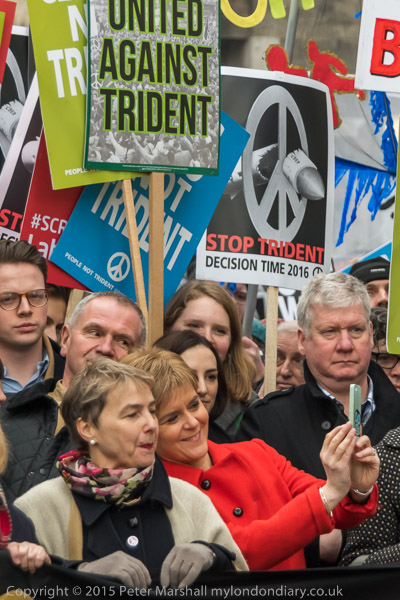
A quick selfie

But there holding the main banner, were many of those who would later speak, including Nicola Sturgeon, taking a selfie with Kate Hudson.


On the march in Park Lane

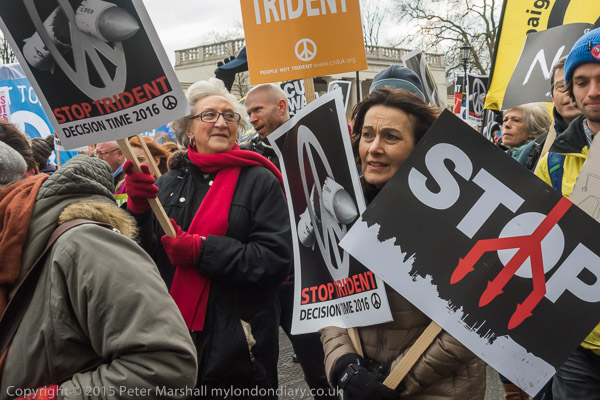
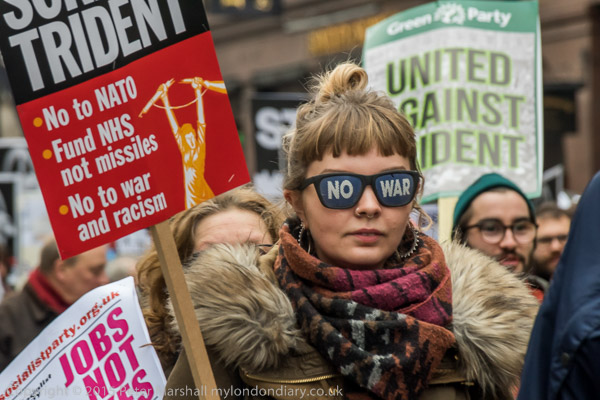
But it’s generally the rest of the protesters that I like to photograph, like this woman with her dark glasses and others in the body of the march. It’s the 30,000 or 50,000 people that are the real story of the march, not the few that are well-known.


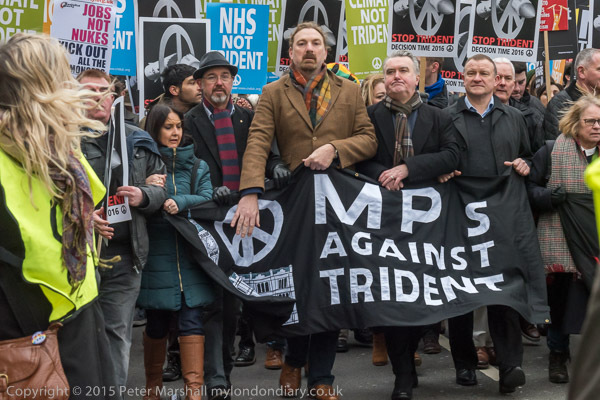
MPs Against Trident enter Trafalgar Square at the front of the march

I’m also not too good at recognising people. I think I’ve always suffered, though fortunately very mildly, from prosopagnosia or ‘face blindness’, which gave me some problems when I was teaching and sometimes when watching films and TV. Now I almost never watch  TV, which in itself makes recognising ‘celebrities’ something of a problem. Though I sometimes wonder if a touch of prosopagnosia might actually help when photographing faces, perhaps enabling you to see what is really there at the time rather than being misled by preconceptions.

Stop Trident Rally
Stop Trident March
Continue reading Trident

Safe Passage

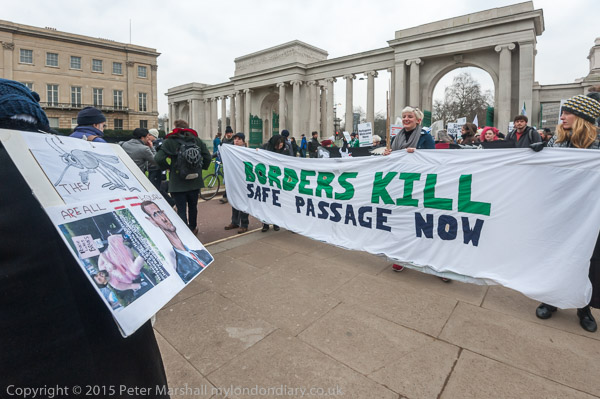
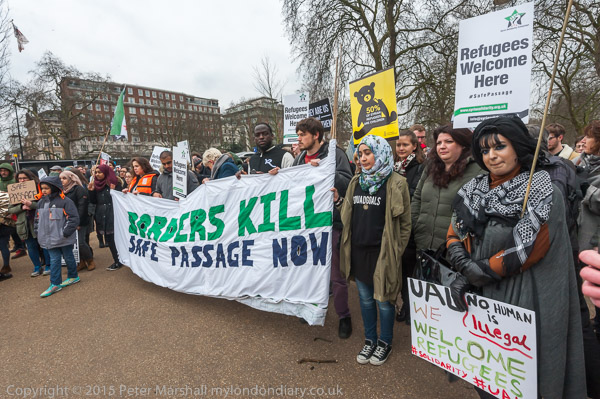
It seemed appropriate to photograph the banner ‘Borders Kill – Safe Passage Now’ in front of one of London’s larger gates at Hyde Park Corner, open when so many of the gates to Europe and between European countries are now closed to refugees.

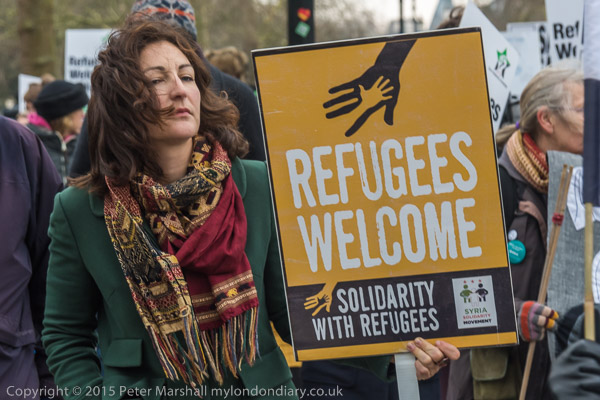
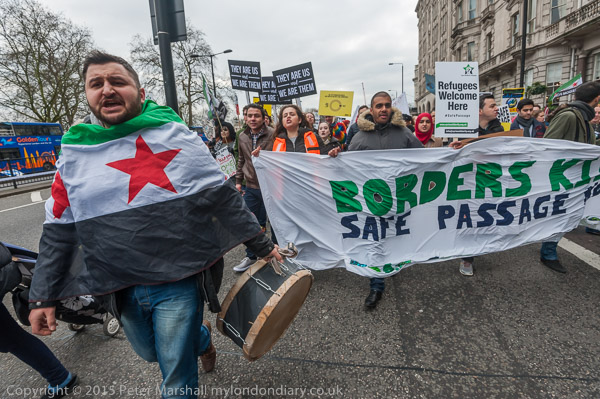
The European March for Refugee Rights was organised and supported by a number of groups, including those representing Syrians from where many of the refugees come and the many groups which have been engaged at providing practical support on the Greek Islands, Calais and elsewhere. Many of those who marched had been volunteers working with refugees at these places, and they included a group of young doctors who had been volunteers with Medicins Sans Frontiers in Syria.

The march was to demand ‘Safe Passage’ for refugees – as the organisers put it:

#SafePasssage means legal and safe routes: no more deaths at our borders

#SafePasssage means protection for refugees on their travel through Europe

#SafePasssage means high standards of reception and asylum in all European countries, no longer diminishing the rights of asylum seekers and refugees, allowing refugees to keep their belongings, allowing them to be reunited with their families immediately and providing stability as far as their right of residence is concerned.

These people are running away from war, persecution and starvation. But Europe is looking the other way – a death count in the Mediterranean Sea of 360 men, women and children in January 2016 and appalling conditions in refugee camps like Calais and Dunkirk speak for themselves.

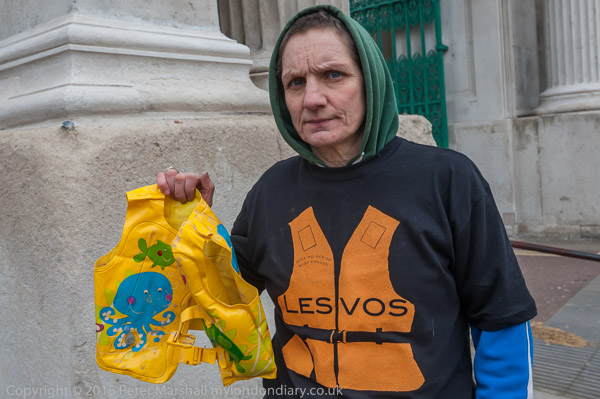
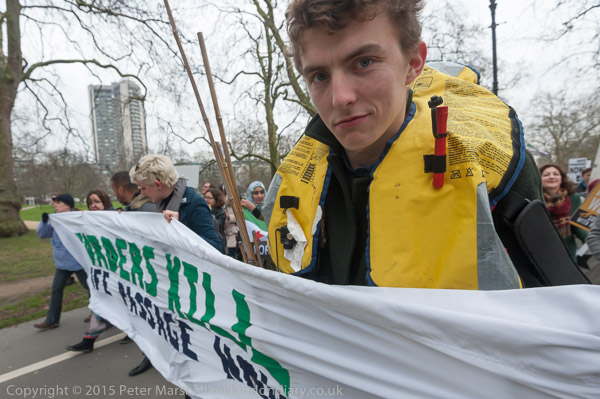
One woman who I’d photographed at earlier protests was wearing a ‘Lesvos’ t-shirt with an image of a life-jacket on it, and held up a small child’s jacket with a cartoon octopus and fishes on she had brought back that had been worn by a child arriving there from Turkey, fortunate that it had not been tested on the journey as it looked more of a fun beach item than a serious life-saver. Others too wore more serious life-jackets on the march.

It wasn’t a huge protest – a few hundred people – timed to be on the same day as other larger protests in cities across Europe, but unfortunately clashing with a long -planned march in London against Trident by CND, Stop the War and others which was supposed to be starting from Marble Arch.

They marched through Hyde Park to Speakers’ Corner, where they held a short rally, and then went many of them went to find the front of the Trident march, which turned out to be close to where they had started at Hyde Park Corner at the west end of Piccadilly.

When they tried to walk past to the front of the Trident march, the Stop the War stewards objected and tried to hold them back, but they persisted, and eventually they made their way past to march down Piccadilly towards Parliament, with the stewards holding back the main march for around ten minutes to create a gap between the Refugee March and Stop Trident.

Continue reading Safe Passage