Theatre of Protest

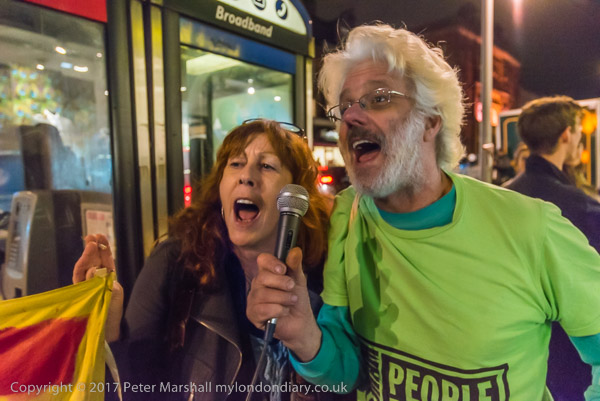
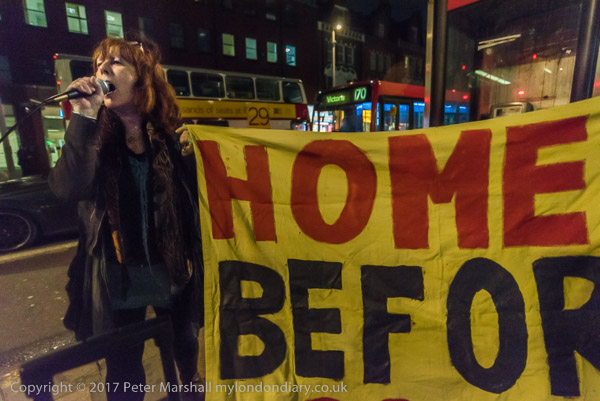
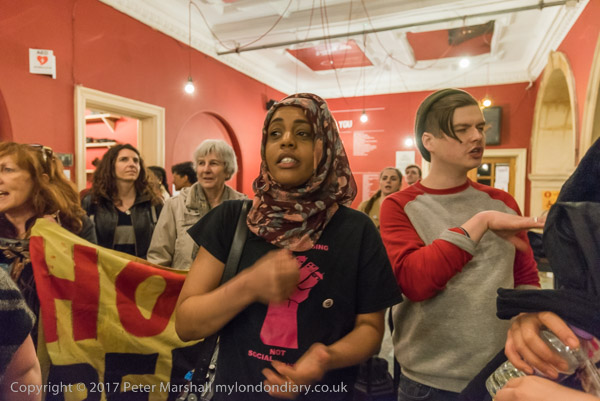
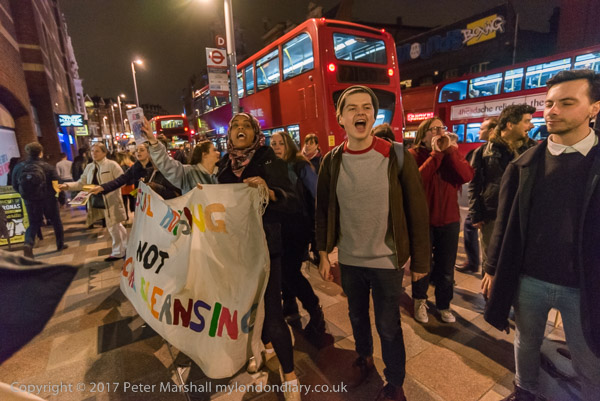
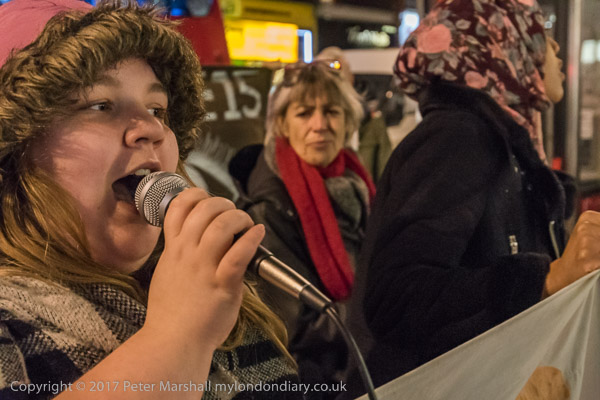
The Lung Theatre ‘E15’ march to BAC was a slightly unsettling event, both protest and theatre, in which I was both photographing an event and playing a photographer photographing an event, along with protesters, most of whom I knew at least slightly, and some I had photographed before at many events and among them the performers from Lung Theatre.

Lung Theatre’s ‘E15‘ is ‘verbatim theatre‘, using the actual words of housing protesters, largely from Focus E15, but also from Sweets Way and elsewhere in a theatre performance, and their run of several weeks at the Battersea Arts Centre was beginning that evening.

The ‘protest’ was an opening event – and I suppose could be called a ‘publicity stunt’ though there were protesters there handing out leaflets about housing in London and publicity for their future protests. It was perhaps a little displaced as these were not in Battersea  but across the city in Stratford, but similar things are happening in all the boroughs across the capital – and indeed in other cities.

All protests – and perhaps in particular those organised by groups like Focus E15 – have an element of theatre, and this certainly looked and felt and was a protest as it handed out leaflets (including those about the theatre performances), held banners and spoke and chanted about housing issues outside Clapham Junction station (which is of course in Battersea) before the short march up the road to the theatre. And like all the best protests it took the road for the march.

I did have some problems taking pictures. The street outside the station is very crowded and rather dark where the protesters had chosen to stand,  though with quite a lot of light of various colours spilling from some shop windows – and in some areas of the protest this was useful. Lavender Hill up which they later marched seems very poorly lit for a major road.

For the static protest I worked without flash at ISO6400, I think mostly on auto-ISO with the limit set at that ISO. I was working in Shutter priority mode, setting speeds mainly of 1/100 or 1/125th, but my usual finger fiddling problems meant I made a few exposures at higher shutter speeds – like 1/500th or even faster –  which at full aperture resulted in several stops of underexposure and a few of the noisiest images I’ve ever used – perhaps exposed at ISO51,200.

Lightroom can do a reasonable job at producing an image out of more or less nothing, but there are limits. When you push images you also get the shadow changing from black to a deep mauve which needs a little local application of a tint to try and neutralise. And in lighter even areas such as the grey of the road surface you can see some purple patches. Mostly I just deleted these vastly underexposed images, but in a  few I felt the problems gave a strong graphic effect and retained them.

Once the march started, I had to switch to flash as there was just too much movement. Again I kept to high ISOs to record some of the street further from my flash.  As so often, I had problems with flash; Nikon’s flash system is great and always works when I test it, but somehow in the heat of the moment it sometimes refuses to play the game properly. It’s probably me rather than the machine, and just shows that while the system is great it isn’t foolproof!

Although I was invited to see the show that evening I was keen to go home and eat and work on the pictures, and it was not until a couple of weeks later that I actually did so, having been invited to sit on a panel discussion at the end of the performance about the role of the arts in protest, along with fellow panelists, theatre director Max StaffordClark,  Guardian journalist Dawn Foster and comedian Jeremy Hardy.

I seldom speak in public, much preferring to write where I can consider my thoughts at greater length and try and chose the correct word, but I was more on my home ground that the others and my stern critic in the audience felt I had done pretty well, though Jeremy did get more laughs.

Lung Theatre ‘E15’ march to BAC

Continue reading Theatre of Protest

An Exodus of Pain

I’ve written many times about seeing things from different viewpoints, and in particular about getting away from seeing things in the often blinkered viewpoint imposed on much of our mass media by the small group – a handful – of billionaires who own and control our media.

Even if we pride ourselves on the independence of the BBC, its news agenda is largely driven by the major newspapers and its close relationship with the British establishment often determines the line it takes on issues.

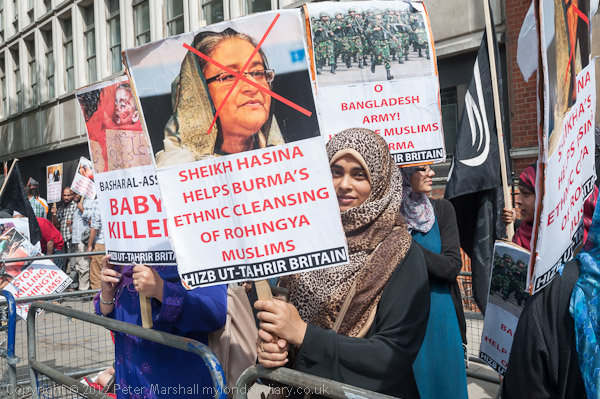
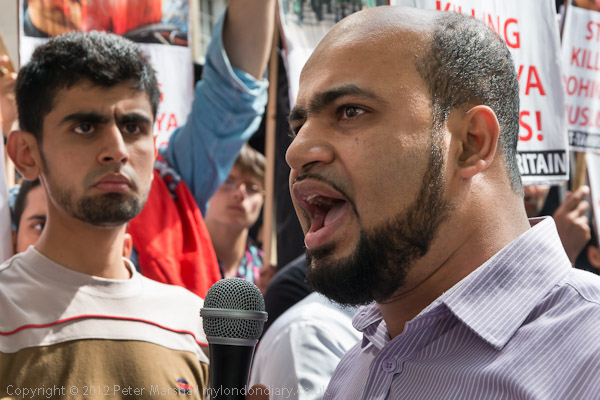
I first reported on the Rohingya and their mis-treatment by Myanmar over 5 years ago, but the story then was hardly taken up by the UK press. I didn’t go there, but was alerted to what was happening largely by overseas media and in particular by a group many in Britain say should be banned, Hizb ut-Tahrir, who protested outside the Bangladesh High Commission. Bangladesh was then blocking of aid to Rohingya refugees by NGOs and sending them back to be oppressed in Myanmar (Burma.)

It wasn’t a great protest to photograph, and Hizb ut-Tahrir were often rather suspicious (with some justification) of the media, but I wrote a fairly lengthy piece about the situation on My London Diary.

Of course things have changed since then and the situation has deteriorated greatly for the Rohingya, and the story has been taken up again world-wide. A few days ago I wrote a post about some of the photographic coverage in The Salgado Effect, and it’s good now to see a view from Bangladesh itself, photographed by Shahidul Alam of Drik/Majority World with text by Lyndall Stein, An Exodus of Pain half a million people driven from their homes.

Continue reading An Exodus of Pain

Hull Photos: 22/9/17 – 28/9/17

Another week of Hull photos and comments. You can see the new pictures every day on Hull Photos or better on Facebook, where these comments also appear.

Comments on the images welcomed here or on Facebook.

22nd September 2017

A man walks his dog in front of rubble from demolition. In the background at left is the rear of Stepney Primary School, and to its right the rear of the baths and a rather small and undistinguished chimney which still stands. The larger chimney to the right, also seen in the previous picture may have been a part of the Beverley Rd Baths.

The Cottingham Drain, culverted some years before I took this picture, ran behind the school and baths, close to where this picture was taken.
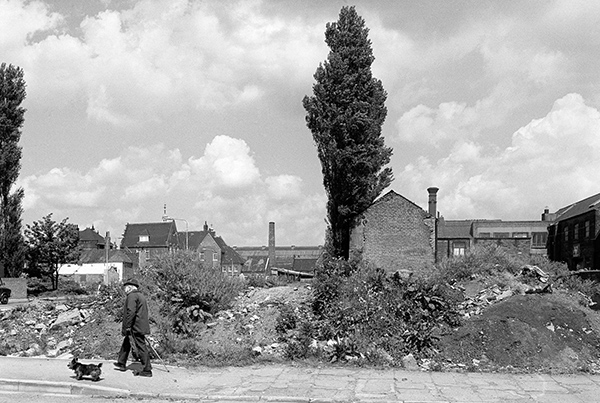

85-5g-25: Man and dog, Epworth St area, 1985 – Beverley Rd

23rd September 2017

Taken from the embankment of the former Hull and Barnsley railway close to Bridlington Avenue this view has a wide sweep of Hull industry in the background, with Reckitt’s chimney and the British Extracting Co silo. But dominating the middle ground are the Grade II listed Northumberland Avenue Almshouses, built in 1884-87 for the Hull Charity Trustees by architects Richard George Smith & Frederick Stead Brodrick of Hull in a domestic Tudor revival style.

According to the Victoria County History at British History Online these new almshouses replaced nine existing ‘Municipal Hospitals’, Crowle’s, Ellis’s, Gee’s, Gregg’s, Harrison’s and Fox’s, Lister’s, Watson’s, and Weaver’s Hospitals. The new almshouses cost £15,000 and took in 114 inmates from the old hospitals.

Northumberland Court is still run by Hull United Charities and is a category 2 sheltered housing scheme for persons over the age of 55, and is now 58 modernised self-contained flats. The site also includes Richardson Court which also provides sheltered housing.
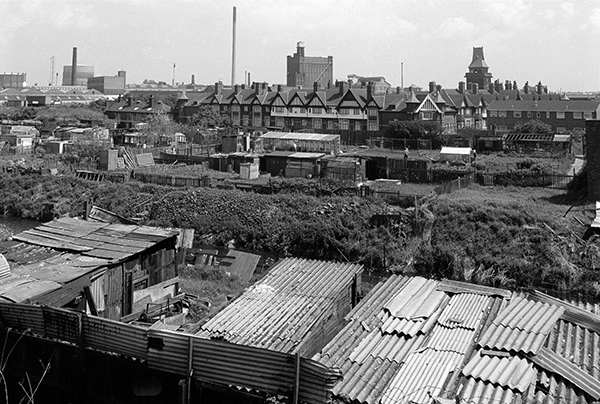

85-5g-42: Beverley & Barmston Drain, allotments & Northumberland Court, 1985 – Beverley Rd

24th September 2017

From the same viewpoint as the previous image, a telephoto view of the Grade II listed Northumberland Avenue Almshouses shows more clearly the work of Smith & Brodrick. In Yorkshire: York and the East Riding, Nikolaus Pevsner and David Neave state they “had the largest (architectural) practice in East Yorkshire, but their work is of mixed quality, with the more distinctive buildings from the late 1870s suggesting the influence of Norman Shaw and the Queen Anne style.” The building is certainly impressive – if not to everyone’s taste – and despite its large overall size gives the feeling of domesticity, essentially a long terrace of smaller houses, with the added accent of the clock tower.

Two of Hull’s other listed buildings appear behind it, the British Extracting Co Ltd silo with its water tower with a puzzling logo, and just visible right of centre close to a metal chimney, the control room on top of the Wilmington Railway Swing Bridge.
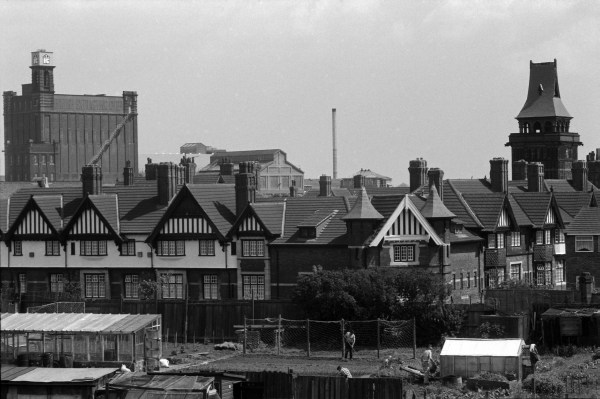

85-5g-43: Northumberland Avenue Almshouses from the Hull & Barnsley embankment, 1985 – Beverley Rd


25th September 2017

Robert Paul (1806-1864) founded Pauls Malt Ltd in Ipswich around 1842, after the family business with a small brewery and its 15 public houses, a saddlery and an ironmongers had been sold up. The business which at his death had 11 small maltings and six barges, passed to a trust until his two sons, Robert Stocker (1845-1909) and William Francis (1850-1928) reached the age of 24. Under them and with financial help from Robert’s father-in-law the business prospered and diversified into animal feedstuffs flaked maize and shipping, and in 1893 became a private limited company, R & W Paul Ltd. The company purchased a number of other companies in London, Lincolnshire, Norfolk and in 1918, the Hull Malt Company, converting their works to mill animal feeds. Expansion continued with other company purchases and in 1960 the company became public and acquisitions and mergers continued, with the company investing in Belgium, France and Germany.

But the 1979 recession hit the company hard, and shortly before I took this picture the company was acquired by Harrisons and Crosfield, though George Paul, the great great grandson of the founder remained as chief executive Two year later Paul’s took over their major competitor Associated British Maltsters to become the largest maltsters in Europe, but in 1998 Harrisons and Crosfield sold Paul’s to the Irish-based Greencore.

Maizecor Foods Limited appear to have taken over the business and their registered office moved to this address around 1998. Since then the business has had a number of crises, but has managed to continue.

Scott St Bridge was unfortunately closed to traffic in 1994 and has been permanently raised since then, and looks as if it is being deliberately allowed to deteriorate by Hull Council. The council tried unsuccessfully to get permission to demolish this listed building a few years ago but were refused permission by the Government in 2012. Many in Hull would like to see it kept as a part of the city’s heritage and reopened if only as a useful cycle and pedestrian route.
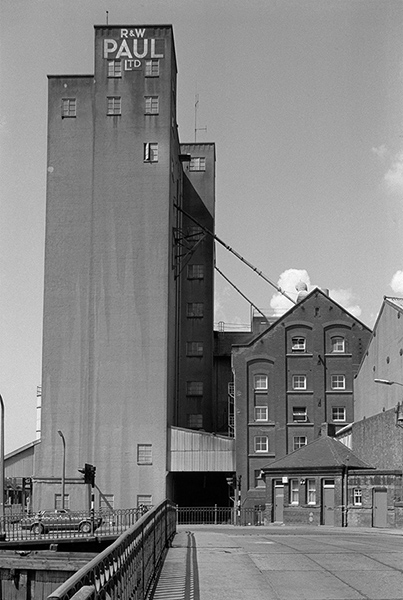

85-5g-51: R & W Paul silo from Scott St Bridge, 1985 – River Hull

26th September 2017

The two buildings closest to the camera on opposite banks of the river are still standing but the other riverside buildings visible here on Wincolmlee have been demolished and the ground stands empty and unused.

The vessel proceeding upriver is the small RIX tanker Beldale H, loaded and fairly deep in the water.

Moored at right is the Krystle, a small 380 tons gross general cargo ship built in Appingedam in the Nethrlands in 1961 which over her lifetime had a succession of names, Visserbank, Aegean Eind, Rene S, and Trio before becoming Krystle from 1985-8 and ending her life as Michelle. She was last recorded at San Lorenzo in 1995 sailing under a Honduran flag and has almost certainly since been lost or broken up.
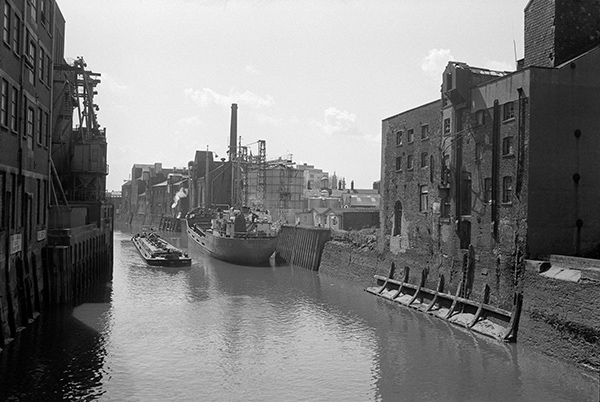

85-5g-52: River Hull, downstream from Scott St Bridge, 1985 – River Hull

27th September 2017

The name on the bridge across Wincolmlee has changed to Maizecor, the windows on the ground floor of the silo have disappeared, though you can still see the ghosts of their presence. There is now a metal security shutter in place of the gated entrance, and the top right window of the brick building has been bricked up but the differences are relatively minor. The lamp post in the foreground is still there, though the actual light fitting has disappeared.

The big difference is out of picture to the right, where the bascules of Scott St Bridge are now locked near vertical, the bridge closed to the road since 1994. The now redundant 10 tonnes weight limit sign has gone, though there are now newer equally unneeded 6’6″ width restriction signs on both sides of the vestigial street leading up to the up-ended roadway, as well as some sturdy black and white striped posts to enforce that limit.

Further down Wincolmlee the public footpath sign as gone, though the path is still there, and three trees above the former Cottingham Drain it runs beside restrict the view of W & J Oliver Engineers and Smiths (now ‘stead engineering’) and the premises beyond.
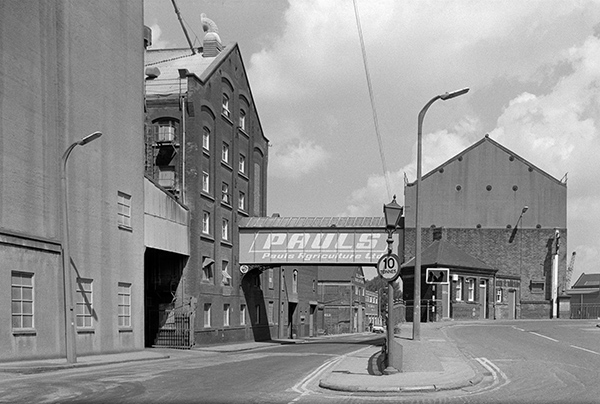

85-5g-53: Wincolmlee and Scott St bridge approach, 1985 – River Hull

28th September 2017

This rather empty yard is now occupied by John Brocklesby Metal Management at 92-96 Lime St, and both the brick building at right and that in the background at the centre of the picture are still there. Whether any of the building at left is hidden beneath metal cladding on the large metal shed now on the site is hard to tell, though I think not.

The low wall at the end of the yard is the river wall, and the more distant building is on the other side of the River Hull, the more northerly of two large mills at around 196 Wincolmlee, the Grade II listed High Flags Mill.
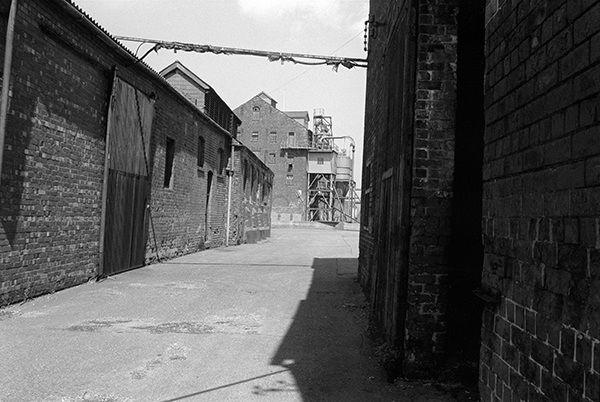

85-5g-62: High Flags Mill from Lime St, 1985 – River Hull

29th September 2017

Taken from Scott St Bridge, this shows one of the older industrial buildings along the River Hull, Paul’s riverbank Granary building, linked on its other side across Wincolmlee to the rest of the mill complex. At the extreme left you can see the bell used to warn of the bridge lifting, in front of the windows of the Paul’s building across Wincolmlee.

The local listing describes it as “Characteristic and increasingly rare historic riverside building. Important for illustrating the history of Hull’s development as a port in the 19th century. Extant in 1853 and pictured in a F. S. Smith drawing of 1888. Distinctive early 20th century iron covered overhead footbridge linking the former granary to the mill across the road has attractive decorative roundels in the wrought iron brackets at either side.”
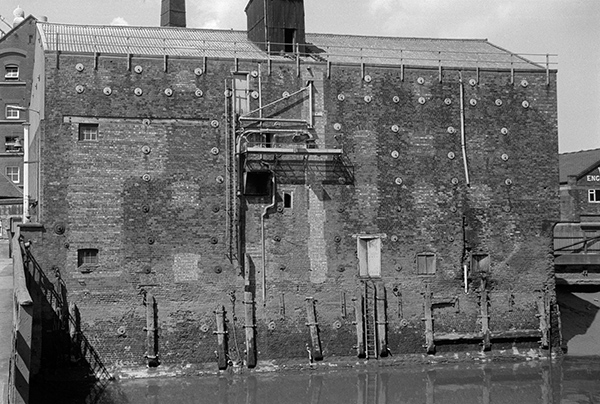

85-5g-66: Granary, R & W Paul, Scott St/River Hull, 1985 – River Hull


You can see the new pictures added each day at Hull Photos, and I post them with the short comments above on Facebook.
Comments and corrections to captions are welcome here or on Facebook.
Continue reading Hull Photos: 22/9/17 – 28/9/17
LSE Action and Arrest

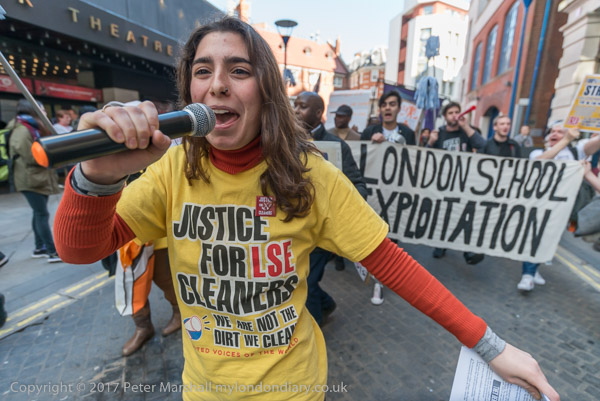
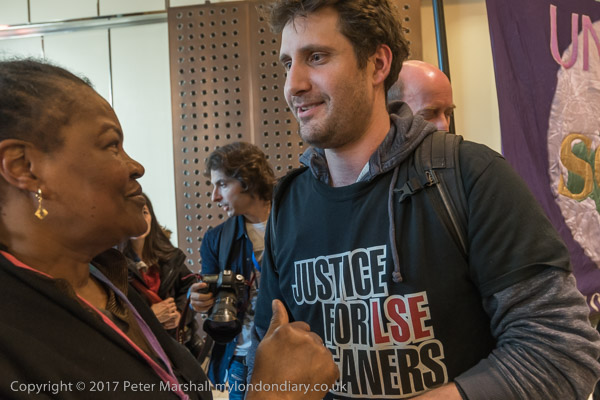
Students, cleaners and supporters continued their series of protests at the LSE for equal sick pay, holidays and pensions etc to similar workers directly employed by the LSE, and for an end to bullying and discrimination by their employer Noonan, including the unfair dismissal of Alba. This rally was on the first day of a two day strike, taken after a complete refusal of the employers to talk with the union.

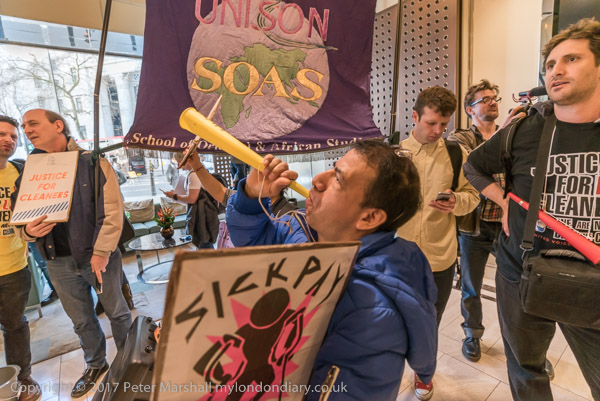
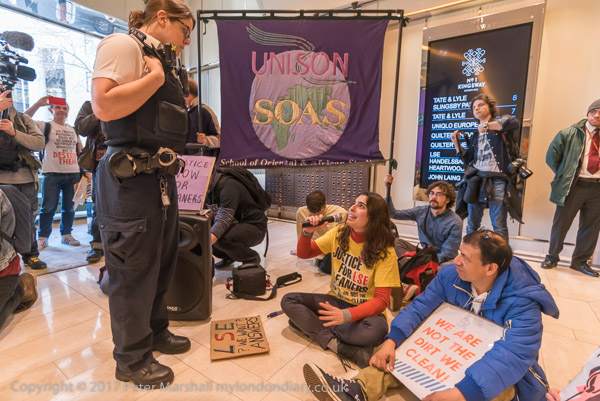
After a lunchtime rally outside the student’s union, the protesters marched to 1 Kingsway, which houses the LSE Estates Office, and a large group walked into the foyer despite the protests of a security man and the receptionist, and occupied this for a little over an hour.

There were speeches about the cleaners demands and chanting of ‘LSE, Shame on You’ and other slogans. After a while the protesters sat of the floor of the foyer, while some others danced to loud music on the PA system. But the protesters were careful to leave a clear path for people leaving and entering the offices for lunch.

Police eventually arrived and talked with both the LSE staff and UVW General Secretary Petros Elia, eventually taking him through the entrance gates to talk with the LSE facilities manager. After a few minutes he emerged smiling, saying that management had finally agreed to have a proper meeting with the union, and the protesters left the building.

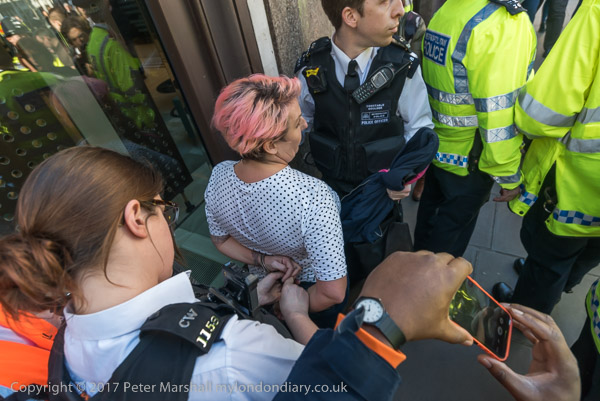
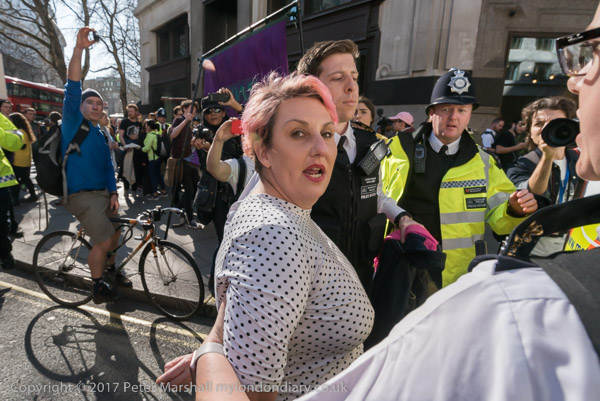
As they stood on the pavement outside sharing the news with those who had not been inside, police suddenly surrounded LSE academic Dr Lisa McKenzie, seizing her and assaulting her. She was arrested and bundled into a police van, charged with having assaulted the building receptionist when the protesters entered the building and she had been holding the UVW banner.

Fortunately her entry into the building had been filmed, showing the charge was false. I had been just a few feet behind her and would have seen had any significant assault had taken place, and there were a number of other witnesses to her innocence.

Lisa stands out because of her hair colour, and also makes her views heard at protest. As I wrote in My London Diary, her arrest on this occasion was  “probably linked to the police feeling aggrieved after failing to achieve a conviction when she was wrongly charged with three offences at a protest in February 2015 at the time she was standing in the General Election against Iain Duncan Smith – a previous arrest that was apparently politically motivated.”

LSE cleaners strike and protest
Police arrest Lisa again

Monday in Westminster

I don’t often cover many events on a Monday, perhaps because not a lot usually happens. Sometimes too, after a busy weekend I need a rest. While most people think of Mon-Fri as the working week, Saturday is almost always my busiest day. I used to cover quite a few events on Sundays too, but now I’m more often in need of a rest after Saturday, and often, like this morning, still have pictures from yesterday to edit from the previous day, having fallen asleep at the computer and decided to give up for the night. But even so, unless there is something I feel important to cover, I still tend to keep Monday as one of my days off.

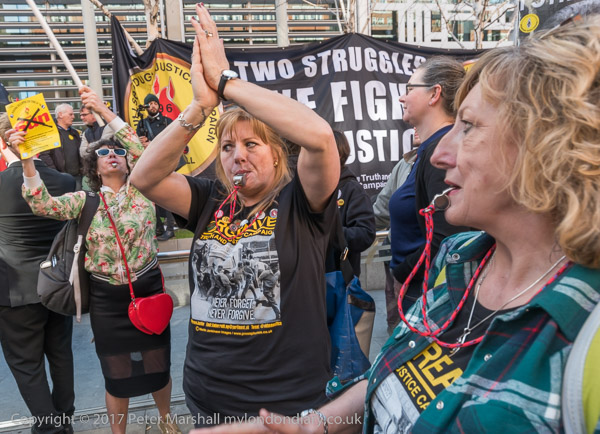
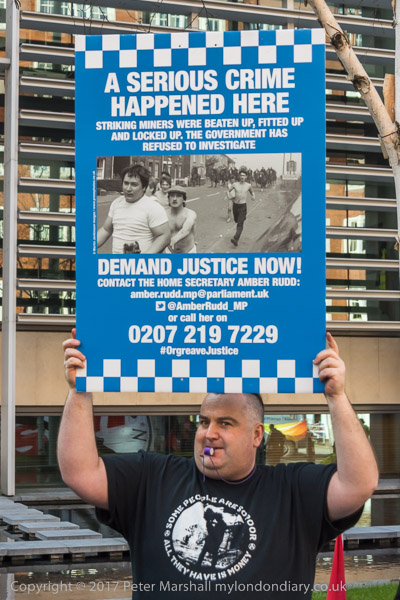
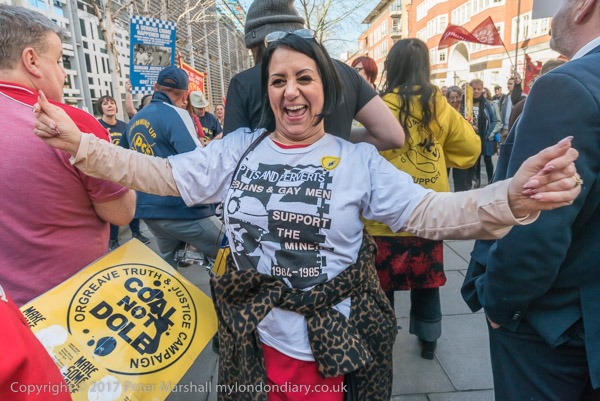
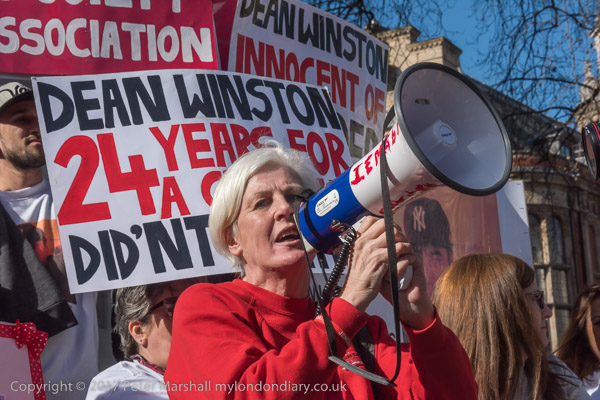
And Orgreave Truth & Justice at the Home Office on Monday 13th March was something I felt important, protesting at the failure of Home Secretary Amber Rudd not to grant an inquiry into the ‘Battle of Orgreave’ in which police, including military police and others in police uniforms, mounted a carefully planned attack on picketing miners.

Thatcher had determined to defeat the miners, and on 18 June 1984 at a British Steel Corporation coking plant in Orgreave, South Yorkshire showed just what illegal lengths the establishment was willing to go to in order to defeat the workers. And many have little doubt that our present government would be prepared to take similar actions, though mostly it gets by with more subtle means.

Perhaps the main hope of a proper inquiry into Orgreave is that we may get a Corbyn Labour government, though I’m not convinced that they will have the nerve or ability to challenge those areas of the establishment that are against getting to the truth – and would also be busily plotting against any radical initiatives by a mildly left social democratic Labour administration.

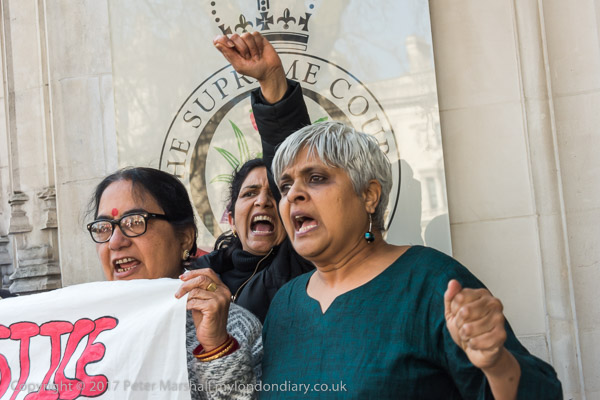
Two other campaigns for justice were also out on the street in Westiminster, one linked to the Orgreave protest. JENGbA had come to support the Orgreave protest, but had started with an action of their own outside the Supreme Court. JENGbA stands for Joint Enterprise Not Guilty by Association, and I’ve always thought the name it has adopted stood in the way of it actually making progress – how many people would have the slightest idea what JENGbA stood for? Despite this, they won a significant victory in 2015, when the SUpreme Court ruled that the joint enterprise law under which over 800 people are in jail had been wrongly applied, and that there must be actual evidence of intention to encourage or assist in a crime rather than some vague association.

But JENGbA have found – like other groups such as disabled people – that it is one thing to win in court and quite another to get the Home Office to correct the injustice. And those held in jail because the law was wrongly applied, many serving life sentences on the flimsiest of suspicions, have been refused appeals. After their protest outside the Supreme Court they marched to join the Orgreave protest outside the Home Office.

Quite separate from this was a protest against the Met Police who were appealing against a high court decision that the human rights of two woman raped by black cab driver and serial sex attacker John Worboys in 2003 and 2007 were breached when police did not believe them and failed to investigate their cases. That the police should appeal the decision that they have an obligation to investigate such cases of serious violence is appalling – and makes me wonder what they think they are there for.

The protest was by Southall Black Sisters, End Violence Against Women Coalition, Nia Project and other women’s organisations who say in the police appeal succeeds there will be no effective remedy in the courts for women who are raped or victims of domestic violence.

Orgreave Truth & Justice at the Home Office
JENGbA march to support Orgreave
Women protest outside Worboys hearing

Continue reading Monday in Westminster

Women Rise and Fukushima

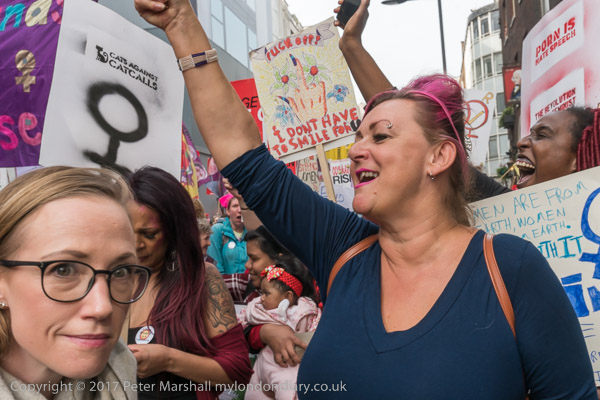
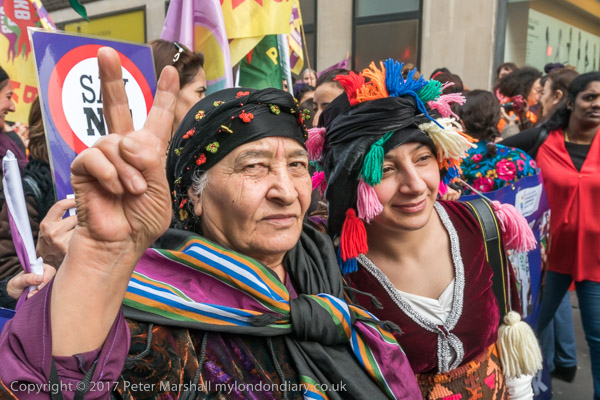
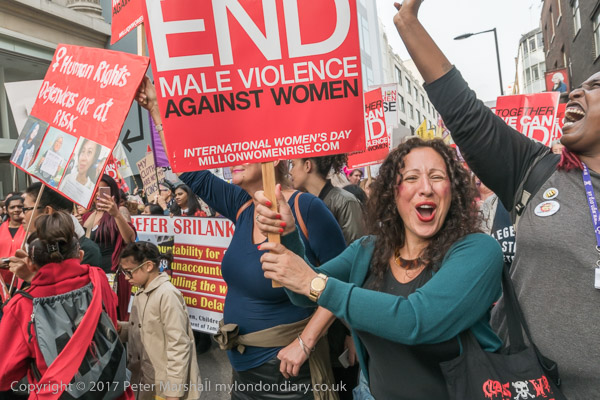
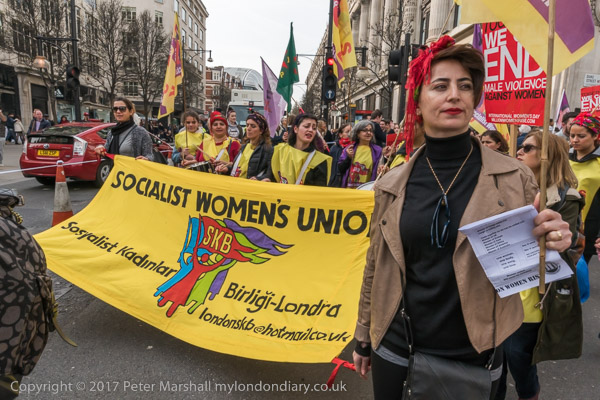
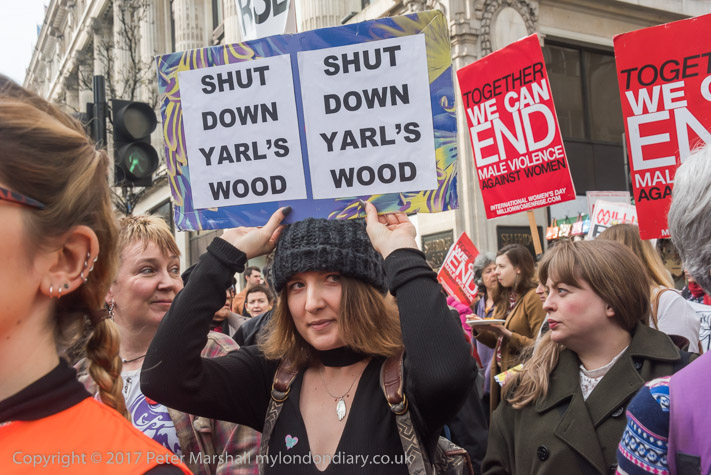
The Million Women Rise annual march through London against male violence is an all-women event, with several thousand of them marching in the centre of London. On occasions a few men have crept in, but it is fairly decisively a women’s event, and this sometimes presents a few problems for a male photographer. There have been a few women on past marches who have made clear they object to being photographed by a man, and on some occasions stewards shouted at me when I have put as much of a toe on the road, although mostly they are more welcoming.

Of course I – and any others of the public – have the same right to be on the road as the marchers, but I have no wish to offend anyone. It does rather make it difficult to work as usual, as I often want to take most of my pictures close to people inside the protests. The great majority of those taking part clearly in this march want to be photographed and have no problems with me getting into a suitable place to do so. Some were women who knew me and who I’ve photographed before.

But I took many more of these pictures from the sidelines than I would normally have done with other marches, although before the march started the street the march gathered in was full from wall to wall and I had to be in the middle of things. But once the march started I more or less kept to the pavement while the march went along the road, and I took relatively few pictures, or at least relatively few that were usable.

Of course I deplore male violence against women, like the marchers. In particular domestic violence is a huge problem, and mainly it is men who are violent and women (and sometimes children) their target. And the main sufferers in wars are women and children. I’ve supported the march and have given the organisers pictures in the past when requested to use in their publicity. But I probably gave up rather earlier than I would have on some other events, and decided against going to photograph the rally at the end of the march in Trafalgar Square. It isn’t possible to be in two places at once, but I was doing my best to cover two separate events both taking place at the same time in slightly different parts of London.

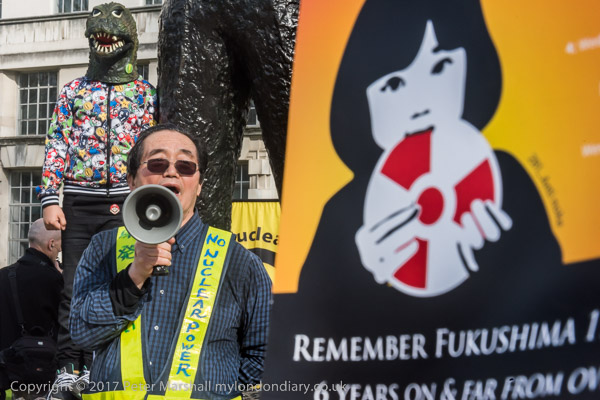
Before going to Million Women Rise I had photographed the start of a march from the Japanese Embassy on the sixth anniversary of the Fukushima nuclear disaster, and had left them shortly after they passed the Ritz on Piccadilly to rush up to Oxford St and photograph the start of the women’s march. And as the end of that march passed Bond St station I left them and took the tube to photograph the anti-nuclear rally opposite Downing St.

Million Women Rise against male violence
Fukushima anniversary challenges nuclear future


Continue reading Women Rise and Fukushima

Hull Photos: 15/9/17 – 21/9/17
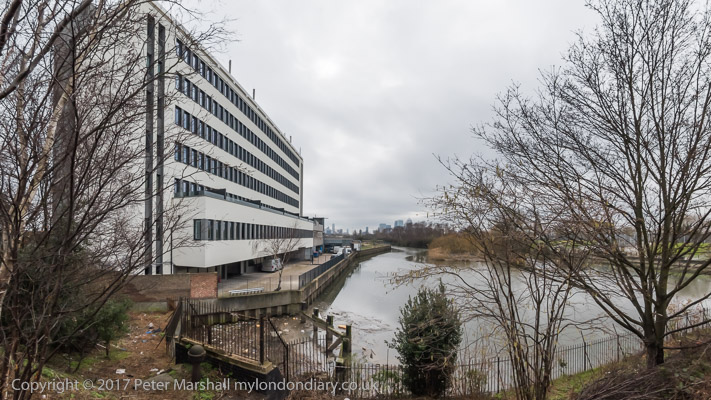
Another week of the daily posts on Hull Photos of images I made in the 1980s. You can see the new pictures every day on the main menu page, but it’s better to follow my posts on Facebook, where you will also see the comments I make on the pictures, and can comment on them.

Comments on the pictures are also welcome here.

15th September 2017

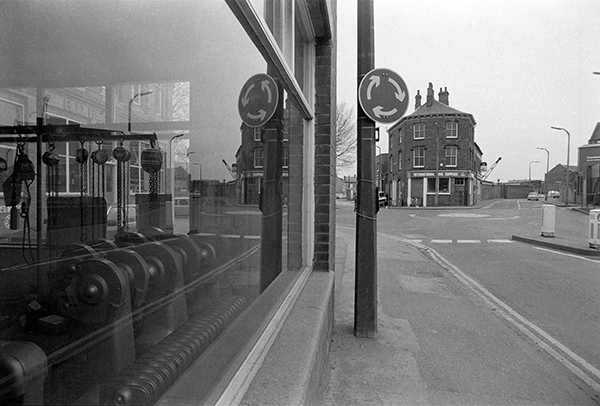
Taken on Wincolmee just a few yards south of the junction with Green Lane and Lincoln St this image incorporates the reflection in the window, the machinery – I think for sale – within and also a view out through the window around the side. This building is still there but the side window has been bricked up.

But most of the view is straightforward and past the roundabout shows the buildings at the junction of Lincoln St and Wincolmlee, looking roughly north. These are still recognisable, and the Whalebone Inn is still open though it has lost the hanging sign and is under different ownership. The site at the right, with a notice for a seed crushing company is now empty.


84-4k-51: Wincolmlee, Green Lane, Lincoln St roundabout, 1984 – River Hull

16th September 2017

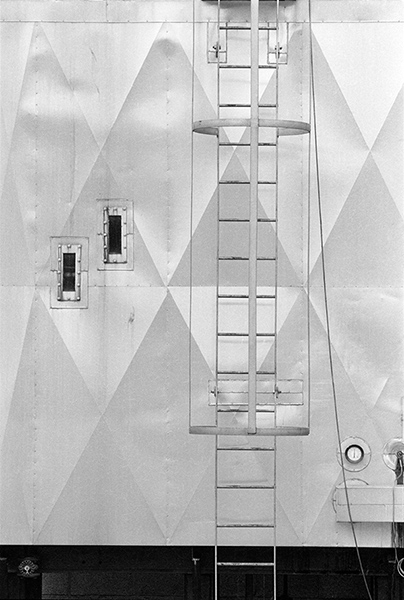
This structure, I think a large panel in front of a bulk oil storage tanks, at one of the wharves on Wincolmlee fascinated me and I photographed it on several occasions, both in black and white and in colour.

The way the different panels caught the light and their diamond shapes, the vertical ladder with its horizontal rungs and the various rectangular and circular accents all seduced my attention.

But I do have a nagging feeling that this is perhaps more of a design exercise than a real photograph of Hull.


84-4k-52: Wincolmlee, 1984 – River Hull

17th September 2017

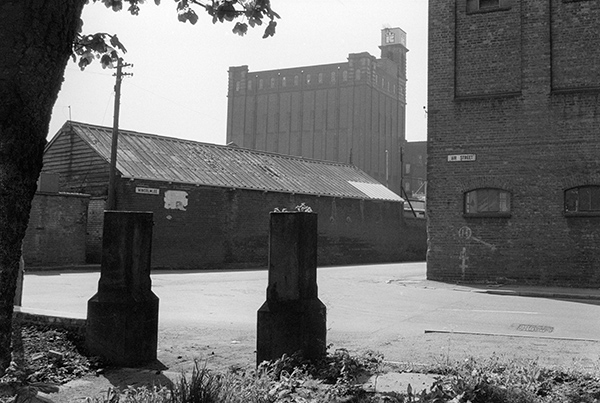
Conveniently both street names are visible in this view take from just inside St Mary’s Burial Ground, on the corner of Air St and Bankside.

Sculcoates by the 1820s had grown from from a population of around a hundred to over 10,000 and the old St Mary Sculcoates which had existed since 1232 or earlier was replaced in 1760 by “a very handsome structure, with a square tower of white brick and Roche Abbey stone, in the pointed style of the time of Henry IV” with seating for 1300 people on the corner of Air St and Bankside. You can see it in a print on the Hull Museums site.

The two pillars in this picture are the lower parts of the gate posts of the 1760 church which was ‘improved’ in 1875 at a cost of £1000 and then demolished in 1916. A new St Mary Sculcoates was built a few hundred yards to the west on Sculcoates lane and is still in use. That church is open on Heritage Open days, but all that remains of the 1760 church are the gateposts (cut off rather shorter – perhaps the upper parts taken for incorporation in the new church, as apparently were the columns) and a little of the wall on which the railings once stood, and the burial ground. There are roughly 50 graves and monuments although inscriptions are only legible on around 20 of them, the most recent dating from the 1850s.


85-5f-11: Air St and Wincolmlee, 1985 – River Hull

18th September 2017

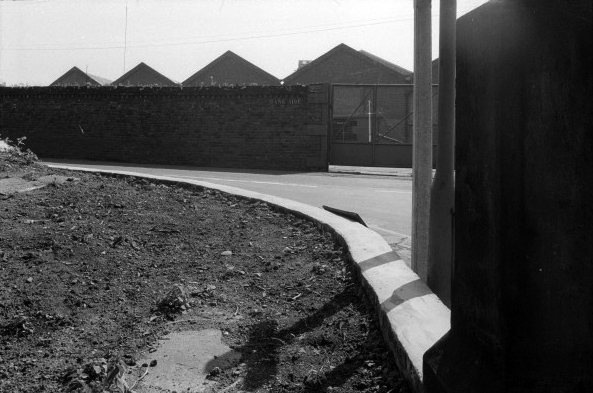
Taken just a few feet from the previous image, this shows the corner of St Mary’s Burial Ground at the junction of Air St and Bankside. The earth here appears to have recently been cleared, and is now rather more overgrown.

At the extreme right is one of the truncated posts of the gate that led into the churchyard, and to the left of that two slimmer posts, one for a street light and the other for the road sign. The shadow of this latter amused me by adding a cross to the churchyard.

Across Bankside, a wall with a gate is of one of the wharves on the west bank of the River Hull, now disused and empty, part of a long riverside site for Seatons. The company John L Seaton & Co Ltd, was founded by John Love Seaton (1820–1903), born in Chatham, Kent, who became an alderman and mayor of Hull in 1873-74. His Mayoral portrait in the Guildhall by Ernest Gustave Girardot is one of the better examples of the genre. Its main business was in crushing rape seed to extract the oil, then known as colza oil.

Colza was widely used in oil lamps to provide light, with the residue after extraction becoming animal feed. The first lighting installed in railway carriages was provide by colza, but was later replaced by gas – and then electricity. Perhaps more importantly for Hull, this was the oil used to calm troubled waters and was carried in all ship’s lifeboats for this purpose. It was also widely used as a lubricant, and is now extracted mainly for use as bio-diesel, particularly in Germany. Different varieties of rape are grown for the rapeseed oil now widely used in cooking.

The business obviously did well, with Alderman Seaton leaving over £50,000 in his will. The company amalgamated with others over the years developing a wide range of vegetable oils and oil-related products and in 1970 was acquired by Croda International. Production at its site in Hull continued until 2002 and for some years after this it had offices in Hessle, but is now simply a trade name used by Croda.

The buildings whose triangular gables are visible are on the far side of the river and are an Enterprise Zone, part of the River Hull Heartlands Foster St development site.The site was once a brickworks and is privately owned.


85-5f-14: Air St and Bankside, 1985 – River Hull

19th September 2017

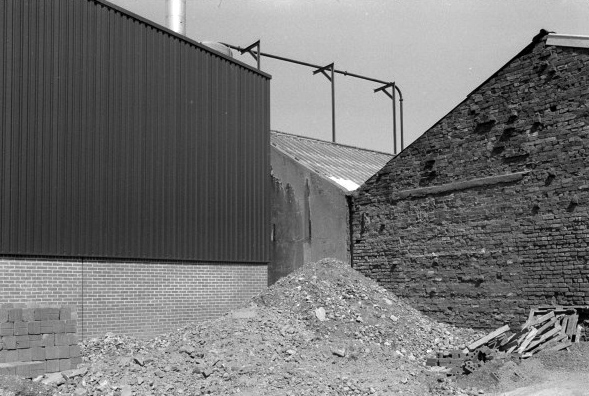
Taken near to the corner of Air St and Bankside, but nothing in the image enables me to identify the exact location, though I think it is probably at a corner of the site of John L Seaton & Co Ltd.

I made two exposures from exactly the same position, this and another in portrait format, which shows the metal chimney to have been rather tall, and it is possibly on the site of Holmes Hall’s Sculcoates Tannery on the south side of Air St. The fixed viewpoint suggests to me it could have been taken with the lens poked through a fence or gate.


85-5f-15: Air St area, 1985 – River Hull

20th September 2017

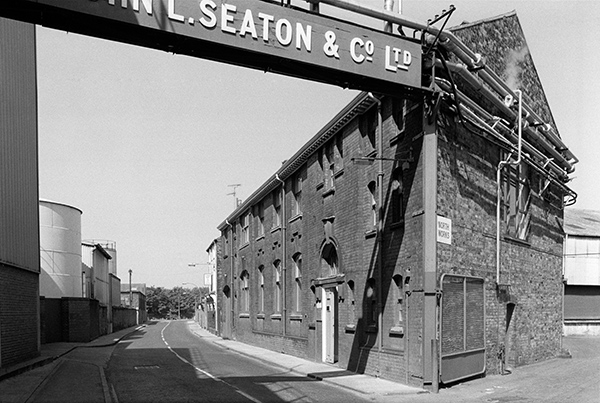
Steam issuing from a pipe at the top left confirms that the North Works of John L Seaton & Co Ltd on Air St was still at work. This rather handsome brick building was perhaps rather suprisingly still there when I last looked, as were the pipes bridging the road, although the name board is long gone, presumably removed when production there ceased in 2002 if not before.

Beyond Seaton’s North Works the picture shows (just) the Golden Ball pub and I think some further buildings which I seem to remember included a small shop selling sweets and cigarettes. Air St is the eastern end of Sculcoates Lane and was probably built around 1800, and the Golden Ball probably dated from about then (there is a detailed discussion on Paul Gibson’s site (http://www.paul-gibson.com/pubs-and-breweries/air-street-pubs.php) and was definitely a pub by 1810, though extended and altered later. It was listed as the Blue Ball in 1823, but changed its name to the Golden Ball around 1882. There were further alterations in the 20th century, but as the factories around closed, trade dropped off in the 1970s and 80s, and the pub was demolished in 1996 when Seaton’s wanted more storage space. Only six years later they ended work on the site.


85-5f-44: John L Seaton & Co Ltd, Air St, 1985 – River Hull

21st September 2017

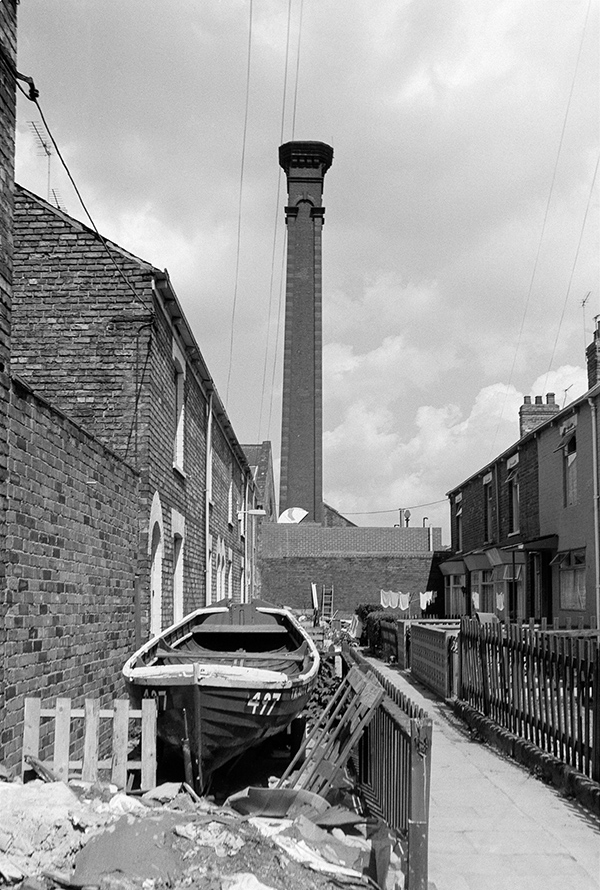
Thanks to comments on-line I can now be sure that this picture is of Victoria Terrace, off Stepney Lane and shows the Grade II listed chimney of Beverley Rd Baths. Unfortunately this appears to have been demolished. There is a chimney somewhere near, but it is a plain brick affair. The listing text for Beverley Rd Baths describes the chimney as “At the rear, a tall panelled chimney stack, formerly with a decorative cap.”

One of my wife’s great aunts, Florrie Needley, kept a small corner shop on Stepney Lane close to here that I visited back in the 1960s, I think on one of the corners of this terrace. I remember it as selling sweets, but I think it also sold other foods, and some wives in the area would bring in the money their husbands gave to them after they were paid for safe-keeping, as they were afraid that after having drunk the cash they had kept back their husbands would take it back from them.

This terrace was clearly still inhabited in 1985, with washing hanging out and windows open, but has almost certainly been demolished since. The boat has number 497 and I can read the word ‘TRINITY’ but what follows is impossible to make out. The front yards on the opposite side of the terrace are slightly wider and opposite the boat but just out of frame was a small caravan in one of them, though it was hard to see how it could ever be moved out.


85-5g-22: Terrace with boat, Victoria Terrace, Stepney Lane, 1985 – Beverley Rd


You can see the new pictures added each day at Hull Photos, and I post them with the short comments above on Facebook.
Comments and corrections to captions are welcome here or on Facebook.
Continue reading Hull Photos: 15/9/17 – 21/9/17
Channelsea River


The Channelsea is still visible below this end of the footbridge

It was I think in 1981 or 2 that I first came across the Channelsea River and walked along the path alongside it from Stratford High St to Three Mills. I was really a few years too late, because the section s outh of Stratford High St to Abbey Lane had been culverted around 20 years earlier, and further north there were only isolated sections above ground.


Channelsea Path

By then the river was a ghost of its former self. Back in the 19th century it had been one of three major streams of the River Lea, running parallel to the main river down through Temple Mills (the tidal limit of the Lea) where the Channelsea diverged from the Waterworks River which had left the main stream around a mile north on Hackney Marsh. There were several channels or ditches joining the streams probably some with sluices.


Channelsea River from footbridge, Stratford

Close to where the railway from Hackney Wick crossed the river the Channelsea turned east, roughly following the old line of the railway to Stratford Station – where you can still see it as a ditch from the west end of the footbridge just south of the station.


Channelsea River from Northern Outfall Sewer

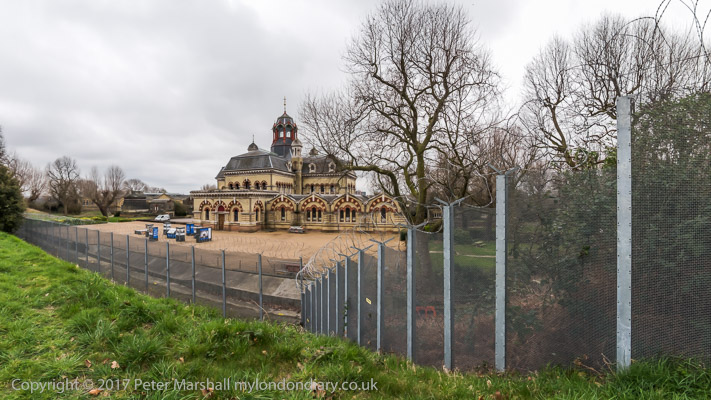
Below Abbey Lane the Channelsea is wide and almost entirely tidal, with Channelsea island in the middle – and the channel to the west of the island is Abbey Creek. During heavy rainfall the sewers receive more water than they can cope with and overflow into the river here and used to flow upriver on the tide.


Abbey Mills sewage pumping station from Northern Outfall Sewer

The whole of the Bow Back Rivers was radically altered in the 1930s, following the 1930 River Lee Act. This enabled the Lee Conservancy Board and West Ham Borough Council to widen the Three Mills River and Waterworks River to 100ft to take flood water away, and to construct the Prescott Channel to take flood water from them into the Channelsea at Three Mills. The City Mill River was also made wider and deeper and provided with concrete banks as a 50ft wide navigable stream. It’s unclear whether there was any real intention for this to be widely used, or if its construction was mainly to provide employment for the many local unemployed.


Where the Channelsea goes under Stratford High St

The most recent and entirely dubious scheme was the construction of a new lock on the Prescott Channel, at a huge cost and under the pretence it would be used to bring in material and take out rubble from the Olympic site. Completed in 2009 it was used for a few photo-calls but the huge bulk of site material was moved in and out by lorry. It can be seen as a huge public subsidy to the developers whose blocks are growing on the upstream banks, protecting their properties and their future residents noses from the sometimes odiferous flood tides.

During the lock construction the riverside paths along the Channelsea were closed. The Long Wall path from the Northern Outfall Sewer (rebranded the Greenway in the 1990s but retaining its slightly sweet and disturbing sewage odour) to the lock reopened only around six years after completion, but that on to Three Mills from the Prescott Channel remains closed.

You can see more pictures from my walk at West Ham to Stratford – Channelsea River.
Continue reading Channelsea River

My London Diary 2006

I’m not sure whether to be annoyed or amused or what to find that my book 2006: My London Diary, published on Blurb in 2012 is now available for ‘free’ download from a Russian web site in various formats and has so far apparently been downloaded 21,407 times. Which I think is over 21,000 more than I’ve actually sold copies to.
What I do know is that my profit from those downloads comes to exactly zero. This isn’t the first time that I’ve found one of my books available in this way and I think a diligent search would reveal more sites making offers of this kind, but its an area of the web that often makes my security software pop up warnings and suggest I get out of there without delay. And I certainly wouldn’t dream of downloading anything from the particular site, which also demands some kind of membership fee to use its download services.

2006: My London Diary costs £6.49 for a legal ‘Instant PDF’ download from Blurb, who take about three-quarters of that for themselves but I still get a reasonable payment. Of course even if the 21,407 is an accurate figure I haven’t actually lost the £35,000 or so that this number of legitimate sales would have provided, as only a very much smaller number if any would have considered a purchase rather than a free download and my real financial loss is most likely in two rather than three figures.

Back in 2006 when I took these pictures, DSLRs were a little more primitive than now, and so was the software for processing RAW files. But the Nikon D200 I was then using – bought immediately it became available in December 2005 – was perhaps the first really decent digital camera I owned, a real step up from the D100, particularly so far as the viewfinder was concerned – and with around twice the file size. Though its 10.2Mp sensor is small by recent standards it was really enough for almost all purposes. A couple of years later I updated to the D300, also a significant advance.

Head and shoulders above other RAW processing software at the time was Pixmantec’s Rawshooter image processing software which I used for developing these images. Adobe couldn’t match it, so in June 2006 they bought it out and slowly used its technology to bring Lightroom up to scratch. For the book I reworked all of the pictures in the latest Lightroom at the time, Lightroom 3.5, but still ended up using many of the Rawshooter files.

There are a few images in the book I’d do a little differently today, and I would probably also make a slightly different choice of images. But it was tough. My initial selection from the roughly 6000 images I’d published on the web was around 3000, and I had to cut that down to around 70 for the book, to keep within the 80 page format I wanted to publish.

It’s still a good cross-section of my work from that year, and I was happy to have a copy of it in one of our major collections – and they also have a CD with most or all of the 6000 from that year.

The book is still available on Blurb, though the print version (softcover only) is a little expensive at over £33, and Blurb’s delivery fee adds a ridiculous amount. I alway recommend the PDF version, but should you want a hardcopy then buy directly from me and save considerably – I still have a few copies at £25 + £2p/p – details are here.

One small satisfaction from that Russian site, apart from knowing that 21407 people have bothered to look at my work, is that the book gets a rating on the site of 8.5/10 – which doesn’t seem bad.
Continue reading My London Diary 2006

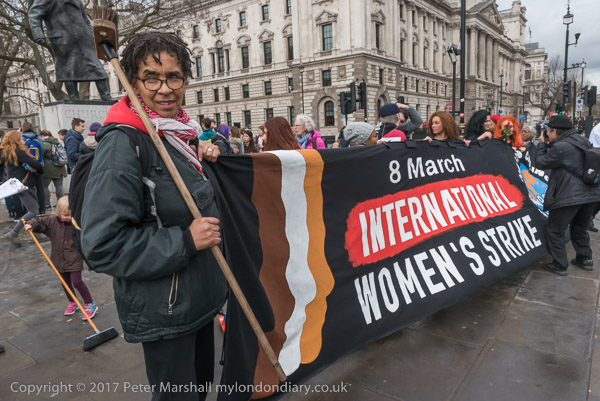
International Women’s Day 2017

The Socialist Party of American organised the first Women’s Day to take place on March 8th, although theirs was a ‘National Women’s Day‘. The idea of an International Women’s Day was adopted by the 1910 International Conference of Socialist Women and in 1911 it was celebrated on March 8th in United States, Switzerland, Denmark, and Austria but in Germany and elsewhere of March 19th. It was not until 1914 it was adopted worldwide. In London on March 8th 1914 the Suffragettes marched from Bow to Trafalgar Square.

Universal female suffrage was the main demand of those first marches, but they also had a whole range of other demands, including labour laws to guarantee women’s rights, free social childcare and education, equal treatment for single mothers, international solidarity and the overthrow of capitalism.

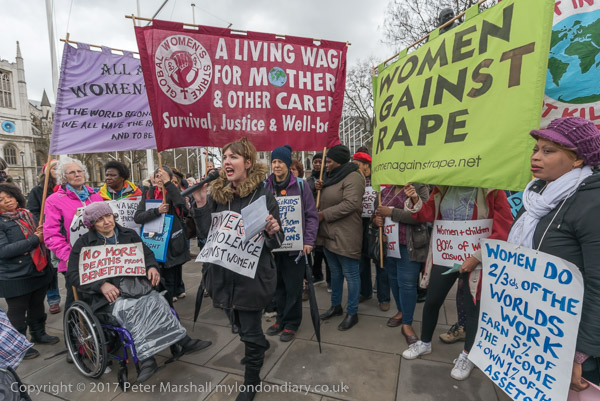
A protest in Parliament Square March 8th – also Budget Day – by Global Women’s Strike in solidarity with the International Women’s Strike (IWS) taking place in 46 countries was firmly in this tradition, and there were contributions from groups supporting women, including the victims of domestic violence, the disabled and the victims of family courts. Later they went on to hold a vigil on the steps of St Martin-in-the-Fields in solidarity with the farmers of the Southern Peasant Federation of Thailand, many of whom are women.

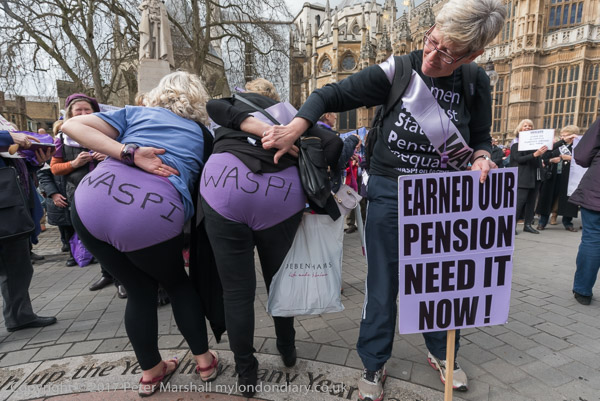
A short distance down the road, Women Against State Pension Inequality – WASPI – held a rally against the changes in the state pension scheme which are unfair to women born in the 1950s. Although the effects of the The 1995 Pension Action Act which set out the plan to equalise the pension age for men and women were well publicised, little warning was given when the 2011 Pension Act accelerated the process for this and for raising the pension age, and there was too little time even for those women approaching pension age who realised what was happening to make alternative plans.

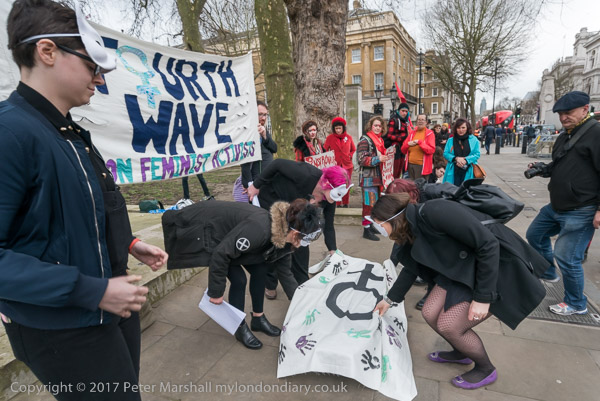
Later in the day opposite Downing St Fourth Wave London Feminist Activists staged a protest against the unjust, ideologically-driven cuts to public services that are disproportionately felt by women, and also against the way that International Women’s Day despite its socialist roots has been appropriated with the media giving extensive coverage to corporate events concentrating on getting more women in boardrooms and other highly paid jobs.

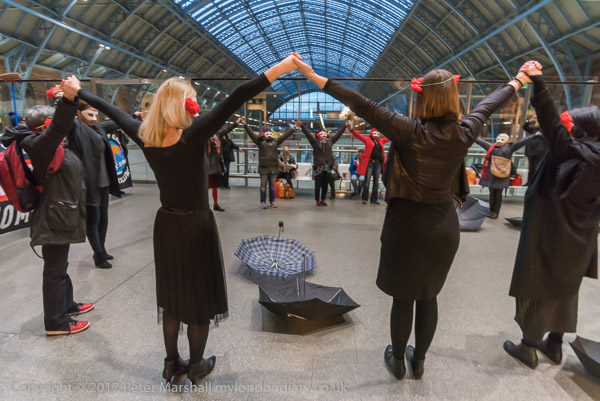
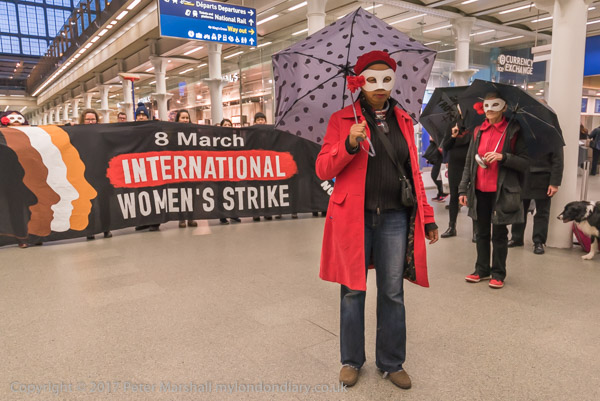
I ended my day with London Polish Feminists and Global Women’s Strike (again) at St Pancras for an International Women’s Day flash mob at St Pancras International in solidarity with women in 46 countries taking part in the International Women’s Strike. It was a colorful event, and the colours were black and red – clothing, umbrellas, masks and flowers – choreographed by the Polish feminists. After a rehearsal in the station foyer the group went down into the concourse and gave a performance there.

They had apparently requested permission for the event, but when it was refused decided that they would go ahead in any case. Police came to talk with them but didn’t stop it.

More from all of these events – and a rather curious Russian gesture which perhaps reflected a more misogynistic attitude to women:

From Russia With Love
International Women’s Strike
Vigil for Thai Farmers
Death By A Thousand Cuts
WASPI at Parliament

Continue reading International Women’s Day 2017