September 2017


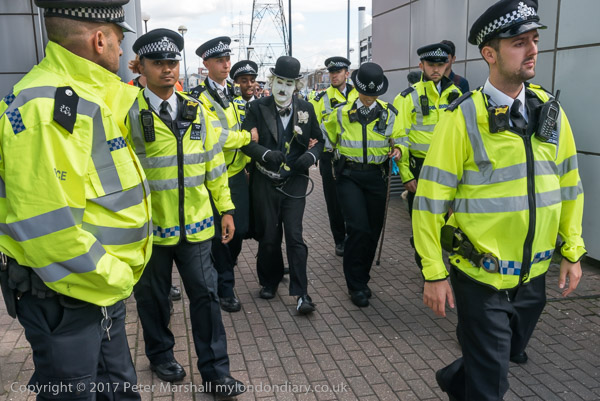
Police arrest Charlie X at the DSEI arms fair

As nights draw in its good to remember those longer days of September, the events I went to, people I met and the pictures I took, and I’ve finally finished putting them on line in My London Diary. September was a busy month, starting with several days with protesters outside the world’s largest arms fair, held every two years in London – at least until the campaign against it manages to get it stopped. So there were quite a few pictures to add and events to write about.

I’m slow to edit pictures and captions, as I like to get both right, though like other people I sometimes get things wrong, particularly as I’m often half asleep as I rush to send images to the agencies. Though my definition of a rush is a rather old-fashioned one, usually a matter of several hours after the event, rather than the minutes photographers are now expected to file by.  And sometimes I find myself falling asleep late at night and decide the following morning will have to do.

But a very busy time in the last couple of weeks have meant that finishing my posts for September has taken a little longer than usual.  Just as it usually does.

Sep 2017
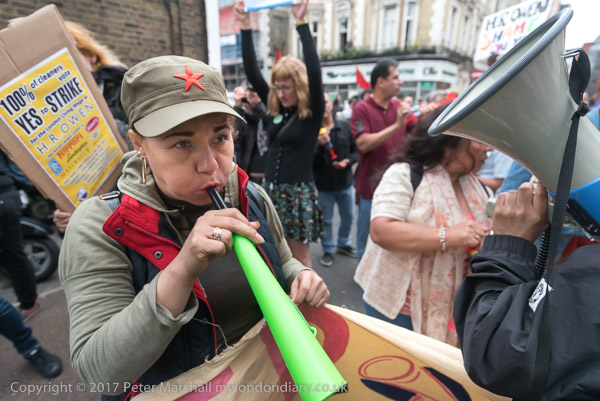

This and a later UVW protest led to re-instatement and a real living wage
Cleaners at luxury car dealers HR Owen
No NHS immigration checks
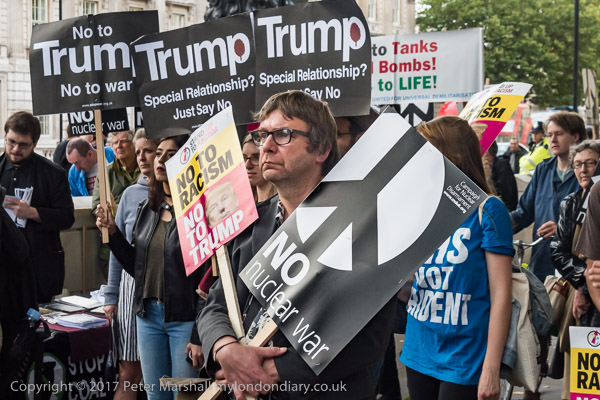

No Nuclear War over North Korea
End outsourcing at London University
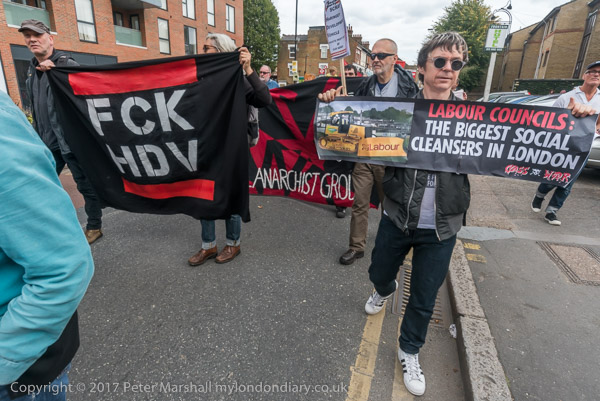

One year of Ritzy strike
Haringey against council housing sell-off
World Peace Day Walk
Trafalgar Square blocked over pollution
No More Deaths in immigration detention
Free forgotten jailed Eritrean Journalists
Lord Carson Memorial Parade
Black Day for Sabah & Sarawak
Overthrow the Islamic Regime of Iran
41st monthly Sewol ‘Stay Put!’ vigil
Open House & more – Peckham
Open House – Banqueting House
Cody Dock
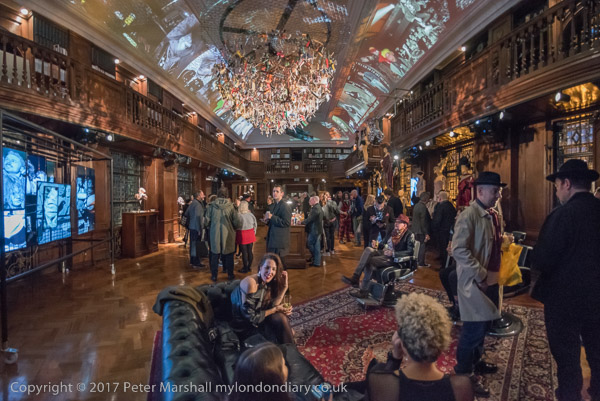
Derek’s Book Launch


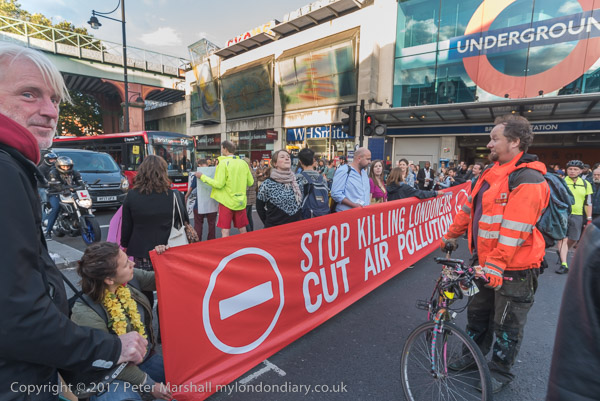
Air Pollution protest blocks Brixton
Croydon Walk
Wreath for victims of the arms trade
#Arming The World
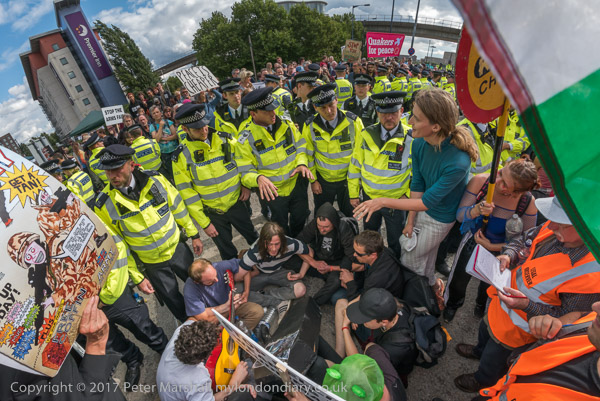

DSEI East Gate blocked
Festival of Resistance – DSEI West Gate
DSEI Festival Morning at the East Gate
Protest picnic & checkpoint at DSEI
Protesters block DSEI arms fair entrances
No Faith in War DSEI Arms Fair protest
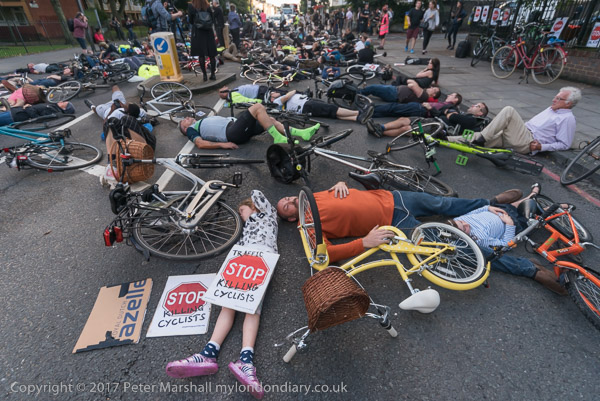

Another cyclist dies – Islington has provided zero safe cycle facilities
Die-in for cyclist Ardian Zagani
McStrike rally at McDonalds HQ
Vegans call for Animal Rights
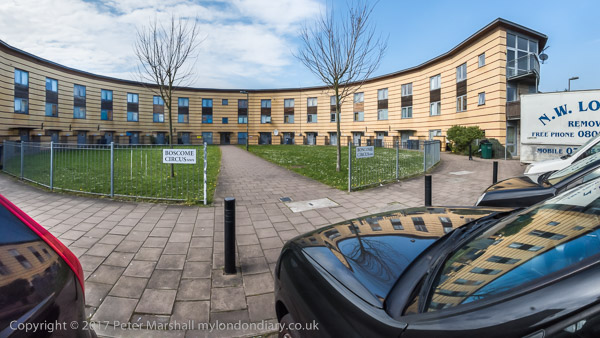
London Images

Continue reading September 2017

Unacceptable Barnet

Barnet is a large suburban borough on the northern edge of London with a diverse population and the council has a small Conservative majority and became notorious for its ‘easyCouncil’ policies which cut services to cut costs and outsourced most of them to Capita. And a part of that has been limiting social housing for the poorest through regeneration schemes that have little provision for low income local residents.

I’d gone to Barnet because the second phase of a public inquiry into the second phase of the demolition of the West Hendon estate was opening at the RAF Museum in Colindale, but only looked in there very briefly. It was a fine day and I didn’t want to sit inside in what was bound to be a rather tedious meeting.

Opposite the site on what was the old Hendon Aerodrome is the Grahame Park Estate. Hendon was one of London’s early airports, and its development for housing in the 1970s by the Greater London Council and Barnet Council is exactly what should also have happened to Heathrow, where an even larger development could have taken place.

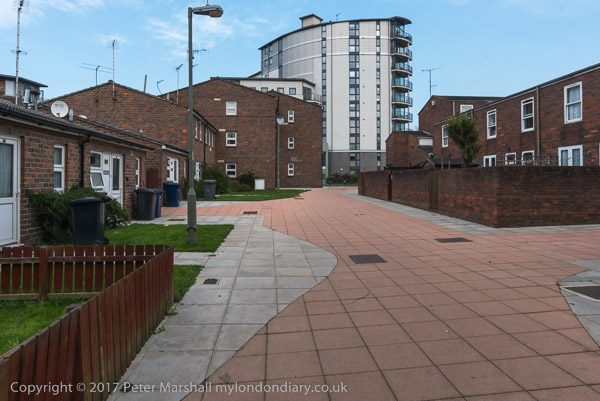
The main part of the estate built in the early 1970s is largely in low-rise brick, with long terraces and separating pedestrians from traffic. It was first ‘regenerated’ in the 1980s when some connecting walkways between blocks were removed and some buildings were given pitched roofs. A more dramatic regeneration began after 2003 with the phased demolition of some areas and new properties being built on the estate, and considerable building work is now taking place in some areas.

The continuing regeneration by Genesis Housing Association and Countryside Properties has come in for much criticism for replacing homes at social rents by private properties at high market prices, along with varieties of ‘affordable’ properties largely beyond the reach of those on average or lower salaries. The latest planning application for part of the estate includes only 39 homes for social rent out of 1,083, a loss of 518 social homes compared to the existing 557 on the site, which London Mayor Sadiq Khan described as “totally unacceptable“. It is very much in line with Barnet’s policies here and in other estate regenerations.

Often, as at Grahame Park, councils claim support of residents for regeneration schemes. Most of us would welcome new and better homes, and existing tenants are always promised rehousing, but such promises are never kept. 518 of the 557 families – around 93% – are in line for social cleansing, being forced to move away from homes and usually into far poorer, less secure but considerably more expensive private rented accommodation, often far from jobs, schools and friends.

After walking around Grahame Park and taking some pictures, I went to look at some of the related new developments around Colindale station, also a part of the Colindale Area Action Plan’, before taking tube and bus to the West Hendon Estate, on the only part of Barnet west of the A5 Edgware Road (West Hendon Broadway).

The attraction of ‘Hendon Waterside’ to developers, as the replacement for the West Hendon Estate is obvious, and few if any of the former residents will be able to afford to live there. Originally there were 680 social rented homes on the site, but there seem unlikely to be more than a token handful in the new development, though exact figures do not seem to be available.

More about West Hendon and Grahame Park on My London Diary:

West Hendon Estate
Colindale

Continue reading Unacceptable Barnet

March for Homes

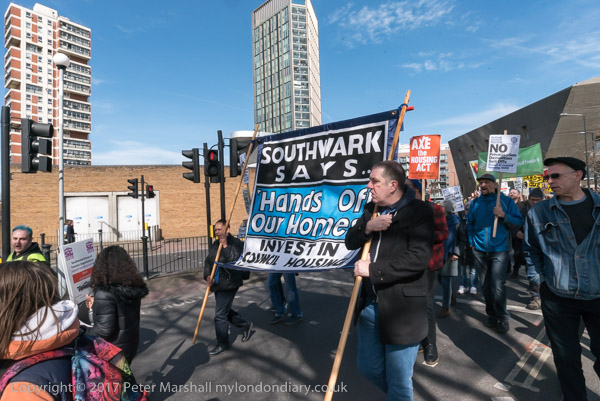
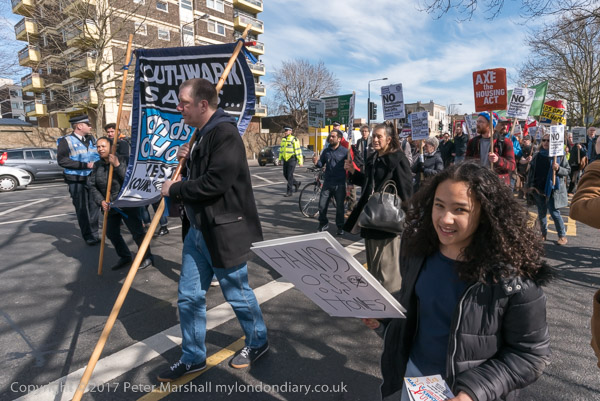
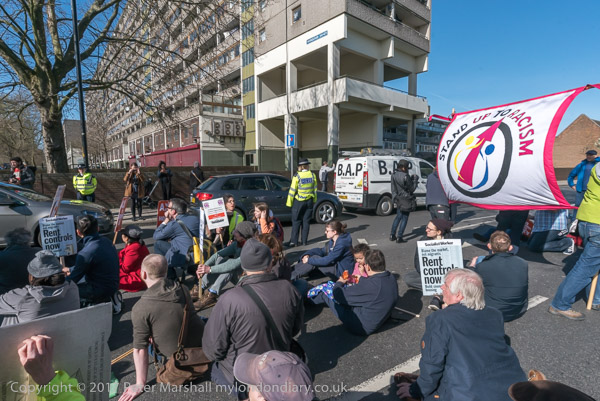
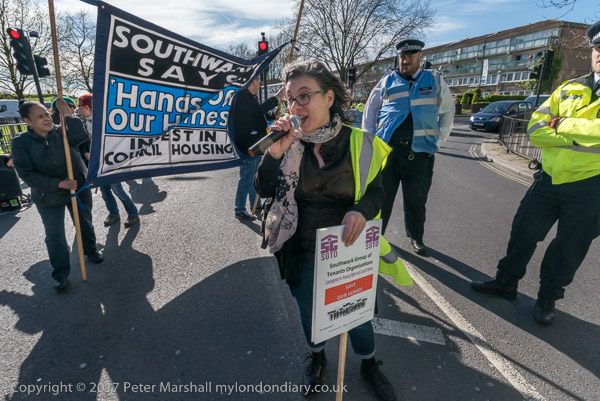
It was a long march on a warm March day from Canada Water to the Aylesbury Estate, and not by the shortest route, but one carefully planned to take in as many as possible of the council estates currently being demolished or under threat from the London Borough of Southwark.  By the time we reached the end, the marchers had walked around 4 miles – and photographers quite a bit more.

Southwark over 15 years ago began to plan to get rid of its council estates, seeing them as liabilities rather than as vital to house the less well off citizens of Southwark – of which there are many. In earlier years they had done a decent job, building well-planned large estates such as the award-winning Heygate Estate, where extensive plantings of trees were coming to maturity thirty or so years later.

But Southwark Council came under new management, more specifically New Labour management, who realised that the value of the land that this and other council estates were built on was worth huge sums on the open market. The estate had previously been allowed to become rather rundown through inadequate maintenance but the process was deliberately accelerated, and people and families with problems were deliberately housed there. Money was spent on PR basically intended to demonise the estate, and they began a long process of removing tenants and leaseholders.

Estates in earlier years were built with large amounts of open space and a relatively low population for the area they covered.  When built the Heygate it had over 1200 homes, all at social rent. Under Thatcher’s ‘right to buy’ policy a number of these were lost, but there were still many socially rented properties.

Heygate’s replacement, Elephant Park, will offer around 3000 propertie, but only around 87 at social rents, with a further hundred or so at three-quarters of market rent or under shared ownership schemes, both far above the means of those in the borough working in jobs at or close to the minimum wage or the real London Living Wage.

And although some councillors and council officials may have benefited from the deal, Southwark council got its figures sadly wrong and is probably out of pocket from the deal, partly because the costs of emptying the estate turned out to be much higher than anticipated, but mainly because allegedly they parted with the land for a criminally low sum, a fraction of its true market value.

I’ve no reason to doubt the figures given by those who fought the council over the demolition, most of which come from council documents, including some released by an IT error as well as those published or dragged out by freedom of information requests. As well as failing to provide properly for the people of their borough it would seem that those involved have been.

Simon Elmer of ASH has this to say on conflict of interests in local councils implementing the estate demolition programme :

“The prime example here is Southwark council, where 1 in 5 councillors are lobbyists for the building industry, and where 6 of the most senior officers responsible for selling the Heygate estate to property developers Lendlease for one-fifteenth of its market value now either work for or with the company.”

Which perhaps goes a long way to explain what is happening in Southwark, and why, at the end of a long, hot march we were denied access to the council-owned Thurlow Lodge Community Hall,  where tenants Divine Rescue who had offered to provide refreshment and toilet facilities for the tired marchers were forced under threat of eviction to withdraw their offer, and instead the hall was locked and shuttered, guarded by Southwark Council security as a rally took place outside.

Southwark march for homes & businesses

Continue reading March for Homes

Anti-Racism Day


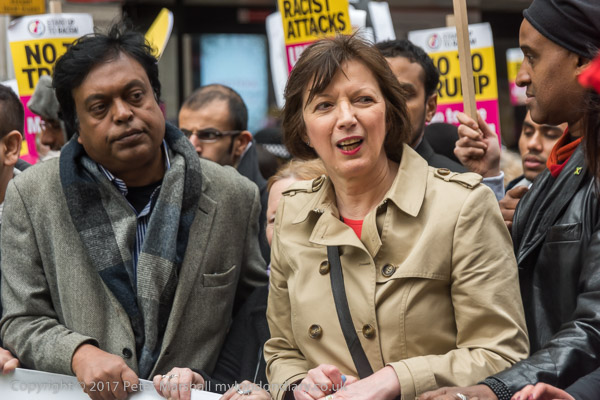
The TUC’s Frances O’Grady was among those holding the main banner

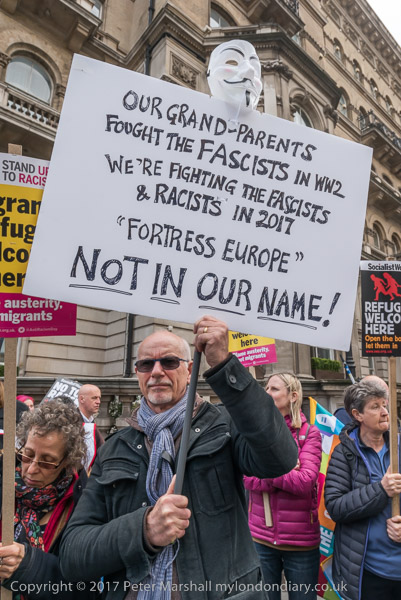
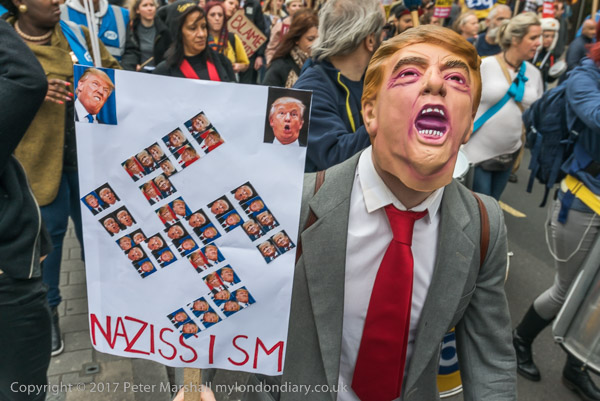
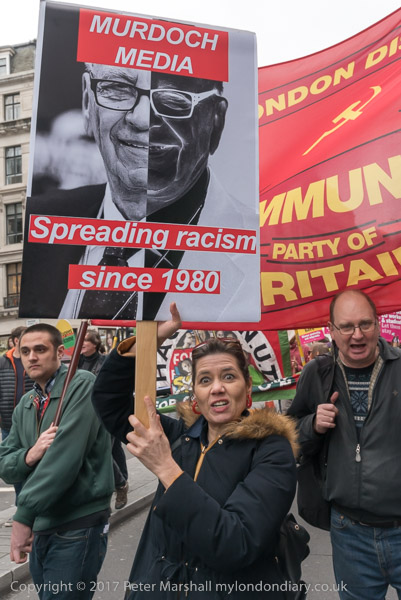
Stand Up To Racism manage to involve a wide range of other organisations in the March Against Racism they organised, including many trade unions and some Muslim groups, and the march and rally on March 18th was one of the larger to take place in London this year. I’m not sure how many the organisers claimed, but I reported ‘tens of thousands’.

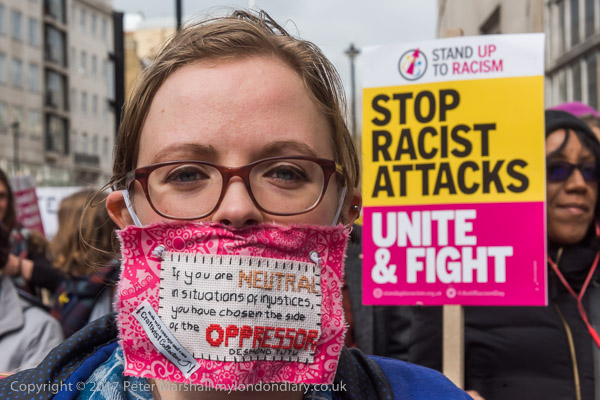
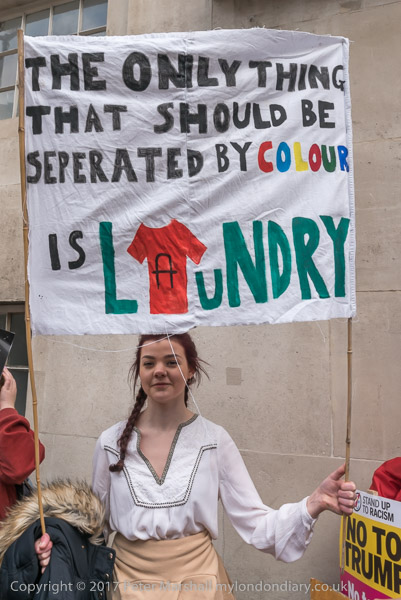
As well as sheer numbers, it was also apparent from the many hand-made posters and placards that this is an issue on which many people feel strongly and realise that the situation is a critical one, with both Theresa May and Donald Trump promoting racist measures against immigrants and in particular Muslims, and much of the press promoting hysteria against Islam and against Europeans who have come to live here, as well as a general xenophobia.

Looking at my coverage of the event in Thousands March Against Racism it is clear that I was greatly attracted to the posters and placards, though I also photographed many of the speakers at the rally before the march. There was a larger rally at the end of the march, but like quite a few of the marchers I was pretty tired by the time we reached Parliament Square and didn’t stay for it. I decided I’d taken enough pictures – and you can see well over a hundred of them on the web site.

Of course not everyone in the country shares the views of the marchers, and there was an organised counter-protest by the extreme right ‘Britain First’ who stood behind a large crowd of police at Piccadilly Circus and shouted insults at the passing marchers, many of whom shouted back, although stewards tried to hurry them on. But that small group were outnumbered by a factor of roughly a thousand to one.

There were so many good posters that it was difficult to know which to leave out, and impossible to do justice to them here. Quite a few were rather lengthy and I’ve chosen some of the more visual; a placard isn’t the best place for an essay.

Long texts also present a small problem on the web site, where I like to pick out and put at least some of the text from the banners and placards etc as text on the site, allowing for it to be found in searches.

Thousands March Against Racism

Continue reading Anti-Racism Day

Theatre of Protest

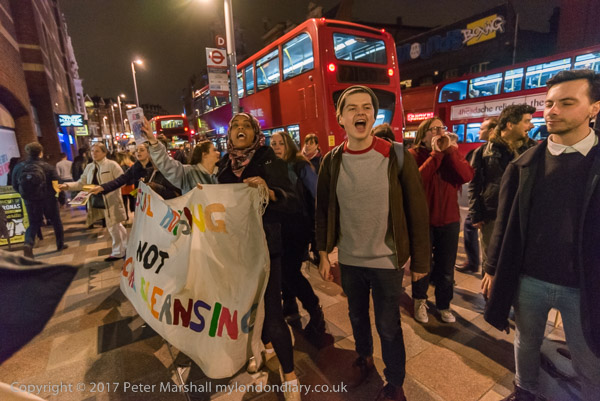
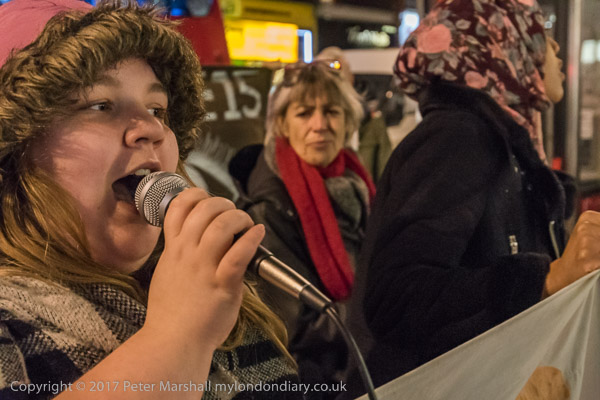
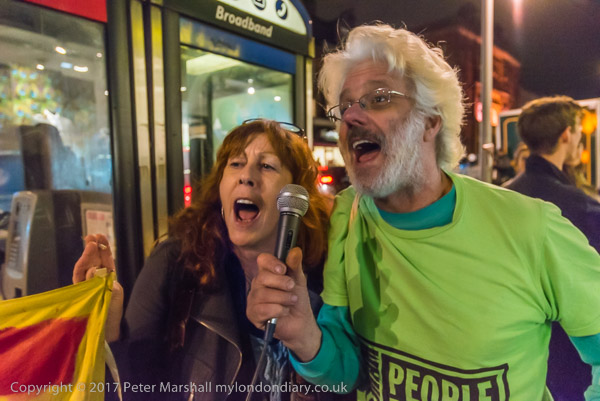
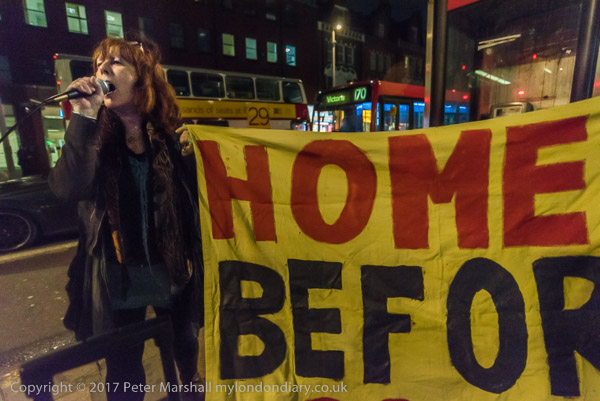
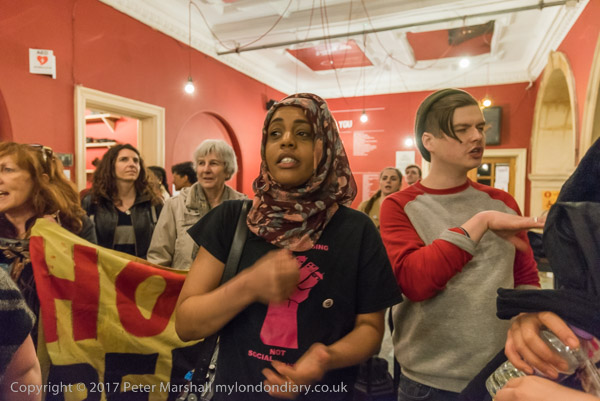
The Lung Theatre ‘E15’ march to BAC was a slightly unsettling event, both protest and theatre, in which I was both photographing an event and playing a photographer photographing an event, along with protesters, most of whom I knew at least slightly, and some I had photographed before at many events and among them the performers from Lung Theatre.

Lung Theatre’s ‘E15‘ is ‘verbatim theatre‘, using the actual words of housing protesters, largely from Focus E15, but also from Sweets Way and elsewhere in a theatre performance, and their run of several weeks at the Battersea Arts Centre was beginning that evening.

The ‘protest’ was an opening event – and I suppose could be called a ‘publicity stunt’ though there were protesters there handing out leaflets about housing in London and publicity for their future protests. It was perhaps a little displaced as these were not in Battersea  but across the city in Stratford, but similar things are happening in all the boroughs across the capital – and indeed in other cities.

All protests – and perhaps in particular those organised by groups like Focus E15 – have an element of theatre, and this certainly looked and felt and was a protest as it handed out leaflets (including those about the theatre performances), held banners and spoke and chanted about housing issues outside Clapham Junction station (which is of course in Battersea) before the short march up the road to the theatre. And like all the best protests it took the road for the march.

I did have some problems taking pictures. The street outside the station is very crowded and rather dark where the protesters had chosen to stand,  though with quite a lot of light of various colours spilling from some shop windows – and in some areas of the protest this was useful. Lavender Hill up which they later marched seems very poorly lit for a major road.

For the static protest I worked without flash at ISO6400, I think mostly on auto-ISO with the limit set at that ISO. I was working in Shutter priority mode, setting speeds mainly of 1/100 or 1/125th, but my usual finger fiddling problems meant I made a few exposures at higher shutter speeds – like 1/500th or even faster –  which at full aperture resulted in several stops of underexposure and a few of the noisiest images I’ve ever used – perhaps exposed at ISO51,200.

Lightroom can do a reasonable job at producing an image out of more or less nothing, but there are limits. When you push images you also get the shadow changing from black to a deep mauve which needs a little local application of a tint to try and neutralise. And in lighter even areas such as the grey of the road surface you can see some purple patches. Mostly I just deleted these vastly underexposed images, but in a  few I felt the problems gave a strong graphic effect and retained them.

Once the march started, I had to switch to flash as there was just too much movement. Again I kept to high ISOs to record some of the street further from my flash.  As so often, I had problems with flash; Nikon’s flash system is great and always works when I test it, but somehow in the heat of the moment it sometimes refuses to play the game properly. It’s probably me rather than the machine, and just shows that while the system is great it isn’t foolproof!

Although I was invited to see the show that evening I was keen to go home and eat and work on the pictures, and it was not until a couple of weeks later that I actually did so, having been invited to sit on a panel discussion at the end of the performance about the role of the arts in protest, along with fellow panelists, theatre director Max StaffordClark,  Guardian journalist Dawn Foster and comedian Jeremy Hardy.

I seldom speak in public, much preferring to write where I can consider my thoughts at greater length and try and chose the correct word, but I was more on my home ground that the others and my stern critic in the audience felt I had done pretty well, though Jeremy did get more laughs.

Lung Theatre ‘E15’ march to BAC

Continue reading Theatre of Protest

An Exodus of Pain

I’ve written many times about seeing things from different viewpoints, and in particular about getting away from seeing things in the often blinkered viewpoint imposed on much of our mass media by the small group – a handful – of billionaires who own and control our media.

Even if we pride ourselves on the independence of the BBC, its news agenda is largely driven by the major newspapers and its close relationship with the British establishment often determines the line it takes on issues.

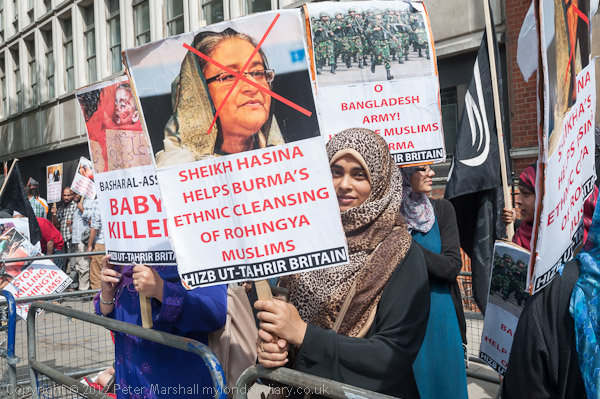
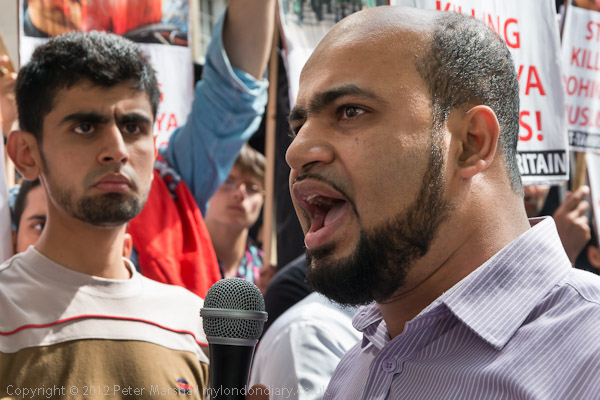
I first reported on the Rohingya and their mis-treatment by Myanmar over 5 years ago, but the story then was hardly taken up by the UK press. I didn’t go there, but was alerted to what was happening largely by overseas media and in particular by a group many in Britain say should be banned, Hizb ut-Tahrir, who protested outside the Bangladesh High Commission. Bangladesh was then blocking of aid to Rohingya refugees by NGOs and sending them back to be oppressed in Myanmar (Burma.)

It wasn’t a great protest to photograph, and Hizb ut-Tahrir were often rather suspicious (with some justification) of the media, but I wrote a fairly lengthy piece about the situation on My London Diary.

Of course things have changed since then and the situation has deteriorated greatly for the Rohingya, and the story has been taken up again world-wide. A few days ago I wrote a post about some of the photographic coverage in The Salgado Effect, and it’s good now to see a view from Bangladesh itself, photographed by Shahidul Alam of Drik/Majority World with text by Lyndall Stein, An Exodus of Pain half a million people driven from their homes.

Continue reading An Exodus of Pain

LSE Action and Arrest

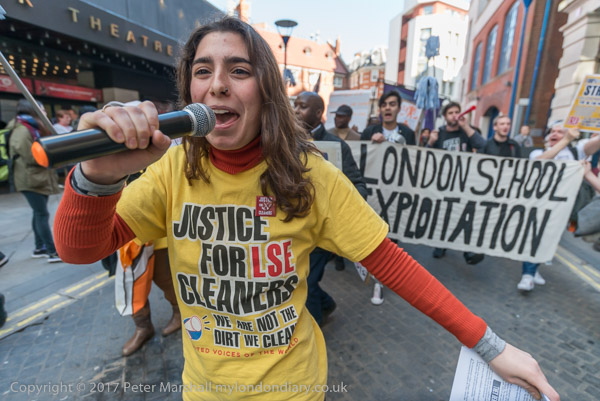
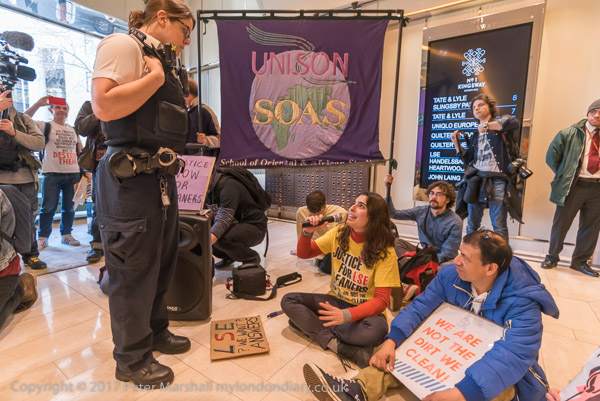
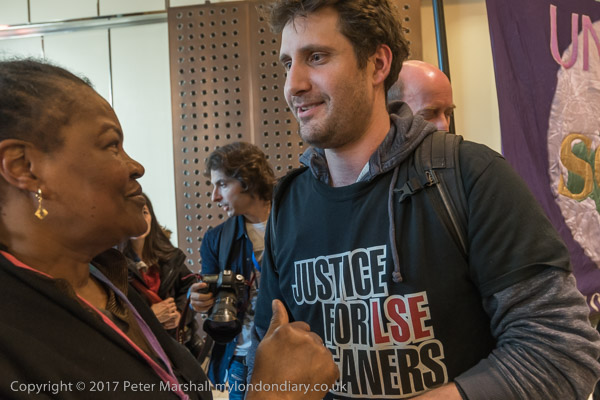
Students, cleaners and supporters continued their series of protests at the LSE for equal sick pay, holidays and pensions etc to similar workers directly employed by the LSE, and for an end to bullying and discrimination by their employer Noonan, including the unfair dismissal of Alba. This rally was on the first day of a two day strike, taken after a complete refusal of the employers to talk with the union.

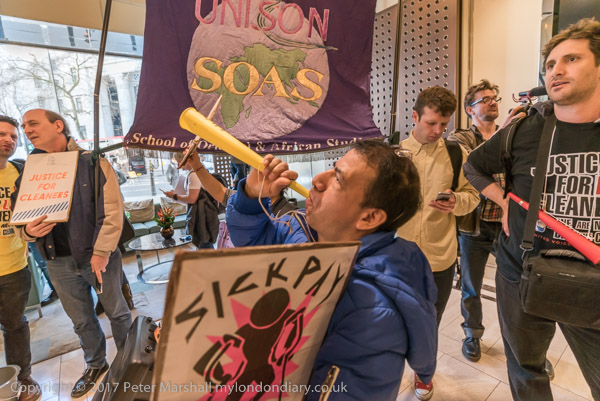
After a lunchtime rally outside the student’s union, the protesters marched to 1 Kingsway, which houses the LSE Estates Office, and a large group walked into the foyer despite the protests of a security man and the receptionist, and occupied this for a little over an hour.

There were speeches about the cleaners demands and chanting of ‘LSE, Shame on You’ and other slogans. After a while the protesters sat of the floor of the foyer, while some others danced to loud music on the PA system. But the protesters were careful to leave a clear path for people leaving and entering the offices for lunch.

Police eventually arrived and talked with both the LSE staff and UVW General Secretary Petros Elia, eventually taking him through the entrance gates to talk with the LSE facilities manager. After a few minutes he emerged smiling, saying that management had finally agreed to have a proper meeting with the union, and the protesters left the building.

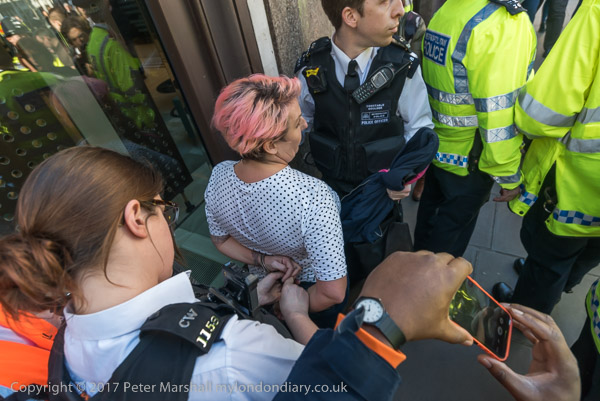
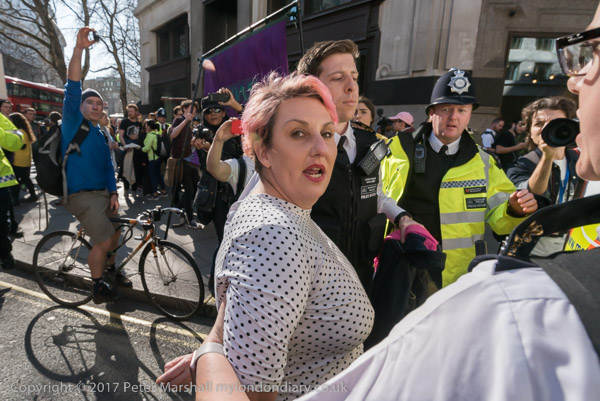
As they stood on the pavement outside sharing the news with those who had not been inside, police suddenly surrounded LSE academic Dr Lisa McKenzie, seizing her and assaulting her. She was arrested and bundled into a police van, charged with having assaulted the building receptionist when the protesters entered the building and she had been holding the UVW banner.

Fortunately her entry into the building had been filmed, showing the charge was false. I had been just a few feet behind her and would have seen had any significant assault had taken place, and there were a number of other witnesses to her innocence.

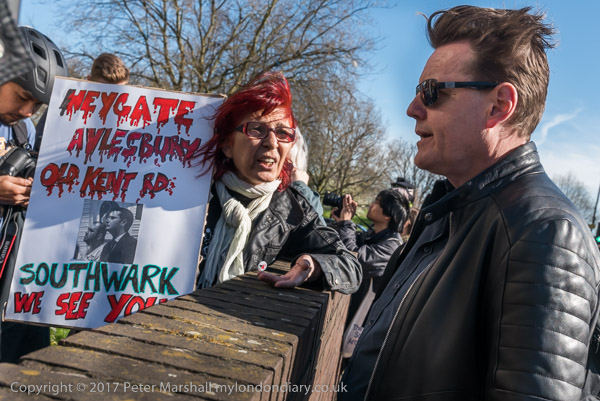
Lisa stands out because of her hair colour, and also makes her views heard at protest. As I wrote in My London Diary, her arrest on this occasion was  “probably linked to the police feeling aggrieved after failing to achieve a conviction when she was wrongly charged with three offences at a protest in February 2015 at the time she was standing in the General Election against Iain Duncan Smith – a previous arrest that was apparently politically motivated.”

LSE cleaners strike and protest
Police arrest Lisa again

Monday in Westminster

I don’t often cover many events on a Monday, perhaps because not a lot usually happens. Sometimes too, after a busy weekend I need a rest. While most people think of Mon-Fri as the working week, Saturday is almost always my busiest day. I used to cover quite a few events on Sundays too, but now I’m more often in need of a rest after Saturday, and often, like this morning, still have pictures from yesterday to edit from the previous day, having fallen asleep at the computer and decided to give up for the night. But even so, unless there is something I feel important to cover, I still tend to keep Monday as one of my days off.

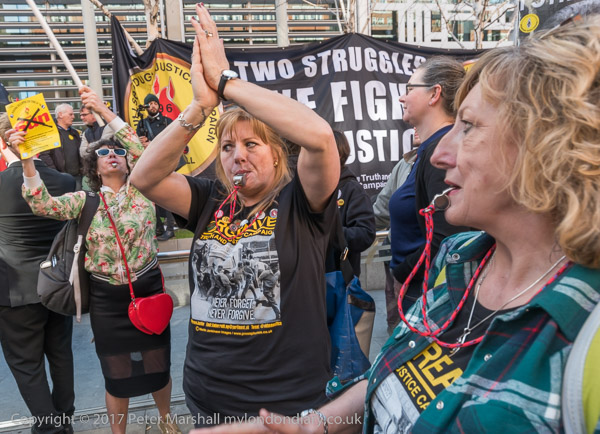
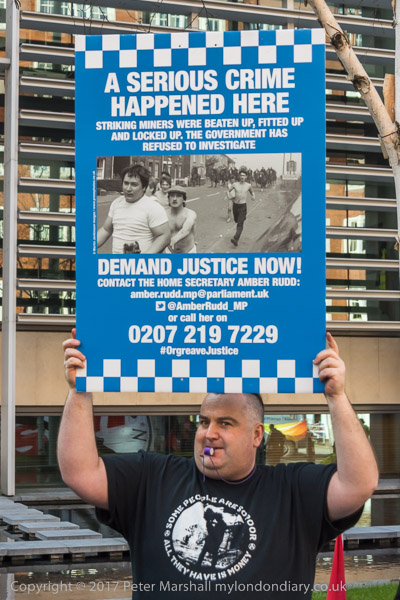
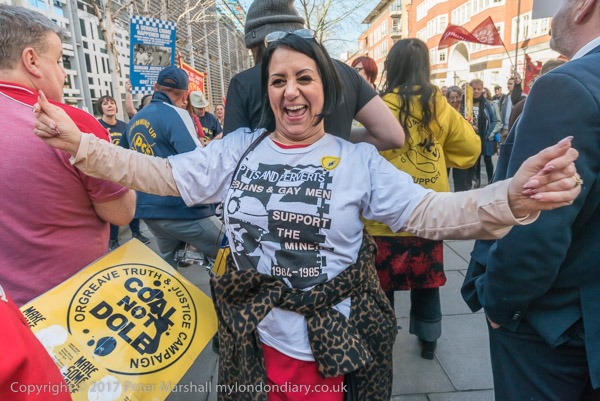
And Orgreave Truth & Justice at the Home Office on Monday 13th March was something I felt important, protesting at the failure of Home Secretary Amber Rudd not to grant an inquiry into the ‘Battle of Orgreave’ in which police, including military police and others in police uniforms, mounted a carefully planned attack on picketing miners.

Thatcher had determined to defeat the miners, and on 18 June 1984 at a British Steel Corporation coking plant in Orgreave, South Yorkshire showed just what illegal lengths the establishment was willing to go to in order to defeat the workers. And many have little doubt that our present government would be prepared to take similar actions, though mostly it gets by with more subtle means.

Perhaps the main hope of a proper inquiry into Orgreave is that we may get a Corbyn Labour government, though I’m not convinced that they will have the nerve or ability to challenge those areas of the establishment that are against getting to the truth – and would also be busily plotting against any radical initiatives by a mildly left social democratic Labour administration.

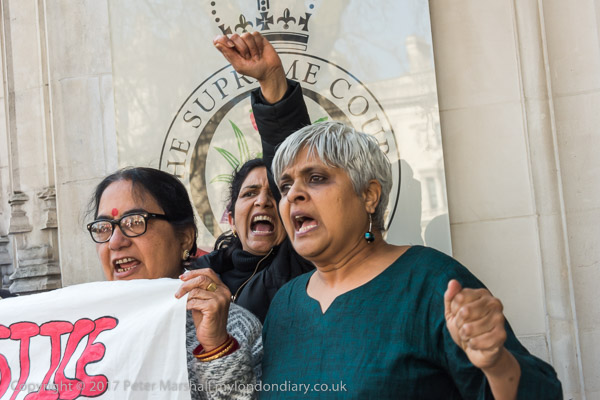
Two other campaigns for justice were also out on the street in Westiminster, one linked to the Orgreave protest. JENGbA had come to support the Orgreave protest, but had started with an action of their own outside the Supreme Court. JENGbA stands for Joint Enterprise Not Guilty by Association, and I’ve always thought the name it has adopted stood in the way of it actually making progress – how many people would have the slightest idea what JENGbA stood for? Despite this, they won a significant victory in 2015, when the SUpreme Court ruled that the joint enterprise law under which over 800 people are in jail had been wrongly applied, and that there must be actual evidence of intention to encourage or assist in a crime rather than some vague association.

But JENGbA have found – like other groups such as disabled people – that it is one thing to win in court and quite another to get the Home Office to correct the injustice. And those held in jail because the law was wrongly applied, many serving life sentences on the flimsiest of suspicions, have been refused appeals. After their protest outside the Supreme Court they marched to join the Orgreave protest outside the Home Office.

Quite separate from this was a protest against the Met Police who were appealing against a high court decision that the human rights of two woman raped by black cab driver and serial sex attacker John Worboys in 2003 and 2007 were breached when police did not believe them and failed to investigate their cases. That the police should appeal the decision that they have an obligation to investigate such cases of serious violence is appalling – and makes me wonder what they think they are there for.
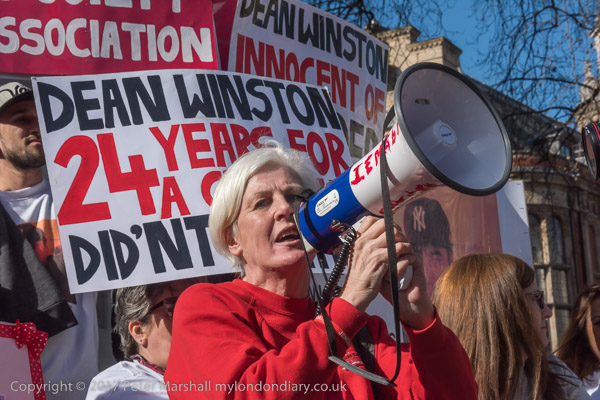
The protest was by Southall Black Sisters, End Violence Against Women Coalition, Nia Project and other women’s organisations who say in the police appeal succeeds there will be no effective remedy in the courts for women who are raped or victims of domestic violence.
Orgreave Truth & Justice at the Home Office
JENGbA march to support Orgreave
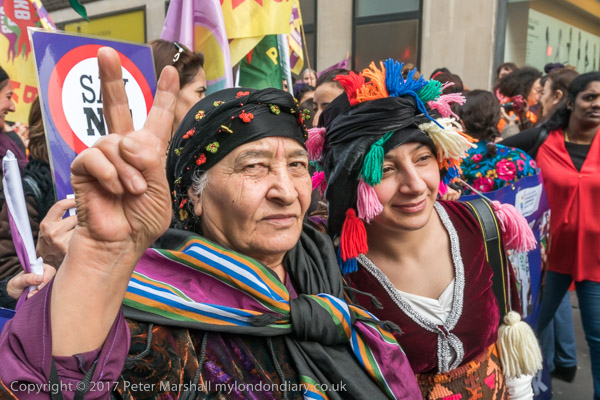
Women protest outside Worboys hearing

Continue reading Monday in Westminster

Women Rise and Fukushima

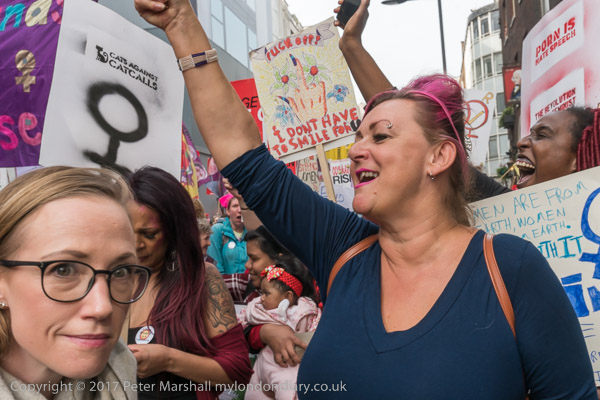
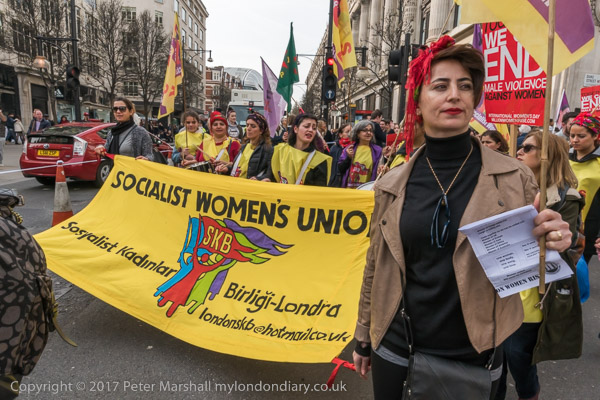
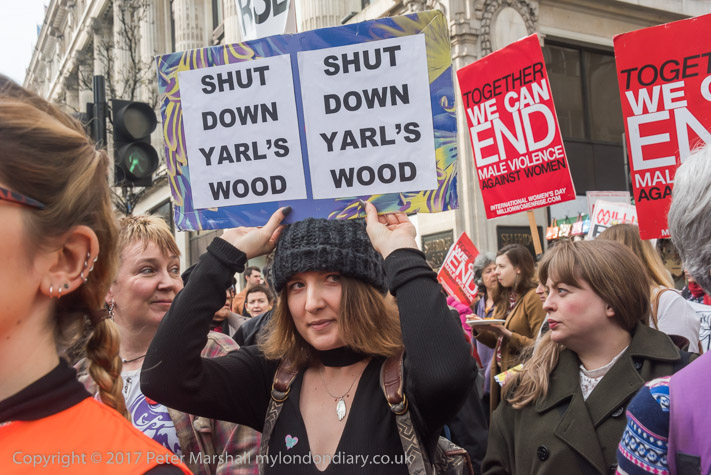
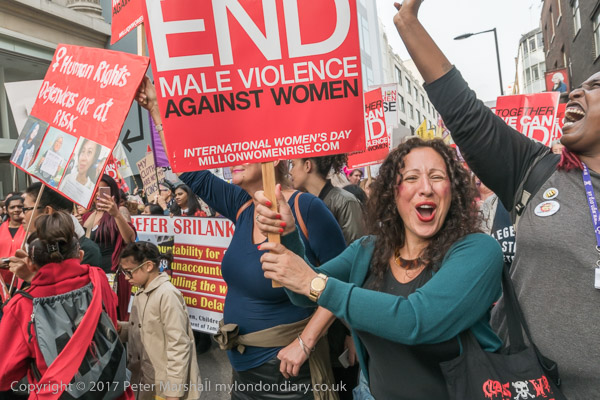
The Million Women Rise annual march through London against male violence is an all-women event, with several thousand of them marching in the centre of London. On occasions a few men have crept in, but it is fairly decisively a women’s event, and this sometimes presents a few problems for a male photographer. There have been a few women on past marches who have made clear they object to being photographed by a man, and on some occasions stewards shouted at me when I have put as much of a toe on the road, although mostly they are more welcoming.

Of course I – and any others of the public – have the same right to be on the road as the marchers, but I have no wish to offend anyone. It does rather make it difficult to work as usual, as I often want to take most of my pictures close to people inside the protests. The great majority of those taking part clearly in this march want to be photographed and have no problems with me getting into a suitable place to do so. Some were women who knew me and who I’ve photographed before.

But I took many more of these pictures from the sidelines than I would normally have done with other marches, although before the march started the street the march gathered in was full from wall to wall and I had to be in the middle of things. But once the march started I more or less kept to the pavement while the march went along the road, and I took relatively few pictures, or at least relatively few that were usable.

Of course I deplore male violence against women, like the marchers. In particular domestic violence is a huge problem, and mainly it is men who are violent and women (and sometimes children) their target. And the main sufferers in wars are women and children. I’ve supported the march and have given the organisers pictures in the past when requested to use in their publicity. But I probably gave up rather earlier than I would have on some other events, and decided against going to photograph the rally at the end of the march in Trafalgar Square. It isn’t possible to be in two places at once, but I was doing my best to cover two separate events both taking place at the same time in slightly different parts of London.

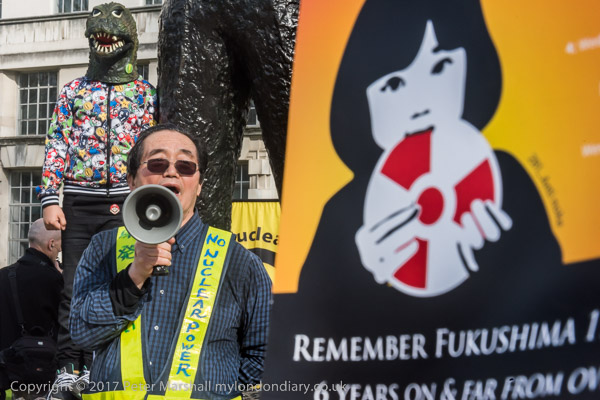
Before going to Million Women Rise I had photographed the start of a march from the Japanese Embassy on the sixth anniversary of the Fukushima nuclear disaster, and had left them shortly after they passed the Ritz on Piccadilly to rush up to Oxford St and photograph the start of the women’s march. And as the end of that march passed Bond St station I left them and took the tube to photograph the anti-nuclear rally opposite Downing St.

Million Women Rise against male violence
Fukushima anniversary challenges nuclear future


Continue reading Women Rise and Fukushima

Channelsea River


The Channelsea is still visible below this end of the footbridge

It was I think in 1981 or 2 that I first came across the Channelsea River and walked along the path alongside it from Stratford High St to Three Mills. I was really a few years too late, because the section s outh of Stratford High St to Abbey Lane had been culverted around 20 years earlier, and further north there were only isolated sections above ground.


Channelsea Path

By then the river was a ghost of its former self. Back in the 19th century it had been one of three major streams of the River Lea, running parallel to the main river down through Temple Mills (the tidal limit of the Lea) where the Channelsea diverged from the Waterworks River which had left the main stream around a mile north on Hackney Marsh. There were several channels or ditches joining the streams probably some with sluices.


Channelsea River from footbridge, Stratford

Close to where the railway from Hackney Wick crossed the river the Channelsea turned east, roughly following the old line of the railway to Stratford Station – where you can still see it as a ditch from the west end of the footbridge just south of the station.


Channelsea River from Northern Outfall Sewer

Below Abbey Lane the Channelsea is wide and almost entirely tidal, with Channelsea island in the middle – and the channel to the west of the island is Abbey Creek. During heavy rainfall the sewers receive more water than they can cope with and overflow into the river here and used to flow upriver on the tide.


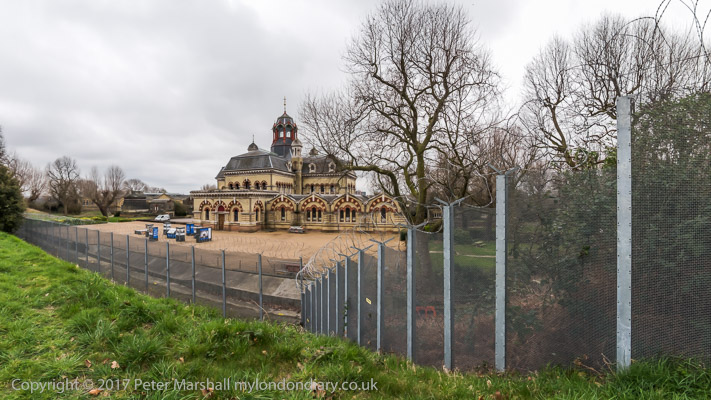
Abbey Mills sewage pumping station from Northern Outfall Sewer

The whole of the Bow Back Rivers was radically altered in the 1930s, following the 1930 River Lee Act. This enabled the Lee Conservancy Board and West Ham Borough Council to widen the Three Mills River and Waterworks River to 100ft to take flood water away, and to construct the Prescott Channel to take flood water from them into the Channelsea at Three Mills. The City Mill River was also made wider and deeper and provided with concrete banks as a 50ft wide navigable stream. It’s unclear whether there was any real intention for this to be widely used, or if its construction was mainly to provide employment for the many local unemployed.


Where the Channelsea goes under Stratford High St

The most recent and entirely dubious scheme was the construction of a new lock on the Prescott Channel, at a huge cost and under the pretence it would be used to bring in material and take out rubble from the Olympic site. Completed in 2009 it was used for a few photo-calls but the huge bulk of site material was moved in and out by lorry. It can be seen as a huge public subsidy to the developers whose blocks are growing on the upstream banks, protecting their properties and their future residents noses from the sometimes odiferous flood tides.

During the lock construction the riverside paths along the Channelsea were closed. The Long Wall path from the Northern Outfall Sewer (rebranded the Greenway in the 1990s but retaining its slightly sweet and disturbing sewage odour) to the lock reopened only around six years after completion, but that on to Three Mills from the Prescott Channel remains closed.

You can see more pictures from my walk at West Ham to Stratford – Channelsea River.
Continue reading Channelsea River