Labour, Labour Home Snatchers!


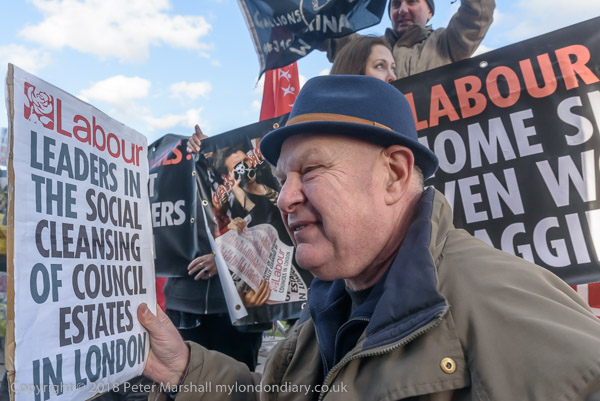
Anarchist Martin Wright leads a protest as a Labour Party activist is called to the microphone

The picture above has an interesting structure with a strong central figure and two planes defined by the poster he is holding and the banners behind, which appeals to me. But it is also a picture in which the text is important, particularly the poster message ‘Labour Leaders in the Social Cleansing of Council Estates in London’, not just because it actually makes  an unfortunately true point, but because it very clearly makes the point which this image is about – a protest by one of London’s leading anarchists over housing, and against the policies pursued by Labour councils in London.
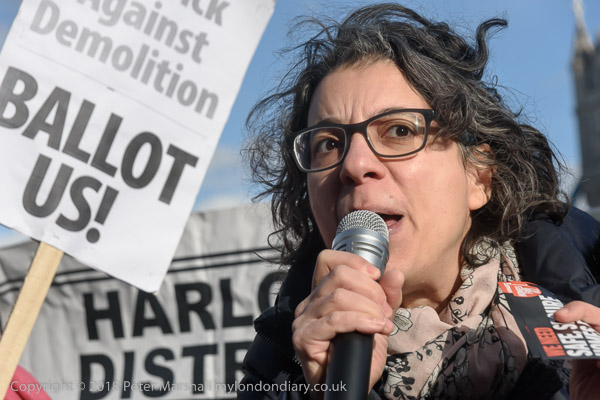

Tanya Murat of Southwark Defend Council Housing and a council tenant in Walworth

When the Labour government brought in the idea of regeneration it was probably for the best of motives, an attempt to improve the housing of many who were living in sub-standard accomodation by providing them with homes that met modern standards. But it was soon being used to do something very different, partly because developers saw it as a huge money-making opportunity, partly because some councillors and officers saw it as a way to develop their careers (and personal fortunes), partly because local authorities lacked the knowledge and experience to deal with the developers, and at least in part because of the demands and limitations imposed by central government on local authorities.

The result has been a culture in  which the needs of the people local authority housing is intended to meet – local residents – have become largely neglected, with councils aiming at realising the values of public assets and some councillors and officials getting treated to extravagant entertainment and getting lucrative jobs. Of course local councils have always suffered from people exploiting their positions for their own interests (and only a very few have been brought to justice.) But the huge redevelopment proposals which came out of thte regeneration process provided rich pickings for some.

Most local government in London is Labour led – with some borough such as Newham having no effective opposition at all. So mostly it is Labour controlled councils that are demolishing estates and handing public assets over to often rather corrupt developers – including some housing associations. Conservative councils are just as bad, but there are few of them. And we expect Conservatives to serve their own interests and those of their wealth friends, while Labour we expect to be ‘for the many not for the few’.
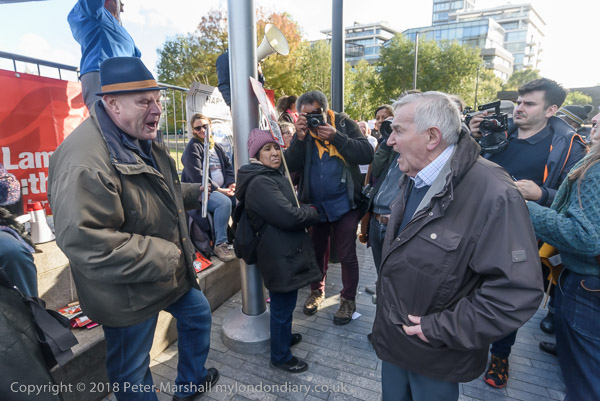

Ted Knight (right) argues with Martin Wright

Class War and other anarchist and left groups had come to take part in the protest called by called by ‘Axe the Housing Act’ against the demolition of council estates but neither they nor housing activists they have worked with were given the chance to speak. The final straw for them was when a prominent London Labour Party activist was called to the microphone. It is a long time since Ted Knight was ‘Red Ted’, the leader of a Labour council which planned and built homes on the premise that “nothing was too good for the working class”, was in power, but he remains a member of a party that has been responsible for more than 160 estate demolitions in the capital (though he has been fighting against some of them.)
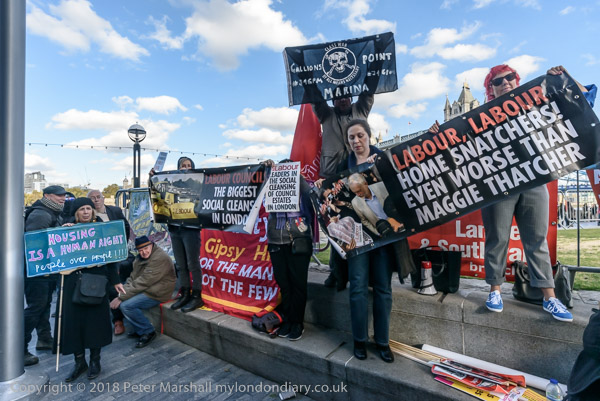

‘Labour Labour Home Snatchers! Even Worse than Maggie Thatcher’

It wasn’t then suprising that Class War and some other activists erupted at this point, disrupting the meeting by shouting their views. They didn’t stop the meeting, but held it up for some time before things quietened down enough for Knight to speak – and the arguments continued. The banner behind Martin Wright, on which only a few words can be seen (you can read it unobstructed at the right of the picature above ), shows Corbyn reading another Class War poster, listing the names of many of the estates Labour Councils are demolishing, thrust in his face as he went to speak at another protest.
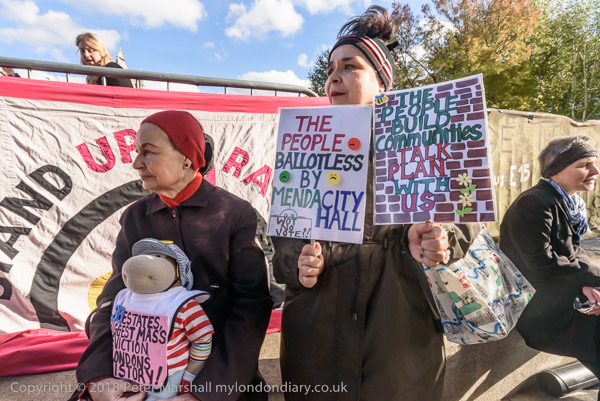

‘The people Ballotless by MendaCity Hall’ – Sadiq Khan rushed through proposals to avoid ballots

Some weeks after this Labour did make a new policy statement on housing, which did include some of the demands activists including Class War and  residents have been making, among them calling for all estate residents to be balloted and to be treated better when councils want to ‘regenerate’ estates. But those proposals are still being largely ignored by London Labour councils, with London Mayor Sadiq Khan rushing through a number of proposals which failed to meet the new standards, and others finding excuses to avoid implementing them.

There have been a few sucesses, notably in Haringey, where a huge level of protests by activists iniside and outwith the Labour Party resulted in the election of Labour councillors opposed to the billion-pound giveaway of council assets involved in the HDV (Haringey Development Vehicle), but elsewhere in London Labour councils dominated by the Labour right (and organisations such as Progress) are still finding ways to continue  the old and discredited policies.

I tried to cover both the main protest and the reaction to it from Class War and others, and separated out the two on My London Diary. There were a number of speakers representing estates currently being demolished or under threat in the main protest, but it did seem a shame that it was not more inclusive.

Class War protest Labour Housing record
No Demolitions Without Permission
______________________________________________________

There are no adverts on this site and it receives no sponsorship, and I like to keep it that way. But it does take a considerable amount of my time and thought, and if you enjoy reading it, a small donation – perhaps the cost of a beer – would be appreciated.

My London Diary : London Photos : Hull : River Lea/Lee Valley : London’s Industrial Heritage

All photographs on this and my other sites, unless otherwise stated, are taken by and copyright of Peter Marshall, and are available for reproduction or can be bought as prints.

To order prints or reproduce images

________________________________________________________

December 2018

A few days off with virtually no protests taking place in London have given me time to catch up with December’s pictures, which as well as those from London also include those from a short trip to Matlock.

My london diary

Dec 2018


Matlock & High Tor
Matlock & Lumsdale
Matlock – Oker Hill
Brentford to Hammersmith
Boxing Day Walk
London Bike Life


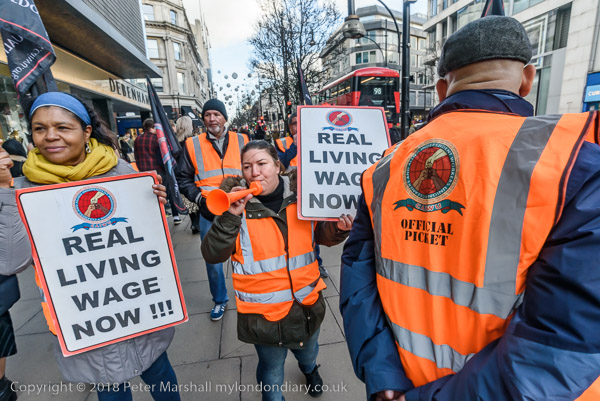
Debenhams Pay Your Cleaners
Nine Elms Wander
Humanity Face Extinction
Extinction Rebellion at the BBC


Anna Soubry MP harassed by extremists
Extremist Brexiteers at parliament
Extremist Brexiteers clash with SODEM
MP welcomes Delhi to London driver
Cuts kill disabled people say protesters
Berlin Syndikat protest at London landlords
London Stands With The Stansted15


Grenfell silent walk – 18 months on
Hand Back Venezuela’s stolen money
SODEM vigil against Brexit
70 years of Human Rights


Marchers oppose Tommy Robinson
London flooded with Santas
British Museum Stolen Goods Tour
Dharma meditation for climate
Protest Slavery in Libya
Winkfield Walk
SHAC Alternative Housing Awards 2018
BBC Boycott Eurovision Israel 2019


Together for Climate Justice
Stop Universal Credit day of action


London Images

______________________________________________________

There are no adverts on this site and it receives no sponsorship, and I like to keep it that way. But it does take a considerable amount of my time and thought, and if you enjoy reading it, a small donation – perhaps the cost of a beer – would be appreciated.

My London Diary : London Photos : Hull : River Lea/Lee Valley : London’s Industrial Heritage

All photographs on this and my other sites, unless otherwise stated, are taken by and copyright of Peter Marshall, and are available for reproduction or can be bought as prints.

To order prints or reproduce images

________________________________________________________
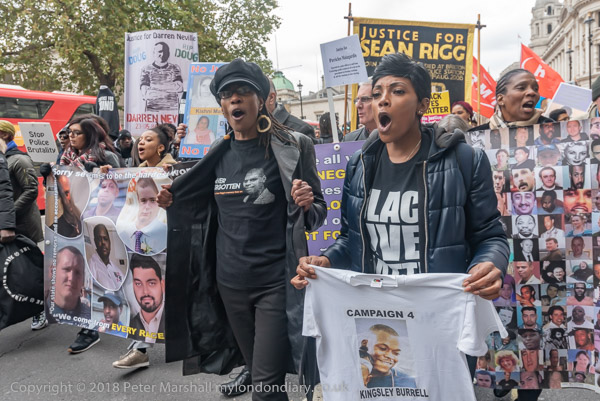
No Justice! No Peace! 20 Years

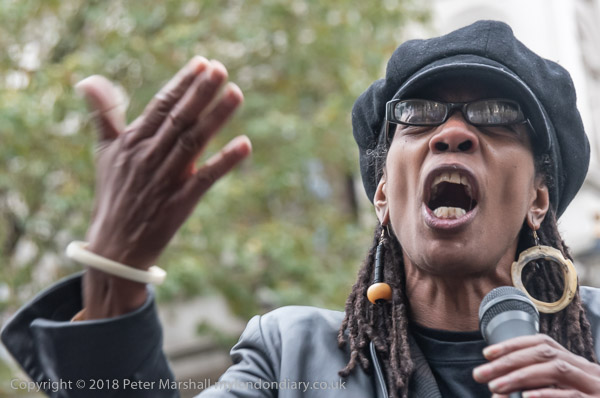
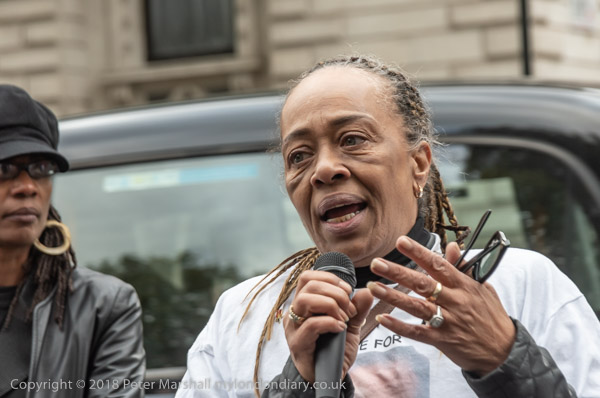
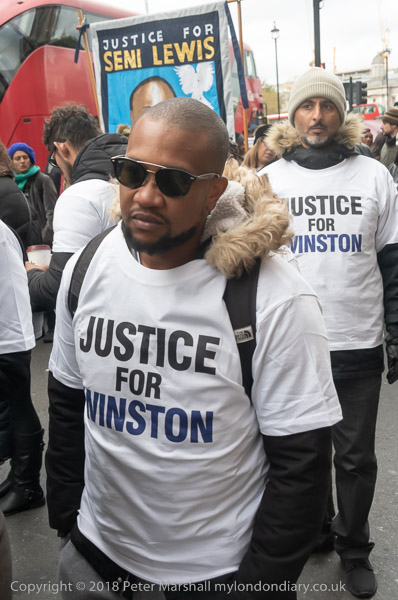
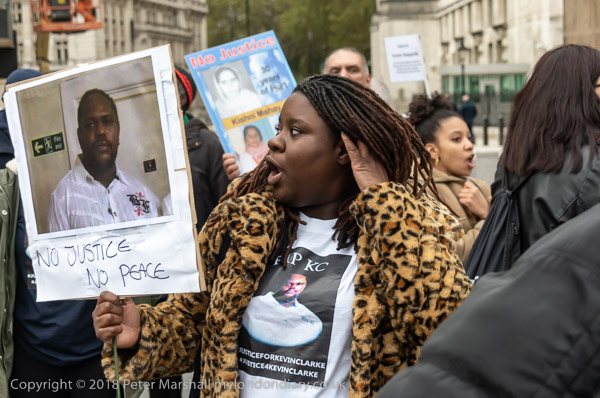
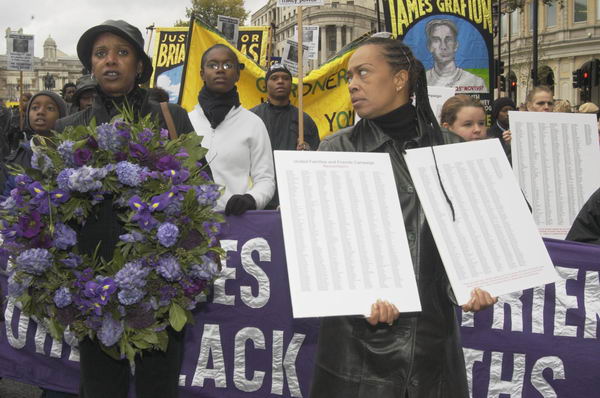
This was the 20th annual march by the United Families and Friends Campaign (UFFC), a coalition of of people killed by police, in prisons, in immigration detention and in secure psychiatric hospitals. I first knew about their campaign in 2003, when I took the picture above, along with others. Then the list they carried of those who have died in custody since 1969 hand around 1800 names on it; now it is considerably longer, with many new names being added each year.

Some of those I photographed in 2003 were still there in 2018, but others have themselves died – sometimes as a result of their grief. Many have given up on the struggle for justice, beaten down by the system which lies and obstructs the course of justice – including the police, coroners and judges who all dissemble, and a complaints procedure dedicated to being ineffective. For most there is no justice – but many are determined to fight on despite this. The most determined sometimes make a little progress, but still the system keeps slapping them back.

Of course not every death in custody is a result of criminal acts by police or others concerned. Some are from natural causes. But too many are from a lack of care; too many from the use of excessive force and failures to carry out proper procedures for restraint. And too many from clearly criminal acts which our courts allow to go unpunished.

The only case among around two and a half thousand where there has been a sucessful prosecution, so far as I’m aware, is one where the violence by fellow officers so offended one policeman that he broke ranks and gave evidence against them. In other cases police have got away with perjury, supporting the clearly false evidence of their fellow officers, making up stories between them that bear little relation to what actually happened.

So many police inquiries into these incidents have been at best half-hearted and often facially incompetent or even criminal. CCTV cameras – even in police stations – never seem to work when officers would be in the frame, and interviews are not made or delayed for months.

Of course police have a difficult job, and mistakes will sometimes happen, but this goes beyond this, and is an institutional problem – like the racism which, despite its revelation after the death of Stephen Lawrence, is still active in police forces around the country, and involved in too many of the deaths. Many of the victims are also people with mental health problems, and the continuing deaths also reflect a lack of proper mental health provision, exacerbated by changes in policies and government cuts both to health services and to community services.

The campaigners met in Trafalgar Square, and then marched slowly, very slowly down Whitehall, stopping for a rally opposite Downing St, where many representatives of the bereaved families spoke. A delegation went to take a letter to the Prime Minister at 10 Downing St, as they have done each year, though never getting a sensible reply. This year they were even refused entry, despite having made their application several months earlier. Police on the gate were apologetic (and the police had facilitated the march and rally in exemplary fashion) and took the letter promising to see it was delieved, but apparently their request had been lost, perhaps deliberately, by Theresa May’s office and they could not be allowed to enter.

‘No Justice! No Peace!’ is the slogan of the campaign, and so far justice is sadly lacking.

More at:
20th UFFC remembrance procession
20th UFFC remembrance rally

______________________________________________________

There are no adverts on this site and it receives no sponsorship, and I like to keep it that way. But it does take a considerable amount of my time and thought, and if you enjoy reading it, a small donation – perhaps the cost of a beer – would be appreciated.

My London Diary : London Photos : Hull : River Lea/Lee Valley : London’s Industrial Heritage

All photographs on this and my other sites, unless otherwise stated, are taken by and copyright of Peter Marshall, and are available for reproduction or can be bought as prints.

To order prints or reproduce images

________________________________________________________
Don’t Break Up the NHS

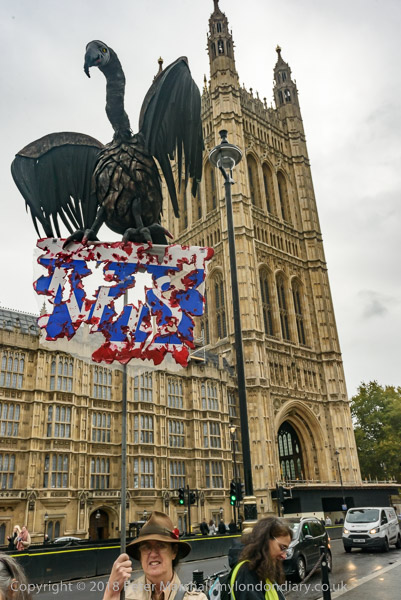
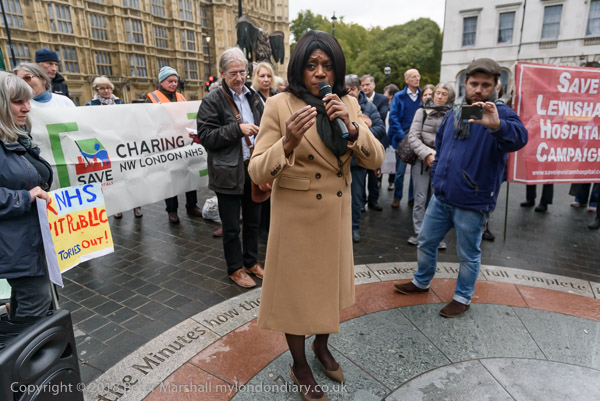
As the holed and bloody NHS logo under Jeremy the Vulture suggests, the NHS has been subjected to a long and brusing campaign of privatisation by the coalition and Tory governments since 2010 (and New Labour before then didn’t help.)

Many of us have found that our NHS clinics and services have been taken over by companies including Richard Branson’s Virgin Healthcare, and more and more of our NHS services are being moved into the hands of private companies, with even some NHS hospitals being run by them – though at least one has been returned to the NHS when the private company found it couldn’t make enough.

The process of privatisation has been carried out largely by stealth through various reforms by politicians who mouth about the NHS being safe in their hands while selling off parts of it to companies owned by party donors, friends and relatives and deliberately failing to cope with many of the real problems of the system.

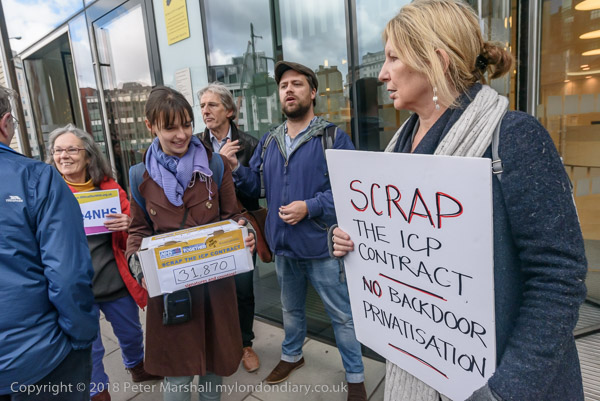
One of the latest of these back-door privatisation schemes is the ICP contract. The Health & Social Care Act 2012 forced competitive contracting onto the English NHS, resulting in the wasting huge amounts of time and resources on competition and tendering processes. NHS England want to plaster over the obvious failures of this by adding another layer of contracting, the Integrated Care Provider contract, rather than getting rid of the system which has failed.

Brexit comes into all of this through the hope by some leading Brexiteers that after Brexit we would be able to offer the US a trade treaty which would enable American healthcare companies to take over much of our NHS as an incentive to get advantageous terms for British companies trading with the US.

The introduction of ICPs would break the NHS into smaller business units which would be competed for by private sector organisations. The plan is being driven by NHS England under CEO Simon Stevens, previously a senior executive of the giant US healthcare and health insurance company United Health Group.

The Carillion failure shows the danger of such contracting arrangements, where a failure of a ‘lead provider’ with multiple sub-contracters has led to thousands of job losses, abandoned major projects (including part-built hospitals), poorer services and great public expense.  Similar arrangements with multiple levels of contracting also made possible some of the failures which made Grenfell Tower a deathtrap.

We need – in the NHS and elsewhere – to move towards simpler systems and eliminate the many unnecessary and costly levels of management. Huge amounts too are wasted on consultancy fees. There is a kind of cult of management which bears no relation to its actual utility and too often it gets in the way of efficient working of organisations rather than facilitating it, often by forcing unsuitable structures in a ‘one size fits all’ approach.

I’m not an expert on the ins and outs of ICP, for which I suggest you look at the National Health Action Party’s page Reasons NHS England should scrap the draft ICP contract. The party and most of the speakers at the protest were professionals with years of experience in the NHS who are appalled at the privatisation which has taken place.

Among those who came to speak at the event was MP Eleanor Smith, a former NHS theatre nurse and Unison President, whose private members NHS Reinstatement Bill was due for its second reading later in the day, calling for the re-nationalisation of the NHS. 

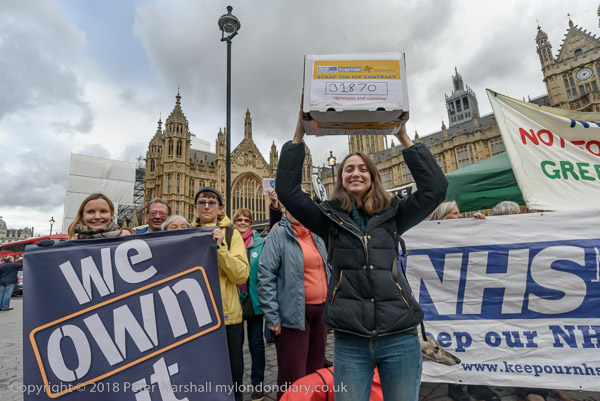
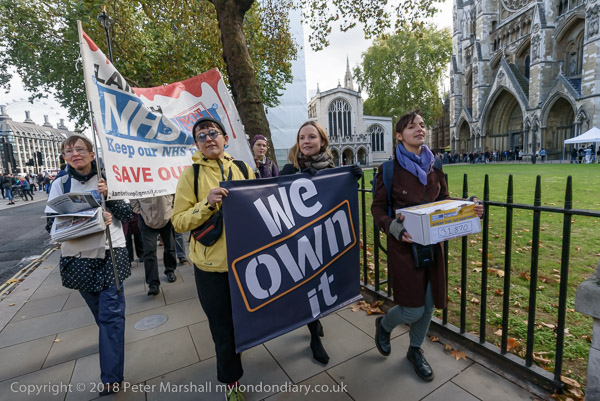
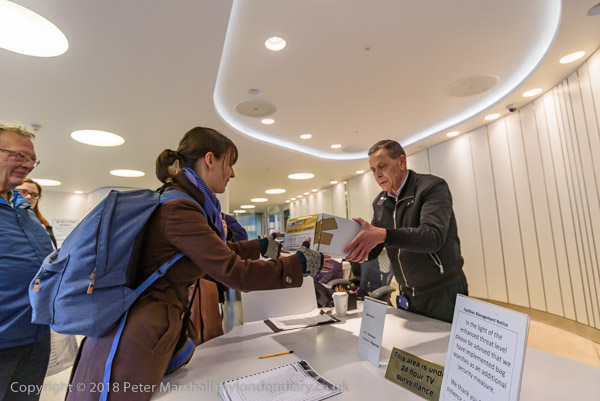
Public services campaigning group ‘We Own It‘ had come to the event with a petition with 31,870 signatures to scrap the ICP contract, a large number considering the rather technical nature of the scheme, and after the rally the campaigners marched to the Dept of Health to hand in.

More pictures at Scrap ICP Contract, Keep NHS Public
______________________________________________________

There are no adverts on this site and it receives no sponsorship, and I like to keep it that way. But it does take a considerable amount of my time and thought, and if you enjoy reading it, a small donation – perhaps the cost of a beer – would be appreciated.

My London Diary : London Photos : Hull : River Lea/Lee Valley : London’s Industrial Heritage

All photographs on this and my other sites, unless otherwise stated, are taken by and copyright of Peter Marshall, and are available for reproduction or can be bought as prints.

To order prints or reproduce images

________________________________________________________

Minister Bone Saw

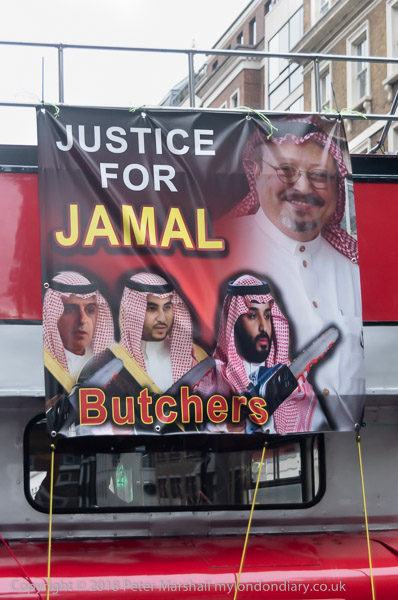
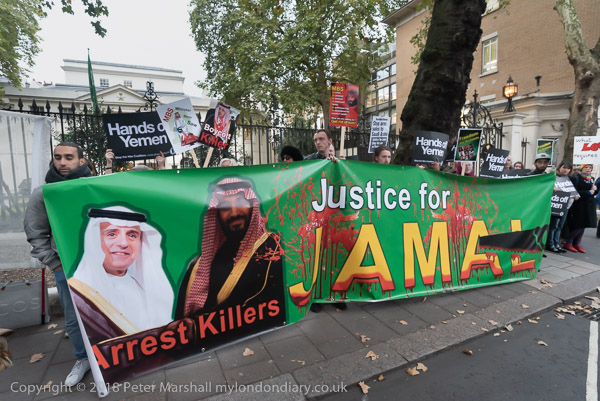
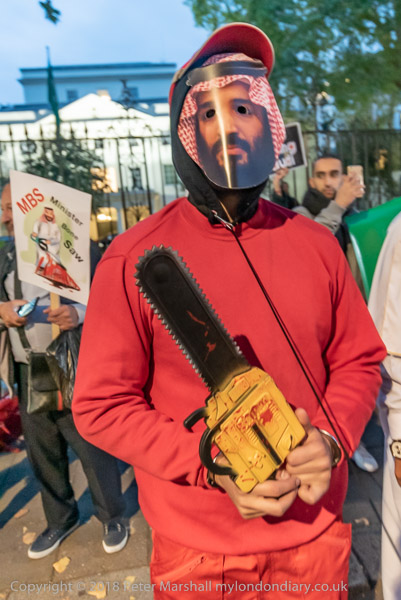
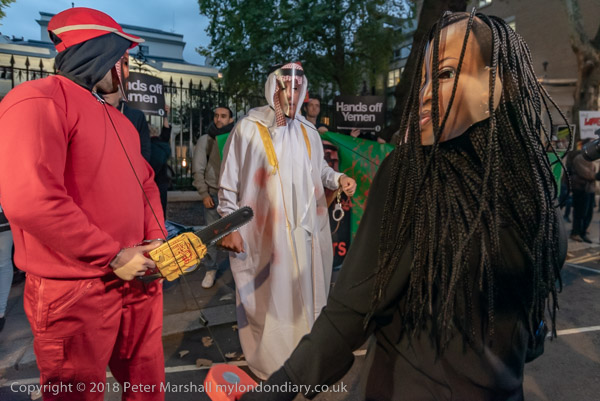
A protest outside the Saudi Embassy in London called for all those responsible for the horrific murder and dismembering of journalist Jamal Khashoggi, including Saudi crown prince Mohammed bin Salman who is thought to have approved sending the death squad to the consulate in the Turkish city of Istanbul, to be brought to justice.

The Committee to Protect Journalists website lists the name of 53 journalists killed in 2018, including Khashoggi,  one of the 34 murdered. Others were killed by crossfire (11) or on dangerous assignments (8).  Twelve of them were photographers, half killed by crossfire. Seven other media workers were also killed.

Few of these deaths made the UK news, because most were local photographers, working in their own countries, and there were no deaths in the UK. Kashoggi’s death made the news partly because he was a journalist for a major US newspaper, but also because of its horrific nature, dismembered while still living using a bone saw and his body in parts smuggled out of the Saudi consulate. I read about the recording apparently transmitted from his watch during his killing, but could not bear to click the link to listen to it.

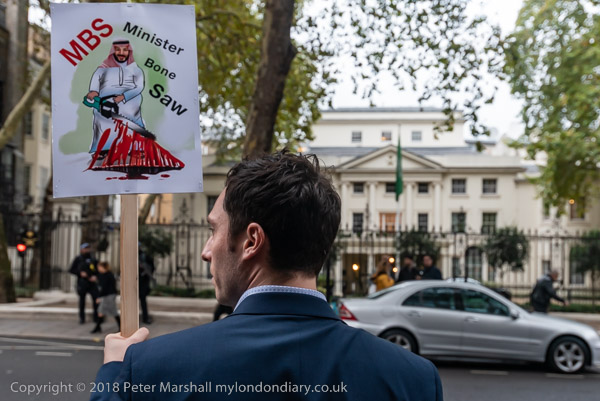
Few if any believe the Saudi denial that his killing was approved by Saudi crown prince Mohammed bin Salman, generally known as MBS, which placards expanded to Minister Bone Saw.  It’s perhaps something of a mystery why MBS thought he could get away with it – though the rich often do, and while there was international revulsion there has been little or no real action. Also hard to understand is why Kashoggi believed the assurances he was apparently given about his safety.

Here in the UK, journalists are generally fairly safe, though a few of my colleagues have suffered at the hands of police, with teeth being knocked out and arms broken, normally the worst we get are a few bruises.  The only UK death on the CPJ site, which has records since 1992, was of Martin O’Hagan, a 51-year-old investigative journalist for the Dublin Sunday World, shot dead outside his home in September 2001 in Lurgan, Northern Ireland.

The protest outside the embassy was also against the Saudi involvement in the war in Yemen and called for the UK to immediately stop arms sales to Saudi Arabia.

Justice For Jamal Khashoggi & Yemen

______________________________________________________

There are no adverts on this site and it receives no sponsorship, and I like to keep it that way. But it does take a considerable amount of my time and thought, and if you enjoy reading it, a small donation – perhaps the cost of a beer – would be appreciated.

My London Diary : London Photos : Hull : River Lea/Lee Valley : London’s Industrial Heritage

All photographs on this and my other sites, unless otherwise stated, are taken by and copyright of Peter Marshall, and are available for reproduction or can be bought as prints.

To order prints or reproduce images

________________________________________________________
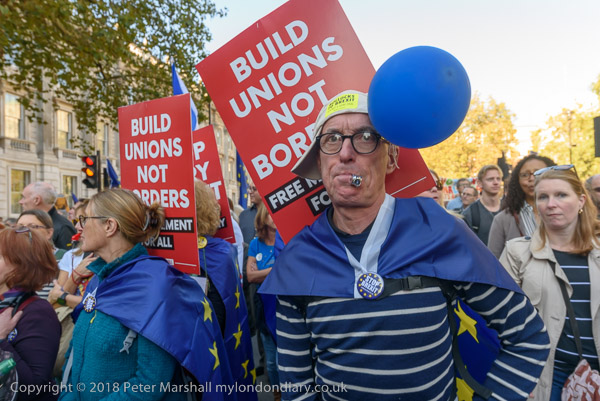
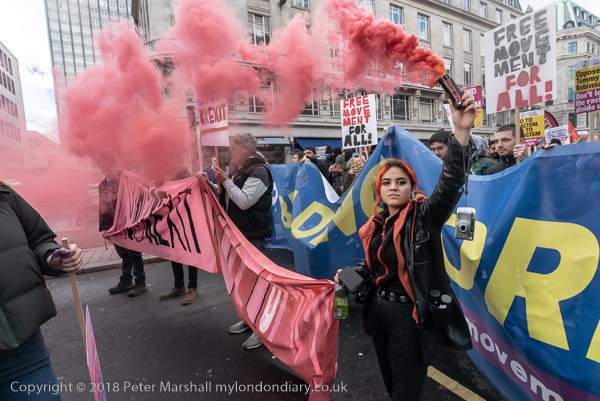
Remainers March Fills London

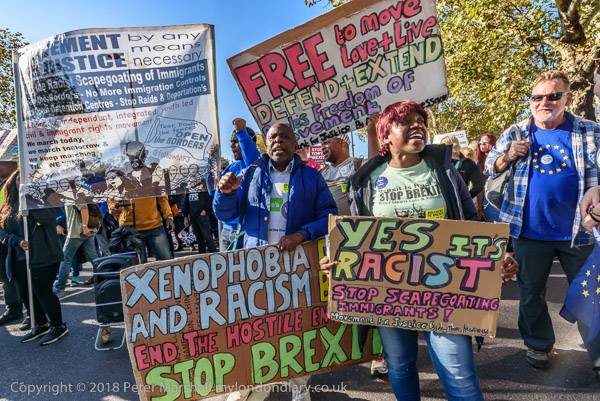
Although the front of the People’s Vote March for the Future was at the Hyde Park Corner end of Park Lane, several thousand people were in front of the banner when the march was due to begin, stretching some way down Piccadilly.

Among them and right at the front were a group of protesters from Movement for Justice who clearly see Brexit as motivated by xenophobia and racism. They called noisily for Brexit to be stopped and for free movement and an end to the UK’s racist immigration policies. Among them were many who have suffered long periods of indefinite detention in Britain’s immigration detention centres, where MfJ has held numerous protests calling for these prisons to be closed, as well as campaigning and giving assistance to those held inside .

Piccadilly behind the MfJ was fairly densely crowded and it took me some minutes to make my way back to the official head of the march with its banners and placards, where I think stewards were waiting hoping that the road ahead would be miracuolously cleared, but there were just too many people for this to happen.

The march began and I stood on Piccadilly taking pictures of the marchers (some of which are in People’s Vote March – Start on My London Diary.) When people were still walking past me half an hour later I got on the tube at Green Park and went to Westminster, where I found that before any marchers had reached Parliament Square it was already fairly full.

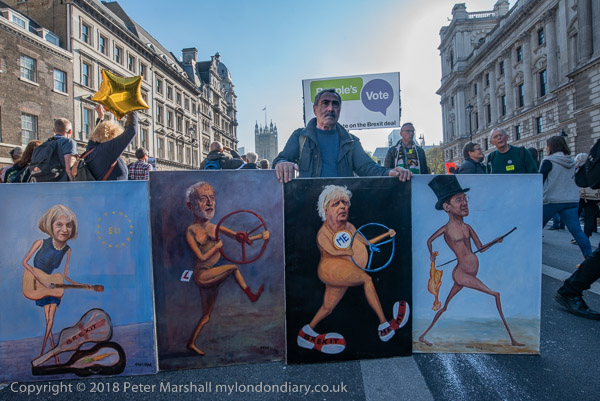
I walked around the edge of the square, then decided to walk up Parliament St towards Downing St to be around there when the marchers arrived, stopping there for a few minutes to photograph anopther protest taking place by the People’s Mujahedin of Iran against executions of the political opposition in Iran.  Political artist Kaya Ma was standing there with paintings of Theresa May, Jeremy Corbyn, Boris Johnson and Jacob Rees Mogg.

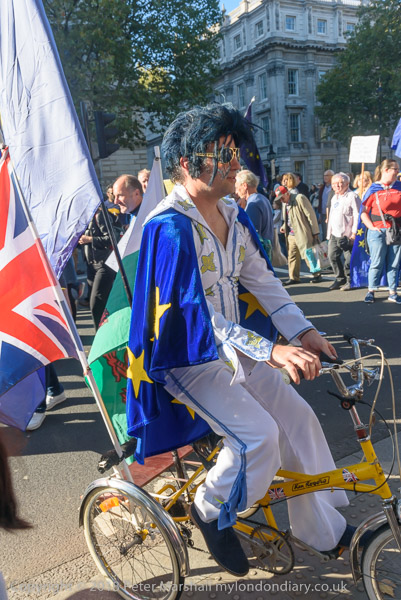
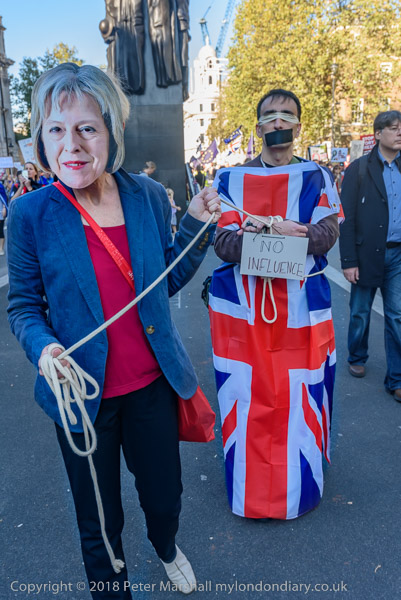
Among the first to arrive was Elvis, riding a tricycle, coming to sing and play with others who were already opposite Downing St, and soon Theresa May turned up holding a rope, with which she was leading a captive Britain.

At the end of the rope tying his wrists together was a man dressed up in a Union Flag, his mouth gagged and wearing a blindfold, carrying a small poster ‘No Influence’.

The whole width of the road was filled with people walking slowly towards Parliament Square, though after a while this was full and Whitehall also began to fill up. Some friends at the back of the march told me that they never managed to leave Park Lane, and there were reports of a large overfill in Green Park, unable to make further progress.

Eventually I decided I’d been standing on my feet too long and decided to try and make my way to Charing Cross – the crowd towards Westminster station which was closer looked too dense to make much progress. There was a single Brexiteer with a megaphone taking on a small crowd who gathered around him, but failing to make much sense, and a line of police across the entrance to Horseguards Avenue where a small protest was taking place in front of the Ministry of Defence.

I wandered down briefly to find it was Veterans United Against Suicide, who as well as calling for more to be done to help service men and veterans in the fight against their developing PTSD and eventually committing suicide were also supporting a soldier discharged for being photographed in  uniform with extreme right figure Tommy Robinson.

I returned to Whitehall and walked up towards Trafalgar Square, but was soon brought to a halt by a densely packed crowd now also trying to leave. People were partying in Trafalgar Square and it took me around 15 minutes to get to Charing Cross station for a train.

MfJ at People’s Vote March
People’s Vote March – End
______________________________________________________

There are no adverts on this site and it receives no sponsorship, and I like to keep it that way. But it does take a considerable amount of my time and thought, and if you enjoy reading it, a small donation – perhaps the cost of a beer – would be appreciated.

My London Diary : London Photos : Hull : River Lea/Lee Valley : London’s Industrial Heritage

All photographs on this and my other sites, unless otherwise stated, are taken by and copyright of Peter Marshall, and are available for reproduction or can be bought as prints.

To order prints or reproduce images

________________________________________________________
Cuban Revolution 60th

On the Magnum web site you can read ‘The Day Havana Fell‘, with Burt Glinn‘s story of how he rushed to Cuba from a New York party where he heard the news and how he covered the story – along of course with his pictures.

Although the Cuban revolution had started on 26 July 1953, it took 5 years, 5 months and 6 days before on 1 January 1959, Batista fled Cuba by air for the Dominican Republic 60 years ago today.

AP was there too, and have just re-published their film of the event on You-Tube.

President Kennedy a few years later in 1963 spoke of his sympathy with Castro and his fight:

“I approved the proclamation which Fidel Castro made in the Sierra Maestra, when he justifiably called for justice and especially yearned to rid Cuba of corruption.

I will go even further: to some extent it is as though Batista was the incarnation of a number of sins on the part of the United States.  Now we shall to have to pay for those sins. In the matter of the Batista regime, I am in agreement with the first Cuban revolutionaries.”

Though that sympathy hadn’t stopped him authorising the diastrous ‘Bay of Pigs ‘ invasion two years earlier in 1951, nor did it stop the various other plots by the CIA to assassinate Castro, some extremely bizarre, revealed by a senate committe in the 1970s.

Cuba of course had its own photographers, best-knoown of whom was Alberto Korda, and you can read about some of them in the Daily Telegraph travel feature, Meet the front-line Cuban photographers who captured Castro’s ragtag rebellion. A rather better introduction is Shifting Tides – Cuban Photography after the Revolution, with text and pictures from a Grey Art Gallery, New York University 2002 show.

Time’s Lightbox features Cuban Evolution: Photographs by Joakim Eskildsen from 2013 by the Danish photographer, and the Huffington Post has 10 Cuban Photographers You Should Know.

Cuba remains a a country that divides opinion, with a socialist regime which is lauded by some for its healthcare and some other social provisions, while denigrated by others for its restrictions on private property and political opposition and for human rights abuses. It has suffered greatly from US sanctions over the years, though under President Obama there were some relaxation in these, including the re-establishment of diplomatic relations in 2015.

Anarchists & Underdogs

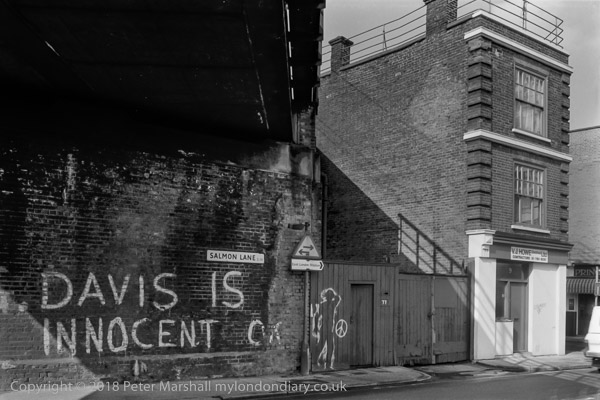
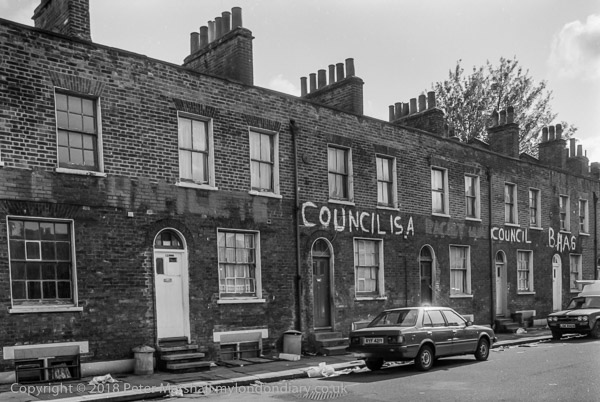
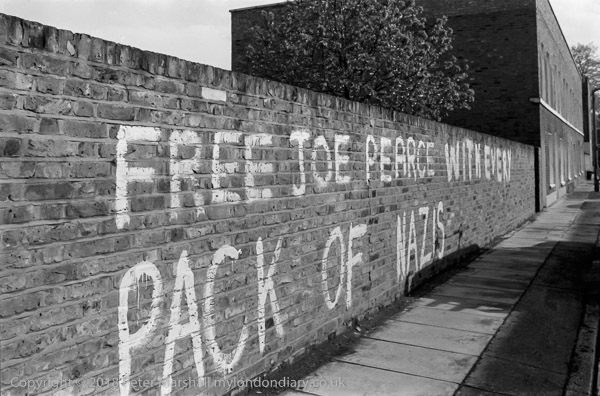
I read a post a week or two ago, pointed out to me by an anarchist friend, on the British Culture Archive web site, posted there last March, Anarchists & Underdogs | Images of Social & Political Graffiti in the UK and as well as sharing the link with you, thought there were also a few images I took in the 1980s of similar material.

It was one thing thinking that, but since I had no real idea of when I might have taken the pictures they were not that easy to track down. I’ve never really concentrated on taking pictures of graffiti, though in more recent times I have photographed some of the more colourful images on walls in Leake St underneath Waterloo Station, a route a sometimes detour through when I’ve just missed a train home and have 22 minutes to wait for the next, in Shoreditch, London’s graffiti capital, and elsewhere, not forgetting Hull’s great Bankside Gallery. But these are more murals than graffiti, and the earlier examples, both in the BCA article and here are simple text statements, usually of a political nature.

‘George Davis is innocent, OK’ appeared on walls across London, and is one I’ve written about before, though I can’t remember where. It was so common it hardly seemed worth using film on, unless there was a little more to it. Of course he was probably innocent of this one particular charge but otherwise a prime villain. Police had deliberately held back evidence that would have led to his acquital and the identification evidence was unsound and the huge campaign over his sentence led to early release in 1976 although the conviction was only finally quashed in 2011.

Many of us knew that such things happen – and I was later openly threatened with being “fitted up” by a police office back in the 1990s – but the George Davis case brought it out into the open in a way that hadn’t happened before. But what made me photograph this particular instance was the anti-nuclear figure with a CND symbol  next to it and the location. I didn’t even feel it necessary to include all of the G.

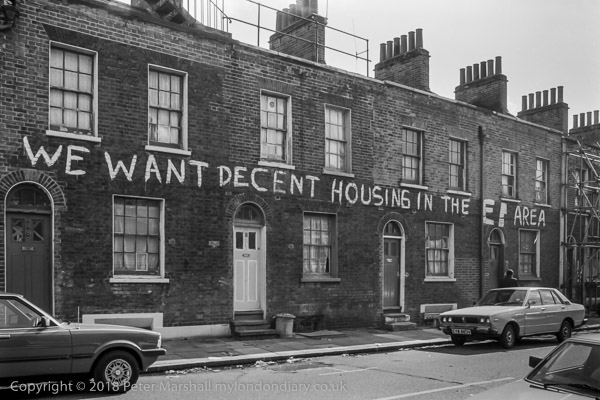
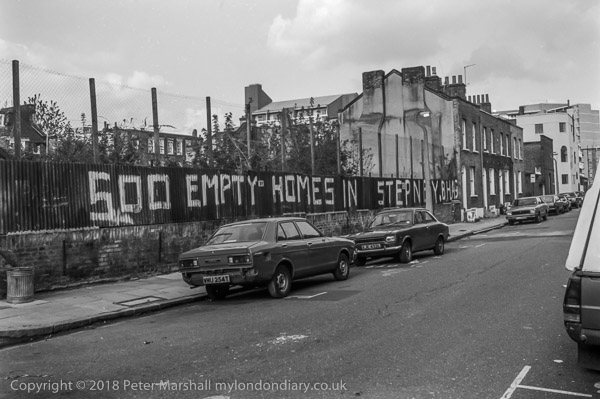
Housing was an issue back in the 1980s as it is now, with London Councils being accused of racism and social cleansing. Of course things have changed. Then the councils were building council housing – if not always doing so in a way that really met local needs, and clearing largely privately owned slums, often in very poor condition, though some were structually sound and could better have been refurbished. Now they are working with property developers to demolish council estates and build properties almost entirely beyound the means of the council tenants who are being displaced by the new developments and mainly for private sale at market prices, under the banner of ‘regeneration’. Tower Hamlets, traditionally Labour, came under Liberal/SDP control days before I took this picture by a majority of twoin a low (35%) turnout.

Joe Pearce was, together with Nick Griffin, one of the leading members of the Nazi National Front; together they took over the party in 1983, and reorganised it from a racist political movement into a racist gang based on young poor working class urban youth, particularly skinheads. Pearce had set up the NF paper ‘Bulldog‘ in 1977 when he was only 16 and in 1980 became editor of ‘Nationalism Today‘. He twice served prison sentences for offences in his wiriting under the 1976 Race Relations Act, in 1982 and 1985–1986. In 1989 he was conveted from Protestantism and membership of the Orange Order to become a Roman Catholicism and, according to Wikipedia, “now repudiates his former views, saying that his racism stemmed from hatred, and that his conversion has completely changed his outlook.”

I took all of these pictures in London’s East End in May 1986.
______________________________________________________

There are no adverts on this site and it receives no sponsorship, and I like to keep it that way. But it does take a considerable amount of my time and thought, and if you enjoy reading it, a small donation – perhaps the cost of a beer – would be appreciated.

My London Diary : London Photos : Hull : River Lea/Lee Valley : London’s Industrial Heritage

All photographs on this and my other sites, unless otherwise stated, are taken by and copyright of Peter Marshall, and are available for reproduction or can be bought as prints.

To order prints or reproduce images

________________________________________________________
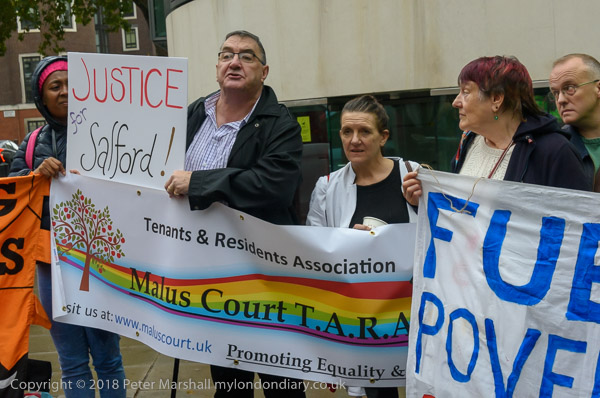
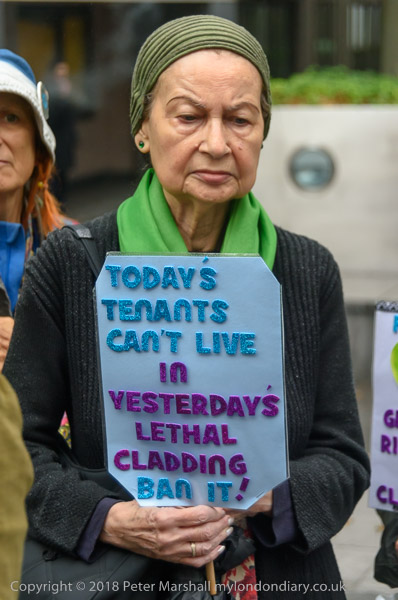
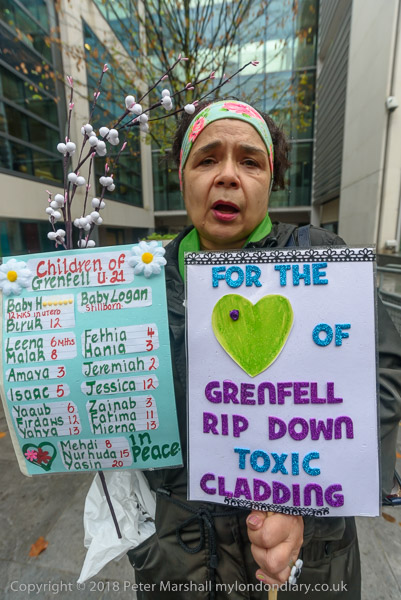
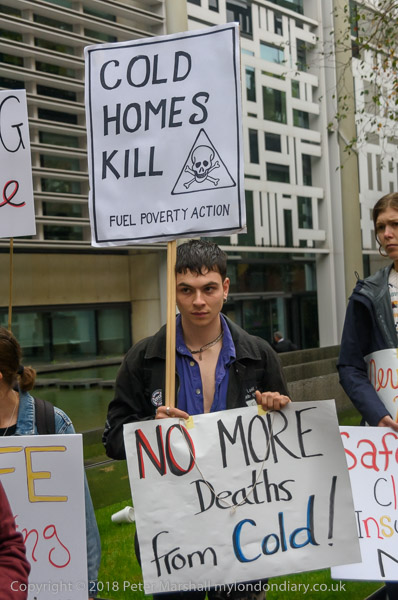
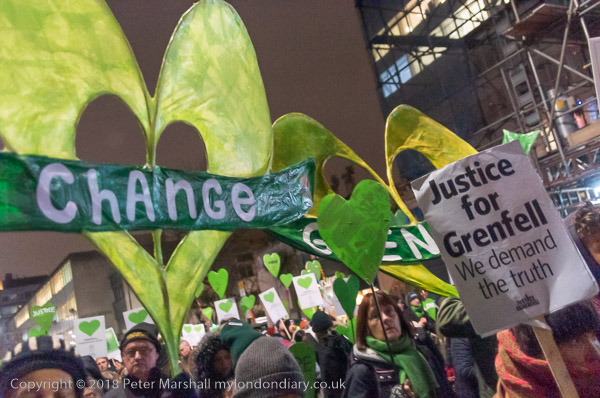
No More Grenfells

I’ve been fortunate always to have had a roof over my head, though it hasn’t always been a comfortable one. A few of the places I lived in as a student were beyond grotty and  one I had to leave after a week it was so desparate. The bed bugs were the final straw.

The room I moved into certainly wasn’t palatial, but it was at least clean and the walls weren’t running with damp. The rent was a little more, but it was reasonably warm and safe, in a house where the owner, my landlord lived.

I’ve lived in some cold places. Back in 1963 in a viciously cold winter there was a month or two where the bathroom never got above freezing and I never had a bath, and in Leicester the ice was thick inside the windows and I gave up shaving – and never started again.

In Manchester, where we lived on the top floor of a small terraced house, there were slotmeters on the landing for gas and electricity, and the landlord came and emptied them. We were paying three or four times the going rate. We went out and bought a paraffin heater. It was smelly but got our room warm – and the condensation from it brought the wall-paper off the wall.

Everything changed when I got a job in a new town – and a large new flat at council rent with a hot-air heating system run on off-peak electricity, and we lived in comfort for several years before buying a house of our own. We wanted to move and it wasn’t possible to remain in social housing.

We moved into a small victorian semi which was cold and draughty and which had hardly been modernised since it was built, other than having the gas lighting replaced by electricity – though some of the piping was still there.

We were fortunate that we could afford to replace the old draughty sash windows with double glazing. I spent hours fitting draught-proofing, putting insulation in the loft and on the inside of front and rear external walls behind plasterboard fixed to battens. The exterior walls were just a single brick thick – which didn’t stop people trying to sell me cavity wall insulation, though there was no cavity. We had gas fires put in rather than central heating as it was more energy efficient but it remained a rather cold house, though much better now since we had external insulation on the gable end a few years ago.

We were fortunate that we owned the property (though it took 20 years to pay off the mortgage) and could make it warmer – and that we could afford to do so – with the help of government grants to meet part of the costs for a new roof and, many years later, external insulation. And that we had enough income never to have to make the choice between turning on a fire and eating. When we were in private rentings things were much tougher.

I spent a year in a tower block too, on the 10th floor about half-way up. But fortunately it wasn’t covered in highly flammable material and didn’t catch fire. The worst that happened was broken down lifts. But there are still many blocks with the same dangerous cladding that was used at Grenfell, and probably also applied with much the same disregard for proper support and breaks; not really accidents but tragic fires waiting to happen.

We need new laws – like that the Conservatives – many of them landlords – voted down to ensure that properties are safe to live in. And for governemnt to keep the promises it made just after Grenfell. To bring in proper and regular fire safety checks, to ensure that building regulations are adhered to – and toughened where neceessary. To remove flammable cladding from all tall buildings, to reverse cuts in firefighters and fire appliances and so on.  To listen to the complaints of tenants and take action, and to end evictions of those who complain or ask for repairs of private rented properties. And of course to build much more council housing and end the demolition of existing council estates.

In my twenties I was a housing activist, part of the Moss Side Housing Action Group, trying hard to persuade the city council to build homes that people wanted and would last. We wanted safe, decent housing – and they built instant slums, now largely replaced. People deserve good  housing – and the cheapest way to provide it is council housing.  Rents are much lower not as many think because of subsidies, but because it is more cost-efficient and most council estates have more than paid for their costs in a reasonable time-scale.

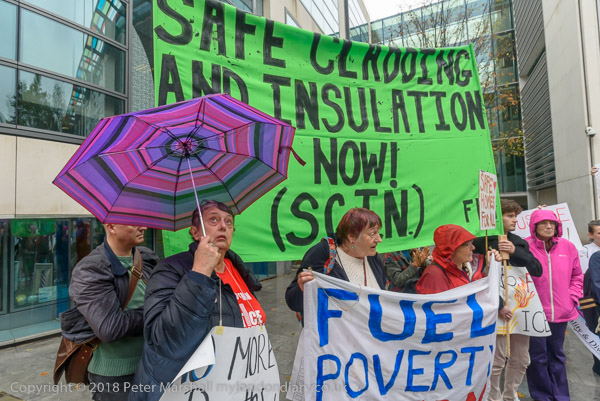
I’ve not written anything here about the actual protest, but you can read that in the text and captions on My London Diary.

No More Grenfells – Make Tower Blocks Safe

______________________________________________________

There are no adverts on this site and it receives no sponsorship, and I like to keep it that way. But it does take a considerable amount of my time and thought, and if you enjoy reading it, a small donation – perhaps the cost of a beer – would be appreciated.

My London Diary : London Photos : Hull : River Lea/Lee Valley : London’s Industrial Heritage

All photographs on this and my other sites, unless otherwise stated, are taken by and copyright of Peter Marshall, and are available for reproduction or can be bought as prints.

To order prints or reproduce images

________________________________________________________
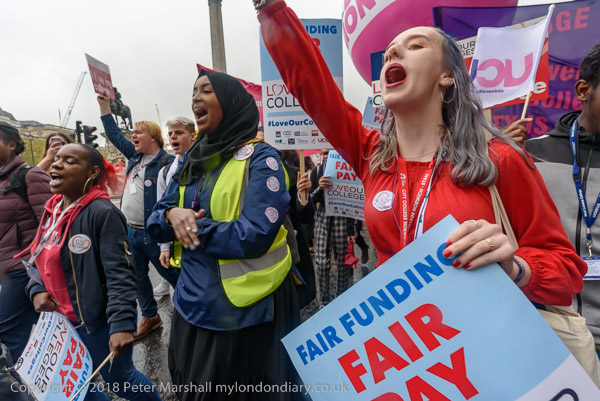
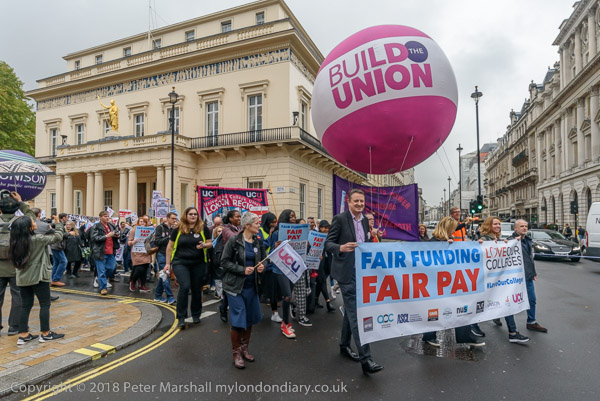
Love our colleges

Further Education has often been discribed as the ‘Cinderella of Education’, and it is still sitting in the dirty fireplace, with no sign of a fairy godmother, ball or glass slipper. It remains terribly unfunded compared both with schools and with the more glamorous ‘Higher Education’. As well as colleges being strapped for cash, students have also suffered, particularly with the withdrawal of maintenance grants in England.

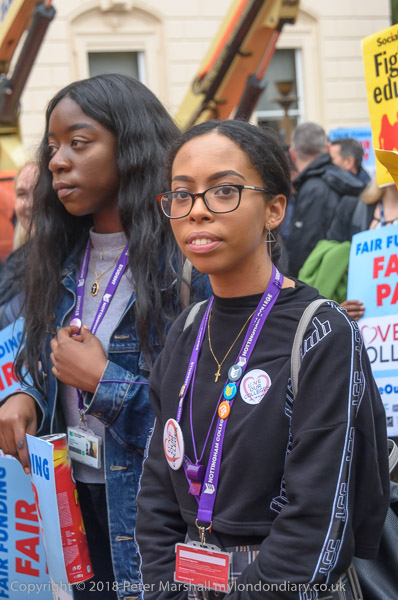
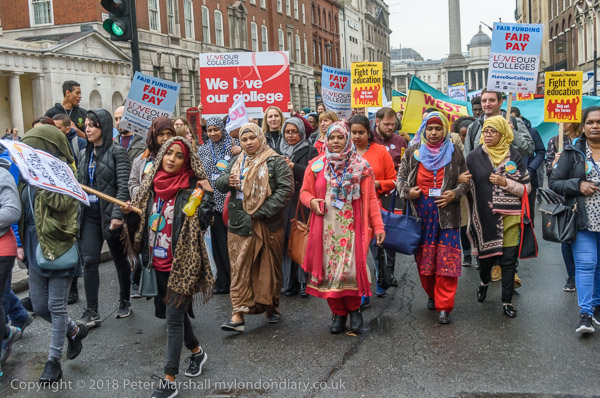
The march was a part of the ‘Love Our Colleges’ campaign week of action and was followed by a rally which I didn’t photograph, as well as a lobby of Parliament.

FE colleges have long been a vital part of our education system, and many were founded because of local needs and have very strong community links. Years ago many were a matter of fierce local pride. Some of these gradually took on more and more higher education courses and have transitioned to become universities, but FE remains vital for training at lower levels and in particular for 16-19 year olds. As well as providing the kind of academic courses available in school sixth forms they also offer a wide range of more techinical and vocational courses.

As the campaign states:

“Further education colleges are an essential part of England’s education system. Whether it’s through top-class technical education, basic skills or lifelong learning, colleges help people of all ages and backgrounds to make the most of their talents and ambitions. Rooted in local communities, they are crucial in driving social mobility and providing the skills to boost local and regional economies.”

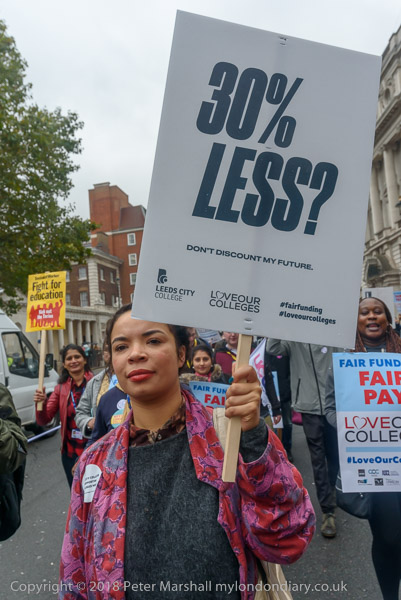
The future of FE colleges is under threat as funding has been cut by 30% since 2009, meaning young students get fewer hours of teaching support and a huge reduction in learning opportunites for adults. The value of staff pay has falling by mnore than a quarter and they now get £7000 a year less on average than school teachers.

More pictures on My London Diary: March for Further Education

______________________________________________________
There are no adverts on this site and it receives no sponsorship, and I like to keep it that way. But it does take a considerable amount of my time and thought, and if you enjoy reading it, a small donation – perhaps the cost of a beer – would be appreciated.

My London Diary : London Photos : Hull : River Lea/Lee Valley : London’s Industrial Heritage

All photographs on this and my other sites, unless otherwise stated, are taken by and copyright of Peter Marshall, and are available for reproduction or can be bought as prints.

To order prints or reproduce images

________________________________________________________