Climate Camp

I regret not going to the Camp for Climate Action at Sipson, near Heathrow in August. Partly because I was busy with other things – no real excuse when its our only planet at risk, but also because I found the anti-photographer rhetoric put out by some of the organisers upsetting. (And of course I was there in 2003.)

Fortunately others did go and make a fine record of what went on, which was on show at The Foundry in Shoreditch last week and closes today (Sunday Nov 3.).

You can see the exhibition online and as well as the pictures, there is also some thought-provoking text about the camp, and the police reaction to it. It is important to understand that those taking part were doing nothing illegal in holding a camp and enjoyed a great deal of support from local residents.

Almost all of the disruption in the area over the week was caused by the police activities, which seriously disrupted life for those living in the area as well as the campers, as well as resulting in some delays for those flying from Heathrow. The whole policing operation – and I wrote a little about my experience of it in August – was totally out of proportion to any likely threat from those at the camp.

The decision to go ahead and build a third runway at Heathrow will almost certainly be viewed by history as the most criminally irresponsible act of the Brown government. The industry is already taking it for granted that it will go ahead. I think it is also likely to lead to the largest direct action campaign ever seen in this country – and it may even end up being Brown’s ‘poll tax’. The police were perhaps just getting in a bit of doubtfully legal advance practice.

My congratulations go to Mike Russell, Kristian Buss, Gary Austin, Jerome Dutton, Adrian Arbib, Amy Scaife and Mike Langridge for their pictures, Jody Boehnert for the exhibition design and Mike Russell for the web site.

Still on show at the Foundry (Great Eastern St, London EC2A 3JL) until Sun Nov 11 are images from the G8 events in Rostock by Paul Mattsson and Guy Smallman.

Still Life: Killing Time – Ed Clark

Last night to the Photographers’ Gallery, not for an opening but a book launch. I was greatly impressed by Edmund Clark‘s still life images from E Wing at Kingston Prison in Portsmouth when I saw them at Rhubarb Rhubarb in Birmingham this Summer, and pleased to learn from him then that they were to be published by Dewi Lewis (who was at the time reviewing portfolios at the table in front of mine.)

Some of my favourite photographs come in the opening section of ‘Let Us Know Praise Famous Men‘; a bed, its worn sheets starkly illuminated by Walker’s flash, a small bowl on a shelf, and through the doorway an oil-cloth covered table with an oil lamp in a sparsely furnished room, a pair of boots on bare-dust earth, a family’s stock of cutlery ledged behind a strip of wood. In Evans’s case there are of course also portraits, unrelenting gazes into his lenses, direct, honest (while his and James Agee’s motives were perhaps less so.) But for me it has always been the images without people that told me far more about the particular exigences of these people living on the edge of America.

Ed Clark is not Walker Evans, but these images seem to me to be in the same tradition, precisely seen and organised, recorded in detail on a large format camera (in colour rather than black and white.) And of course it is the details that matter, that grab the photographer’s and our thoughts and feelings. Among the more powerful of them are the various lists that mark out time – newspaper rotas, the day’s activities (or rather lack of), a prisoner’s handwritten lists of his lunch for the next 3 weeks, even the series of steps required to use the toilet printed in large for a senile inmate. But there are also many strong visual clues to the nature of life for those in this particular dead end (and the final image in the book shows a coffin in the crematorium chapel.)

Wisely, Ed Clark decided not to include images of the elderly “murderers, rapists, paedophiles and other violent criminals” whose time was being killed in E Wing in his project, although some were happy to be photographed. Most of them are inside for acts that we find reprehensible, although occasionally we may glimpse our own darker sides and shiver “there but for fortune...”, but despite the disgust we feel for what they have done, it is hard to look at these images and not to feel a considerable disquiet at the way that we – and our agents, the prison service – treat these elderly, sometimes senile, men.


Side of Inmate’s Cupboard (C) Edmund Clark.

We changed to decimal coinage on February 15th 1971, roughly 35 years before this picture was taken. A life sentence, ordered like the chart in neat rows.

Government and opposition eagerly scramble over each other to prove who is toughest on crime, inventing new offences, making sentences longer and longer and sending more and more to jail. We have more and more elderly prisoners, many of whom no longer present little if any real threat to the community at large, and for whom prison is an inappropriate place. As the images suggest, you don’t need 20 foot razor wire fences of its initial image for people who need a stair lift or walking frame.

E Wing was of course a small if inadequate step to care for these people within a prison system where the weak and elderly – as Erwin James points out in his afterword – are easy prey in the struggle all prisoners have to survive. And housing only 25 men it was for its 8 years of existence the only unit catering for a prison population of over 2000 over-60s.

This is a powerful book, and a disturbing one, and it deserves a wide audience, not just among those of us with an interest in photography but with all who care about the kind of society in which we live. It should be published in magazines and newspapers and other media. It’s work that thoughtfully and graphically raises important questions – but importantly without preaching or suggesting solutions. Every politician should have a copy, and think carefully about where their competition for the red-top vote is taking us.

Peter Marshall

STILL LIFE: KILLING TIME
Edmund CLARK
Dewi Lewis Publishing
Hardback, 72 pages. £16.99
43 photos, 310 x 247mm
ISBN: 9781904587538

Two exhibitions of this work have so far been confirmed:

Light House, The Chubb Buildings, Wolverhampton: 18 Jan – 12 Mar, 2008
Aspex, The Vulcan Building, Portsmouth: 1 Feb – 20 Mar, 2008

Bielsko-Biala Diary

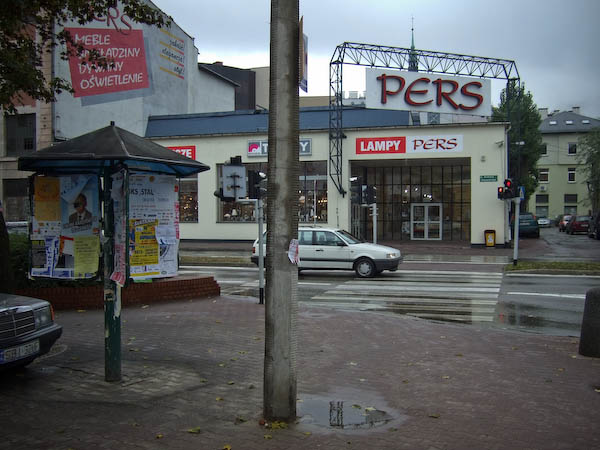
Photo festivals tend to keep you pretty busy, with meeting and talking to other photographers, but I like to find time to take a few pictures too. While I was in Bielsko-Biala last a just over a week ago for the 2007 FotoArtFestival , I kept a diary, and took some pictures both of the place and of the festival to illustrate it.

I’ve had to censor the diary a little for publication, and get rid of the libellous remarks and wilder thoughts, but I hope there are still a few controversial passages. You can read what I really thought about some of the shows, and see a little of what photographers get up to at such events.


On my way to the theatre in Bielsko-Biala


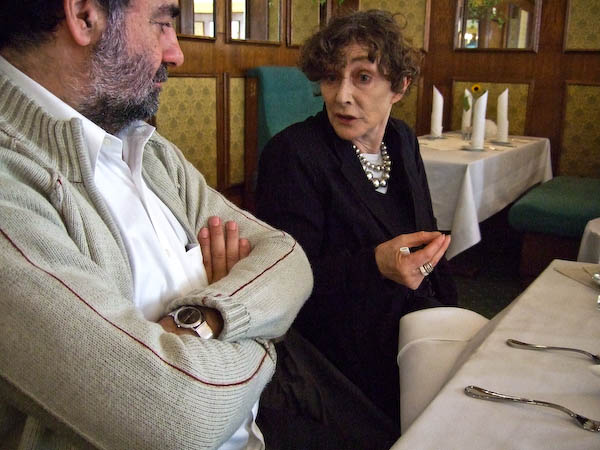
Friday lunchtime – I was sitting next to Joan Fontcuberta and Sarah Moon


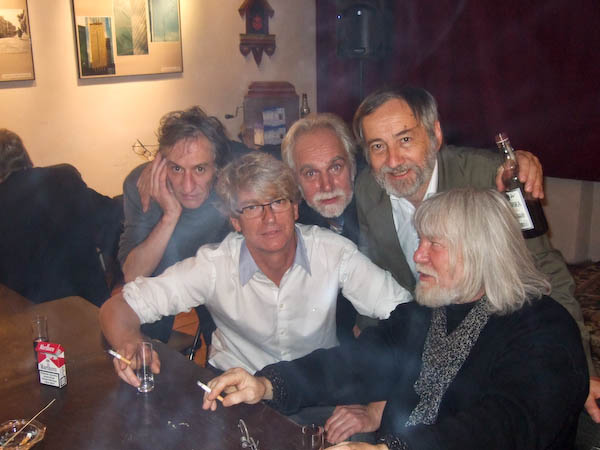
Early on Saturday morning in a smoky Gallery Wzgorge

I’ve not finished the diary – still some material from the final day of the ‘Maraton’, the final party and a couple of pieces on some of the shows to add. Then there is my own presentation, the final session in the Maraton, and I also intend to put the text and some of the pictures of it on line as well (copyright issues mean I cannot use them all – but wherever possible I’ll link to the same or similar images.)

All the pictures I made in Poland were using a Fuji Finepix F31fd. Would I buy one again? Probably not, but some of them aren’t bad. But not having a viewfinder is still a pain.
You can also read the diary – and some of my presentation – from the 2005 FotoArtFestival on line.

ROOF UNIT at [ space ]

First I’d better declare an interest. Actually I’m not sure I need to. This is – I hope – a very personal blog, one that reflects my own personal involvement in the medium of photography, and my conviction that if it isn’t personal, it isn’t worth saying (or photographing.)

But I was at [ space ] in Hackney on Friday night partly because my own work was appearing in the ‘Roof Unit Foundations’ show there, though I would have gone in any case to see the Brian Griffin show also opening there (see separate article.) My pictures in it are ones I now feel a certain distance from, as I took them in 1983.

Roof Unit is a group of photographers based in a former soap factory in the East End. I met one of them, Toby Smith, at an ‘Olympic Symposium’ held at [ space ], an arts complex in Hackney, in June, (where I also saw what will almost certainly be the best film to come out of the London 2012 Olympics.)

Toby talked at the symposium about his bid for a photographic contract for the games, made together with Photofusion, based in Brixton. I contribute work to the Photofusion library and I’ve been connected with it – if fairly peripherally – since its earlier incarnation in Webbs Road when I joined a ‘Men’s Group’ run by Crispin Hughes.

I met Toby again at a Photofusion opening on the day before the contract was announced (it didn’t go to Photofusion, although their bid was credible enough to get to the final stages) and naturally talked to him about my work in the Olympic area and the Lower Lea generally since the early 1980s. He was interested and later took a look at my River Lea site, and I was delighted to be invited to take part in the Roof Unit show in Hackney with a group of 4 colour pictures from those I had made around 1983.

This is a picture from the edge of the main Olympic site, and a scene that when I saw it made me exclaim ‘Man Ray’, although I have really no reason to think the wrapped object is a sewing machine. I’ll put the other 3 of my images at the bottom of this piece :


Bromley by Bow, 1982.
Lightjet print on dibond, 30x20cm. Peter Marshall

Back in April this year, after I’d photographed the Manor Gardens Allotments – now sadly lost to the Olympic juggernaut – I wrote: “part of the charm of the allotments at the moment is that they are a little run-down and the plot-holders huts have a very personal and rather heath-robinson quality. a still life photographer could spend their life here and never exhaust the subject matter.” The three images by Gesche Wurfel provide a powerful illustration of the fact, working precisely and in square-format colour. I particularly liked Shed 2, with its perfect balance between inside and outside lighting connecting the interior with the allotments and its use of colour, particularly the glowing orange plastic spade, the reds of the window frame and the yellow hedge outside.

Rita Soromenho‘s bunch of dandelion heads collected on a walk by the Lea were also glorious for their colour and richness, transmuting these wild and so-common plants into an image of sumptuous beauty. The fine detail and glow against the black background produced in this image made on a scanner gives an amazing realism.

Jason Larkin adds a touch of human interest in his two pictures taken in one of the many small factory units on the site. Heads peer out between stacked white boxes of scotch salmon, and a crudely tattooed hand cuts through a slice of rich orange fish. Of course all of the work on show implies human presence, whether in the eerie night-time pylons of Anthony Marsland (one suspects putting the cables underground was a decision made largely on doubtful aesthetic grounds) or the goal-posts of East Marsh by Mark King, seen in dramatic light and one of a number of sporting facilities to be lost during the Olympic development, in this case I think for a coach park.

Chris Littlewood’s three Ebb and Flow images show the patterns left by the rise and fall of water and waste, soon to be a thing of the past above in the site area with the building of a lock on the Prescott Channel, which may enable the use of barges to carry away spoil from the building sites, but perhaps more importantly will protect the delicate noses of the athletes and corporate guests for whom the Olympics is staged from the sewage sometimes carried upstream on the tide.

Reinaldo Loureiro‘s untitled C-type print reminded me of the travellers caravans I was invited into for tea many years ago when helping to protect them from police harassment in Manchester. The same mixture of kitsch religious images, plastic flowers and everyday life – in this case a plate of biscuits and a beer can. Toby Smith‘s Silo 7 is very much the kind of view of derelict industry that has excited some of my own work over the years, and I would have welcomed seeing more of his work, even if that meant smaller prints. Jon Wyatt‘s panoramic image of the ‘Greenway’, the path on the Northern Sewage Outfall, shows it in dramatic light with a fine mass of grey clouds. I wasn’t sure whether it might have been improved by rather less of the brown of the path in the foreground, but perhaps this was a deliberate reference to what lay under the photographers feet on its route to Beckton.

Outside in the corridor are two large light boxes with Duratran lambda prints by Allesandra Chila. These ‘Olympian Visions’ were (I think) of a group of volunteers tidying up one of the filter beds of a former water works and a view over the rooftops of Hackney Wick. I’m not sure exactly from where this was taken, but many of us will have spent considerable time waiting for Silverlink and contemplating a rather similar view. Although I found these prints impressive, I also felt a little disappointment when I moved in for a closer view, which gave me grain or texture rather than the greater detail for which I had hoped.

Also in the show were Peter Ainsworth, with an image of fridges piled up behind a wall and a white van parked in front, Sophie Gerrard with a picture of a lock-keepers house on the Bow Back Rivers (an interesting lock, recently restored,) and Wendy Pye, whose Ipod slideshow gave us some fleeting glimpses around Marshgate Lane and the Old River Lea; too fleeting for me – I would have liked to see more images and a slightly slower presentation rate.

It’s an interesting show, combining a variety of approaches to the area, much of which will disappear and whose whole character will be changed over the next few years, a change which I can only view with considerable regret.


The Lea Navigation carried timber to many timber yards. Upper Edmonton, 1983.
Lightjet print on dibond, 20x30cm. Peter Marshall


Ponders End, 1983.
Lightjet print on dibond, 20x30cm. Peter Marshall


Hackney Wick, 1983.
Lightjet print on dibond, 20x30cm. Peter Marshall

Brian Griffin: The Water People

One of the things that I admire about Brian Griffin’s work is that he takes what could be dull, commercial projects and turns them into something personal and exciting. In his early years it was his portraits of businessmen.

If you have the misfortune to read any of the business press or by mistake open the business section of your newspaper rather than send it directly to recycling, you can unfortunately find too many tedious suits, often supplied by company PR who generally have as much imagination as the typical woodlouse.That you will also sometimes come across some more interesting photography probably owes a great deal to the example of his work, inspiring other photographers.

A commission by Reykjavik Energy in Iceland could have been boring. Brian has turned it into a mythical narrative, based very loosely on Jules Verne’s ‘Journey to the Centre of the Earth‘, in which he undertakes a dangerous journey to discover the city of the water people, who he then photographs. Two of the more interesting images in the show for me are of structures which I assume belong to Reykjavik Energy which suggest a different science fiction, clearly the alien landing craft.

The portraits of the water people are I think taken through sheets of glass with water or other more viscous clear liquid on them to give distortion effects. Years ago I had a box of sheets of various patterned glass samples some of which could also produce similar – but generally more regular – effects when used close to the lens.

It was a nice opening at [ space ], where it is on show together with water medallions by Brynja and in the next-door gallery Roof Unit Foundations, all running until 15 December 2007. I’m pleased to report that the opening was liberally supplied not with water but with Pilsner Urquell, one of the great bottled beers. Such a change from the brew at London’s best known photography space.

Brian also has another show in London at the moment – Teamphoto, which I’ve written about previously – at the (German) Gymnasium at St Pancras until Novermber 19, celebrating the great achievement of adding 20 minutes to my travel time to Paris. I’ll try out the new service in a few weeks on my way home from Paris Photo.

Water Portraits

Last week I spent some time with another photographer of ‘water people’, Alex ten Napel, whose work I’ll write about shortly. His approach to water portraits is more direct, getting his subjects (or helping them) to duck under water just before he photographs them, standing in the swimming pool.

Paul Trevor at Rich Mix

Last week I got e-mail from Paul Trevor and realised I’d not actually been able to see his work when I called in at Rich Mix Cultural Foundation on the Bethnal Green Road at the top of Brick Lane – and I’ve since met several people who had the same experience as me.

Paul contacted the gallery after hearing from me, and whether as a result or otherwise, when I called in there on Friday, things were very different. I went down the stairs again and sat on the old sofa, and enjoyed around 300 of Paul’s pictures on the large display screen, projected at roughly six second intervals in a show lasting roughly 30 minutes.

As I sat down, one of his pictures from the ‘Battle of Lewisham‘ was on screen, and what followed was a kaleidoscope of life from London’s East End in all its rich diversity. Of course many of the pictures were familiar to me – including some of the half dozen or so I’d featured in the London Arts Cafe show a few years ago, as well as those I’d seen in various shows and publications over the years, but there was also a great deal of work new to me.

The images in the display were a selection from the 5000 scanned from Paul’s contact sheets by the London Metropolitan University as the initial step in a project to produce 500 high quality scans for his Eastender Archive. Paul obviously took rather more care over his contact than some photographers (me for example!) but there were still some that were a little too light or dark, as well as those for which a straight unmanipulated print cannot do justice. The scans were of surprisingly high quality – considerably better than those I made of my own contacts for my very first CD project, ‘London Pictures 1992’, made in 1993 when I found that none of the clients I gave the CD to had the equipment to play it. Technology has moved on considerably since then! Contacts from 35mm are 1.5×1″, and a scan at 1200 dpi gives a 1800×1200 pixel image, sufficient for most display devices.

The sofa and screen are in a hole down a set of stairs from the main floor level. There are now two large projected images on the walls above this, one at the side and one on the back wall. Although the quality of these large projections is still rather washed out – even in the dull light of approaching dusk that I was there, at least the projectors are now set up correctly without the distortion of aspect ratio and keystoning apparent in my previous vision, and the images are shown on a blank wall avoiding the ventilation duct that formed a part of every image previously,

Its a shame that my write-up here – and in my previous piece has had to concentrate so much on the practicalities rather than the images. But this is only an initial stage in the project. Paul Trevor’s work in the East End of London is certainly one of the most significant bodies of documentary work produced in the UK in the era and deserves considerably more care and respect than was shown by the gallery – and a much fuller treatment by critics – including myself – at a later date when the project is in a more complete form.

There were a few pictures in those I watched that I would be surprised to find in the final cut, knowing something of the strength and depth of Paul’s work. A few perhaps where his feeling for the people or the place or the occasion is stronger than the photographic representation, as well as a little duplication, but the overall impression is hardly diminished.

There were many places and situations that I recognised, and some – in particular the anti-racist demonstrations – where I was scanning the image to see if I was visible, at the time more as a participant than a photographer. I didn’t find myself, but Paul’s work forms a very recognisable and very intimate view of an East End that I’ve only really glimpsed over the years as an outsider.

So, get along to Rich Mix and see the show – its on until 30 Nov, and Paul’s work is by far the most interesting show in London at the moment.

Helen Levitt – Street Colour

Jim Casper‘s Lens Culture has long been one of my favourite sites, and each new issue brings much of interest. One of the highlights among the latest on-line issue is a set of 24 images, some in colour, by that doyenne of street photography, Helen Levitt, now in her 90s. Work by her from seven decades, starting in 1938, is on show at the Fondation Cartier-Bresson in Paris until 23 December 2007 (if you read French it is worth downloading the press PDF from the site.)

Levitt was a pioneer in the use of colour, with Guggenheim fellowships in 1959 and 1960 to explore its use in her work. Unfortunately most of these early transparencies were stolen by a curiously selective burglar (who apparently took little else) in 1970, and have not been seen since. But in 1974 she had the first showing of colour photography at New York’s Museum of Modern Art, ‘Slide Show‘, organised by John Szarkowski, some two years before William Eggleston‘s work was shown there.

Levitt is noted for not talking much about her work, but there are several interesting interviews on-line, including (as Lens Culture also mentions) a NPR feature with some clips of her talking.

More About Helen Levitt

You can see images by Helen Levitt on Lens Culture and at the links above. There are some further links to sources and images at the end of this feature.

Helen Levitt was born in 1913 in Brooklyn (many sources give the date incorrectly as 1918); in 1931 she quit school and started working for a portrait photographer in the Bronx, where she received a good technical grounding.

In 1935 she met and saw the work of Walker Evans and Henri Cartier-Bresson; Evans she thought was “brilliant” but Cartier-Bresson was a “genius”. It was their impact that decided her to become a photographer, and in 1936 she bought her first Leica. She went with Cartier-Bresson on at least one occasion as he photographed in New York. From him she saw that photography could be art, and determined that she would be an artist with a camera. This led her to spend time studying paintings in New York’s museums, learning from them lessons about composition, and the use of light which have a powerful influence on her work.

In New York, the prevailing tradition of photography was that of the New York Photo League, documenting the people of the poorer working class areas. Levitt also learnt from this and her subject matter was also the people of the working class areas of New York, particularly Spanish Harlem and the Lower East Side. Here in the late 1930s she found life still being lived in a vivid way on the streets, especially on hot summer days when it was too hot for anyone to stay inside. This was an era before air-conditioning and television, and she found the streets crowded with children playing who became her main subject and she photographed them with warmth and humour.

As well as the children themselves, Levitt also saw and photographed their drawings. In an age before the spray can, the streets and walls were filled with chalk drawings, often – as with modern graffiti – of striking energy and originality.

In 1938-9 she became assistant to Walker Evans, and also met the writer James Agee, who would later work with her on her first book, ‘A Way of Seeing’, not published until 1965. Unlike Cartier-Bresson, Evans believed strongly in the need to crop images to make stronger compositions, and Levitt learnt from his practice.
She went with Walker Evans when he was taking his series of subway portraits using a camera hidden under his coat, sitting with him so that he was less obvious. These pictures were only published as a book many years later, ‘Many Are Called‘ (1966.) In some of her own Levitt also took pictures of people who were unaware of being photographed, at times using a mirror device photograph at right angles to the direction in which she was apparently shooting. This was particularly important in some of her pictures of children playing, enabling her to capture images without distraction.

Levitt’s one major body of work away from New York was made when she went to Mexico in 1941. While there she worked as a film editor with Luis Buñuel. Cartier-Bresson had worked for a year in Mexico in 1933, and his pictures from there were shown in Mexico in 1935, and he had brought them to New York.

In 1943 she had her first one-person exhibition at the Museum of Modern Art in New York (M0MA), curated by Edward Steichen. Although she returned to street photography around 1950, her next solo showing at MoMA was not until over 30 years later, although her work was included in major group exhibits, including Steichen’s ‘The Family of Man‘.

In the years immediately after the war the Levitt and Agee worked together with painter Janice Loeb on the film, ‘In the Street‘, a documentary about everyday life made using a hidden camera on the streets of New York’s East Harlem. All three worked with film-maker Sidney Meyers on the Oscar-nominated documentary about a young African-American boy, ‘The Quiet One‘ (1948).

Two Guggenheim Grants, in 1959 and 1960, enabled her to investigate the use of colour transparency film in her work on the streets. Tragically the great majority of this work was stolen in a puzzling burglary in 1970, where apparently little else was stolen. But Levitt made new colour images to replace the stolen work, leading to a ‘Slide Show’, curated by John Szarkowski at MoMA in 1974, and published as a book in 2005.

In 1991, Levitt’s work was shown at the San Francisco Museum of Modern Art, and she received a Master of Photography award from the ICP in New York. Other retrospectives came at the The Metropolitan Museum of Art, New York, The Boston Museum of Fine Arts, and elsewhere, although it was the use of her pictures in the opening sequences of the 2001 Ken Burns PBS documentary ‘New York‘ that brought her work as “one of the great living poets of urban life” and of the people of New York to a wider audience.

Other Web References

Laurence Miller Gallery
The gallery have represented Levitt for many years.
Stephen Daiter Gallery

Slide Show: Powerhouse Books

Helen Levitt: 10 Photographs,
A lengthy and interesting essay by Thomas Dikant on her career through a detailed study of 10 pictures.

Review of ‘Here and There’ by Sarah Boxer – New York Times
May require registration.

Bethnal Green Blues

We had a fine day for our book-related walk around Bethnal Green and a good audience. Our meeting point was, for various reasons, the Museum of Childhood, which features in two of my pictures in Cathy’s book (‘The Romance of Bethnal Green‘ (ISBN 9781901992748), Cathy Ross, 2007). One shows the sculpture which was in the space at the front of the museum for many years, and I was surprised to find it now inside, at the rear of the cafe area, and given a white coating (perhaps so the ice-cream won’t show), and the other features some of the panels on the outside of the building about agriculture.


Bethnal Green, (C) Peter Marshall, 1986

So I chose to talk here instead about perhaps one of the most significant changes to the geography of London in the past 50 years, the small card rectangle of the Travelcard. My father lived in the London area for the first 70 or so years of his life, but probably never visited Bethnal Green, and the convoluted journey I’d made that morning on the way to the Museum would, before its introduction have involved me queuing to buy two train tickets and paying separate fares to 4 bus conductors. The Travelcard (and slightly later the Capitalcard), introduced by the Greater London Council led by Ken Livingstone in 1981, was a revolution in travelling across London.

It made a significant change in my photography. Previously I’d photographed Hull, a much more compact city, walking almost everywhere with just the occasional bus journey back to base from the city centre (a fairly massive project from which a gross of pictures were shown as ‘Still Occupied, A View of Hull‘ at the Ferens Art Gallery in 1983.)

Before the Travelcard, my work in London – with a few exceptions – had been limited to very specific areas, largely within walking distance of Waterloo or London Bridge, as well as pictures taken on visits to tourist attractions and other specific trips. The Travelcard opened up the whole of London in a new way – and among the areas I visited in a fairly systematic coverage of the capital was Bethnal Green.


Roman Road (C) 1988, Peter Marshall


Bethnal Green (C) Peter Marshall, 1993


Arnold Circus, Bethnal Green (C) Peter Marshall, 1986

Arnold Circus, shown above, was one of the places our walk took us, though it has come up in the world considerably since 1986. The first major slum clearance scheme from the London County Council, it was built due to the urging of the local vicar, Rev Osborne Jay, in 1890. Charles Booth’s great survey had marked ‘Friar’s Mount’, better known as the ‘Old Nichol’, as London’s worst slum. Jay also brought the writer Arthur Morrison to the area, and his ‘A Child of the Jago‘, published as the demolitions were taking place gives a horrifyingly real picture of the old area, and its people. Those who lived in the Old Nichol of course got no benefit from its clearance, simply being evicted and having to fend for themselves, decanted into the slums of surrounding areas, the new flats being let by the council to the ‘industrious poor.’

Around the corner at the new Rich Mix Cultural Centre lay the great disappointment of my day. Earlier, standing opposite the former site of ‘Camerawork’ I’d talked about the great days of the ‘Half Moon Photography Workshop’ based in Aldgate, and the magazine, ‘Camerawork’, the early issues of which – before it sank into theory-laden senescence – helped vitalise British photography, and of two very different important photographers associated with it I had known, Jo Spence and Paul Trevor. And I’d promised that people would be able to see why I think of Paul as one of the most important British photographers of the 1970s when we arrived at Rich Mix, although I had yet to visit the show myself.

Unfortunately we couldn’t. This is what we found:


Installation view: Paul Trevor’s work on display at Rich Mix (see note)

Images projected at a slight angle onto a wall mostly in fairly bright light from the large window area at the front of the building, pale and washed out. Of course they would look better at night, although the air vent will still hide the upper left part of the image . But more , but even then they all suffered from a curious squashing effect, presumably due to some digital reprocessing to make the images fit the format of the projector, but resulting in figures that looked like caricatures.

It’s hard to imagine that anyone could do something this badly. This is a show that has been well advertised and is in many respects the major event of the East London Photomonth. But it seemed to have been presented with less care than most people would take over showing their holiday snaps. (See note below)
Peter Marshall

PS

What we saw at Rich Mix was not the real show, which we should have seen when we went and sat down on the sofa downstairs. We sat down and had a little rest there (it had been a long walk) but there was nothing to see. I’d actually walked down the stairs expecting to see more, and was surprised to find nothing there.  It just hadn’t occurred to me that a gallery would switch an exhibition off during opening hours.

Scanning Negs

I’ve just been reminded by a posting on the ‘Multipro’ list (for users of the now-discontinued Minolta Dimage Scan Multi Pro’) about some of the problems and solutions for scanning film negatives and transparencies. Although I’m using very little film now, I still have a few hundred thousand old images, and if I need to print any of these, I now turn to scanner rather than darkroom. Sometimes I have little choice; thanks to years of storage without any control of temperature, humidity or atmosphere, many now need considerable digital retouching to get an acceptable print. Of course in my early years, my processing might not always have been entirely archival, although some of the worst problems I have are with trade-processed materials.

Oil or Plastic? 

One technique sometimes used to improve scan quality is oil immersion of the film to be scanned, and apparently there is a feature in the current (Nov-Dec 2007) issue of Photo Techniques by Ctein in which he shows how to do this simply (but messily) using cheap mineral oil with the Minolta. Fortunately if you have a Multipro, you don’t need to get your fingers and film in a mess, as thanks to the work of Dutch photographer and filmmaker Erik de Goederen, you can use a Scanhancer, a simple plastic sheet that – at least in the tests I’ve seen – gives slightly better results than oil immersion.

If you use a different scanner, there is a page on the Scanhancer site that discusses other Minolta scanners, as well as those from Polaroid, Microtek, Canon and Nikon. Minolta themselves appeared to have learnt from the Scanhancer research, building in a similar device to their Minolta Dimage Scan Elite 5400 (and a slightly different, but no quite so effective method with the Mark II version) before their unfortunate absorbtion/demise at the hands of Sony.

Third-party Software 

Whatever scanner you own, its performance is likely to be limited by its software. I’ve owned half a dozen over the years, and for several of them crippled would be a more appropriate term. Getting good scans has meant using third-party software, and I’ve used (and reviewed) both SilverFast and Vuescan. Vuescan is the product of one man, Ed Hamrick, and has worked with every scanner I’ve owned and the pro version still offers unlimited free updates (I’ve been getting them for around ten years.) It’s good to know that when I have to buy a new scanner, Vuescan will almost certainly still work with it, while copies of SilverFast I’ve used were specific to a particular model. A single Vuescan licence also allows use by one person on up to 4 computers – and will work with several scanners on a computer.

Both programs can give good scans, though I’ve generally preferred the results from Vuescan, especially when scanning negs. For some jobs Silverfast was faster, and it often gives scans that need no adjustment in Photoshop, whereas those from Vuescan are always improved. But almost all the scans I make need considerable work on them, both to eliminate blemishes (infrared cleaning can do a little on most colour and chromogenic negs, but heavy use does destroy detail) but also to ‘dodge’ and ‘burn’ as I would in the darkroom.

I also scan at 16 bits per channel to enable me to manipulate the files in Photoshop without loss, usually reducing there to 8 bit per channel as few output devices will handle greater bit depth, and I’m generally rather short of storage space (even with more than a terabyte of hard disk in this computer I’m running out of space.)

Combining Vuescan with the ‘Scanhancer’ and ‘Multipro’ can give results that of comparable quality with those from high-end equipment (drum or those hugely expensive flatbeds) – at least from normal 35mm and 120 negatives. I suspect if you have very dense overexposed negatives the expensive gear may cope better.

At some point I hope to replace my old Epson flatbed by one of their more recent models such as the V750 Pro (or possibly whatever replaces this.) When I do it will be interesting to see whether Vuescan will get more out of it than the software supplied.


Weddings and Compacts

I’m not a wedding photographer. I’ve only officially photographed three weddings in over 30 years as a photographer, one of which was a couple of years back when my own younger son got hitched, and I could hardly refuse his request. It was a long day, and the pictures cover well over 12 hours, and show a certain deterioration towards the end which could be slightly alcohol-related. There are just a few of them on My London Diary that give some of the flavour of the day, with some text that of course starts with me quoting Brodovitch’s “so you want to be a wedding photographer!”.

The other two occasions each has a little story, but I’ll keep those for another time. Of course I’ve been to other weddings, but I make a point never to take a ‘real’ camera and to stay well out of the way of the professionals.

So on Saturday, a guest, I turned up to the Gurdwara with just a little Fuji F31fd digital in my pocket, as despite having been told it would be fine to take plenty of photographs, I was really intending not to take much. But it was my first experience of a Sikh wedding, and I soon found myself caught up in the colour and human interest of the event, and shooting at least as much as I would have done with my Nikon.

Given the minute size of the sensor, the results are surprisingly good; perhaps the main failing isn’t noise or sharpness, but the colour quality. Hard to pin down, but it just somehow lacks the smoothness of colour and tone that the D200 provides, and at 6Mp the files are of course a little smaller.

Light was a problem, although the area where the main ceremony was held has a lot of natural light and the team of photographers covering the event had added a couple of movie lights, they and I were shooting with flash as well. I’m sure the results they got with their SB800 units – my normal choice of flash – were rather better in that respect than the tiny built in flash on the Fuji, although it did a decent job (with of course a considerable amount of red-eye.)

One of the reasons for choosing this model was its relatively good performance in lowish light, and a second its relatively short shutter lag, and both were useful. What I still hate about it is the lack of a viewfinder. Holding a camera out in front so you can see the viewing screen is just not a good way to work. It is much trickier to frame, and the camera is much harder to hold steady. So quite a few shots were not sharp, many more than I would expect with the Nikon under similar conditions. The vibration reduction (VR) in the Nikon 18-200 would also have come in useful.

Push-button zooming is also a little of a disaster – very difficult to control the rocker switch accurately and much slower to be precise than the manual ring on an SLR lens. The 8-24mm zoom is roughly equivalent to a 24-72mm on the DX Nikons (35-105 on ‘FX’) and there were times when I would really have liked a wider view.

All cameras are compromises, and given the size and low cost of the F31fd (mine as £133) it proved a remarkably effective tool. A final compromise for me is that the camera has no raw mode, and I was shooting using the highest quality jpeg it provides. The 2Gb XD Picture Card did add another £25 to the cost, but does hold around 680 images – enough to keep me happy most days – though of course I also needed to spend another £13 on a spare compatible battery.

The images straight out of the camera seemed a little harsh, with some empty highlights and blocked shadows, as well as some small colour temperature problems in some images. I could have tried sorting these out in Photoshop, but instead imported the images using Lightroom. (Incidentally this is now at version 1.2, another free upgrade for registered users.)

I don’t quite understand how, but this appeared to let me get something extra out of many of them, although not as much as with RAW files. I was also surprised to find that those files that I looked at later in Photoshop didn’t have any of the ‘comb’ effect – gaps in the histogram – which I would have expected from working on them. I also converted the files to Adobe RGB which I normally use with the Nikon.

Looking at the files in detail it is clear that one of the main problems with my use of the camera is camera shake at speeds where I would normally have no problem with hand holding. Its a problem that I think would not be there if the camera had a viewfinder so it could be used held to the eye. I’ve not had the camera long, and I’m still struggling with the camera manual, which goes out of its way to be friendly while giving you as little actual information as possible. It has as what is called a ‘picture stabilisation’ mode, which appears to be is a simple auto program that selects higher ISO and shutter speeds than normal – but has been misleadingly named to suggest the camera incorporates image stabilisation – which it does not.

What it does have is excellent performance at high ISO. Although the quality is best at the slowest ratings of ISO100 and 200, many of the images at ISO800 are perfectly usable. At ISO1600 it is still remarkably good. Without the use of specialised noise-reduction software the results are in the same region as those from the Nikon D200 at the same speed. Things do fall apart rather at ISO3200, but it looks as if we are going to have to save up for the Nikon D3 if we really want to work at that speed.

You can see more of the pictures from Saturday’s wedding on My London Diary. I tried hard to capture all the key events in the ceremony without being in the way of those doing the job officially. I’m not sure if I can live with the Fuji. I’m thinking of trying to use it at the wide-angle setting either completely without a viewfinder, or possibly by adding a sports or accessory viewfinder on to the top of the camera.