Welcome to Hell

© 2009 Peter Marshall

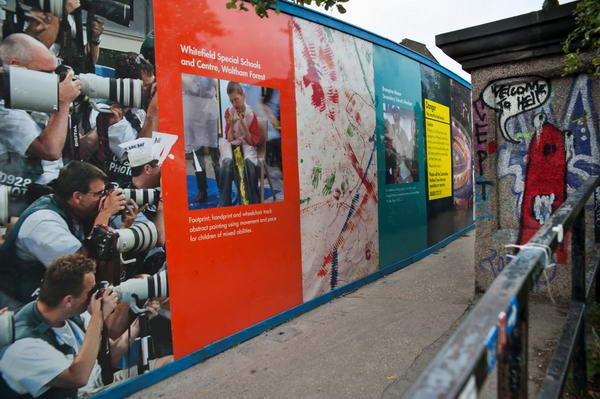
Welcome to Hell’ says the graffiti on the bridge over the Lea Navigation at Hackney Wick, at the side of the path which takes site workers onto the Olympic park there, and the rest of us across to the tow path. It’s perhaps a little of an overstatement, although the pit of photographers in the image on the blue fence at left is surely  one of Satan’s finest torments.

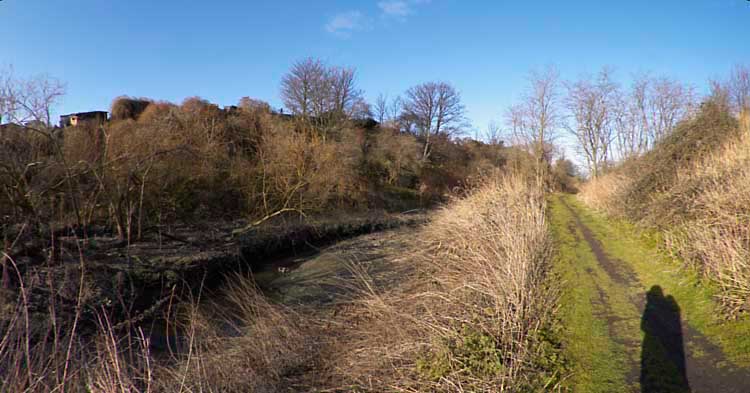
The walk along the top of the Northern Outfall Sewer through the site is also no longer the delight it used to be, with bored security men stationed every few yards along it and a fence restricting access to a fairly narrow path along it.  Here and there are a few bushes or small trees surrounded by plastic fencing and announcing they are to be preserved while the rest of the greenery on the ‘Greenway‘ is doubtless to be razed and replace by something much more domesticated – perhaps neatly trimmed grass. At the moment it still has the old sickly-sweet sewage smell, but doubtless there are plans to deal with that (perhaps with tons of those highly noxious air fresheners that make my eyes sting!)

The glory of the Greenway, and of the Bow Back Rivers to which we no longer have access, lay in their wildness and disorder, a little bit of nature reclaiming the polluted urban space in the gaps between productive industries with some remarkable degree of success.  After 2012 we can expect a similar process  to occur – but perhaps more slowly – around the acres of concrete white elephants that will be left.

At the moment the whole stretch of Greenway south of the railway to Stratford High Street is closed for the next few months, with a diversion around by Pudding Mill Lane DLR  station, and further closures are planned for other sections and the navigation tow path.

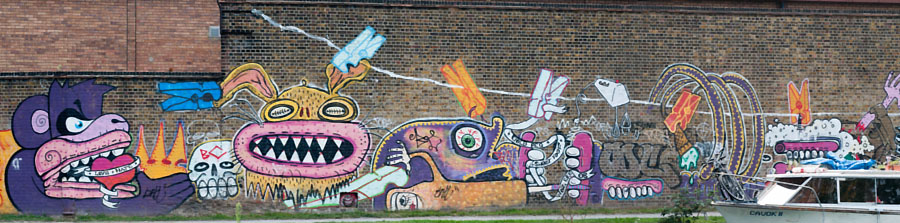
I was sorry to miss Hackney Wick’s great art events recently, but perhaps its most vital art is visible at any time, though I suspect it may at some point disappear under Olympic whitewash. Here’s a small sample:

© 2009 Peter Marshall

You can see it larger, and some more examples and other pictures from the Olympic area in August 2009 on My London Diary, where you can also find pictures of the area from around 2003 on – and in particular something most months since Jan 2007. There are more pictures from 1983 to around 2005 on my Lea Valley – River Lea site (urgently in need of updating – I have so much more which should be on it.)

© 2005 Peter Marshall
Channelsea River and Manor Gardens Allotments, 2005

[Reminder:

Most images on this blog are links to larger images elsewhere on the web. You can show them larger in Firefox by right-clicking and selecting ‘View Image’ from the menu. This is particularly useful for panoramic images, as the maximum width of 450 pixels makes them look rather small.]

DISARM DSEi at Clarion

© 2009 Peter Marshall.

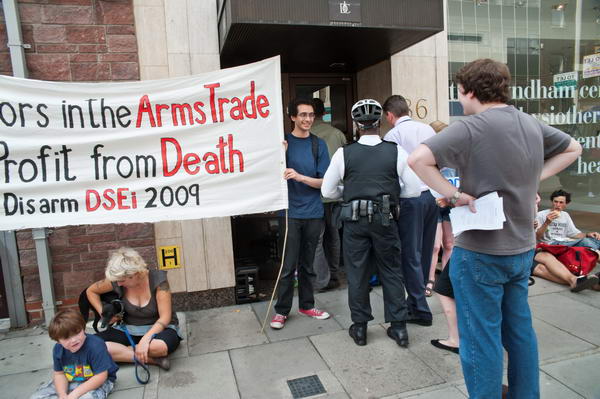
The above scene seemed to me one of the most bizarre I’ve photographed for quite a while, although so much so that it needs explanation.

A man is being escorted by an armed policeman into his offices past smiling demonstrators whose sole weapon is a plastic boomerang (not visible in this image) being wielded by a small child. It’s hard to penetrate the mindset that finds such an escort necessary.

But then it’s also hard to understand how people can live with themselves and arrange arms fairs to sell the weapons that kill so many around the world – including two million children  in the ten years from 1986-96 (according to UNICEF.) Armed police may make him feel safe against people holding banners, but surely do little to salve the conscience.  Probably this man goes home after work to his own children.  But of course the children who die aren’t like the child in this picture, or his own kids, but are largely black and in strife-torn countries a long way away.

The protest was against Clarion Events, organisers of many events including the world’s largest arms fair, DSEi, which is taking place at the ExCeL centre in East London next month. The 2007 show boasted over 1300 companies from 40 countries exhibiting weapons and related equipment to over 26,000 visitors, although the Space Hijackers were denied entry when they wanted to sell their tank there.

The many people who work in the area and stopped to talk to the demonstrators were surprised to find the connection with the arms fair. But then why should they, as the three companies named in large type on the signs beside the door are all diamond companies – and there is no mention of Clarion Events. If Clarion really feel they are doing nothing below board why do they hide?

More about the picket and a few more pictures on My London Diary, where I comment:

Only a few years ago we prided ourselves that our police were not armed; now they seem to want guns even to help old ladies across the road.

Rotherhithe Photographs

One of the more intriguing features to appear in the British Journal of Photography for a while was on Geoff Howard‘s Rotherhithe Photographs.

You can buy the book and see a preview (including the first 9 photographs taken in Rotherhithe pubs) on Blurb, where it states :

Images from “Rotherhithe Photographs” were first published in the legendary “Creative Camera” magazine in 1975, when the project ran as a cover and major portfolio, described as “a report from someone who is unquestionably one of the major talents among British photographers”.

Unseen for many years, the photographs are a personal documentation of the south London docklands, a cut-off, self-sufficient, largely working-class society; seen between the closure of the docks which had been the area’s raison d’etre, and the consumerist redevelopment of the later Thatcher years.

I don’t remember seeing his work when it was first printed in Creative Camera, though by then I was a subscriber, and the issue will be somewhere hidden under piles of papers in the shelves behind me.

Some of the more interesting images were taken inside working-class pubs in the area using a Leica, but abandoning the available light approach – because there just wasn’t any that film could capture, Howard used a big flash, moved into the right place and took a single image. Rather similar to the way that a few years later, Martin Parr started to do with a bigger camera and colour film. But Howard needed to get to know his subjects so he could get away with working like this.

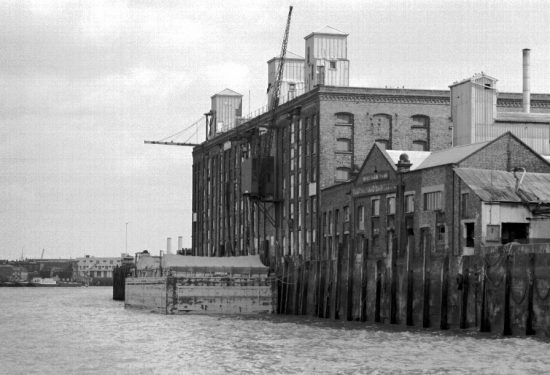
Howard’s work has a particular interest for me because I was also photographing Rotherhithe – along with other areas of London – at around the same time.  You can see some of my pictures on the site ‘London’s Industrial Heritage‘.

© Peter Marshall
Rotherhithe – ©  1982, Peter Marshall

My work in Rotherhithe was more varied than the site suggests, but did mainly concentrate on the urban landscape. The better pictures on my site are probably from other riverside areas of London, such as Wapping, Southwark and Greenwich.

© Peter Marshall
Greenwich, © 1983, Peter Marshall

Hiroshima Day

Although the dropping of atomic bombs by the USA on Japan was surely one of the most significant events of the 20th century, in many respects changing our view of the world, the anniversaries of the two events that destroyed the cities and many of the people of Hiroshima and Nagasaki pass almost without notice so far as the commercial mass media are concerned.

© 2009 Peter Marshall.
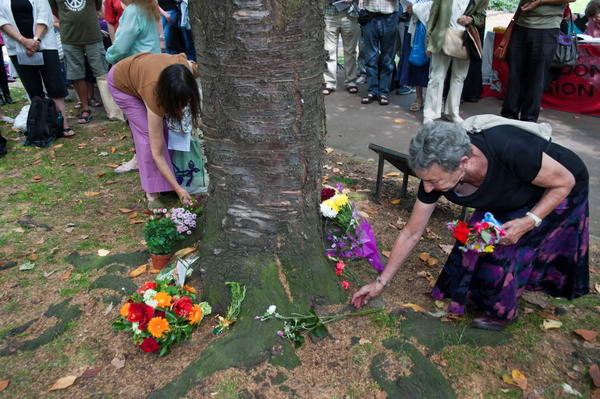
Flowers were laid during a short silence

Sixty-three years ago, at 8.15 am on August 6, 1946, the USAF B-29 Enola Gay dropped the first atomic weapon to be used in war, code-named “Little Boy” on the Japanese town of Hiroshima. It took almost a minute to fall from over 30,000 feet to a height of 2000 ft where it was detonated. Around 75,0000 people – almost one in three of the population of the city – were killed immediately and roughly the same number were seriously injured. Two days later, on 8 August, a second atomic bomb was dropped on Nagasaki, resulting in at least 40,000 being killed immediately and possibly twice as many dying by the end of the year. Many more in both cities suffered from the effects of radiation and died later.

Around 200 people met in London at Thursday lunchtime, 6th August to remember the anniversary of the first use of atomic bombs. Similar ceremonies were also held in other cities around the world. The London Memorial Ceremony, organised by London CND, took place in Tavistock Square, next to the cherry tree planted there by the Mayor of Camden in 1967 to remember the victims of Hiroshima.

More about the London memorial event and more pictures on My London Diary.

© 2009 Peter Marshall.

Maisie’s Night – The Ian Parry Scholarship 2009

© 2009 Peter Marshall.

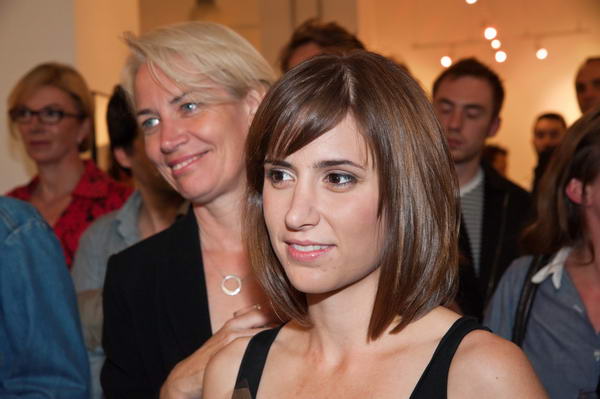
I’ve written in several previous years about the Ian Parry Scholarship award, particularly when I was writing virtually from New York but actually from Staines for About.com, not least because I wanted to remind our friends in the USA that there is photographic life outside their borders. But this is the first year that I’ve attended the awards ceremony – and the large party that accompanied it in the gallery and on the street outside.

Ian Parry was a 24 year old photojournalist shot while working for the Sunday Times covering the Romanian revolution in 1989, and family and friends set up an annual scholarship in his memory open to those attending a full-time photography course or under the age of 24.

As the exhibition at the Getty Images Gallery in Eastcastle St (near Oxford Circus) in London for the next week (so don’t delay in going to see it) shows, it attracts a high standard of work from around the world – including many from the USA.

Even more important than the prize is the prestige and exposure that the award attracts, with the exhibition and publication of work by the finalists in the Sunday Times magazine (2 Aug 2009 issue), a place on the final list of nominees for the World Press Photo Joop Swart Masterclass and this year, an international assignment for one of the finalists from Save The Children.

The value of the award can be seen in the careers of those who have been awarded it in previous years. Last year’s winner was Vicente Jaime Villafranca and on his web site you can see some of his fine black and white work on the Gangs of BASECO.
© 2009 Peter Marshall.

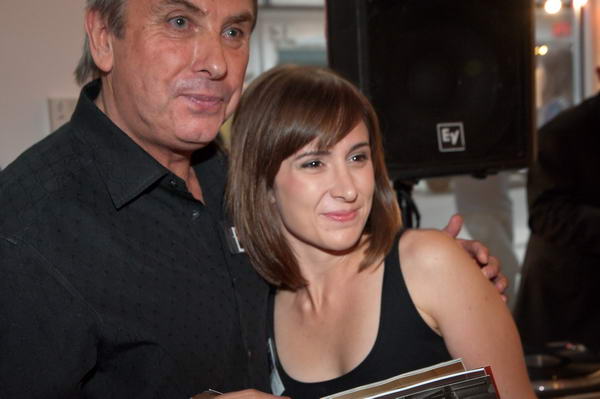
Maisie Crow is currently working as an intern for The Boston Globe and is a graduate student in the School of Visual Communication at Ohio University. Previously she studied Spanish at the Universidad de Veritas  in Costa Rica and Spanish and Art History in Seville before a BJ in Photojournalism at the University of Texas and further studies at the Salt Institute of Documentary Studies, and also worked as a freelance from 2006-8.

Her winning project on Autumn, a 17 year old Ohian girl growing up in a poor and dysfunctional family environment contains some powerful and intimate images – a selection of six were in the BJP feature on the award  (BJP 22/07/2009 p10). One of the captions which sets the scene reads “Autumn sits between a relative’s legs. She alleges he tried to rape her when she was 13 years old but says her parents do not believe her.”

Surprising the 12-page Sunday Times feature uses only one of her pictures, tightly cropped on the front cover. It is a highly charged scene with Autumn being attacked by her boyfriend, pushed down over the kitchen sink (the caption notes that within half an hour they had kissed and made up) printed much more harshly than the original and gaining drama at the expense of sensitivity.
© 2009 Peter Marshall.

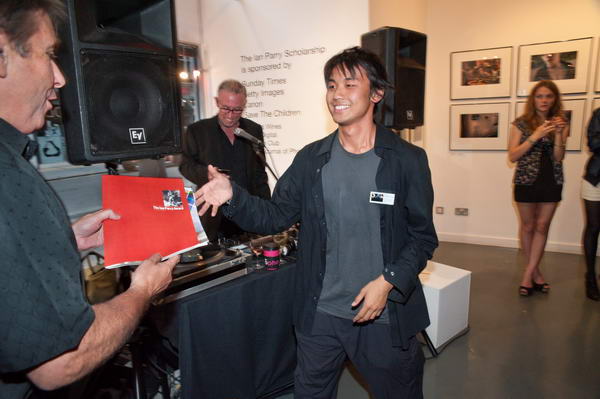
Ed Ou’s Highly Commended work on the horrible deformities suffered by people living in the area of Kazakhstan where the Soviet Union carried out over 450 nuclear tests is extremely strong, and hard to view. Too much so for the Sunday Times, who use only a picture of a nurse cradling a small child; the BJP too shies away from publishing the more horrific of these powerful images from ‘Under a nuclear cloud’. Ou doesn’t dwell unduly on these aspects but they are an important part of the story, as you can see in the images on his web site (rather slow to load – but it does eventually appear.)

Some of the other work is better served in publication than on the gallery wall. The two pictures of Dennis, a sufferer from dementia and Ruby his wife, married for 61 years and now forced apart in the Sunday Times are far stronger than the sentimental portrait of the couple on the gallery wall, and made me want to see more of this project by Dan Giannopoulos.

Similarly, the two pictures by Giuseppe Moccia of an American teenager suffering from Down’s syndrome on the wall failed to grab my interest, but the Sunday Times has a far stronger image.  Other photographers whose work seemed more interesting in publication included Alinka Echeverria with images of veterans of the Cuban revolution and Masud Alam Liton’s project Bangladesh: Requiem For Freedom (he has a blog – Liton Photo) and a second set of images from the same country by Mohammad Rashed Kibria.
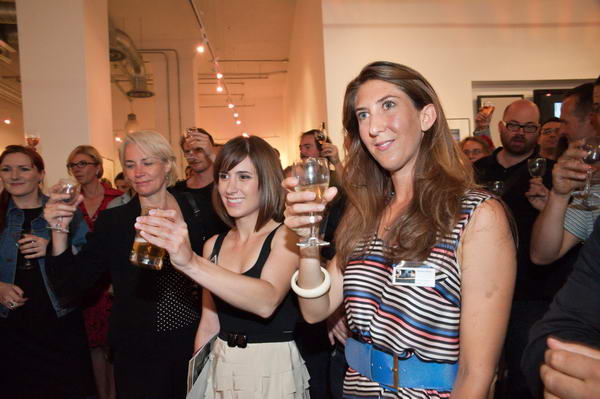
© 2009 Peter Marshall.

Of course the magazine page (or now the web page) is where this work really belongs, rather than the gallery wall and its perhaps not surprising that some at least works better there. The black and white work in particular seemed better suited to print than frame, perhaps reflecting the difficulties in making good black and white inkjet prints, but occasionally also the hanging. Ruben Joachim‘s Afghan child clinging to her father so intense on the printed page was lost in reflections and weaker contrast on the wall.

It is perhaps more a sign of the times rather than a reflection on the quality of the work that all of the winning and commended work this year was in colour. Personally I would have made some different choices, although the work of Crow and Ou did I think stand out among the rest.

We were sorry to hear that Don McCullin was unable to attend, but Tom Stoddart was there to hand over the awards to the winners. This is one of the more interesting of photographic awards, and deservedly gets sponsorship from the Sunday Times, Getty Images, Canon and Save The Children, as well as Touch Digital, Frontline Club, British Journal of Photography and, last but certainly not least, Eminent Wines.
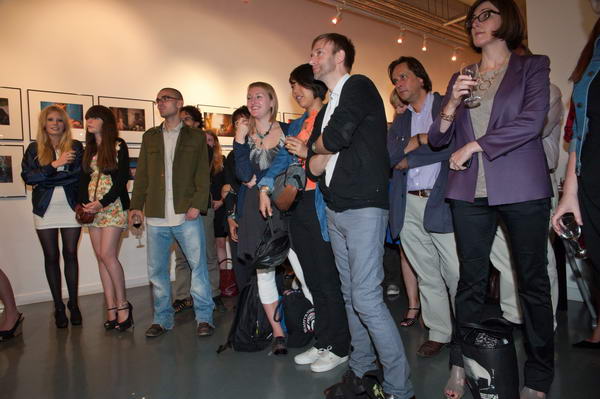
© 2009 Peter Marshall.

Since I was there, I took some pictures – though using a Nikon D700 with Nikon SB800 flash and a Sigma 24-70 f2.8 HSM lens (sorry Canon!) Given all that excellent wine it is a powerful testimony to Nikon’s intelligent electronics that everything came out.  The gallery was crowded for the opening, and the food and drink was still flowing freely when I left around 10 pm to scurry back to Staines.
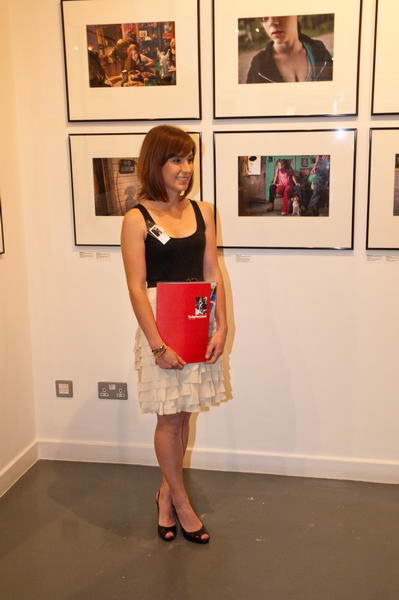
© 2009 Peter Marshall.

I’ll put a few more pictures from the opening on My London Diary shortly.
Demo at Press TV

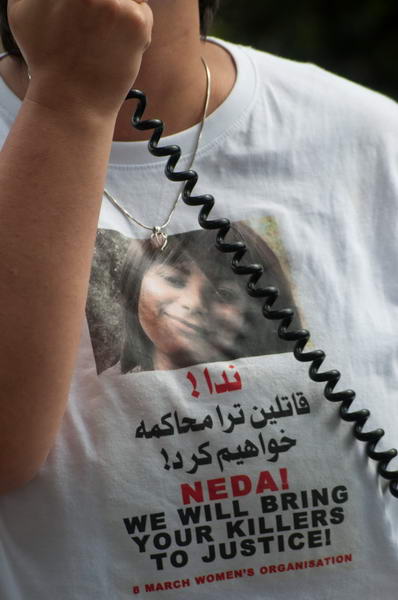
Press TV gets its funding from the Iranian government and despite its claims of independence has towed the Iran government line closely over events since the election there, ignoring or misreporting them.  Ofcom have just given it a rap on the knuckles for two programmes hosted by George Galloway which they ruled that Press TV breached the broadcasting code on impartiality over the Palestinian issue, and I hope will at some time also respond to complaints over their coverage of the Iranian elections and their aftermath.  But even more I hope for a change in Iran and the replacement of the Islamic republic by “a society where all human beings are free & equal without exploitation” as one of the banners at Sunday’s demonstration demanded.

I was glad I’d taken the underground out to Hanger Lane for this demonstration by UK and Iranian socialists and trade unionists outside the Press TV studio on Sunday afternoon, not least because there were very few photographers there. It isn’t the kind of event likely to interest the commercial press, and several of the other photographers who might have otherwise covered it were camping on the Isle of Wight for the Vestas occupation there.

Events like this – you can see more pictures and read more about it on My London Diary – are simply “not news” for the mainstream press, and so I was particularly pleased to see that my report and pictures was one of the four stories that made the front page on Demotix (the full story is here) and was still featured there over a day later. And of course I put it on Indymedia too.

© 2009 Peter Marshall.

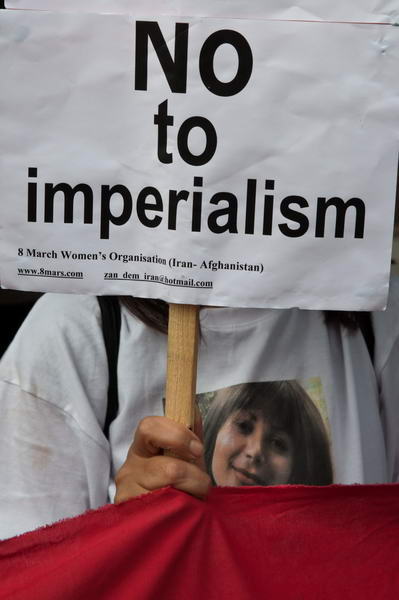
I rather liked being able to show Neda Agha-Soltan holding a placard! Though her hand is just a little on the large side. Here is another example of the t-shirt:

© 2009 Peter Marshall

(If you need a clue about the 8 March, this page from 2004 will help. )

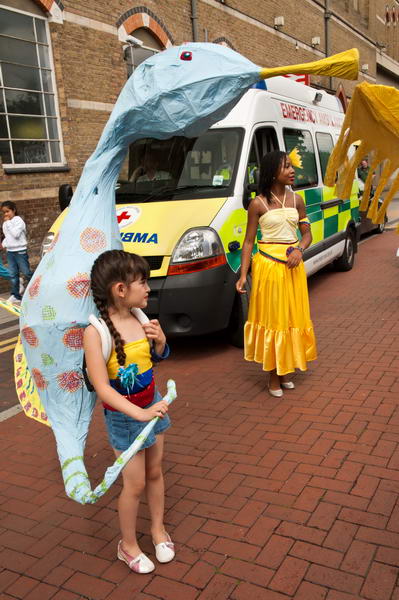
Carnaval del Pueblo

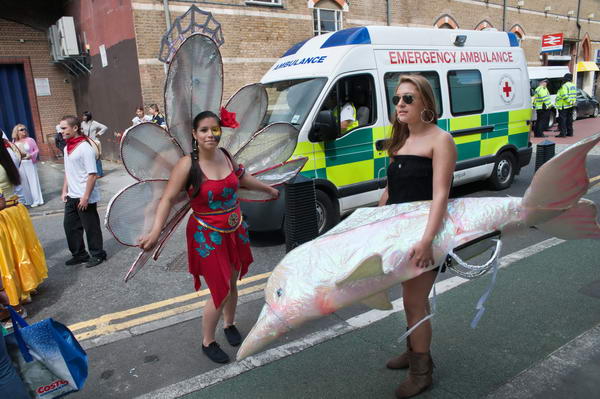
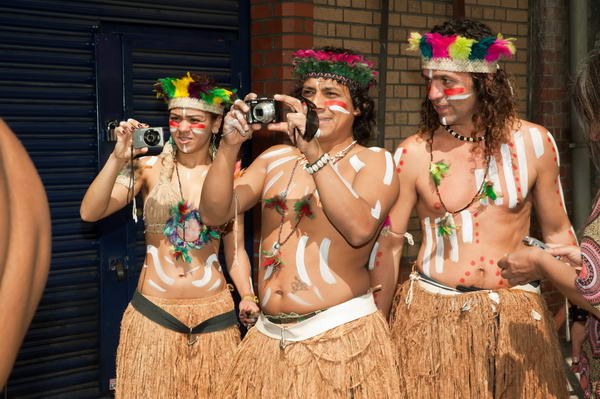
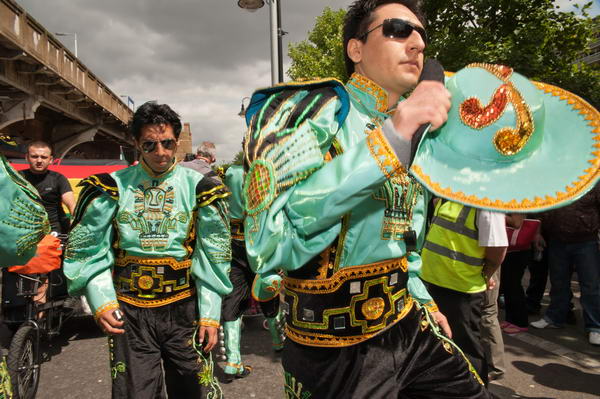
There are those who turn up their noses at South London and apparently taxi drivers who refuse to go there late at night – though that’s not a problem I’ve ever had since I virtually never use taxis.    But south of the river has many charms and I’ve photographed many parts of it, as well as events such as the Carnaval del Pueblo,  described as “the largest Latin American out-door festival in Europe” which began with the support of Southwark Council in 1999.

© 2009 Peter Marshall.

I’m not sure if the first time I photographed the parade which forms a part of it was in 2004, but certainly this was the first set of pictures from it I put on My London Diary (about halfway down a long page) and in some respects I think it was rather easier then than last Sunday.  The big difference is simply the number of photographers. Since 2004 we’ve seen an enormous growth in the ownership of digital cameras, and in particular of amateurs getting digital SLRs capable of professional results.

© 2009 Peter Marshall.

And once people have got digital cameras, of course they want to go out and use them, and what better opportunity than a festival such as this. Not only are there more photographers, but while film had a restraining influence on the number of pictures that people took – many amateurs might well have thought 36 exposures more than enough for a single event, and for the more serious of us perhaps half a dozen cassettes would have seemed fairly extravagant given the likely return – with digital the marginal cost of an exposure is essentially zero.

Don’t get me wrong. I’m not saying that digital photography is cheap – my annual accounts would immediately prove me wrong. Just that taking more pictures doesn’t add to the costs. It adds a little in the cost of storage – but a one terabyte external hard disk costing around £70 will hold perhaps 80,000 of my RAW images  – under 1p per image. And probably more importantly it each adds a few seconds to the time I take to go through a set of images and select the relatively small proportion that I will take further. But once you’ve got the gear, then photography becomes more or less free.

The event has also gained a higher profile and the festival in particular has grown, although the procession – despite some lottery funding – doesn’t seem to be much different. Perhaps it does now have a little less of a ‘grass-roots’ feel to it than it did in the early years, but this doesn’t yet appear as an event that seems to have been commercialised and organised out of existence like some others. It is still an event where anyone can turn up and take pictures, and I think probably the kind of thing that is listed as a ‘photo-opportunity’ in Amateur Magazines. Hence the swarm of photographers, and the problems that brings for both other photographers and those taking part in the event.

© 2009 Peter Marshall.

In general working with a crowd of amateurs is harder than working with pros, who tend to be rather more aware of what they are doing and less likely to walk in front of other photographers etc. And I’m sure that my way of photographing things – using my feet to get in what I think is the right place to take pictures whenever I can – infuriates many of those who like to stand well back and press the button from a distance.

© 2009 Peter Marshall.

Of course these other guys have just the same rights to be there and take pictures as I do, and I wouldn’t want that generally restricted, though there are times when I think a press card should get you places that others can’t go. But perhaps I might find other things to do another year.

More about the event and more pictures on My London Diary.

London Protest Against Calais Clearances

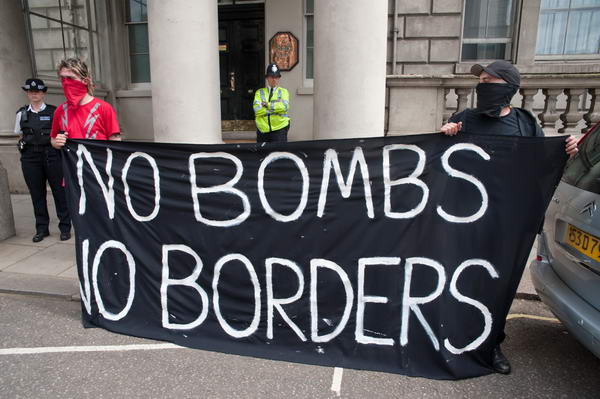
The demonstration at the French Embassy on Monday was perhaps most interesting for the curiously mixed actions of the police, both toward the demonstrators and the press.

The Embassy is on the corner of Knightbridge and Albert Gate, with its entrance a few yards down Albert Gate. Police wanted the demonstrators to stand in a pen on the other side of Knightsbridge a few yards to the west, where they could only see the Embassy across 4 lanes of traffic. They decided not to comply as it was too far away for their protest to be effective – those in the Embassy would probably not be able to see or hear much of the demonstration, and the protest continued for around an hour and a half in Albert Gate.

One officer came and told a couple of demonstrators standing on the pavement in the centre of the road with a large banner they had to move because they were causing an obstruction. Clearly they were carefully positioned out of the way of anyone, but in the end they decided to move and asked her where they could stand and not cause an obstruction. She then told them they would be OK to stand on the roadway right in front of the embassy entrance  porch,  much to the consternation of the police who were standing there.

© 2009 Peter Marshall.

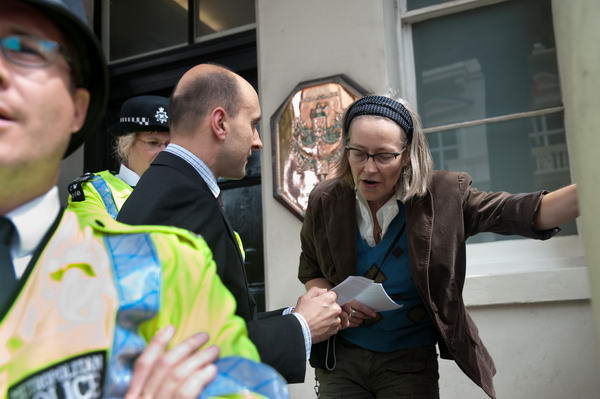
The same woman officer also took one of the demonstrators to the door of the embassy and arranged for one of the diplomats to come out and talk to her as she wanted to hand the leaflet in to the embassy.  He came out and they stood for five minutes or so talking on the embassy steps.

At one point while I was photographing the two of them one of the officers standing on the steps deliberately came and stood in front of my lens. I moved to one side and he moved to keep my view blocked. We went back and forth perhaps a dozen times, he obviously thinking it was a fun game. Since his reactions were a little slow I was still able to get some pictures, but this isn’t the kind of cooperation the police are expected to give the press.

© 2009 Peter Marshall
He hasn’t yet noticed I’ve moved to the right…

I should have made a complaint to the senior officer present, but by that time I would have missed the pictures, so having got a few from that position I moved elsewhere to continue taking pictures.

Another curious incident came when I was talking to another photographer in the middle of the road, and he noticed the police photographer who had been hiding behind a police van come out and point his telephoto lens directly at us rather than the protesters. We went across to him and asked him why he was taking pictures of the press and he denied strongly that he was, saying he had no interest in us at all.  I suppose it’s some kind of progress. Other than these two incidents, so far as I’m aware, photographers had no issues at all with police behaviour.

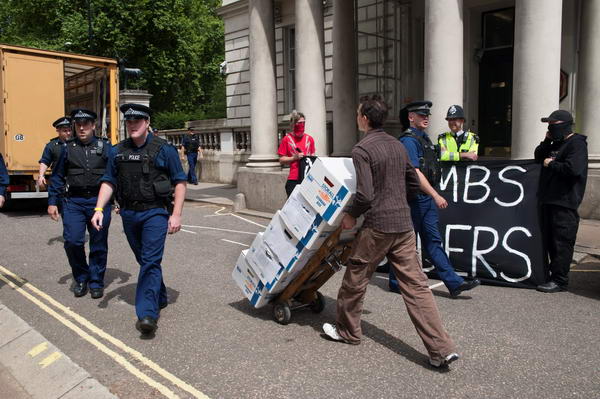
A few minutes before the demonstration, which had been entirely peaceful throughout, was due to finish at 2pm, a van load or two of  police dressed in blue overalls and some carrying tasers arrived and began to look at the demonstrators in a very menacing way.

© 2009 Peter Marshall.

One masked protester who had been annoying the police photographer was then warned under Section 14 of the 1986 Public Order act and then arrested. The other demonstrators were then warned under the same act that they would also be arrested if they didn’t move across the road to the pen, and eventually decided to go. Once they reached the other side of the road they decided that since they had been demonstrating for over an hour and a half it was time to leave.

More about Calais and this demonstration – and of course more pictures – on My London Diary.

Sex Workers Masked Parade

© 2009 Peter Marshall

There isn’t a great deal I can say about sex workers from personal experience. I’d suggest than its worth reading the preliminary report of a project, Migrant Workers in the UK Sex Industry from the Economic and Social Research Council of London Metropolitan University which appeared recently.  Of course not all sex workers are migrant workers, but many are, and current government thinking on making laws in this area are very much based on the need to take action against the trafficking of women for sex.

There are nine bullet points in the initial report which says that most migrant sex workers were not forced or trafficked, but take up sex work because other work they can get is very poorly paid. The main problems they face are their stigmatisation as sex workers and the lack of official documentation that opens them to abuse and violence. They report that most of their contacts with clients involve mutual respect and consent.

In Soho, many women work from their own or shared flats, and Westminster Council has been trying to get rid of these. The local community association – the Soho Society – and local people, including the rector of St Anne’s, Soho, have supported the women. Working from a flat is much safer than working on the street and also creates less nuisance.

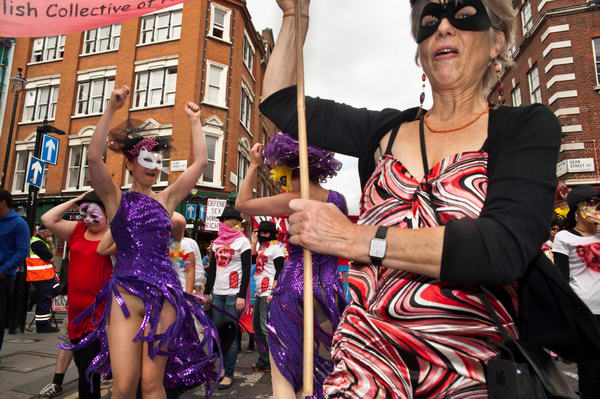
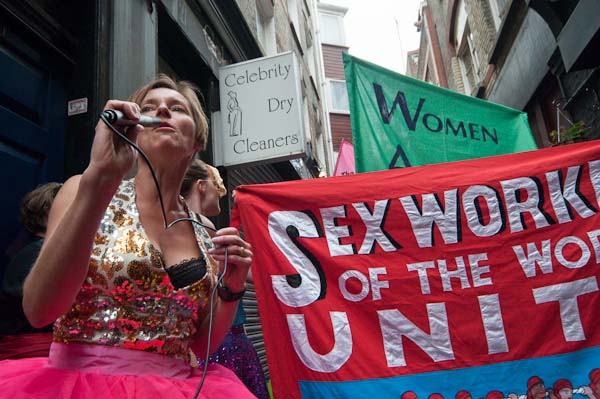
The parade was in part to thank the people of Soho for their support, but also to oppose the  Policing & Crime Bill currently going through parliament which will criminalise clients and also make it easier for the police to persecute sex workers. It was organised by the ‘Soho Working Girls‘ and the ‘English Collective of Prostitutes‘, who state “We are mothers, daughters, sisters, grannies, aunties struggling to support ourselves and our families, just like other women.”

Those taking part in the parade were masked (although I saw many of them before they put their masks on) but otherwise they seemed very little different to any group of women one might meet on the streets of London, as this statement suggests. Although it’s a story that has attracted a great deal of interest because of the subject matter, in fact there was very little titillating about the event, though the masks and costumes made it fun to watch and photograph.

© 2009 Peter Marshall.

You can read more about it and see many more pictures as usual on My London Diary.

A Poet, a Queen, Whores and Artists

I’d come to Brockwell Park for the annual Lambeth Country Show with Dave; its an event we’ve both photographed in the past, although its more than ten years since I really did much there. And walking briefly through it, neither could summon up much enthusiasm, except for a cup of tea at the café in Brockwell House on the top of the Hill. So, no pics of the Country Show.

It’s a nice house, built in 1811-13 for the wealthy city glass maker John Blades, who was then Sheriff of London and Middlesex in 1812–13 and had a good view of most of it from there, although I think the trees have been allowed to grow rather too much since. A public campaign to establish a park in Brixton at first concentrated on the site of Raleigh House on Brixton Hill, but the money raised was then diverted towards the much larger estate of Brockwell Park, which was bought as a Metropolitan Open Space in 1892, largely thanks to the work of Norwood MP Thomas Bristowe, who unfortunately collapsed and died from a heart attack during the opening ceremony.

© 2009 Peter Marshall.

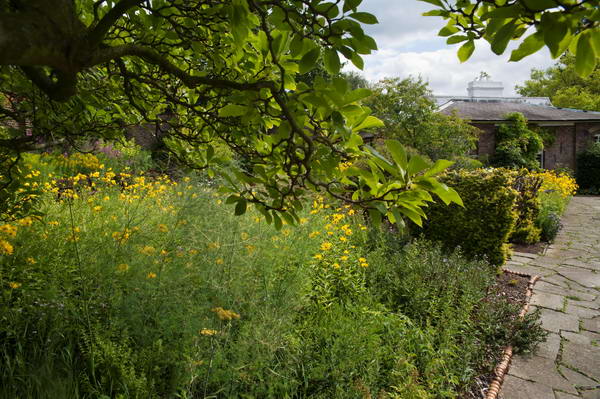
We walked down from the house towards some of the gardens. Unfortunately the community garden was closed, but we were able to visit the Old English Walled Garden, converted from the houses kitchen garden by J.J. Sexby, the Chief Officer of Parks of the LCC, who also added lakes, waterfalls and a swimming pool – as well as establishing the first tea rooms in the hall.

It’s hard to imagine, sitting in or walking around the garden that you are in Brixton, hard to think of anything further from the public image of Brixton, and good to see that people were enjoying its peace.

© 2009 Peter Marshall.

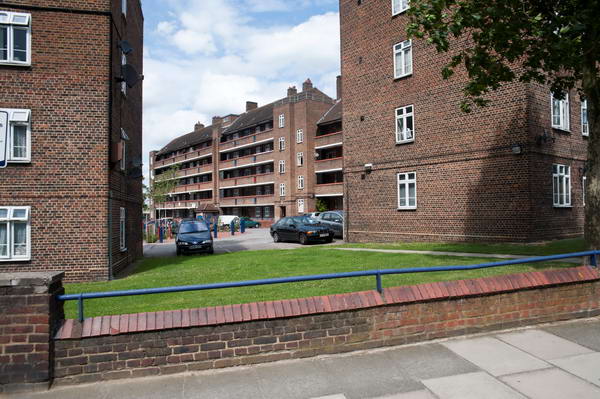
Dave’s lived in the area all his life, and grew up on the Tulse Hill estate we came to next, a typical LCC estate started in 1939, built with an access from the park, solid well-spaced blocks completed after the war. Dave went to the same local boys school, Tulse Hill School, as Ken Livingstone, redeveloped as affordable housing where Jean Charles de Menezes was living in 2005 (the girls school, which overlooked Brockwell Park, was replaced by a luxury gated private development.)

Through the estate we walked along and up to Josephine Avenue, where the annual outdoor Urban Art fair was taking place, London’s largest such event. The late nineteenth century development of this road, formerly a part of Rush Common was governed by Lambeth Manor Inclosure Act of 1806 which prohibited building within 150 ft of the road. Houses on both sides are set back by this distance, with a wide path designed for carriages immediately in front of them and then an area now largely divided into individual gardens between that and the road, with an iron fence. The street side of this is covered with paintings, prints and drawings – and a few photographs – as pitches for the artists taking part in the fair.

These often neglected gardens made the street notorious in the recent past, with kerb crawlers and prostitutes taking advantage of its relative isolation from the houses – and some carrying out their trade alfresco in its bushes. An active residents group has done much to clean up the area – including the organising of the Urban Art fair and more recently, a small community garden adjoining the ‘Poet’s Tree‘.

© 2009 Peter Marshall.

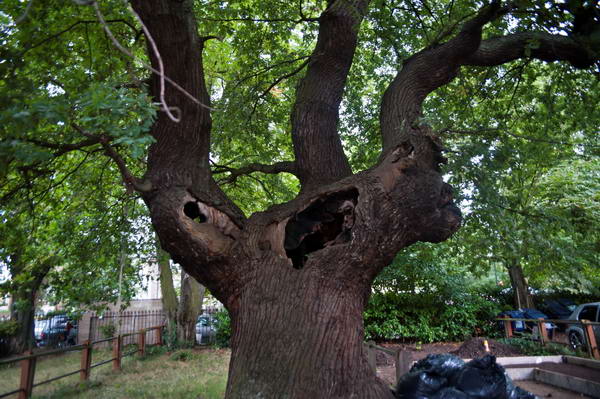
Local legend that Queen Elizabeth I came up the Rvier Effra by boat to meet with Sir Walter Raleigh here under this ancient oak is almost certainly without any foundation, as the Effra was almost certainly not navigable to this point, although in the centre of Brixton some accounts say it was 6 ft deep.  Henry Hastings, the first Baron Loughborough, who leased the manor of Lambeth Wick got an Act of Parliament to make the Effra navigable from Brixton Causeway to the Thames years later in 1664, but died before he could do so. (It was no consolation to him to get a Junction station some two hundred years later.) And although there was a Raleigh House nearby on Brixton Hill (where Raleigh Gardens is now) there appears to be no provable connection between the man and Brixton. But he certainly was a poet – as well as a courtier, explorer and pirate.

More or less this same text with rather more pictures is on My London Diary.