Spelthorne? Where? Wilshire? Who?

While these were the questions asked over the toast and marmalade in many homes this morning, for once I knew all the answers. Because I was at the centre of David Wilshire MP’s constituency, Staines.  Spelthorne is at the centre of all those reservoirs visible on the left immediately after take-off from Heathrow as you wantonly increase your carbon footprint.
© 2008 Peter Marshall
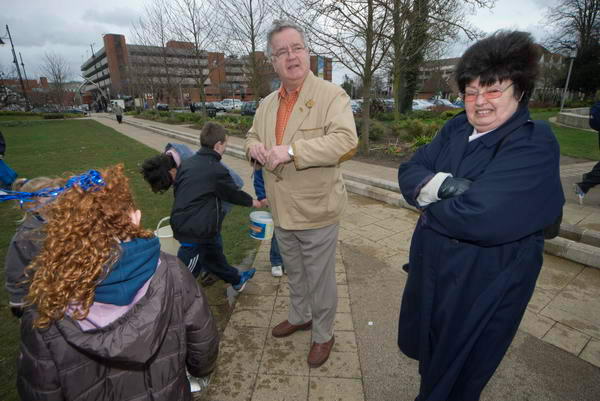
David Wilshire and his partner and office manager Ann Palmer

All that water is not enough for our local council, which also goes under the rather silly name of Spelthorne, and despite the fact that the River Thames was only a few yards behind me they had to install the rather fatuous ‘water feature’ (a concrete ditch) that you can see behind the Spelthorne MP and his very personal assistant taking part in a very worthwhile charity event Stepping Out for Water that I photographed last year.

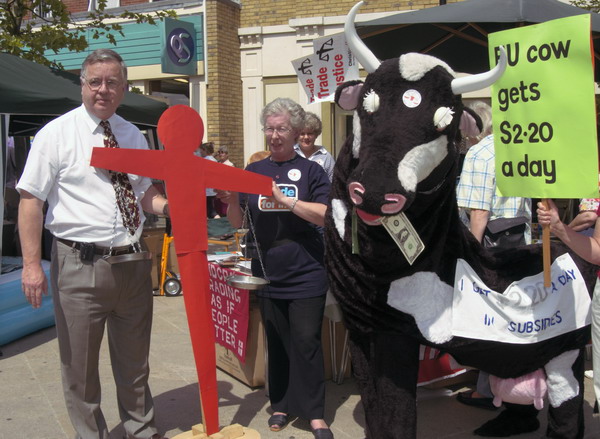
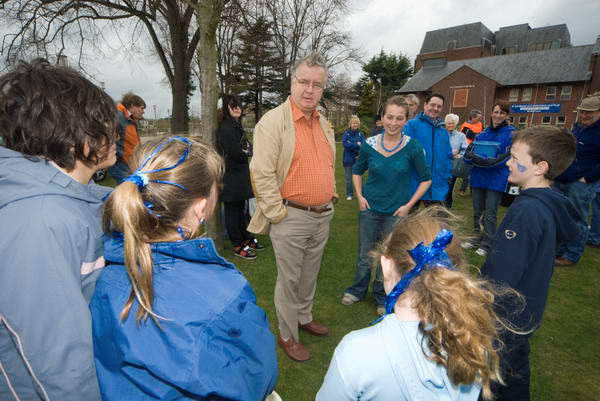
Mr Wilshire has earned some local respect for getting involved in events such as this, where he came to speak at the meeting in the Staines Riverside Gardens/Car Park at the end of a walk raising concern and cash about the one fifth of the world who lack clean water and the 40% who lack basic sanitation – and our failure to do our part to meet the Millennium Development Goals, one of which included the aim to halve those without clean water and sanitation by 2015.  He’s also supported other events, such as a Trade Justice demonstration in Staines. So he isn’t all bad.
© 2003 Peter Marshall
Wilshire at a Trade Justice demonstration in Staines in 2003

He also regularly replies to letters from me and Linda, telling us of his support for various things we oppose – such as the wasting of vast amounts of money on Trident and the expansion of Heathrow – an issue where he is one of few local MPs to defy official Conservative policy. But he does keep in contact with constituents and argue the case even if he almost invariably ends up coming to the wrong conclusion.

He must have been doing something right, as there is a group of local Tories reported to be trying to get rid of him since August – though their main beef is over his expenses claims, others criticise him for not living in the borough (reportedly he has homes in Somerset, Hanworth and London.)  The current allegations are about payments to Moorlands Research Services, an unregistered company owned by himself and his partner, Ann Palmer.

Spelthorne exists because of opposition by Conservative backwoodsmen and women back in the 1960s, who fought tooth and nail to keep this true blue area out of Greater London and in particular the London Borough of Hounslow (thus ensuring it remained under Labour control. Oh dear!)  It then jumped over the Thames to become part of Surrey, although that country has never quite accepted it, and even now some local activities get missed out from Surrey listings because they are in Middlesex. But Staines really isn’t Surrey. We have the crime rates, unemployment and social problems  you’d expect for outer London, with an extra dose of pollution from Heathrow and three motorways around our edges – the M25, M3 and M4.
© 2008 Peter Marshall
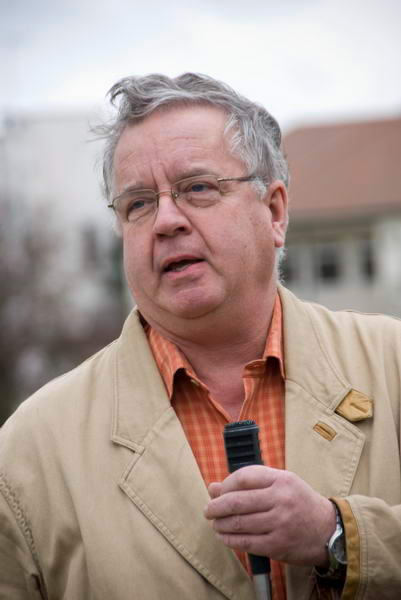
David Wilshire MP speaks. Rather a lot of nonsense as usual.

Wilshire, a former Conservative whip, probably last made the national headlines for the controversial Section 28 which he introduced into the Local Government Act, 1988 aimed at preventing “local authorities from promoting homosexuality“.  A half-baked and largely ineffectual attempt at discrimination, it had the effect of uniting and galvanising LGBT groups in protest and thus advancing the cause of equality in the period until it was repealed (in Scotland in 2000 and the rest of the UK in 2003 – hard to comprehend why it took New Labour so long.)

It seems inevitable in the current climate that Wilshire will have to go – whatever the justice of his case. But I don’t hold out any great hope that the conservative candidate that replaces him as MP (a monkey with a blue rosette would get elected here) will be any better.
© 2008 Peter Marshall
Another picture from ‘Stepping Out For Water

Camp Ashraf Update

I was sorry not to be at Grosvenor Square on Friday when the the news came through that the 36 men detained in Iraq had been released. The account on the Free Iran web site says:

Upon hearing the news of the hostages’ release, everyone was crying, dancing, singing in the street in Grosvenor square in front of the US Embassy.

and gives a link to a video on YouTube of the release in Iraq after 72 days of hunger strike.

I was also unable to attend the celebrations at Grosvenor Square on Saturday evening, however it is good to be able to report some success. But  the release of the prisoners was only one of the demands.

Many of the 36, who had also been refusing fluids for a week, as well as those who went on hunger strike around the world in sympathy – including the 12 in London – may have permanently damaged their health – and according the the report I heard early on Sunday morning on the ‘Sunday’ programme on Radio 4,  five of the London hunger strikers have been kept in hospital.

The Church of England often gets a pretty poor press, but the Archbishop of Canterbury took a prominent role in the campaign – and kept the issue in the religious media while the mainstream largely ignored it. Here’s another quote from ‘Free Iran’

Huge international pressure, prompted by hunger strikers, helped bring about their release.

The Archbishop of Canterbury, Dr Rowan Williams, the vice president of the European Parliament, Dr Alejo Vidal-Quadras, and the former Prime Minister of Algeria, Sid Ahmed Ghozali, and thousands of parliamentarians, jurists, human rights icons, dignitaries and personalities across the world condemned the Iraqi regime for failing to release the refugees, despite three separate rulings by Iraqi judges.

Amnesty International joined the chorus of voices denouncing the actions of Iraqi Prime Minister, Nuri Al-Maliki with another Urgent Action appeal which was its 12th statement since the ordeal started.

You can see my earlier pictures and comments on the Grosvenor Square hunger strike in Serbian Pride and Camp Ashraf, and more on My London Diary.

John Benton-Harris – Surprise Party

We should as a photographic nation be celebrating today, with features in the colour supplements and photographic magazines, the 70th birthday of one of the most important figures for British photography in the second half of the last century, who happily is still going strong now.  But you are unfortunately unlikely to read about it anywhere but here.

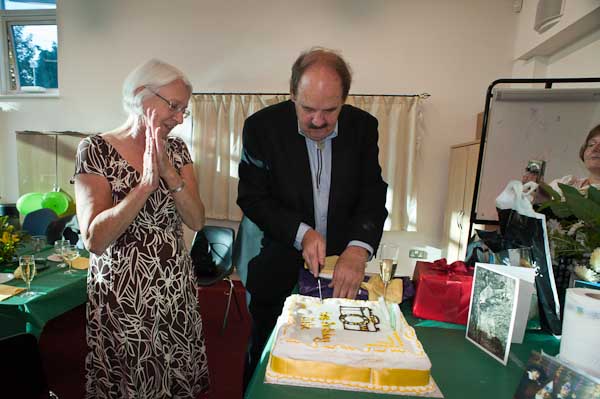
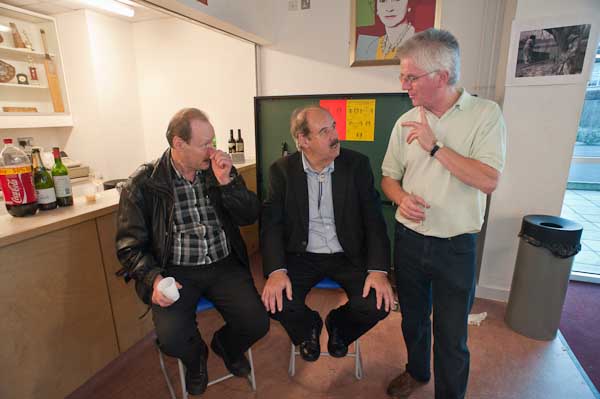
Yesterday I was privileged to attend the surprise birthday celebration for John Benton-Harris in the sports club opposite his home in Croydon, with his family and a decent smattering of photographers.

© 2009 Peter Marshall

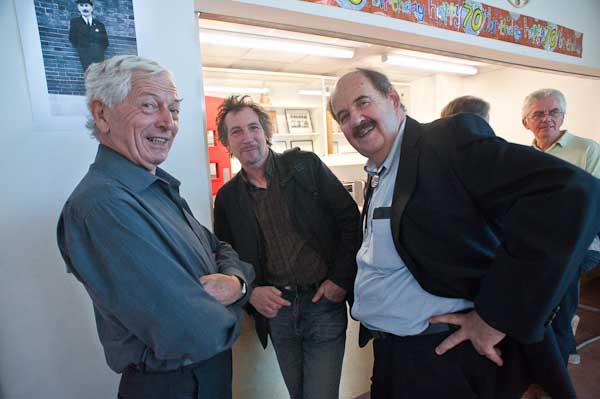
Those of us who were around in the 1960 and 70s remember the great breath of fresh ideas that came across the Atlantic and re-vitalised the medium here. Two people in particular, both separately students of Alexey Brodovitch in New York and New Haven, played a greater role than any others by coming and working here. One was British, Tony Ray-Jones, who died tragically young – only 30 – in 1972, having produced  the work that was published posthumously as ‘A Day Off – An English Journal‘ in 1974. The other was an American from the South Bronx who took leave from his post as a photographer in the US Army in Italy to photograph Churchill’s funeral in 1965. While in London he met a young woman who changed his life, and as soon as he was able, moved to London and married her, continuing his photographic career here. You can see both of them in the picture above.

© 2009 Peter Marshall

Two years ago at the FotoArt Festival in Bielsko-Biala, Poland,  it was slightly daunting to take to the stage immediately after the notable historian and writer of ‘A World History of Photography‘, Naomi Rosenblum, particularly as the talk I was going to give had a considerable overlap with the lecture on the  history of street photography she had just given.

My  ‘On English Streets’ used illustrations from the work of John Thomson, Paul Martin, Sir Benjamin Stone, Margaret Monck, Bill Brandt, Martin Parr, Paul Trevor and of course John Benton-Harris, as well as some of my own pictures (I’d talked there about Tony Ray-Jones on a previous occasion or he too would have featured.) Here is my script for the part of the talk which was about John:

His vision of England – certainly in the early years here –  was very much based on the ideas about it he had picked up from films set in the country, particularly those made by British film studios. But his view as an outsider certainly made him more aware of the class differences here and the key ways in which they are signified – and in particular the importance and readings of hats, which appear in so many of his pictures.When John met another Brodovitch graduate, Tony Ray Jones  in London, and found they shared many ideas (Ray Jones had studied at Brodovitch’s class in New Haven, and they had not met in the USA.) Both had the experience of having worked in a supportive visual environment that they found almost completely lacking in word-centred Britain, where no one seemed to care about photography. It must have come as a shock to John to have moved from a New York where he knew everyone who was anyone to a London where there was no one to know, although Ray Jones would have known exactly what was in store when he returned here. Together they provided an energy, a dynamic, that catalysed others to shake up of the dusty world of British photography, particularly editors Bill Jay and Peter Turner, who took over from Jay at Creative Camera.  Benton-Harris curated several influential shows with Turner, particularly American Images: Photography (1945-80) at the Barbican in 1985.

The new breeze that ran though British photography affected all of us, perhaps reaching its apogee in volumes such as Creative Camera Collection 5, which featured, as the first of three major portfolios, 27 images by Benton-Harris (as well as a well hidden set of three pictures from me.)

© 2009 Peter Marshall

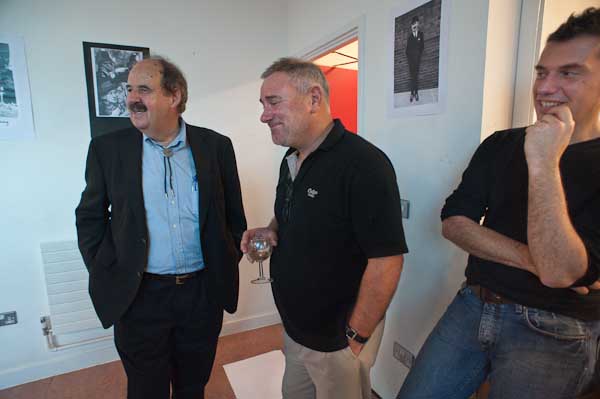
Those coming to the party had been sworn to secrecy, but were asked to nominate their favourite image by John, and these had been printed up to poster size and were stuck up around the sports hall for the party – you can see some in the background of these pictures. I’d printed out the presentation slides for his section of my talk as a small present and was pleased to see that my choice included several of other people’s favourites.

Also on display was a series of pictures of John as a young man with a camera on the streets of Rome, taken by his friend George Weitz, there at the party (I’m afraid the link to the piece I wrote on John for About.com no longer leads to it – like the several thousand other pieces I wrote for them it is no longer available on line.)

Part of the reason why John is not as highly known as he should be is that it is not easy to see his work, much only available in long out of print books and magazines. A reasonably diligent search on the web only reveals a couple of pictures of him and two poorly scanned images of St Patrick’s Day, neither his best work on the theme. We really need a well-produced book of his work from the first twenty or so years in England, as well as other publications covering his later work.

© 2009 Peter Marshall

Probably the best way publication is still the major portfolio in Creative Camera Collection 5 mentioned above, still available secondhand at a very reasonable price in the USA, though more expensive here – and prices of this and the other CC Year Books do now seem to be rising fast. (My favourite on-line bookseller lists a copy at a US bookseller for £6.47 below an ‘ex-library’ copy apparently in poorer condition from a UK store for £56, though most copies are in the £16-25 range.)

But it is also unfortunate that credit wasn’t always given to him for the things that he did do. The catalogue for the ground-breaking Barbican Show American Images 1945-80 does state in the acknowldegements “Peter Turner and John Benton-Harris have been the motivating force behind the show and without their unstinting efforts as organizers, American Images would never have happened” and it carries a short note by him and about him, but essentially it marginalises his contribution to a show which was almost entirely dependent on his contribution and insights, if slightly diluted by the efforts of others.

Unforgivably he was not even included in the index to the catalogue, and the front cover which should have stated ‘Organised by John Benton-Harris & Peter Turner‘ simply says ‘Edited by Peter Turner‘.

It is also hard to understand why use wasn’t made in the catalogue of his personal knowledge of many of the photogrphers included (which was essential in putting the show together) to provide greater insight into their lives and work. As his occasional contirbutions to this site show, John is capable of writing with considerable force and insight.

John has recently returned from another extended trip to the USA, doubtless with many interesting digital colour images as on his recent previous trips. I also hope he will write up his thoughts about some of the shows that he saw there for this site. It would be nice if here or elsewhere he would also share some of his images with us.

More pictures from the party on My London Diary.

City Panoramic II

OK, lets try again with that rather effectively hidden bad link to the pictures in City Panoramic (which I’ll correct in a second.)  This one to the actual City Panoramic website really does work

There really does seem to be some kind of hex on these pictures; first I simply forgot about the site, then I put it up with a bad link (or perhaps one that got corrupted when the site went down a few days back?)

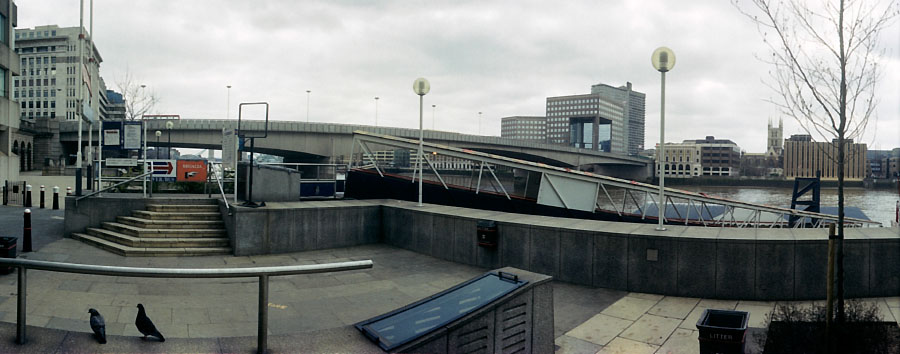
When I showed the picture above, I gave it the title London Bridge but deliberately it wasn’t the most obvious of views, and perhaps the two pigeons are what stands out most. It was taken on a cold wintry day and I like the way it uses the curvature of the cylindrical perspective – it’s been called the ‘cigar effect’ – of the swing lens camera.

When I started using a panoramic camera – and this was taken with the Japanese Widelux – I found a recent book about panoramic photography in my local library which gave some useful advice. One of the things it said was essential was to avoid subject matter close to the camera. So of course I went out and did the opposite.

Opening night

Thanks to all who made it to the opening of ‘Taken in London‘ at Shoreditch Gallery at the Juggler in Hoxton Market last night. It was great to see so many photographers, including some of the best in London, so many old friends, and to meet some new people. It really was a very pleasant evening.

For once I went up to London and didn’t take pictures, though I did have my camera with me I just didn’t get the time to take it out of the bag and was busy talking to people for more than two hours.  Fortunately my fellow exhibitor Paul did occasionally top up my glass, or I might have forgotten to have a drink.

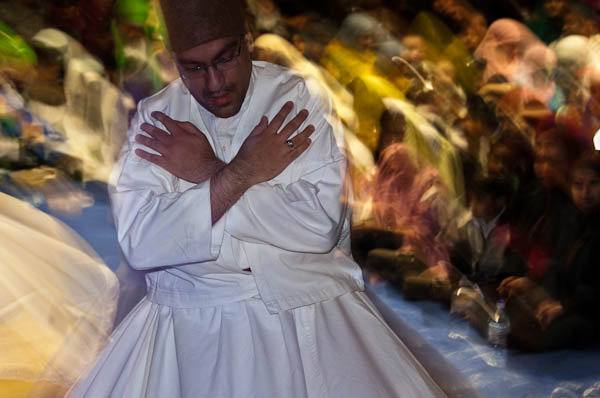
© 2009 Peter MarshallWhirling dervish at Eid Milad-Un-Nabi celebrations, Tooting, March 2009

The show continues until the end of the month, so there is still plenty of time for anyone who couldn’t make the opening to see the work.  The Juggler is a nice place to visit if you are around Shoreditch or Hoxton for a coffee and cake or roll (though I can seldom resist a bottle of Budvar there.)

Talking to the gallery owner he told me that there had been quite a few visitors already, many clutching their Photomonth booklets. There are around 20 galleries taking part in Photomonth within easy walking distance of the Juggler in the areas on either side of Shoreditch High St/Kingsland Rd, and although opening dates and times differ, it’s an area for a good afternoon out in the next few weeks. Full details and map on the Photomonth web site as well as in the booklet.

You can also see some of the work from the show on the Taken in London web site, although the final selection I made is rather different from there, with much more work from 2009. All of the pictures are of course somewhere on My London Diary – with around 50,000 others!

Viva Cuba! Havana Cultura

I’ve never been to Cuba, although like many its story has fascinated me and I’ve written in the past about the country and its photographers, including the pictures of Batista’s Cuba by Constantino Arias (1926-92),  Raul Corrales (1925-2006) who in 1959 was official photographer to Fidel Castro and later worked for the government’s ‘Revolucion’ magazine and Alberto Korda (1928-2001) whose image of Che still graces t-shirts and more around the world, as wellas  and younger photographers such as José A. Figueroa (1946-) and a dozen or so others.

Visiting photographers have also created fine work there. Among the outstanding examples are three Magnum photographers, Burt Glinn, who photographed the   RevolutionDavid Harvey, with some fine colour work – and he also used to run some gerat workshops there. Only the fees, air fare and carbon footprint prevented me from rushing to them. And another fine colour photographer, Alex Webb

Quite different was the work of Mexican Pablo Cabado, in his book on Cuba in 1990 – 12 pictures on Fifty Crows.

© 2009 Peter Marshall

Although I haven’t yet got to Cuba, last night I did have a very enjoyable evening in Bethnal Green, thanks to Havana Cultura, a global art initiative from Havana Club Rum to introduce the world to the fabulous culture of Havana.

© 2009 Peter Marshall
Along with around 50 other bloggers I was their guest at Chamucos Bar in the basement of Green and Red more or less opposite the top of Brick Lane. The Mojitos were flowing and the music from Gilles Peterson’s Havana Cultura album to be released on 26th October was playing – and I wrote this while listening to it again – watch out for it, some great stuff. Mojito Mayhem was one of the meetings of the London Bloggers Meetup, and we also got a couple of presentations from fellow bloggers.

© 2009 Peter Marshall

Havana Cultura has a great web site with lots of information about Havana, including photographer René Peña’s (b 1957) favourite views. But what was more interesting to me was to see a video of him talking about and showing his work, in particular a series called “White Things“, exploring the way that people consume things. The pictures show them with consumer objects, not necessarily white, but lit, exposed and printed to make them white against the darker skin of the people. As well as the video and text about him and his work there are also links to some of his pictures.

Doubtless somewhere on the Havana Cultura site you can also find details of the ‘Havana Twitter Treasure Hunt’ which uses clues on Twitter  – @_havanacultura_  and you will find the answers on the Havana Cultura’ web site. The first prize is two tickets to Gilles Peterson’s exclusive Havana Cultura album launch party in Paris on 26th October.

Tech Note:

All pictures 24-70mm Sigma on Nikon D700, with SB800 mainly bounced from a fairly white ceiling. It was rather dark in parts of the bar and I had to turn on the focus assist light. Shooting at a ISO 2000 and on program – which gave 1/60 f9 for most pictures – meant the ambient lighting helped fill in the distant areas. Lightroom helped a bit too!

My London Diary by the Sea

I didn’t go to Brighton clutching my bucket and spade, or even for the traditional dirty weekend – the hotels were in any case pretty much fully booked for the Labour Party conference, which explained my visit, though I had no intention of entering the boredom zone inside the conference centre itself. Coming from the western edge of London it didn’t make sense for me to travel on the specially chartered “Rage Train” from London Victoria, and I arrived an hour or two before this, avoiding the welcome by a large contingent of police at Brighton station when the demonstrators arrived, and strolled down to the conference centre and the pier with a Brighton-based photographer.

© 2009 Peter Marshall

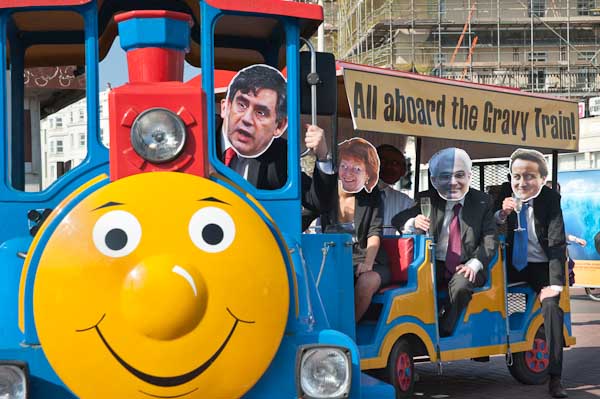
There we found another train, driven by Gordon Brown, but with David Cameron waiting his turn on the back seat. The ‘Westminster Gravy Train’ was provided by the ‘Vote for a Change’ campaign, calling for a referendum on electoral reform and a break with the “voting system that has left parliament unaccountable and unrepresentative.” There were other protests too, including a reminder that there is still unfinished business at Guantanamo Bay, with Shaker Aamer, whose family live in Battersea still detained and former Bournemouth resident Ahmed Belbacha  who is free to leave but has nowhere safe to go, permission not having been granted for him to return to the UK.

Meanwhile, protesters were gathering on the promenade for the main demonstration for ‘Jobs, Education, Peace‘ organised by six trade unions and several campaigning groups.  Protesting against job losses and unemployment – and arguing that instead of allowing industries like Vestas who make wind turbine blades to move production out of the UK the government should be taking a positive lead in creating green jobs; against cuts in education provision, especially those in deprived areas such as Tower Hamlets, and against essentially imperialist wars such as those in Iraq and Afghanistan.

© 2009 Peter Marshall

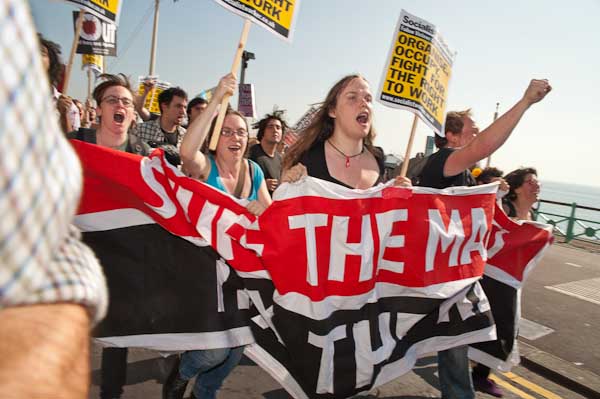
‘Stuff the Market, Tax the Rich’ was the uncompromising message of the banner carried by a large group of students among the several thousand demonstrators, intermittently halting to chant slogans and work up some energy before charging forwards into the gap of 50 or more yards they had allowed to develop, scattering the media who had gathered in front of them.

That’s my arm at the left of the picture above, running at some speed to keep ahead as I pointed the camera held in my other hand back towards the banner. The 24mm end of the 24-70mm was around the right focal length for the job on the full-frame D700, and the fill flash adds the necessary sharpness to the central figures, while a slight degree of blurring helps with the feeling of movement. It is only slight blurring because the flash synchronizes at 1/320th, rather different from just a few years ago when sync speeds of 1/60 were normal and 1/100 fast.

It was a nice sunny day, and working at ISO400 was plenty fast enough, with f14 eliminating any depth of field problems – the hairs on my arm are out of focus but then they are closer than the near end of the focus range – and better soft in any case. The sea and promenade railings are blurred slightly from the camera movement – and this helps the picture. As I now do most of the time, I was using the camera in P (program) mode (though I often use the dial under my thumb to increase or decrease shutter speed while keeping exposure constant) and the exposure was made using the 3D Matrix metering with no compensation. The camera was also set to autofocus in auto-area mode – in which it is supposed to recognise and choose faces to focus on. In other words I left the technical stuff to the camera – and it seems to have worked

Back in the old days, when I was working with manual cameras such as the Leica I would have only managed a single exposure, at most two, during this few seconds of rush; with the Konica which added autowind, perhaps three. In both cases I would have have been lucky to get anything at all from the pictures – though I did occasionally manage in similar situations.

I can’t say it’s easy or comfortable shooting back over your shoulder while running fairly fast, but modern technology does make it a lot more reliable!

More pictures and text (both stories were on the front page at Demotix)  on My London Diary:

Gordon on the Gravy Train etc

Jobs, Education, Peace March & Rally

Apprentice Boys March in London

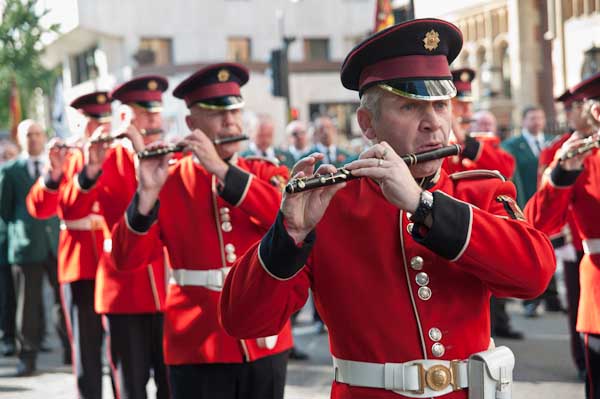
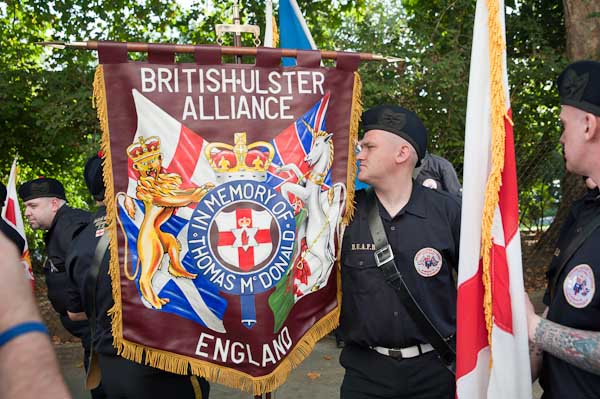
If I lived in Northern Ireland, marches by the Apprentice Boys would worry me, even though I’m at least nominally a Protestant,  and the Parades Commission there has an important role in its guidelines and code of conduct for processions so they avoid as far as possible creating disorder.

© 2009 Peter Marshall

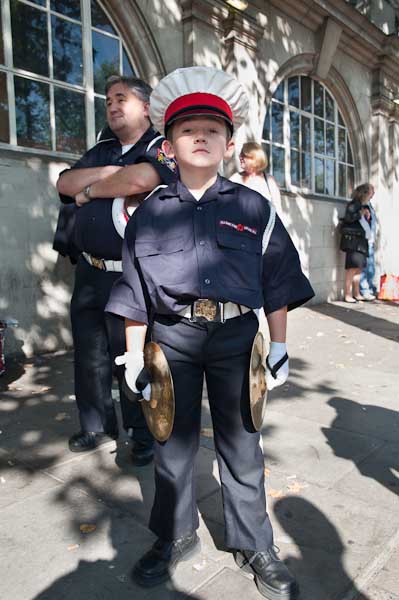
Here in the UK, such marches are different, and there are very few “contentious areas” in any case. The main purpose of the annual Lord Carson memorial march in London is to lay wreaths at the Cenotaph in memory of the many men from Ulster who served in the 36th Ulster Division of the British Army, made up of men from the paramilitary Ulster Volunteer Force.

© 2009 Peter Marshall

Families come from Glasgow, Liverpool, Belfast and elsewhere to take part in and watch the parade along with those from London. Of course there are still cases of sectarian violence in Northern Ireland and elsewhere in the UK, and last year I was threatened and mildly assaulted when I was mistaken for another photographer (who was actually a short distance down the road, but of course I didn’t tell on him.)  Of course such behaviour is simply unacceptable. Fortunately this year everyone was friendly.

© 2009 Peter Marshall

Carson himself was a great figure in English and Irish law and government – and one of a small number of non-royals to be given a state funeral here. Unfortunately he was unable to convince the Orange Order and those who came to power in Northern Ireland of the need to accord fair and reasonable treatment to the minority Catholic population, and instead left the country for London in 1921.

More about the event and pictures in ABoD Lord Carson Memorial March.

Serbian Pride and Camp Ashraf

A week or so on ago on Friday afternoon I photographed two demonstrations that haven’t otherwise got a lot of media coverage. And perhaps if I had not been coming to London for a couple of other things I would not have made it to them. I’m pleased that I did, as it meant both got some publicity through Indymedia and Demotix, but neither is likely to do a lot for my bottom line.

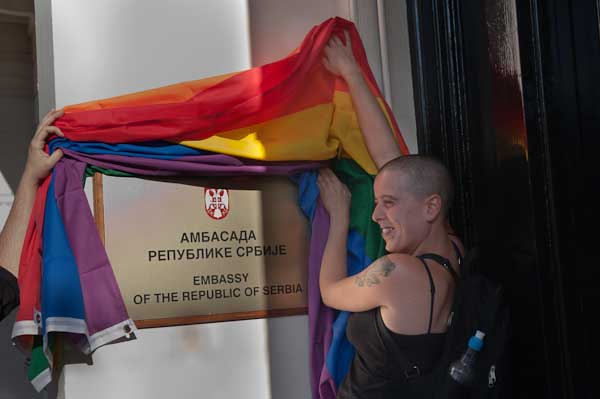
LGBT Solidarity at Serbian Embassy

The first was a LGBT demonstration outside the Serbian Embassy in Belgrave Square to protest at the last-minute cancellation of the Serbian government of Belgrade Pride. There is a strong homophobic right-wing there, and a previous attempt in 2001 to hold a procession there ended in violence with the parade having to be abandoned.

This time the government had promised to ensure it could happen, but at the last minute backed down to the right-wing pressure and cancelled it just hours before it was due to take place.

© 2009 Peter Marshall

There wasn’t really a lot to photograph, some rather straightforward pictures of people standing on the steps, handing over a letter… It was really an occasion where I start to understand why press photographers so often set things up. But that just isn’t how I work.

Perhaps the best opportunity was with the picture above (and a few variations of it of course) but here the difficulty was in the lighting contrast between the very bright sunlight coming in low on the left of picture and the deep shadow at the right. Of course I had my flash, the Nikon SB800, but for once it simply refused to work properly, and wouldn’t go into BL (balanced light) mode at all.  I made a few exposures, trying several ways to get the balance I wanted, but couldn’t really make it.

I still don’t know why it wasn’t working, but I think it was the camera rather than the flash that wasn’t playing ball, as when I got home and tried with my second SB800 I had exactly the same problem. I cleaned the flash contacts on camera and flash, fiddled with the menus on both flash and camera with no luck. Then finally it did start to work again, but I’ve no idea why. Modern automatic systems are great when they work, but can be so frustrating when something goes wrong.

More at: LGBT Solidarity at Serbian Embassy

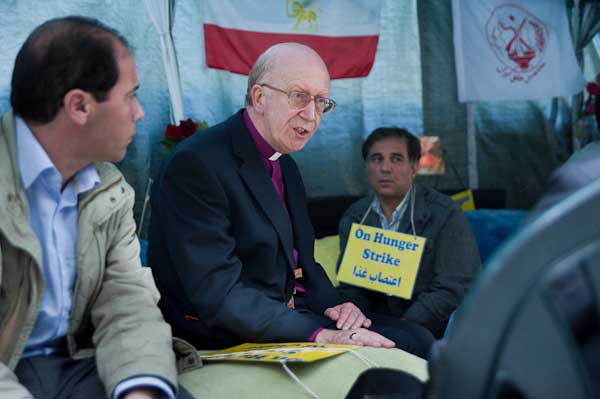
Camp Ashraf Hunger Strike – Day 60

Camp Ashraf is in Iraq. After the 1979 Iranian revolution a number of camps were set up in Iraq for Iranian refugees, and some of them were also armed to continue resistance. The main Iranian opposition group, the People’s Mujahedin of Iran, was housed in Camp Ashraf. After the US led invasion, the US took over responsibility for refugees in Iraq, and after a short while decided to disarm the PMOI.

At the start of the year, the US handed over control of the camp to Iraq, giving promises that those living in it would be treated humanely and not deported to any country where they had a “well-founded fear of persecution“. The Iraqi government apparently has other ideas, as it wants to improve relations with Iran it wants to send the PMOI back there, possibly as a part of a prisoner exchange. Iraqi forces came into the camp, attacked the residents, killing 11 and injuring hundreds and took 36 men into detention. They are still detained despite a court ruling they must be released.

The detainees started a hunger strike in Iraq, and 12 Iranians in Britain also gone on hunger strike as a protest outside the US embassy in London, as the US is still thought to be responsible under the Geneva Conventions for the safety of the men in Iraq. When I was there they were on their 60th day and several had already been taken into hospital but had returned to continue their protest.

© 2009 Peter Marshall

Although the awnings under which the hunger strikers were sitting or lying on beds were fairly dim, the lighting under them was reasonably even and I could work at ISO 1600-3200 without great problems.

My problem was how to dramatise the story to make it more likely to be taken up by the media, and I couldn’t find a solution. I’m not sure if I was having a bad day or there really wasn’t anything there, or perhaps I just didn’t spend long enough or work hard enough at it.

Of course the story and picture did get out on Indymedia and Demotix, but I would have like it to get more publicity. The failure of the US and our governments to do anything at all about it is truly shameful.

More at: Camp Ashraf Hunger Strike – Day 60

Druids at Primose Hill

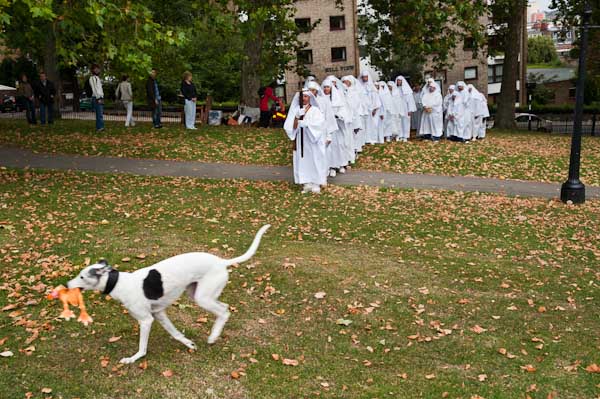
Primrose Hill, just to the north of Regent’s Park and the zoo, has a wide view over the centre of London and is a pleasant place to sit on a warm sunny day. When I got there, a few people were marking out the grass next to the summit ready for the Autumn Equinox celebration by the Druid Order.

© 2009 Peter Marshall
The dog and stolen rubber chicken are not a normal part of the celebration

I was interested to find a new memorial stone in the ground, perhaps 4 feet across, made of a grey cricle of slate set into a concrete base, with a brass circle in the centre carrying a bas-relief head and shoulders. Around it were twelve symbols, something like this: ‘/| \’, the three rays of the ‘druidic’ Awen, and in the next circle the name of ‘Iolo Morganwg’  who invented it, along with his date of birth and death, 1747-1826 and the text ‘THE TRUTH AGAINST THE WORLD’ together with what I assume is the same in Welsh. An outer ring carries the message (again in both English and Welsh) ‘This is the site of the first meeting of the Gorsedd of the Bards of the Isle of Britain 22.6.1792‘. Perhaps surprisingly this appears to be historically accurate.

© 2009 Peter Marshall

The Gorsedd still meets, but now at the National Eisteddfod of Wales, but it was good to see a memorial to “Glamorgan Eddie” who started it, even if we now know that much of the history he claimed to have translated from the ancient Welsh manuscripts that created a cultural image for the Welsh nation was his own complete invention. 

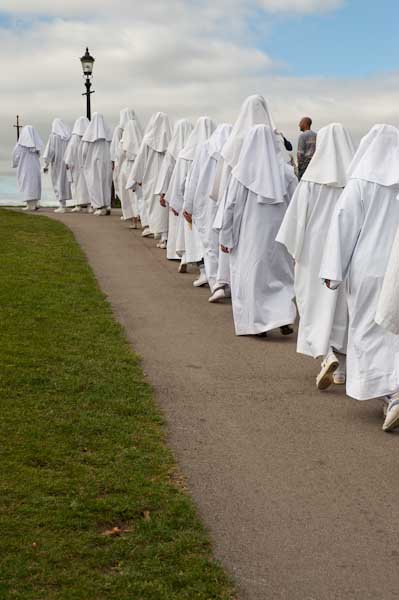
Like many of our ‘ancient traditions’, The Druid Order who I had come to photograph also has a mythic history, tracing a lineage back to 1717 and even earlier, but actually began just around a hundred years ago. Perhaps fortunately so, because the ancient druids appear to have been a much more bloodthirsty lot. I don’t know when they began their celebrations at Primrose Hill (or Tower Hill in the Spring) but they first appear rather similarly dressed but under a different name at the Summer Solstice at Stonehenge in 1913.

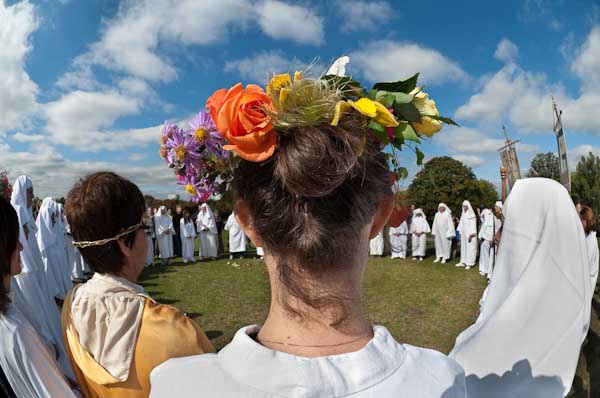
The white robes and head dresses appear to have been derived initially from a fanciful description written in Germany around the middle of the last millennium rather than from the actual druids, who I suspect wore mainly animal skins and woad, but the robes are more photogenic. I think it would be hard not to take some interesting pictures of the celebration.

You can read more about the history of the druids (and if you want even more, a there is a lecture by historian and author Professor Ronald Hutton which you can download) in my feature on My London Diary, with of course many more pictures.

As usual, I found the fisheye rather useful.

© 2009 Peter Marshall

It was another occasion when two bodies would have been useful, although the 24-70 covered most of what I wanted. It would have been better to have had a second body that I could have had equipped either with something shorter or longer as the situation changes. Perhaps I might try keeping the24-70 permanently on the D700 but also carrying the D300 with 10.5mm fisheye, 10-20mm and 55-200mm.  Only another 7-800 grams but I really need a bigger bag!

More here: Autumn Equinox: Druids at Primrose Hill