G4S Protest

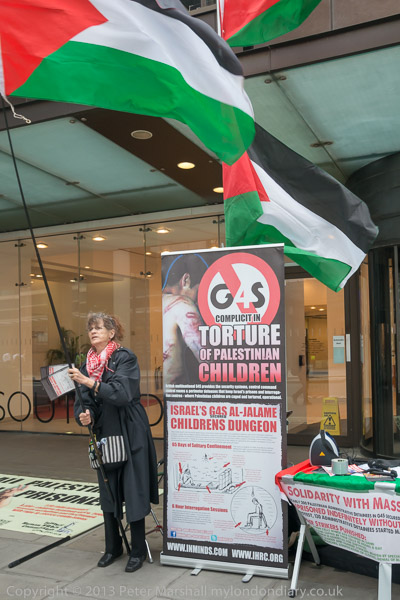
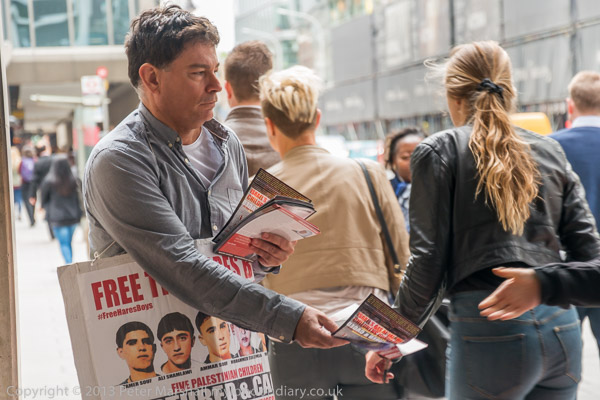
I was pleased with this image, taken at a protest outside the London HQ offices of security firm G4S  – you can see the others from the set I made at Support Hunger Strike in Israeli Jails. There have been regular protests outside the offices on Victoria St, and it was difficult to think of some different way to show them, having covered quite a few.

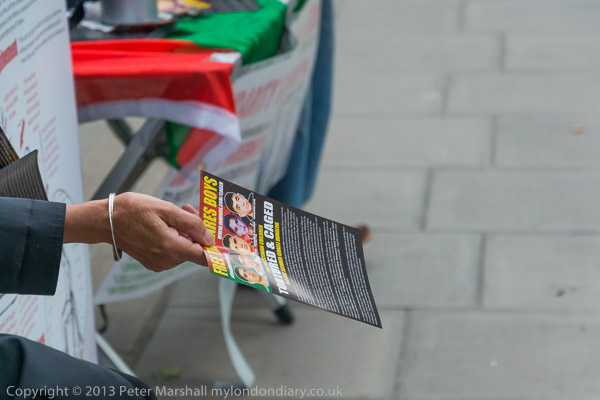
I’m just slightly annoyed that I wasn’t working with the zoom lens just a little wider – it would have been good to have the word ‘TORTURED’ under the pictures of the boys from Hares – the ‘Five Palestinian Children’ who have been held in solitary confinement in small empty underground cells in a prison where G4S provides their support.

It was a cool, dull and slightly wet afternoon, and the tall buildings along the street channel the wind, turning the area of pavement where the protest was held into a wind tunnel. I made some more general images of the protest, and there was no problem in getting the Palestinian flags flying.

But I decided to concentrate on people handing out leaflets, using the 70-300mm to zoom in on the actual leaflets in some images – like this:

So for the top image, I was at the widest focal length the lens goes – 70mm – and really would have liked it to be just a little wider. It would have been a little better if I had been working with the 18-105mm.  The longer lens is fine for what it does, but very much less flexible than the 18-105mm.

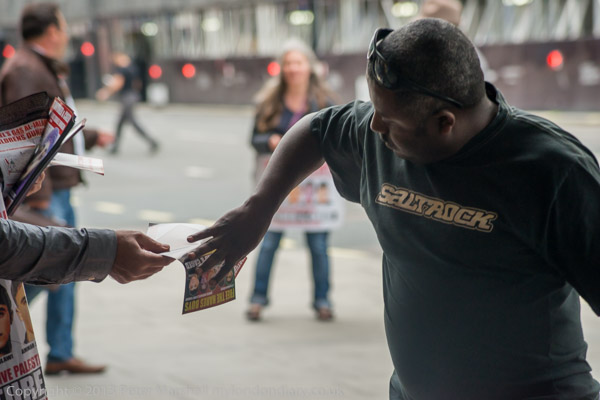
The long lens worked for a number of images. I particularly liked a rather athletic pick-up of a leaflet by one man walking past – here is one of the two images of his. It’s an image I think I could improve by a little more post-processing to bring out more shadow detail; the pictures on My London Diary are usually from the fairly rapid editing that I do to get pictures to the agency within a few hours, and this was a very busy day. This story was my third of the day and I had to rush several miles across London after the half hour I spent there for another protest.

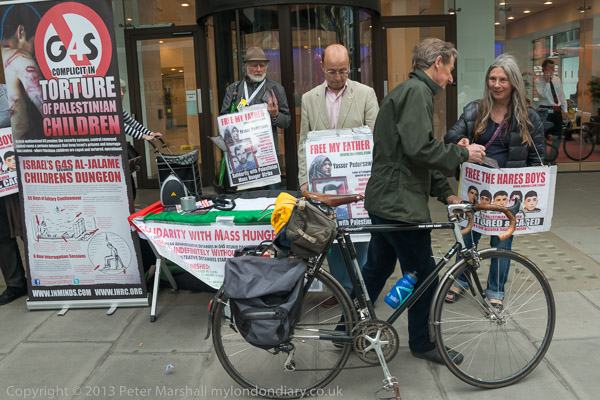
I’m only aware so far of one image from this set having been used, and it was this image of a man walking with his bike past the stall – and taking a leaflet from the woman at the right. This was taken with the 18-105 mm at 18mm. As with the other images, I tried to concentrate on the protesters, showing those taking the images either only as hands or arms or working from behind them.

More of my pictures from the event – and more information about the protest at Support Hunger Strike in Israeli Jails.

Continue reading G4S Protest

Fuji Problems

Every May my wife takes part in a sponsored walk, and as well as sponsoring here I sometimes walk around with her (and usually a few others she has persuaded to take part), as the walk is a church crawl in the City of London. It’s pleasantly deserted on a Sunday and the selection of churches at which she has to get her walk card signed and stamped varies enough each year to keep the walk interesting.

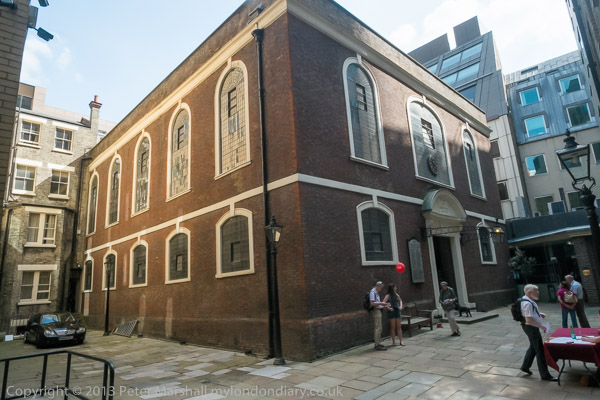
Of course a lot of the city churches are open much of the time to visitors in any case, but there are usually a few places on the walk which Christian Aid has persuaded to open specially for the event. Mostly they are Anglican churches, but each year there are a few exceptions and these are often of particular interest. This year we went into Bevis Marks Synagogue which is an interesting place to visit (and I’ve visited once before) but unfortunately photography inside is not allowed. But everywhere else we were free to take pictures.

Most of the City churches were designed shortly after the Great Fire of London in 1666 by Christopher Wren, but the fact that the plots of land on which they are were of differing shapes and sizes gives them some individuality. Some have suffered more at the hands of restorers than others, and some were severely damaged by bombing in World War II, but overall they are a remarkable collection. Probably my favourite as a building is not by Wren but by Hawksmoor.

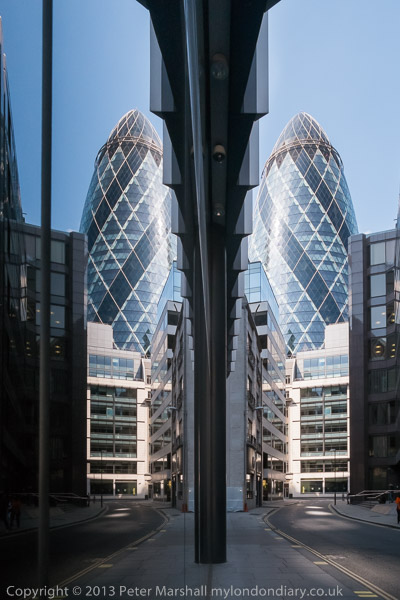
And as well as the churches there were also the walks between them. The city streets we walked along were all familiar, though its a while since I’ve worked there on a Sunday and had the place so empty. I took the opportunity to take a few pictures in between the churches as well, including the one above of seeing a double Gherkin.

Taking pictures when out with others is often a problem and you often have to rush what you are doing and then run to catch up with the rest of the group. But I was really going to keep Linda company (and make sure she didn’t get lost) rather than take pictures.

I was just going to take the Fuji X Pro1 and a trio of lenses – the 18-55mm, the 14mm and the 8.5mm Sanyang semi-fisheye. I could have managed without a camera bag, with one lens in each of my jacket side pockets and the third on the camera around my neck. Of course I’d need at least one spare battery, but that could easily tuck away in one of my inside pockets. But in the end I decided to take a small bag so I could also easily carry a bottle of water and a book to read on the journey. And since I was carrying a bag I might as well also take a second body, the Fuji XE-1

I suffered from a few problems using the Fujis. I was already aware that although the 14mm Fuji lens is superb, and it’s a very nice idea to be able to change from auto to manual focus by a push/pull on the focus ring, it is all to easy to do by accident. And while the signs are pretty obvious when you take pictures, it’s also easy not to notice them. I think I’d like it to be just a little harder to make the change.

The 14mm also has an ‘A’ setting on the aperture ring. It works well, enabling you to work in shutter priority or program mode, depending on whether you set a discrete shutter speed or ‘A’ on the camera shutter speed dial.  But what it lacks is some way of locking it to A, or a least a rather firm detent. It is ridiculously easy to accidentally move away from that position and find you are working at f22.  And f22 is a setting you would be better without on any such lens, with its ridiculously small physical aperture cutting performance by diffraction.

Most cameras I use need little bits of black tape on them to prevent me making unwelcome accidental changes to settings. But the aperture ring is too vital a control for this to be viable.

Doubtless I’ll get used to these things in time, and remember to check for the obvious warning signs. But one thing that happened was more worrying. On the way home I turned the cameras on to look through the pictures. No problems with the X-Pro1, but with the X-E1 all I got was a message telling me the card was empty and did I want to format it? I didn’t.

At home I put the card into my computer – which found nothing on it.  My copy of Sandisk Rescue Pro which once came free with some Sandisk cards (it now needs an annual subscription) was more successful, and recovered around 600 files it claimed were TIFF files. Unfortunately no software for reading TIFF files agreed, but by renaming them to .RAF files Adobe Bridge gave a fleeting view of the thumbnails before only showing them as black rectangles – though it could read the metadata. By using ‘IJFR‘  I managed to recover the 1920×1280 preview jpgs  but found no way to get the larger RAW images I had taken. Better than nothing, but hardly great.  I tried various other file rescue programs, but nothing else worked at all, or wanted me to pay to recover the files – without any guarantee it could actually do so. Worst of all were those programs that pretended to be free, scanned the disk and found some entries and then told you to pay up to recover them.

Some of the jpeg images were fine – like the architectural image above, but others where the lighting was rather difficult or the auto-exposure had been rather out were trickier.

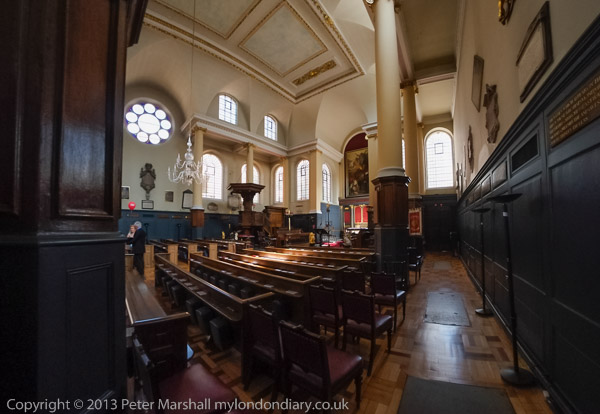
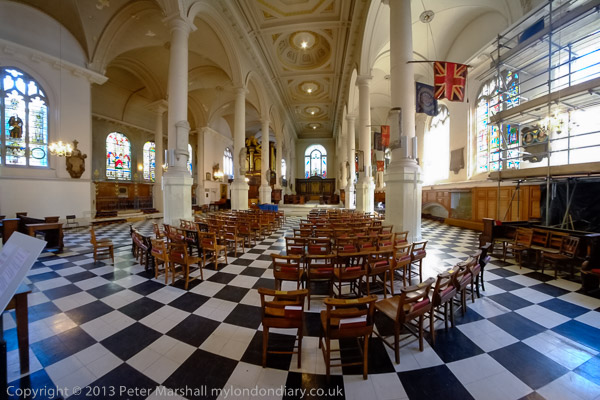
Inside the churches, the Samyang 8.5mm was very useful, both with and without the partial correction of Fisheye-Hemi. (I’ve recently had to buy a new 64bit version of this plugin to use with Photoshop CC 2014.)  They really need to update the software to work with the Samyang’s unique projection, though it does still improve many images – such as that above.

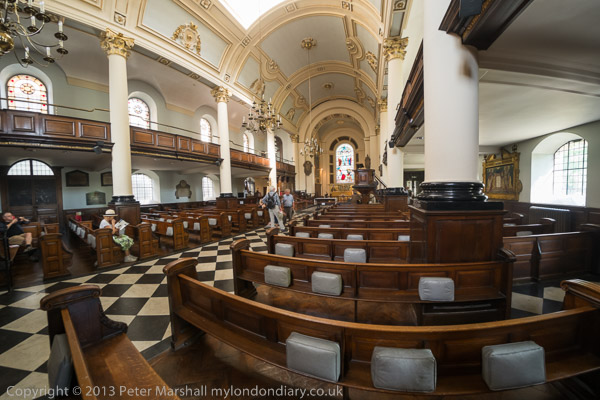
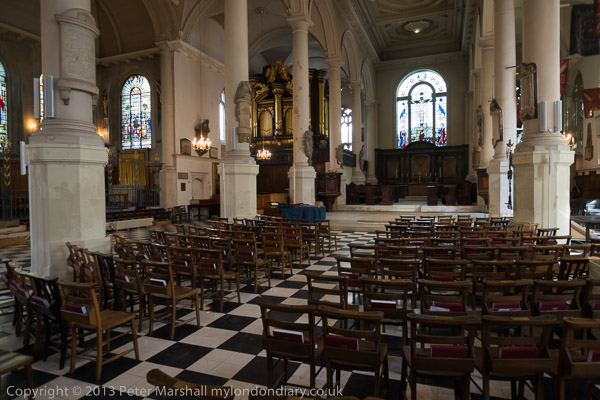
These two pictures inside Saint Sepulchre-Without-Newgate,  taken from almost the same position, give a good idea of the relative views of the 14mm and 8.5mm lenses. I think had I taken the lower image with the Nikon 16mm semi-fisheye the plugin would have removed all curvature from the vertical pillars.

There are more examples in Christian Aid Circle the City, where you can also see that I had some problems in getting proper colour correction from the pictures taken outdoors in bright sun from the Fuji images. Although people often praise Fuji cameras for their colour I have more problems with this than when using Nikon. Perhaps this is a problem with Lightroom.

I do like using these two Fuji cameras, though from the reviews the Fuji XT1 might well suit me better. I’ll let you know more about that in a month or two.  But the card problem with the XE1 really has me worried. Though I asked on a Fuji facebook page and I don’t think anyone else had experienced a similar problem. But I’ve only had to try to rescue files made on other cameras when I’ve deleted files or formatted cards in error, and have managed to get these back fully unless they have been overwritten.
Continue reading Fuji Problems

An End to May

All of the posts and images for My London Diary for May 2014 are now on-line, and I hope the links are all working. Sometimes pictures do mysteriously disappear and have to be uploaded again. If you notice missing images or broken links please let me know – there is an e-mail link on each monthly page of My London Diary. There are still a few stories I have to tell about the story behind the pictures from the second half of the month – such as this:


I was escorted out of the Department for Education for taking photographs of this protest ‘class’ against education minister Michael Gove’

and about how I worked at ISO 25600 and jpeg at one event by mistake – you can probably spot which in the pictures below, and a few more.

While I’m thinking about May I decided to post some of the site statistics for that month for this blog, >Re:PHOTO.

 May 2014                                           Visitors                            Page Views
>Re:PHOTO                                        165,946                           332,582

It isn’t easy to do the same for My London Diary, as this can be reached at several different web addresses, including the new mylondondiary.uk which I have registered simply to avoid confusion. But I’m gratified to see that over 5000 people per day on average now read this blog. It’s still a little short of the audience (around a million views a month) when I wrote about photography for a commercial site – and for a living – but a very significant number. But it is quality that really counts rather than quantity – and I have no doubts on that score. You wouldn’t be reading this if you didn’t care about photography.

May 2014


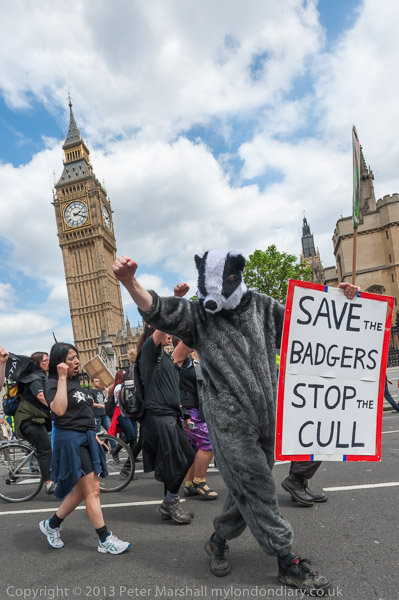
Great Badger Trail ends at Westminster


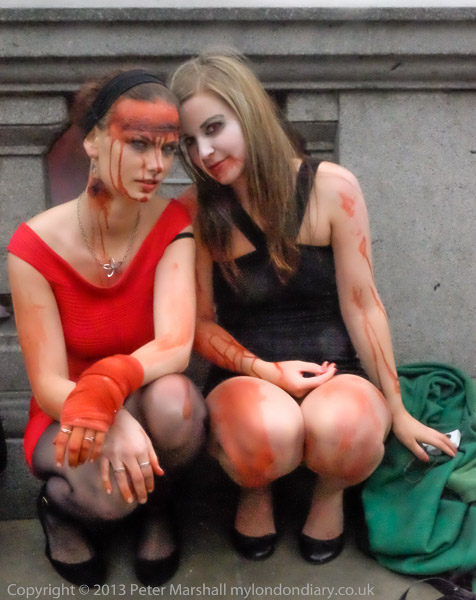
Zombie Walk London
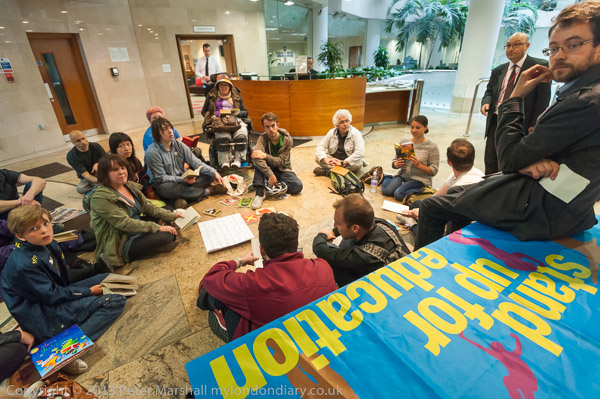
Gove “Read-In” protest in DfE
African Liberation Day protest against Vedanta


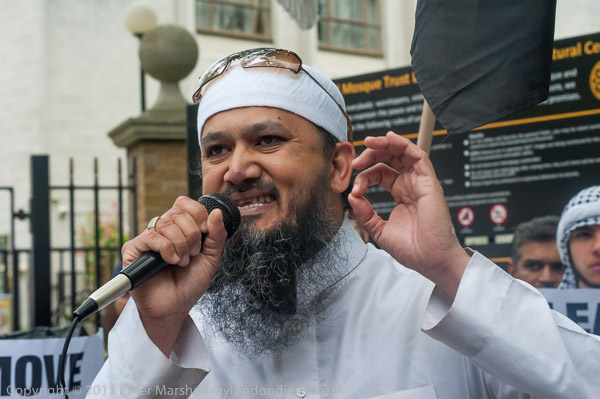
London Mosque protest for Sunni extremist
Peckham Jobcentre penalises jobseekers
Solidarity with Ukrainian Miners
Support Hunger Strike in Israeli Jails
Oromo and Ogaden against Ethiopian killings
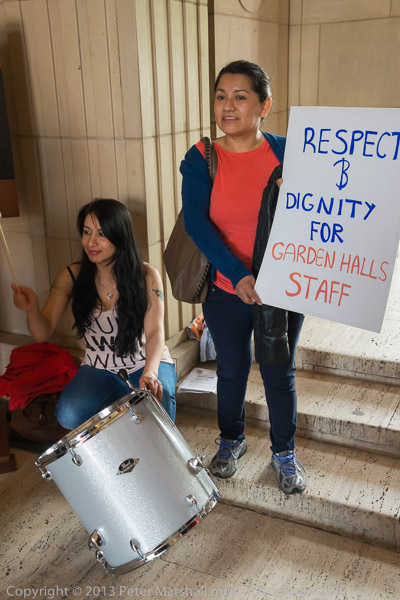
Defend UoL Garden Halls workers
Obama keep your promises


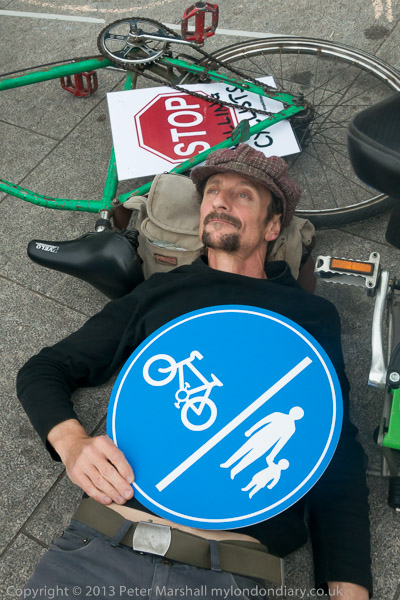
Cyclists protest Death at the Elephant
Turks protest Soma mine deaths
Christian Aid Circle the City
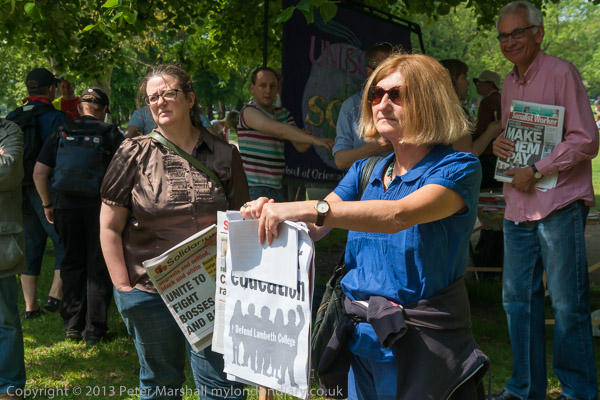
Lambeth College March for Further Education


Garden Halls Closure Senate House Protest
Communists & Anti-Fa protest Ukraine Massacres
Travellers protest Spectator’s racist language
Save Independent Living Fund
Bin British Gas
Sheffield
Derbyshire


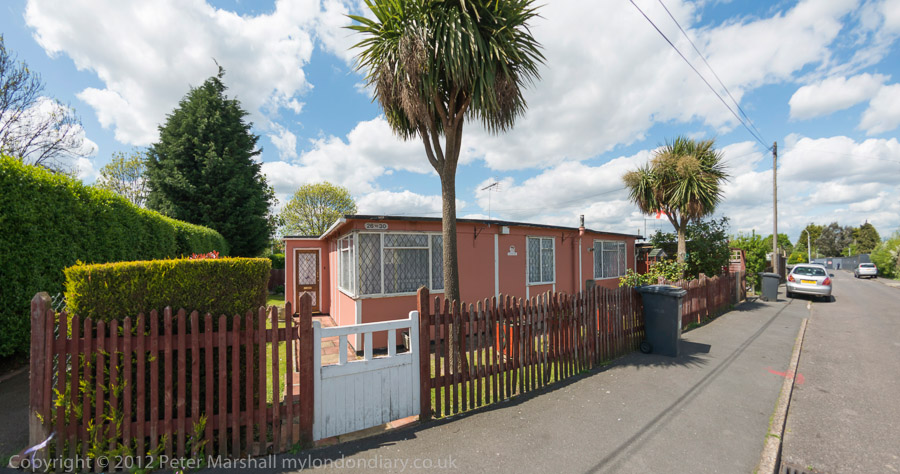
Excalibur Estate
Support Harmondsworth Mass Hunger Strike
IWGB Cleaners at Royal Opera
Horse Traps at the Nag’s Head
Baloch Hunger Strike


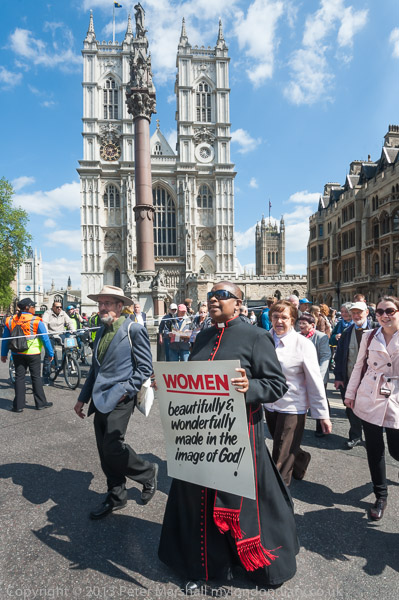
20 years of Women Vicars
Anti-Fur Picket at Harvey Nichols
Restore the Ethiopian Monarchy
Joint Enterprise – NOT Guilty By Association


May Day Rally


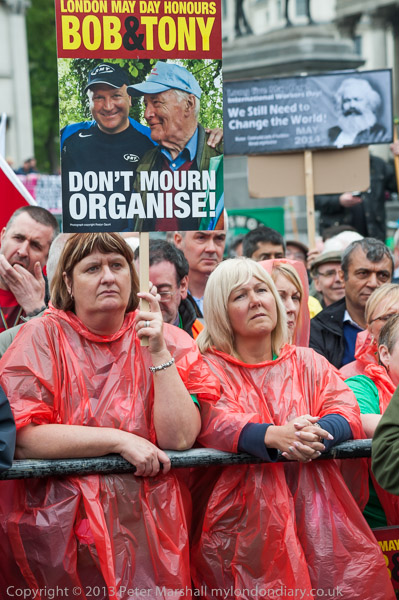
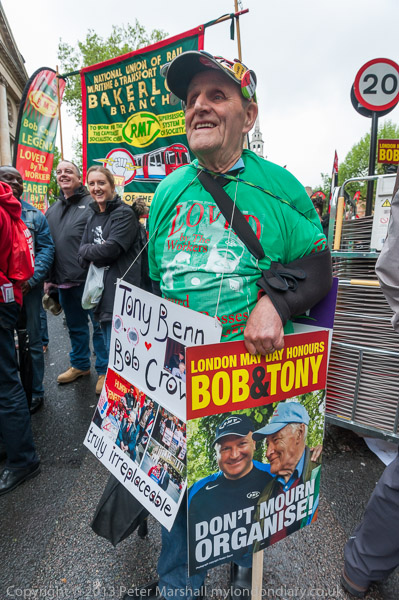
May Day March for Bob Crow & Tony Benn

The design (such as it is) of My London Diary means that the lead image used on the ‘month’ page is always in landscape format. As I’ve previously noted the increasing viewing of images on screens has led to a dramatic decrease in portrait format – so I’ve tried to redress that a little with the images on this page. The format of this blog, which limits the horizontal width to 450 pixels, works better with portrait format.

Continue reading An End to May

Lambeth College Leads Fight for FE

FE – Further Education – has always been a neglected area. It’s something that hasn’t been helped by the Cinderella complex that has had many of the larger and more successful colleges jumping to grab the glass slipper and aloughing off their lower level courses to become part of Higher Education. Vocational education has always been looked down on in the UK, sneered at by the Oxbridge elite who dominate our culture and politics. Of course its a class thing – but what isn’t in Britain.

Behind the specifics of the fight at Lambeth is the drive to convert public education to private profit, and this particular sector – if the Conservatives and their rich friends who own the companies trying to take over education get their way – will be the first to go.

I arrived at Clapham Common where the march was gathering a little early and had time to take a little walk around. It was a little sad to see that one particular area that I’d photographed nearby was no longer there, a small street of houses replaced by a rather dull block. Clapham has been going upmarket for many years now, and this was just a small part of the old area. I was saddened but not surprised.

There wasn’t a great deal happening when I returned to Clapham Common, and the lighting was tricky, with areas of shade under the trees along with bright sun. There was an ‘open mike’ with anyone who wanted to invited to speak, and I photographed quite a few of them, but it didn’t make for exciting images, though there were some banners to liven up the background.

Things got a lot more interesting when people were told to pick up their banners and form up for the march, but things happened rather quickly and in a very small area, so it wasn’t easy to be in the right place.

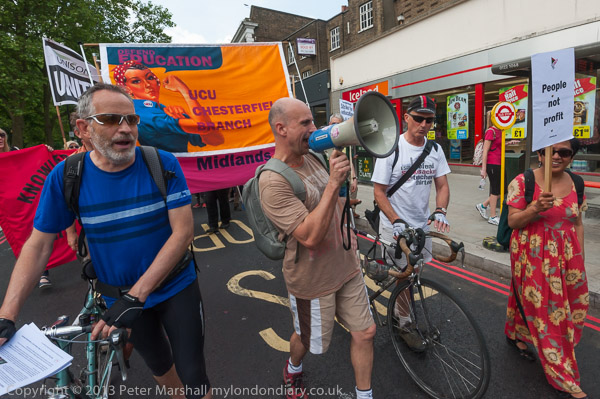
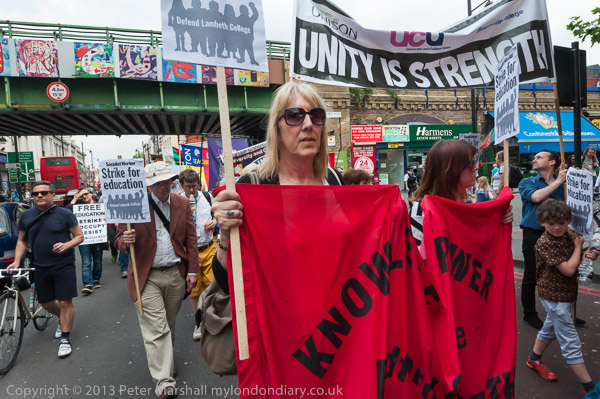
Once the march was on the street, things were a little easier, and the many banners made the march much more visible as well as giving me something to photograph. I rather like to keep my feet on the ground these days as I no longer have any head for heights at all, but I decided to clamber (with some difficulty) onto a barrier by some traffic lights for a few pictures, though some of the marchers as well as myself were rather worried about my safety!

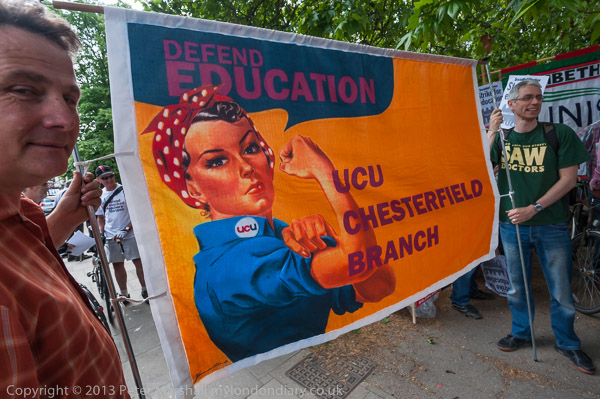
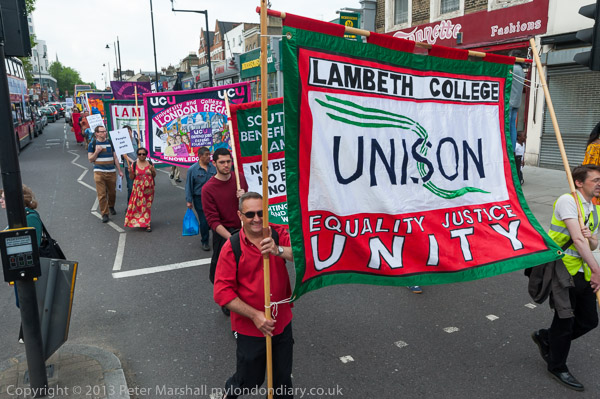
I particularly wanted a good view of the Lambeth College Unison banner at the front of the march, just behind the rather less attractive Lambeth College UCU banner (which of course features in some other pictures), and the extra height helped with this.

One of London’s notable landmarks that the march went past was the mosaic at Stockwell tube station, to Jean Charles de Menezes, murdered catching a train here by blundering police in 2005. Of course I’ve photographed it before, but I walked over to take another picture. Later as the march came into Brixton, I went across the road to photograph the tree outside Brixton Police station, with its pictures and momentos of some of those killed by police there, including Ricky Bishop and Sean Rigg. It’s a part of the context of this march and the area the college serves. And I was particularly keen to that my pictures would show some of central Brixton, with its railway bridge across the High Street and the Underground station and shops.

As the march came to Windrush Square I ran ahead and on to the open-top bus waiting there as a platform for the speakers. But the arrival of the march there was less impressive than I had hoped, perhaps because the area is now so sterile, obviously landscaped with the intent of being hostile and unwelcoming and discouraging people from meeting there. I soon returned to ground (and an angry complaint from the event security who had failed to be around when I got on the bus so I was unable to ask for permission to board.)

Using a bus as a speaker’s platform obviously makes sense with large crowds, but this was not a particularly large crowd, though at least it meant that most of the banners stayed up for the rally. But it isn’t ideal for photography. If you work on the top of the bus with the speakers you are at best seeing them in profile or from behind, seldom ideal positions. From the ground, close to the bus the view up is too distorting, and you have to move back and use a very long lens, and some speakers who are fairly short stand so they are almost completely invisible.

Fortunately I’d put the 70-300mm in my camera bag that morning. It isn’t a huge weight, but I still don’t carry it unless I think it will be necessary. I always prefer to work as close as possible, and for most purposes the 28-105mm DX lens – equivalent at its long end to a 157mm – is longer than I need. But on this occasion it would be definitely underpowered. Most of the pictures are at 300mm, when the lens loses a little of its edge, and I would perhaps have got crisper images by taking them in DX mode at 200mm. I didn’t really need the full 7360 x 4912 pixels of the D800E.

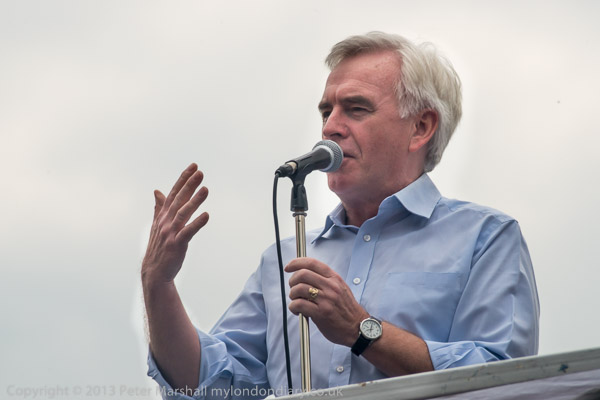
It might also have helped to use a wider aperture; as usual I was saving thinking by using program mode, and Nikon tend to stop lenses down rather more than I would. The picture of John McDonnell was taken at 1/1000 f16 (ISO 640) and if I had been thinking I would probably have worked at f8 to avoid the softening effects of diffraction. The solution is very simple – with a turn of the thumb-wheel you engage program shift, but you have to think to do it. It was probably also a stop or two underexposed with the pattern metering being a little confused by all the bright sky, but this wasn’t a problem.

You can see more of the pictures at Lambeth College March for Further Education.

UCU members there have been on strike since 3 June and Unison members joined them in a three-day strike last week; there were solidarity protests at many colleges around the country last Wednesday.  And now there is a Sponsor a striker campaign. But there has been an almost total news blackout by newspapers and broadcast media outside of the fringe socialist press. Too many biting footballers or right wing politicians scratching their noses for a strike to be news. Next you’ll expect the BBC to report a protest.

Continue reading Lambeth College Leads Fight for FE

Birthday Events

May 14 happens to be my birthday, though I’ve had too many to make much of a fuss about it, and I still went out and took pictures. Though I didn’t start until around tea-time, having by then been out for an excellent birthday lunch with my wife at one of my favourite Indian restuarants.  I was feeling pretty good after this, having consumed with it a large bottle of that ‘Indian’ less gassy lager brewed in Bedford (costing almost as much as my buffet meal.)

And it really was fine weather, warm and sunny but not too hot, and I was in a good mood, though just a littel disappointed when I arrived outside The Spectator offices where the protest was due to start dead on time to find nobody there.

It’s not unusual for me to turn up at protests and find they don’t happen, but today I was fairly certain that this one would take place, if just a little late. Rather than waiting on the street outside the offices I decided to head towards the nearest pub, where I arrived to find a small group of the protesters standing outside (the Romany flag was a giveaway), just about to leave for the protest. Rather than drink on my own – something I seldom do – I went with them.
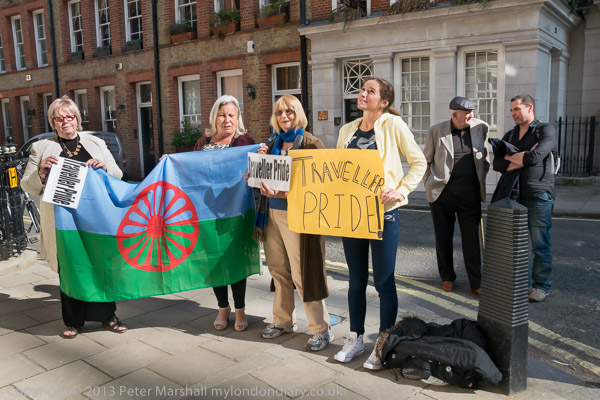
It was really good lighting, sun from the side, and the light walls of the offices around giving some natural fill so I didn’t need to use flash. The protesters were from the Traveller Movement, here to protest against the magazine’s publication of an article by Rod Little supporting the use of racist terms – the ‘g’ and ‘p’ words – to describe travellers, Roma and gypsies – more about this in Travellers protest Spectator’s racist language in My London Diary.

After the protesters had stood outside the offices for around a quarter of an hour, Spectator editor Fraser Nelson came out to greet them carrying a plate of chocolate cake and some serviettes.  It was, he told them his birthday, and they had far more cake inside the office than they could eat, so would they like some. Although most of the protesters decided they didn’t want to eat his cake, I had no such problems, and told him it was my own birthday too, though I was a little older as I took a large slice. It was delicious, and came as an unexpected bonus. I can’t recall ever having been at a protest before where the person being protested against has offered cake.
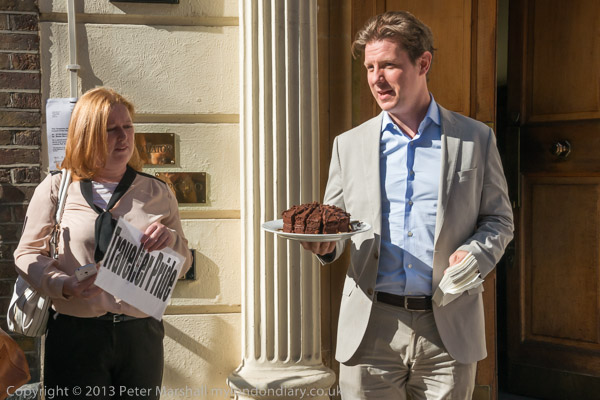
Not of course that cake makes his actions as an editor any more excusable. It is language that no reputable journalist would entertain, and certainly against the clear guidelines of my union, the NUJ, on the fair and accurate reporting of race relations subjects.

Soon after the protesters rang on the doorbell and went inside to deliver their letter of protest, and shortly after I left to catch a bus to the Ukranian embassy in Notting Hill. It was the evening rush hour, so the journey was slow, very slow. There are quite a lot of ‘bus lanes’ but these have a tendency to give out where they are most needed, and to be clogged by taxis elsewhere. Fortunately I was in no great hurry, and the top deck of a London bus is a good place from which to view the city, and just occasionally to take photographs from, though I don’t think I did so. Or at least, as so often, none that were worth keeping.
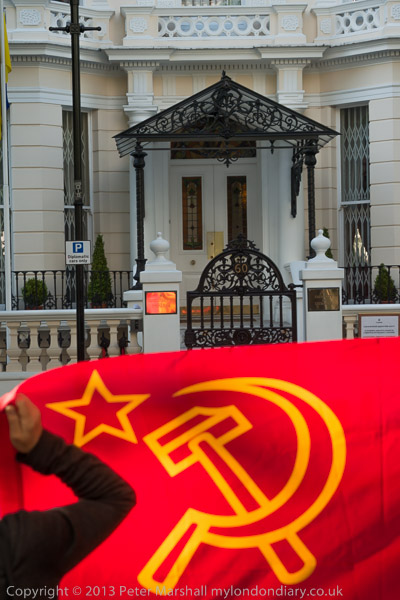
As I had anticipated, things were hardly starting by the time I arrived at the Ukrainian Embassy in the very posh backstreet of Holland Park.  Although a Communist newspaper described the event the following day as a ‘siege‘, the protesters were actually standing rather peacefully on the opposite side of the road, making it difficult to really connect them with the embassy visually. It didn’t help either that the embassy’s blue and yellow flag was hanging limply in a thin line down its post.

After a few minutes, some of the protesters got out their banners, and I noticed that from a particular position one was reflected in the brass plate on the embassy gate. Having taken it from the other side of the road I tried to go closer to the gate and work with the reflection, but couldn’t get it work as I wanted – and while I was trying, a police car came and parked in the way, bringing the number of diplomatic officers present to two.

The protest had united various communist groups which generally have little in common other than their opposition to US imperialism, which they saw as behind a fascist coup in the Ukraine. The incident which sparked the protest was an attack on a protest camp and Trade Unions House in Odessa on May 2, when 42 people were killed and over 200 injured by Ukrainian neo-Nazis.

They see the current government in Ukraine as openly fascist and anti-democratic and call it a ‘Neo-Nazi junta‘, though this led to a problem with the chanting of slogans, with some factions supporting the Spanish pronunciation and others the fully anglicized version of junta, and argument that got just a little heated. Some too were unhappy at being photographed by the capitalist press – that is me, who regularly gets labelled as a ‘dirty commie’ by the right wing because of my membership of the NUJ.
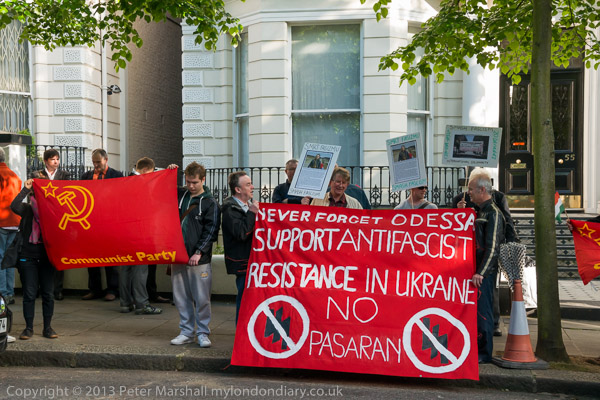
Of course I took the usual pictures of people with banners and placards. I played a little with putting the hammer and sickle in the corner of too many of them, but I wasn’t really too pleased with the images and wanted something a little more striking.
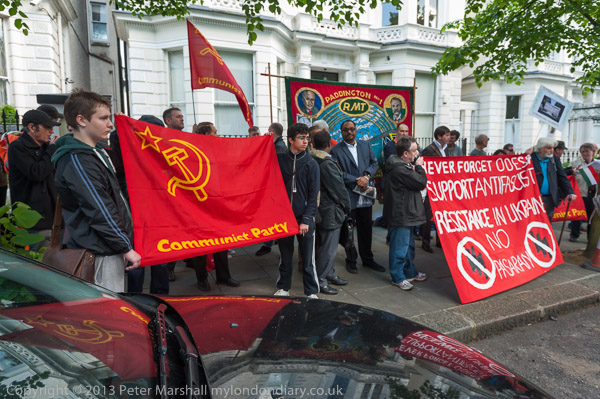
Eventually I think I found it, with the protest and its reflectioin in the windscreen and black bonnet of a parked car. I made a couple of frames and then moved away. It took a little care in printing to get the effect I had seen, but I rather like it.

I walked back along Holland Park towards the centre of London rather than to the closer bus stop I had come to, because I thought I would pay a visit to St Volodmyr, the patron saint of Ukraine and the king who converted the country to Christianity by decree a little over a thousand years ago. Around him now are flowers and photographs of the martyrs of the Maidan; some of them may have been fascists, but most were nationalists who wanted freedom in their country.
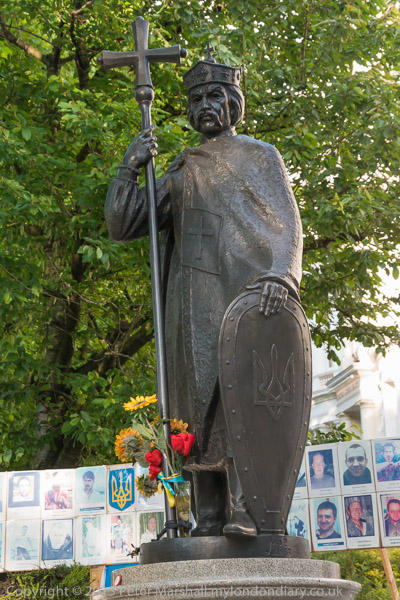
It was getting just a little dark, and I photographed the dark metal figure both with and without flash – as you can see in Communists & Anti-Fa protest Ukraine Massacres. The exposure above without flash has more interesting lighting and gives more detail in the statue. Flash on camera flattens the statue too much, though renders the flowers around the base of the statue in a wider view well.

It was time to go home, and to eat some of my own birthday cake after I’d blown out the candles.

Continue reading Birthday Events
Island History

On Tuesday evening I went to the opening of Isle Of Dogs Then & Now: Photographs By Mike Seaborne, which is showing at George Green’s School Café Vert, a venue for various community and youth organisations, open to the public at times. But it is rather easier for most to see Mike’s work elsewhere, particularly in the ‘Then and Now‘ section of Mike’s 80sIslandPhotos web site.


Mike Seaborne talks about his work on the Isle of Dogs in the 1980s at Café Vert

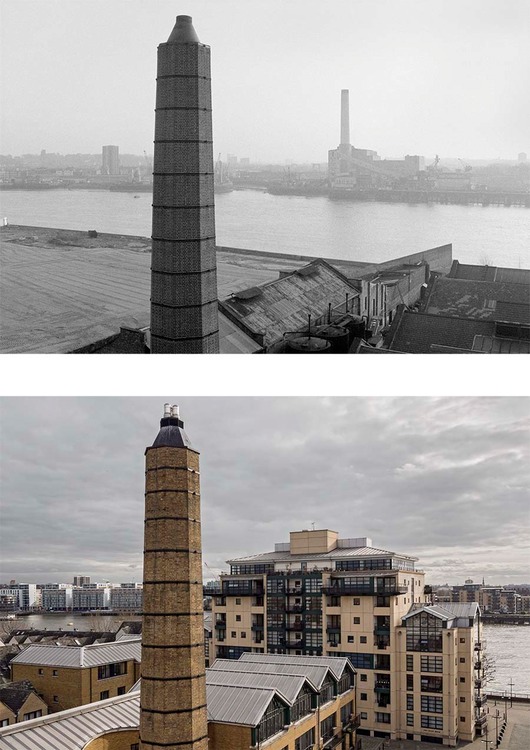
In 1983-6 Mike undertook an extensive photographic project on the Isle of Dogs in East London to document the area prior to its redevelopment, in conjunction with the Island History Trust. In 2013, a Heritage Lottery Fund grant enabled him put approximately 1500 of his black and white photographs into Tower Hamlets Local History Library and Archives where the albums can be viewed by the public. But you can also see them on his 80sIslandPhotos web site, where they are covered by a Creative Commons license that allows them to be copied and used for non-commercial purposes provided they are correctly credited (Copyright © Mike Seaborne) and are not altered or cropped. So here is one of the pairs of images in the show at Café Vert,


View south from the Plate House belfry, Burrell’s Wharf.                             Copyright© Mike Seaborne

In the show his black and white images from 1983-6 were paired with colour images taken from the same place over the past year or so. For some it was easy to know exactly where he had taken the earlier photograph – the belfry was still there, and the chimney of the former colour works has been retained, although it is the only thing in the recent photograph that remains – even the river walls have been rebuilt since then. The power station across the river on Deptford Creek is long gone – and you can see the chimney in mid-air as it was dynamited in one of Mike’s pictures.

Mike’s photographs of the area form an important record, not just because of the quality of the work but also because of the information that is attached to them, both by him and also by others, and part of the reason for making them available on-line is to enable others to come forward with more information about the people and places in them.

You can also see more of Mike’s work from this and other places on his main web site, and also on the Urban Landscapes website that we set up around 12 years ago and co-curate.

Although I took quite a few pictures on the Isle of Dogs around the same time as Mike in the 1980s – some of which are in my book City to Blackwall 1977-84  (preview here) – my work there just a small part of a much larger project on post-industrial London and not dedicated to a particular area. His is a much more in-depth study than mine and one that involved considerable interaction with the local community. It was only a few years later that I got to know him, when I joined a group of photographers he set up, London Documentary Photographers, to document the changing city, though by then I had seen some of his work – both of us had four pictures in the 1988 BJP Annual, two of his from the Isle of Dogs.

At the opening I talked briefly with Mike about the problems of re-photographic projects such as his, particularly in areas like the Isle of Dogs which have undergone almost complete redevelopment. I’d had a few hours spare and had walked through the Island on my way to the show, taking a few panoramas. Much of the way I was walking along streets and paths I’d walked on back in the 1980s, and little remained. I think I would find it tricky to exactly pinpoint the locations of many of the pictures I made back then, or the exact direction in which my camera was pointing.

Later I began to take more careful notes about locations, and as well as street names the contact sheets from much of my later work also contain grid references, although these only locate to a 100 meter square. Life would be much easier now with GPS and the ability to automatically record the image location into metadata.

DPAC at DWP over ILF

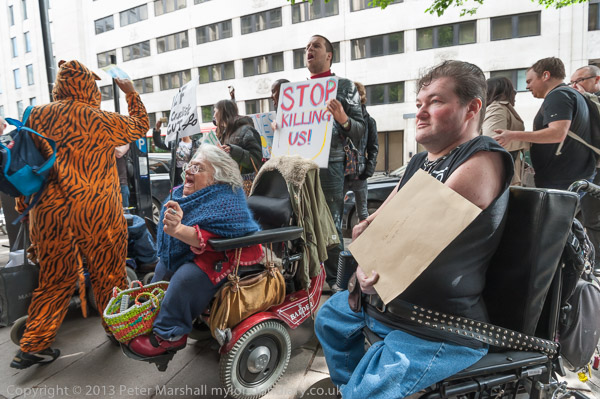
I was on my knees in the doorway – locked and guarded by security – of the Department of Work and Pensions, where protesters from disablement activists group DPAC had brought a letter for the Minister for Disabled People, Mike Penning.  There wasn’t a great deal of room, even though I was the only photographer in front of the protesters, and I was using the 16-35mm, so was very close to the guy holding the envelope. Even at the time I was wishing they had written his name rather more clearly on the envelope, though I’ve brought it out a little in post-processing.

The lighting was tricky, with a little bright sunlight leaking into the scene in various areas, but all the significant subject matter in shade. Those near-white buildings opposite were very bright – and have been brought down quite a bit in Lightroom, where I’ve also brought up the shadows considerably. As taken the envelope was reflecting quite a lot of light and looked rather lighter than a manilla envelope should. But Nikon’s pattern metering worked well, though I doubt if this picture would have worked if I had not been using RAW.

Although I was only working at f5.6 (1/125, ISO 640) at 17mm there was considerable depth of field and the figures in the foreground – with the slight exception of the moving tiger – are pin sharp. Those at the back and the background are a little soft, just enough to add a little depth to the image, and the slowish shutter speed adds just a slight blur to those moving, particularly one hand of the figure holding the poster ‘Stop Killing Us’.

I’ve not bothered to correct the slight barrel distortion at 17mm, because I think it actually – if fairly subliminally – improves the image. You can see it in the lines of the background building and I think it has a slight effect of keeping the eye drawn in to the centre.  It is actually more than you think – that tiger’s heel at bottom left just touches the edge of the frame after correction.

Of course I didn’t have time to think about everything when I was making the image – things were changing quite rapidly as usual, but I was certainly very conscious of the framing – and the images before and after this and its partner were both made at 16mm and from slightly different positions.  This was the sixth of three seven frames where I was concentrating on the letter (the next differs only in having the tiger stationary a foot or so to the right), and after it I moved to the left as I wanted a clearer view of the placard with the scissors and the message ‘ILF Cruelist Cut’. But this picture stood out.

The next frame was good too, and appealed to me because the tiger holds in his left hand a grey bag with my name, MARSHALL, clearly visible – making this a pre-signed image. But it seemed just a little static compared to the above. Perhaps I should get one of those bags and take it to all protests!

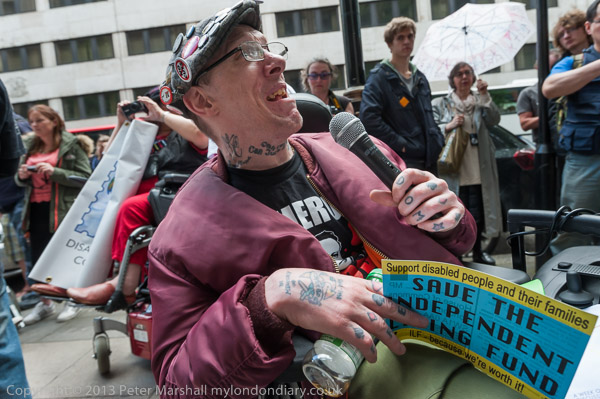
This was another picture I liked, and I had to look at the original RAW file to confirm that this was exactly how I framed it when making the picture. It’s another good example of why I like working close with the wide-angle – in this picture at 21mm. Here I had more time to work and took around 20 frames – this has the best framing and fortunately the best expression on the speaker’s face too. And it shows up those tattoos well.


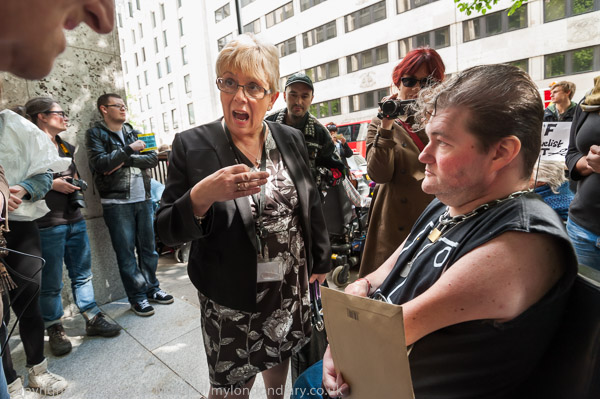
When it became clear security would not let the protesters in to deliver the letter, Mary Glindon, the Labour MP for North Tyneside took it in for them

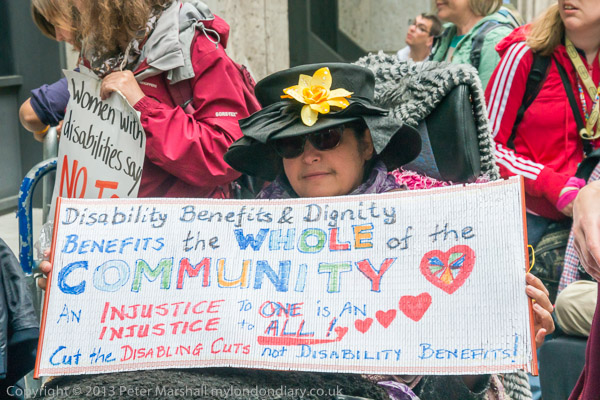
Of course I don’t always get what I want, but at this protest I made a number of images I was pleased with. Although it was quite crowded on the pavement – and wheelchairs take up quite a lot of space, there were not very many other photographers present – and those present cooperated with each other. The DPAC protesters are always nice people to work with and of course they have great reason to protest, with disabled people having suffered the most from the government’s cuts. You can read more about their protest  at Save Independent Living Fund where there are also quite a few more of my pictures from the event.

Continue reading DPAC at DWP over ILF

Bin British Gas

Back before the Thatcher era the idea of private companies making profits out of supplying gas seemed ridiculous. It was an industry with a single network of pipes across the country. Of course in the distant past we had over a thousand gas companies, each with its own area, some private and some municipal, all merged into the nationalised area ‘gas boards’ under Clement Atlee in the Gas Act 1948, and into the single British Gas in 1972.

It was an industry where nationalisation made sense, and I think delivered a better deal than the privatised British Gas created by the Thatcher government in 1986. For the next 10 years, domestic users had no choice of supplier, and it was only in 1998 that the market was fully open to competition.

It’s hard to see any real benefit for the consumer that privatisation has brought, and after recent price hikes few still believe there was any financial advantage – except to the shareholders of the privatised British Gas and other big energy companies and those who bought shares cheap and sold quickly at a large gain.

In the days of the gas boards things were simple. Anything to do with gas and you knew where to go. There was a ‘gas showroom’ in every town of any size where you could go and look at new gas appliances, and to pay your bill, and if you smelt a leak or needed maintenance or anything else, the board (and from 1972-86 British Gas) was the place to go. Things were simple and they worked pretty well.  Much the same was true of electricity, again nationalised by the Atlee government – by the 1947 Electricity Act, and privatised in 1990.

Most people would prefer a simple national system for energy in the UK again, with a YouGov poll in November 2013 showing over two thirds of people backing the energy companies being brought back into the public sector and only 21% saying they should be private. Even among Conservative party voters over half – 52% – thought they should be re-nationalised. It is a pretty clear indictment of the current system, so it is perhaps surprising that none of the major political parties seems to be even considering renationalisation. I think it says something about how our democracy works -or rather fails, protecting some private interests rather than the public good.

Few of us can be bothered to change our energy suppliers to get a better deal – and many who have done so have found themselves actually paying more with an incredible level of misleading selling. In the 18 years it has been possible to switch suppliers I’ve only done so twice; once to get the small benefit of a ‘dual fuel discount’ from buying gas and electricity from the same supplier, and more recently for ecological reasons to a green energy company, Ecotricity, which has no shareholders but uses all its profits to develop new renewable energy services. As a bonus, it also seems to be saving me a little money.

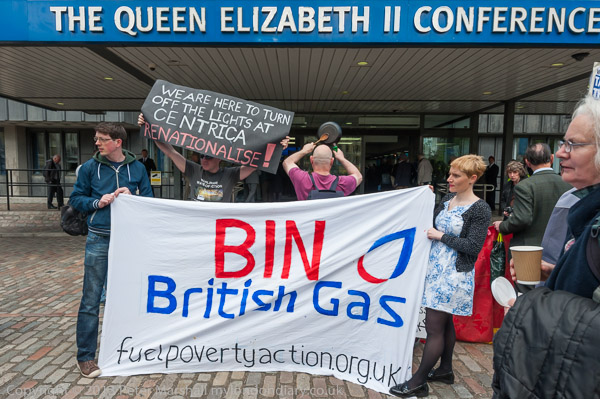
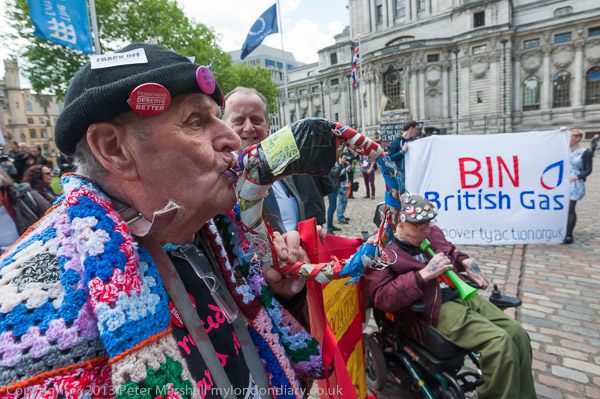
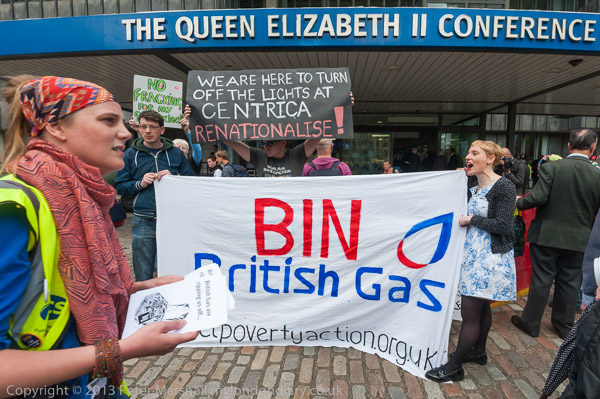
So I was very much in sympathy with the protesters outside the AGM of Centrica, the parent company of British Gas, a protest organised by Fuel Poverty Action, with their slogan ‘Bin British Gas’. You can read more about their aims and the protest, along with many more pictures in Bin British Gas on My London Diary.

Another picture taken with the same lens, the Nikon 16-35mm f4 from more or less exactly the same position, but at a slightly wider focal length has a big difference. The name of the conference centre is straight on the upper image (at 22mm) but rather definitely curved in the lower 16mm version.

There is more distortion at the wider focal length, but the real reason for the difference in these pictures is that I have used the lens profile in Lightroom to correct the 22mm version. I could have done so for the lower image but chose not to. I have changed my default setting for the profile in Lightroom to use 0% distortion correction, because for most subjects the distortion actually gives a slightly less distorted looking effect at the edges of the pictures, avoiding a little of the problems of rectilinear correction on extreme wide angles. It also gives a slightly wider field of view, with any correction of distortion always resulting in a little loss at the edges.

The distortion is only generally a problem with architectural subjects and other things with obvious straight lines – as in this case. But correcting it would have lost more than I was willing to lose of the hair of the woman at the left of the image.

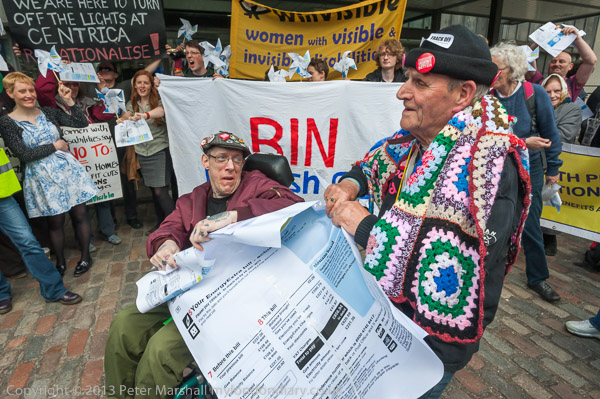
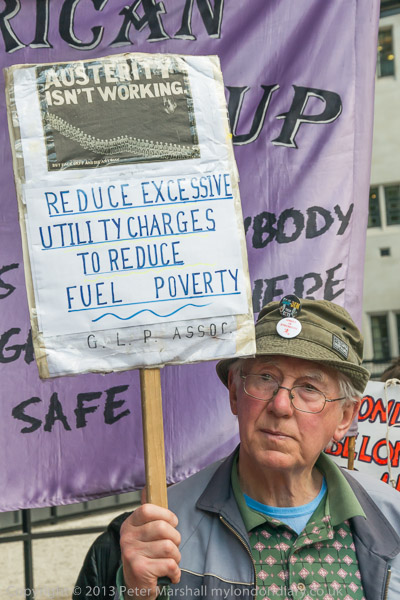
Pensioners are among those hardest hit by high fuel prices – many now find themselves having to chose between keeping warm or eating. I took several pictures of one of them holding a hand-made placard. I think this was the best, though probably it would be improved by a little crop at top and right, but you can see another version on My London Diary. Obviously the face and placard were both important, but less obviously I think his hand gripping the placard adds to the picture. As (almost) always the images are un-posed.

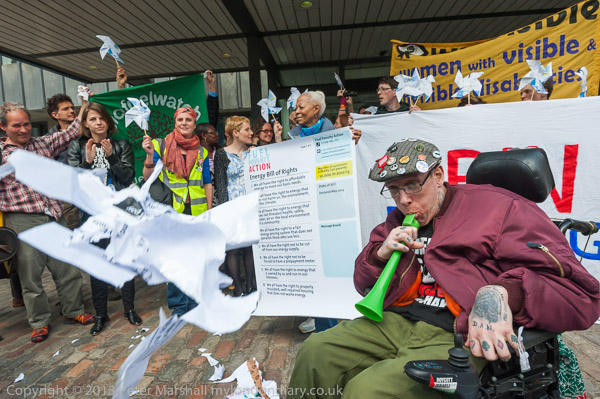
I rather like the picture of a giant gas bill being torn up, though it proved a little difficult for them to tear. I was surrounded by other photographers when taking this and the other pictures and unable to move much, but I’d chosen a fairly good position – thinking in advance what was likely to happen and where and getting there before the others.

They did eventually tear it to pieces and then Terry who was right next to me threw them into the air. It was a picture with no second chances and I would have liked more of the pieces to have been the other way round – ideally to show the British Gas logo.  But you have to take what you can.

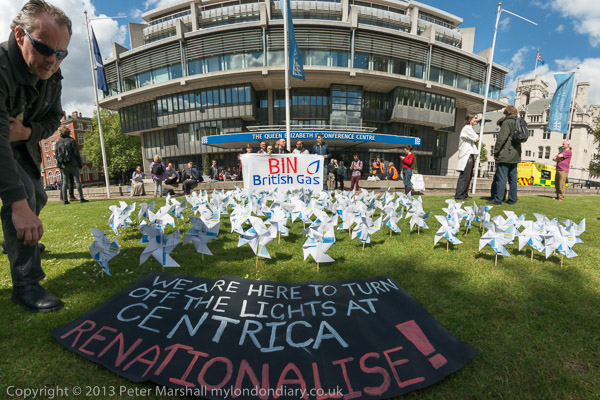
The finale of the protest was the planting of windmills made from folded gas bills in the grass in front of the centre. They had been planning to do so on Parliament Square in front of the House of Commons which might have made a better picture, though the ‘Heritage Wardens’ there would certainly have objected.  There were supposed to have been 100 of them, but quite a few didn’t get planted

Along with the other photographers present (and we did get in each other’s way a little) I had a few minutes to think about how to take this, and to try different ideas, with focal lengths from 16mm fisheye to 70-300mm telephoto. There are four different views at Bin British Gas but this is my favourite.

Continue reading Bin British Gas

Derbyshire & Sheffield

It was good to get away from London for a weekend, although it was a bit rushed and not entirely relaxing.  But I was able to spend a little time using the Fuji XE1 and both the 14mm and 18-55mm and 8mm Samyang lenses.

The 14mm was great for some group pictures (not included on My London Diary) at the conference weekend I was taking part in, and also a good lens for some landscape pictures. But I did have one problem with it. It’s largely a matter of getting familiar with the system and I haven’t yet used it enough to spot the things that are likely to go wrong.

The focus ring on the lens has a nice feature which switches from manual to autofocus by a short push towards or away from the camera body, which also hides and displays the distance scale. It works very well and needs just enough of a push that you are unlikely to change it accidentally. It’s also very clear in the viewfinder when you are using autofocus, with a green rectangle or cross (depending on whether you are using single or continuous autofocus) appearing, But I still managed to make quite a few exposures with the lens in the manual position while I thought I was using autofocus.  I’ve now set it to make a beep as well – something I really find annoying, but perhaps I need it.

It’s particularly annoying, because one of the things I really like about the Fuji-X cameras is how quiet they are compared to the Nikons. The other great thing is of course their light weight and small size.

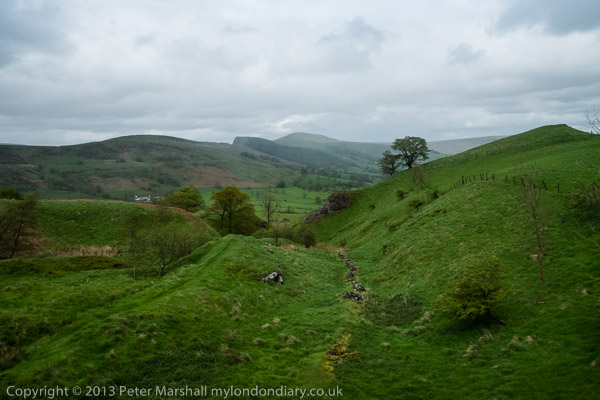
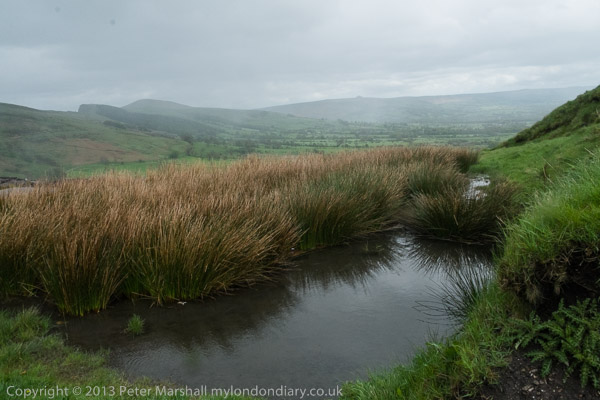
On the Saturday afternoon we had a free couple of hours and left hoping to get to the top of Mam Tor, which was not a huge distance from the conference centre. I took the XE1, three lenses and several spare batteries, the camera on a strap around my neck, a lens in each of the large pockets on left and right of my waterproof and one on the camera, the plastic bag of batteries in an inside pocket. No need for a camera bag.

It was raining on and off, and it was no problem to tuck the XE1 inside my jacket to keep it dry, unlike the Nikon with the 16-35mm which is just a little bulky to fit comfortably. I could easily have fitted in a second Fuji body and lens too.

There were a few times when I would have liked something longer than the 18-55mm (27-83mm equivalent); the extra reach of the Nikon DX 18-105mm is really a big advantage. But it does weigh 35% more and takes a 67mm filter compared to 58mm for the Fuji – despite the Fuji being almost a stop faster. Optically I don’t think there is much to choose between the two; despite the Nikon being one of the cheapest Nikon lenses it is a better performer than many in their range, though the build quality is perhaps best illustrated by the fact that I’m now on my third example. The Fuji certainly seems better built and is more expensive when bought alone.

Even more expensive at around £750 is the new Fuji XF18-135mmF3.5-5.6 R LM OIS WR which is roughly the same size as the Nikon, but looks pretty impressive – and is weather resistant with a claim that it offers the equivalent of 5 stops of image stabilization to partly make up for its rather low maximum aperture.

But for most purposes you can use a bit of ‘digital magnification’, cropping the 4896 x 3264 pixels (16.3 Mp) to say 3264 x 2176 – still 7Mp – and enough for most purposes. That makes the 55mm into a respectable 127mm telephoto. I think I’ll stick with the 18-55mm, though possibly getting a longer zoom for those few occasions where length is vital. Of course it’s actually the wider end that interests me more, and the Fuji 10-24mm f4 R OIS is a rather lighter alternative to the Nikon 16-35mm, so may well be my next lens purchase.

Unfortunately we ran out of time and had to turn back before the final climb to the top of Mam Tor, but at least is wasn’t because of exhaustion at carrying a heavy camera bag. But it does still take longer to take photographs on Fuji than on Nikon, and there were still some of those frustrating moments where the quickest way to bring the camera into life was to turn it off and then on again. If only Fuji could follow Nikon’s example, where the lightest touch on the release instantly brings the camera back into picture-making mode.

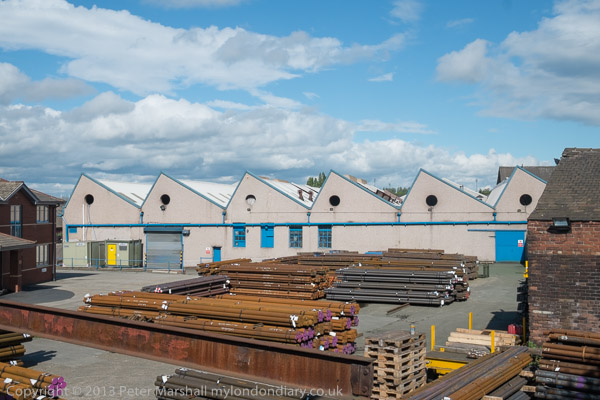
There is still some steel in Sheffield

I had a second chance to use the camera on the way home, where I was able to take a more leisurely walk around a little of central Sheffield as we had an hour to two to wait for a train. With a little more time to take care over what I (and the Fuji EX1) was doing there were no problems with the photographs.

More pictures from Derbyshire and Sheffield.

Continue reading Derbyshire & Sheffield

My Panoramic Adventures

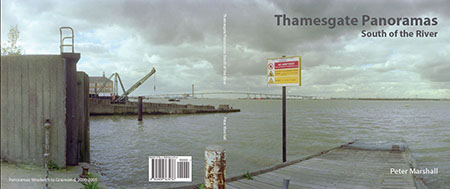
For those who missed my speech at the opening of City Streets and River Paths, here is the complete text – less only the few words of introduction and thanks and with a few minor corrections and some stage directions and explanations.  None of the illustrations to this post are included in the show, except for the image on the cover of Thamesgate Panoramas.
My Adventures in Panoramic Photography

My adventures in panoramic photography began close to the River Thames, the subject of my pictures in this show. Aged 16 I piled into the back of a battered van with nine other senior sea scouts and we took off for a tour of Scotland. On Skye, four of us were sent to walk across the Cuillins; in exact opposition to Baden Powell’s motto ‘Be Prepared’ we had little suitable equipment and only the sketchiest of maps.

We waded through bogs and streams, up hills and valleys, got soaked by torrential rain and exhausted.  We had a long detour as our expected crossing point of a major river was under feet of flood water, but finally on the second day when the sun had come out I climbed a ridge and saw in front of me a magnificent wide vista, across some lower peaks and down into a hidden valley were the sun was glinting on a lake.

I reached for my camera – there were still a few pictures remaining on the roll of 20 I’d bought for the fortnight holiday – raised it to my eye and immediately was hit by a deep frustration. The scene was this wide but the picture could only show this. (You will have to imagine my wide flung arms narrowing to a ‘standard’ lens view.)

The next day, coming down what are perhaps Britain’s most impressive mountains to our rendezvous I had another unforgettable panoramic experience. Losing my footing I found myself taking a vertical route through the air, the splendid view whirling upside-down for a second or two – and then – oblivion! (My right fist slammed into my left palm. In the event I came round to the anxious face of one of my companions who had climbed down more slowly to the small patch of grass on which I had landed, the large rucksack on my back cushioning the fall – but on the opening night I left my cliff hanging.)

The history of panoramic photography is virtually as old as photography itself; in the Daguerreotype era two approaches emerged that are still with us. The first was simply to take several pictures and display them side by side, and the second – patented in Austria in 1843 – involved some ingenious clockwork rotating a lens to scan the image onto a curved plate behind.

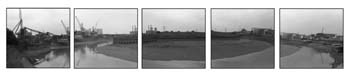
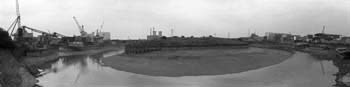
Around 20 years later I made my first successful panorama by the first method, once again close to the Thames, on Bow Creek – the final few tidal miles of the River Lea, where the river turns through around 360 degrees in the first of two great bends – squeezing through a gap in fencing on Orchard Place and taking a careful series of five overlapping images as I rotated the camera on the tripod. Back home I printed these, trimmed them carefully and mounted them in a line. They almost fitted together (and the sixth on the right or the set I had to discard.)


Years later I combined them digitally with this result for an article on making panoramas

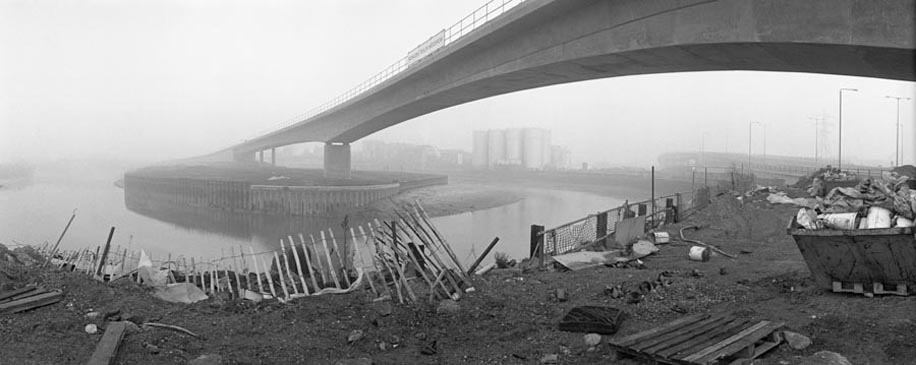
Ten years later still I read the book on Panoramic Photography, with its rules on making panoramas most of which I still regularly break today, but it did inspire me to save for a Japanese clockwork swing lens camera.  Soon after I bought it I went back to Bow Creek, now a building site, and left sunny central London to find the area covered in dense fog. I could hardly see the viaduct of the Dockland Light Railway being constructed that I’d come to photograph.

Shivering with cold I almost went home without taking a picture, but I’d made a long journey so thought I’d take one or two. You can see a little more in the pictures than I remember and one of them became one of my best-known pictures – and the first of mine to somehow mysteriously enter the Museum of London collection.


Docklands Light Railway crosses the River Lea, 1992

My earlier pictures on the wall from around 2000 came partly as a result of the breakup of the Russian Empire. This and the digital revolution that created the World Wide Web enabled me to order a Russian-made miniature swing-lens camera through the Ukrainian black market. It arrived as a ‘gift’ in plain brown-paper wrapping for £170 – probably the only camera I’ve ever bought that I’ve dared to tell my wife how much it cost.

Its big advantage was that – unlike the expensive Japanese model which made do with two arrows marked on its top to define its view – it had a viewfinder. During exposure the lens swings round through around a third of a circle, recording a roughly 120 degree view onto normal 35mm film, though the frames are the same width as a medium format camera.  Some of the pictures from the show are in this book

(At this point in my speech I should have held up Thamesgate Panoramas, but realised I’d left it in my bag on the other side of the room. But I did go and get the next exhibit below.)

Digital photography now means everyone has a camera or phone that can take panoramas, though for seamless high quality results you still need to take a series of images and stitch them together with specialised software. With Mireille Galinou’s help I was able to gain entry to a number of gardens behind those high private walls of St John’s Wood and make a series of images for this book and a show at the arts café she then ran. The image on the back of the book (and now 36 inches wide on my stairs) was produced from around a dozen separate exposures, which between them contained one full dog and around half a dozen dog parts as the animal rushed around the garden.

Since then I’ve been working on a method of making high quality digital panoramas with a single digital exposure, and the second half dozen of my images, from the Thames path in Battersea and Wandsworth were produced in this way.

Of course, in the end the techniques are just a means to an end, and it is the pictures that matter. I hope you enjoy them – and thanks for coming.

____________________________________________________________

I wrote a little about the methods I was trying to make digital panoramas in January’s post New Panoramas, which included the above image. Unfortunately I got the maths slightly wrong and failed to display it correctly in the post. Here is how it should have looked (and it now does, as I’ve just corrected the original.)

The recent images in the current show are all roughly 42 x 22 cm, giving them an aspect ratio of 1.9 which I’m now using as a standard. It would have been good to print them larger – and at 300 dpi they would print around 75cm wide and would still look good larger still. But the costs of printing and framing dictated a smaller size for this show. Perhaps in the future I’ll be able to show more images and larger images, but for the moment you can see more more or less as I make them in various posts on My London Diary.

Continue reading My Panoramic Adventures