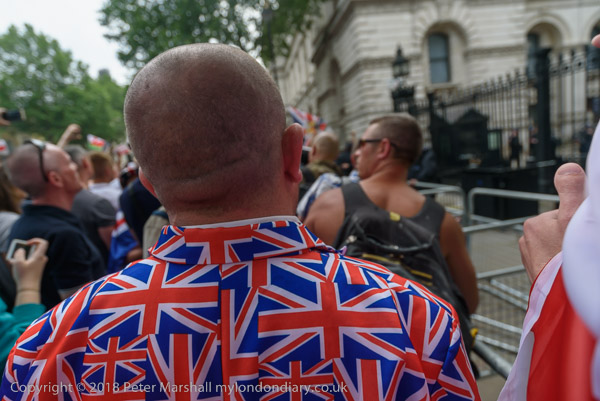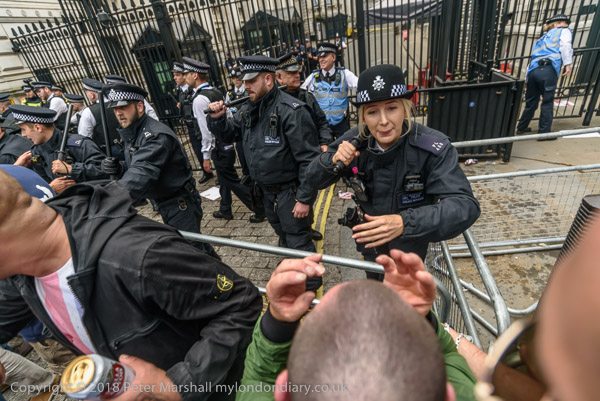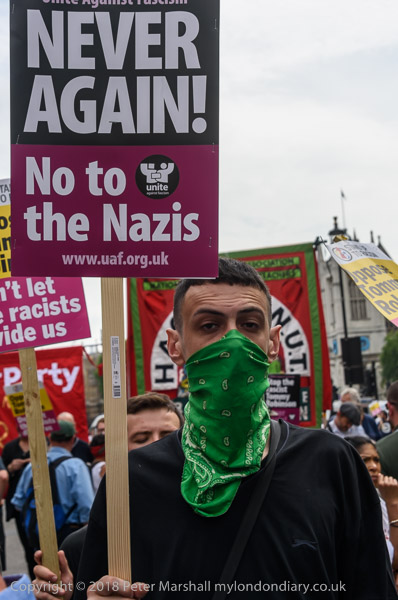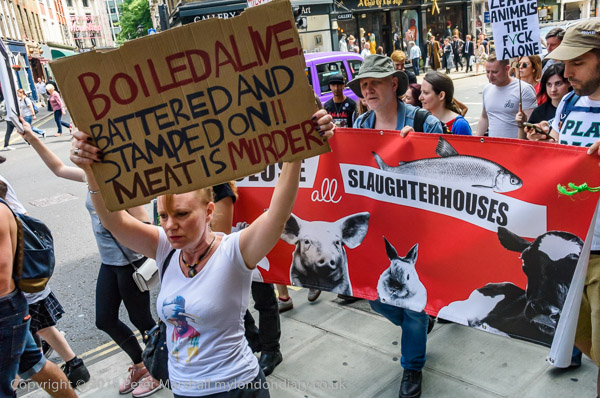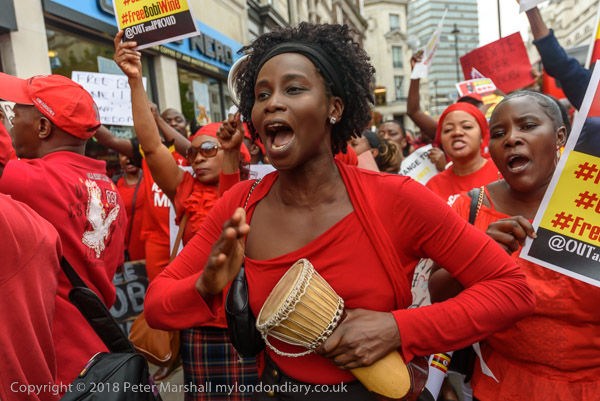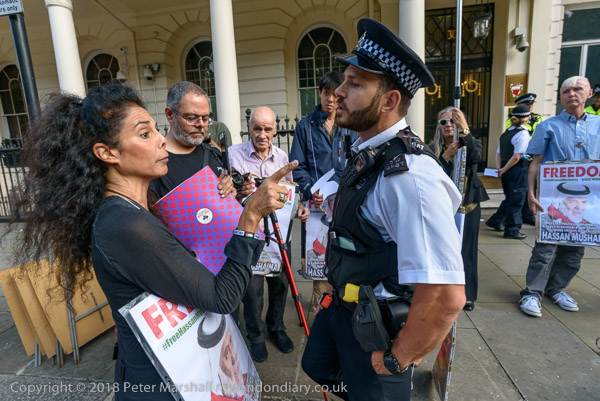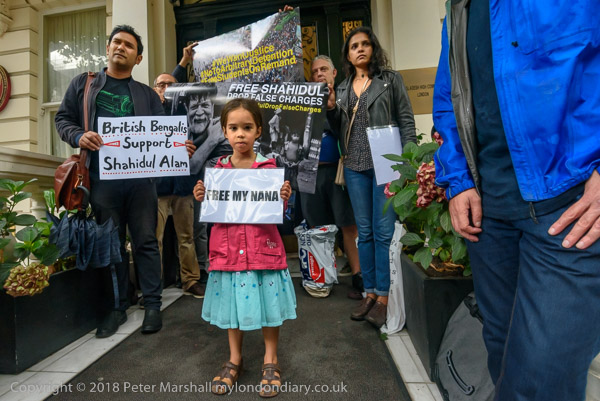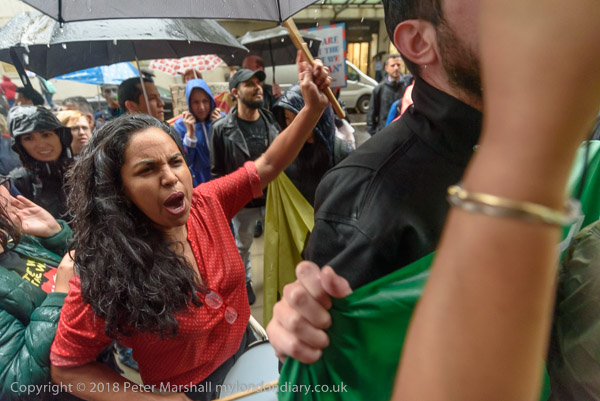
Al Quds Day 2018

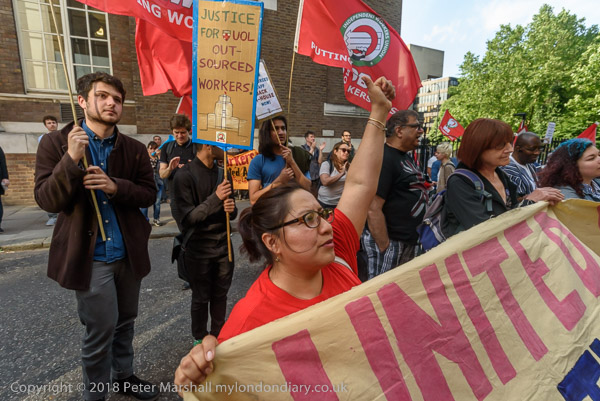
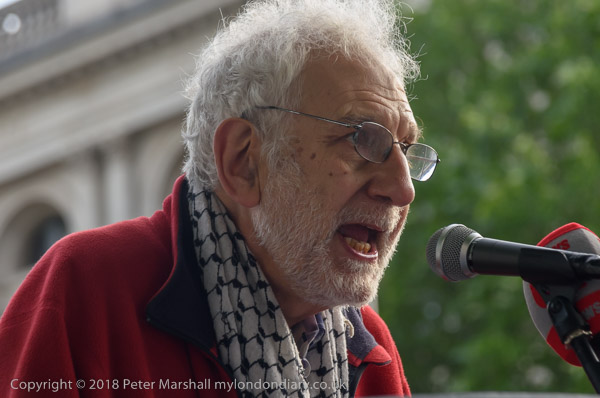
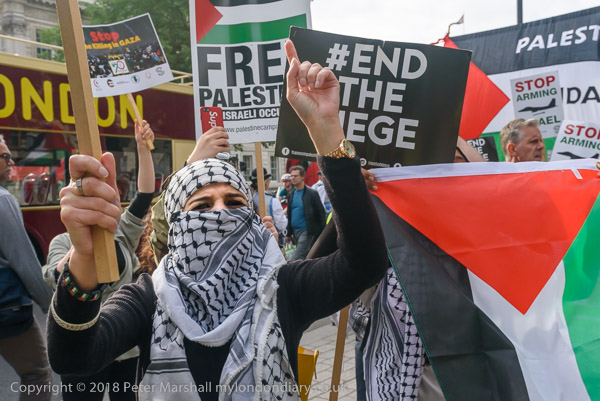
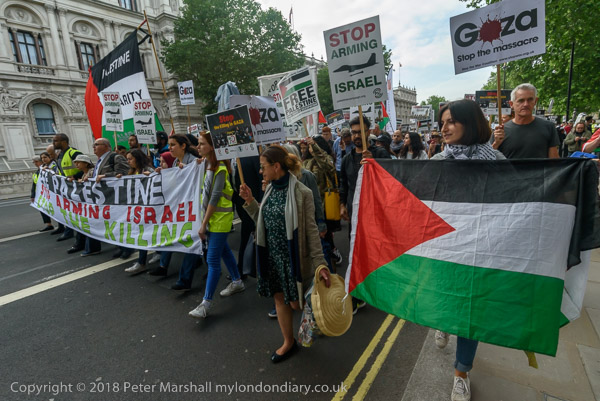
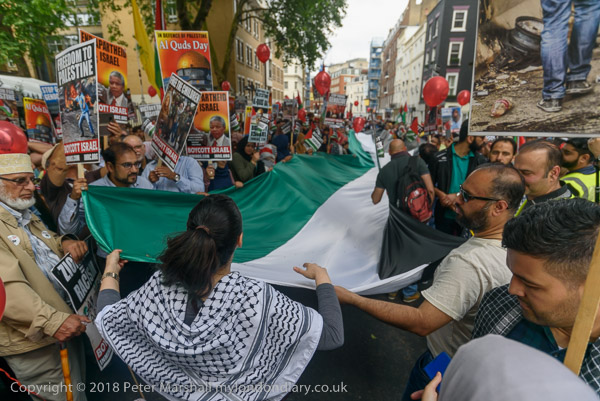
Al Quds Day in London has long aroused opposition. Al Quds (Jerusalem) Day was inaugurated by the leader of the 1979 Iranian Revolution and founder of its Islamic republic Ayatollah Khomeini. The Shia religious leader and his successors have many opponents, and the Iranian regime has brutally oppressed all opposition, imprisoning, torturing and hanging many over the years. Allegations have been made that this event in London and some groups supporting it are funded by Iran. Organisations supporting it include 5Pillars, Ahl-al-Bait Society, Ahlulbayt Islamic Mission, Balfour Declaration Centenary Campaign, Campaign Against Criminalising Communities, Football Against Apartheid, Hastings PSC, InMinds, Jews for Boycotting Israeli Goods, Lebanese Community in Scotland, Neturei Karta UK, Palestine Democratic Forum, Scottish Forum for Middle East and North Africa and the Scottish Palestine Solidarity Campaign, as well as a number of mosques throughout the UK.
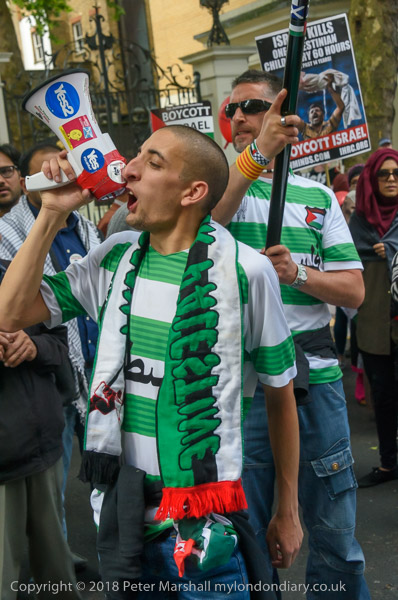
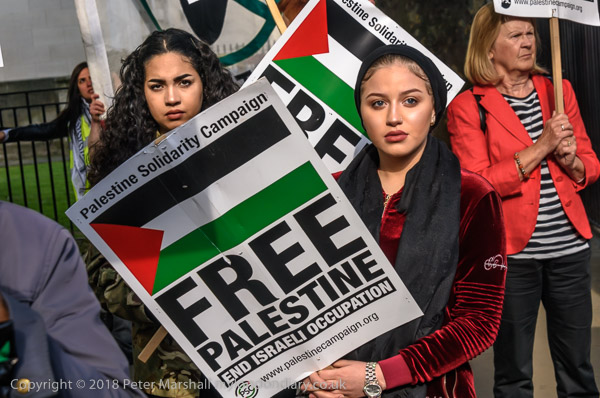
Al Quds Day calls for the freedom of the oppressed everywhere (except in Iran) but particularly in Jerusalem and Palestine, and the most numerous and persistent of those who oppose the march are Zionists and other supporters of Israel, who include some right-wing Christian groups. Some just hold counter-protests, while others try to physically attack the march, standing or sitting on the road to prevent its movement and insulting those taking part. Sometimes things are thrown at the marchers who include many with young children.
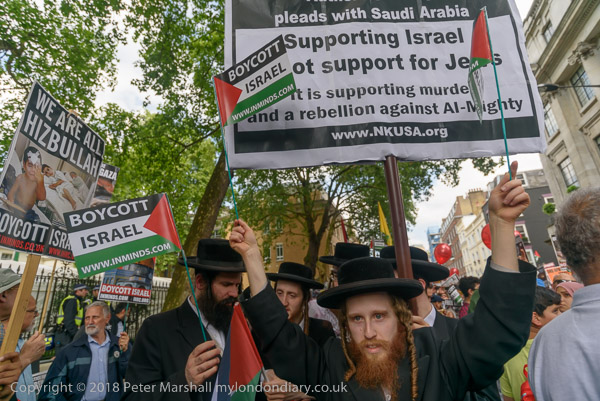
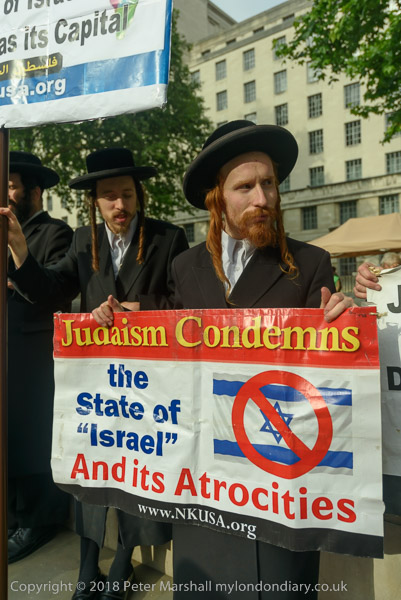
Those who oppose it call it anti-semitic, though the organisers go to  great lengths to explain they are not against Jews, but against Israeli government and the occupation of Palestine. Though the marchers are predominantly Muslim, they always include a significant number of Jews opposed to the occupation of Palestine, and at the front of the march alongside the Imams are a group of ultra-orthodox Jews who support the Palestinian cause, arguing that the idea of a Jewish state goes against their religion.
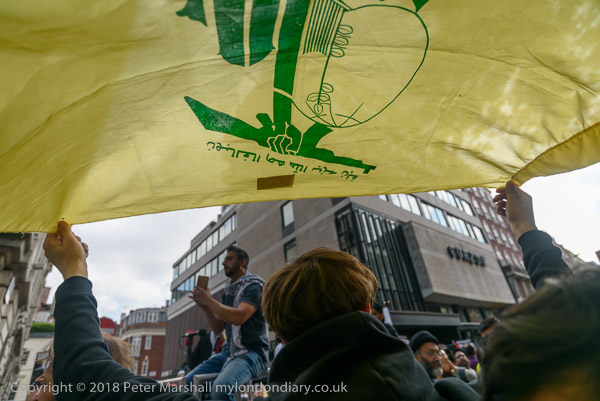
At least in recent years when I have photographed the event, the march organisers have been careful to ensure there are no anti-Semitic posters or placards on the march, and that any Hezbollah flags which may be present are in support of the political party which is a part of the Lebanese parliament, and not of the banned military wing. There were relatively few of them, a handful in a march of well over a thousand, and few pictures of the Ayatollah.

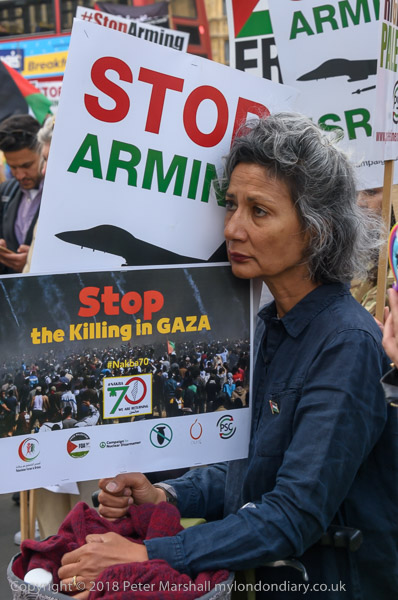
The event does call for freedom for Palestine, and condemns violence against Palestinians by the Israeli state and the increasing takeover of Palestinian land by Israel. It points out the different treatment of Palestinians, calling Israel an Apartheid state because of the different laws and their application, different roads etc., a charge made even more clear by the recent Jewish nationality law, and it supports the Boycott, Divestment, Sanctions (BDS) movement which works to end international support for Israel’s oppression of Palestinians and pressure Israel to comply with international law.

The event started with a static protest at the rear of the Saudi Arabian embassy in Mayfair, and was against the demonisation campaign led by the Israeli government and the ongoing murders by Israeli troops of innocent Palestinian protestors in the Gaza Strip commemorating 70 years since Israel was formed on expropriated Palestinian land.
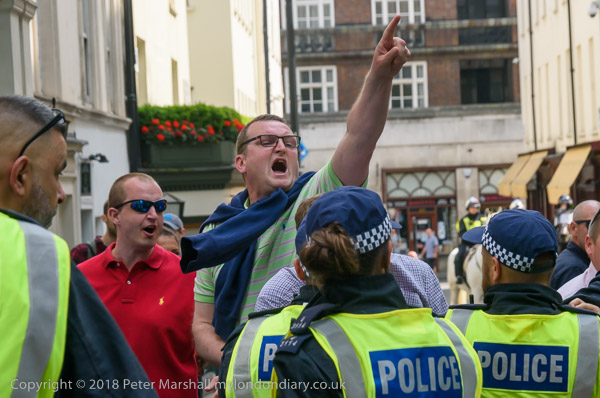
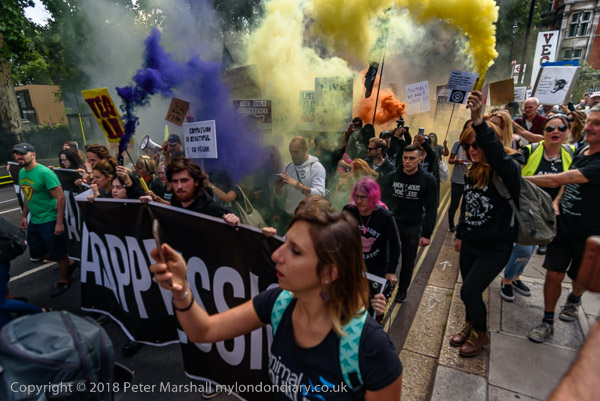
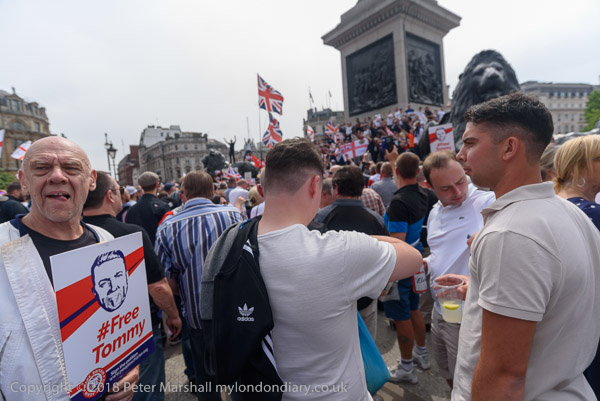
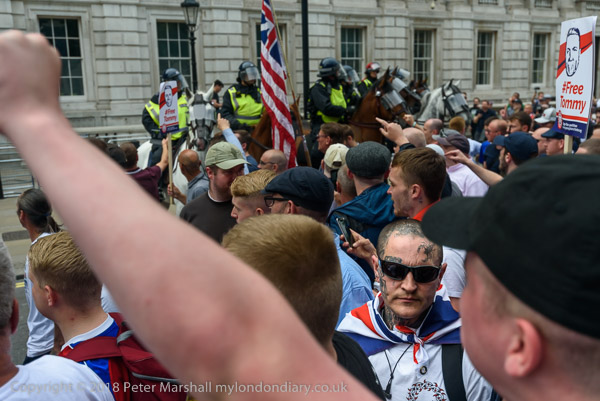
The usual Zionists who attack the procession were joined by football hooligans who had been at the ‘Free Tommy’ rally the previous day, but a huge police operation kept most of the far away from the rally. A short distance along the street was a more orderly protest by the Zionist Federation, staying behind its barriers and watched by police between the two groups.

I had to leave after a couple of hours and before the rally ended with a march to Westminster, which apparently saw further attempts at disruption by Zionists and football hooligans which were quickly stopped by police. The Al Quds day event itself is attended by many families and resists provocations.

Al Quds (Jerusalem) Day
Zionists protest against AlQuds Day

______________________________________________________

There are no adverts on this site and it receives no sponsorship, and I like to keep it that way. But it does take a considerable amount of my time and thought, and if you enjoy reading it, a small donation – perhaps the cost of a beer – would be appreciated.

My London Diary : London Photos : Hull : River Lea/Lee Valley : London’s Industrial Heritage

All photographs on this and my other sites, unless otherwise stated, are taken by and copyright of Peter Marshall, and are available for reproduction or can be bought as prints.

To order prints or reproduce images

________________________________________________________
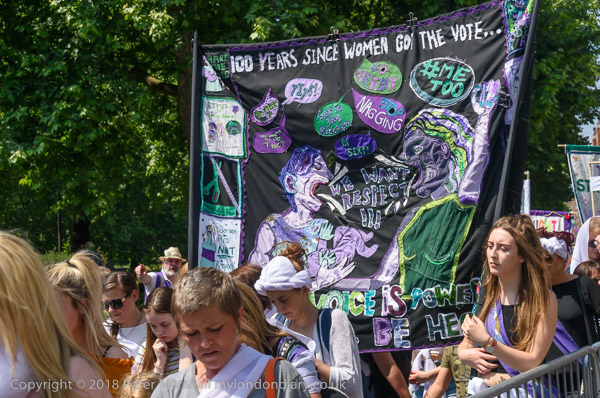
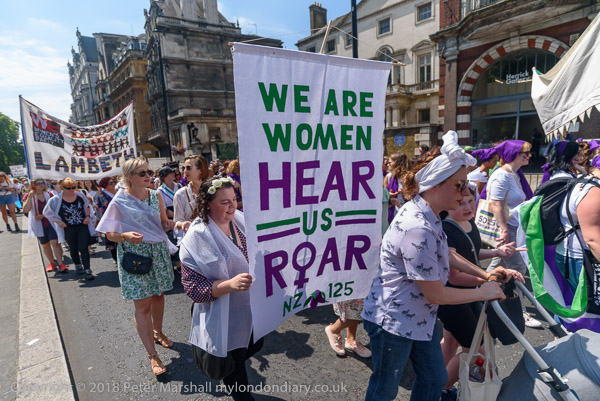
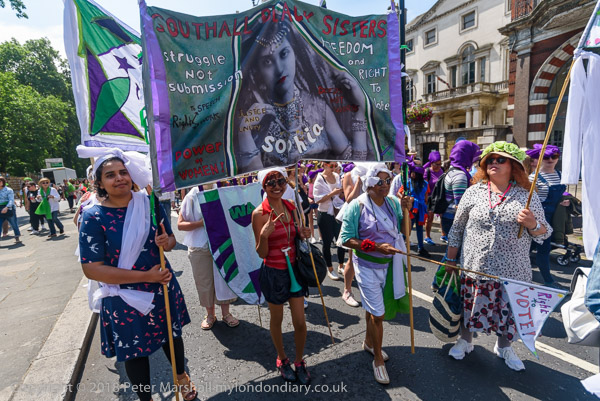
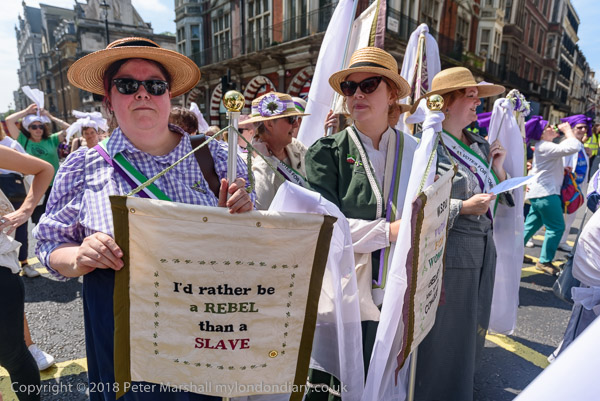
Votes for Women

Women ratepayers had been able to vote in local elections since 1869, and the UK Representation of the People Act 1918 gave the vote in parliamentary elections to around 8.4 million women in the UK, though they had to be over 30 and have some property. Later that year another act gave women the right to be elected to Parliament.

But many women were still unable to vote. My old French teacher back in the late 1950s used occasionally to remind the class “They gave women the vote in 1928, and ever since the country has been going to the dogs”, and he was at least right about the date, because it was only in 1928 that all women over 21 gained the right to vote in exactly the same way as men.

So while many celebrated the centenary of women getting the vote this year, it was some ten years premature. An important step in the right of women to vote, but not the final one, though most of those unable to vote after 1918 would have been working class women, and relatively few working class women were taking much of a role in this year’s celebrations.

The same 1918 act gave my father, then serving in the Royal Airforce (though I don’t think his feet ever left the ground) a vote, but my mother had to wait another ten years before she was eligible. Despite our origins she was a staunch Conservative supporter, always putting up a poster for them in our front room window. My parents never talked about politics, but I’m convinced he cancelled her out by voting Labour and I think was influenced by the ideas of William Morris who died three years before he was born.

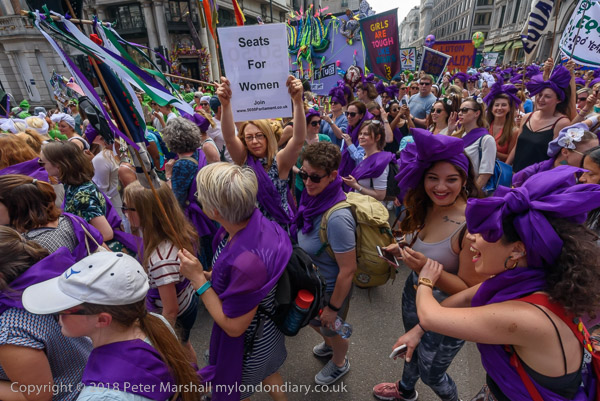
Those taking part in the protest were given purple, white and green scarves to make up three strands of a huge procession in the suffragette colours through London, though this will only really have been truly visible to those photographers in helicopters or illegally flying drones. I’m sure there will have been some, though I’ve not seen the pictures.

I went to Marble Arch which the details posted on-line about the protest had given as a starting point, only to find the march was really starting from Hyde Park Corner, which was mildly annoying, and meant I had to run down Park Lane, still managing to just miss the start. I went a little way down Piccadilly and photographed the three streams, purple and white on one carriageway and green on the other, coming along, moving forward slowly to Piccadilly Circus, where I stayed until the end of the march had passed. I had to leave the protest there as another event I wanted to cover was taking place in Mayfair.

100 years of Votes for Women

______________________________________________________

There are no adverts on this site and it receives no sponsorship, and I like to keep it that way. But it does take a considerable amount of my time and thought, and if you enjoy reading it, a small donation – perhaps the cost of a beer – would be appreciated.

My London Diary : London Photos : Hull : River Lea/Lee Valley : London’s Industrial Heritage

All photographs on this and my other sites, unless otherwise stated, are taken by and copyright of Peter Marshall, and are available for reproduction or can be bought as prints.

To order prints or reproduce images

________________________________________________________
Free Tommy

I have heard Tommy Robinson speak on a number of occasions, photographing protests by the English Defence League and other groups and have found him clearly racist and to incite hatred of Muslims.  In 2011 when leader of the EDL he said:

“Every single Muslim watching this… You had better understand that we have built a network from one end of this country to the other end, and we will not tolerate it, and the Islamic community will feel the full force of the English Defence League if we see any of our citizens killed, maimed or hurt on British soil ever again.”

He took the name Tommy Robinson from a leading member of the Luton Town  “Men In Gear” (MIG) football hooligans which he was involved with in his teenage years.

After serving an apprenticeship in aircraft engineering he lost his job when sentenced to 12 months for a drunken assault on an off-duty police officer. In 2004 he joined the fascist far-right British National Party, from which he says he resigned after a year. In 2009 he was a part of the United Peoples of Luton, founded to oppose Muslim groups who demonstrated against a march by British troops returning from Afghanistan, and later in the year founded the English Defence League as its leader. In 2011 he was convicted for using “threatening, abusive or insulting behaviour” in a fight he is said to have led between football hooligans the previous year, shouting “EDL till I die”.

Robinson was arrested again in September 2011 for breach of bail conditions when attending an EDL protest in Tower Hamlets and held in jail for several days; at the end of the month he was given a suspended 12 week sentence for common assault on another EDL member at a rally in April in Blackburn. In November 2011 he was arrested in Zurich, jailed for three days and fined for a protest at FIFA’s HQ against a ban on the English team wearing poppies. In 2012 he pleaded guilty to using another person’s passport to enter the US and was sentenced to 10 months’ imprisonment at the start of 2013.

Business activities caught up with him in 2012 over a mortgage fraud and in January 2014 he was sentenced to 18 months imprisonment. Released on licence he broke the terms and was recalled to jail, being finally released in November 2014. After his period of licence ended in July 2015 he returned to protest with the UK offshoot of the German anti-Immigratyion and anti-Islam Pegida.

In May 2017, while working as a correspondent for the far-right Canandian anti-Islam web site ‘The Rebel Media’ he was arrested outside Canterbury Crown Court for for contempt of court after he attempted to take video of the defendants in a child rape case. The judge, giving him a suspended sentence, commented:

“this is not about free speech, not about the freedom of the press, nor about legitimate journalism, and not about political correctness. It is about justice and ensuring that a trial can be carried out justly and fairly, it’s about being innocent until proven guilty. It is about preserving the integrity of the jury to continue without people being intimidated or being affected by irresponsible and inaccurate ‘reporting’, if that’s what it was”

Robinson was arrested for the same reasons outside a court in Leeds where a grooming trial was taking place in May 2018. Admitting the offence he was sentenced to 10 months in prison, with the suspended sentence of 3 months from Canterbury being added on. At the start of August he was released pending an appeal which was partially succesful and a new trial has been ordered.

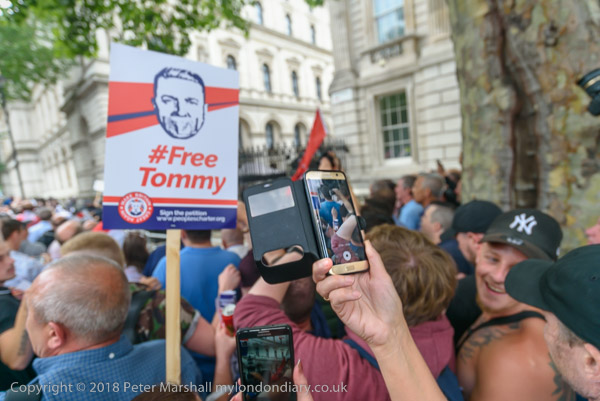
Robinson’s supporters were up in arms about his arrest, claiming he had been arrested for “free speech” which was clearly not the case. They set up a petition that quickly got half a million signatures and attracted much support worldwide for his release, largely through misleading reporting by far-right news sites.

This protest was allegedly in favour of free speech, something which hardly stands up well with the assaults that protesters made on journalists trying to report it, including myself. Two men made a determined effort to steal my cameras when I was photographing near Downing St, but I managed to twist away from them. They continued their attacks until I was able to reach police standing outside Downing St, when they disappeared into the crowd. I was shaken but not injured by the attacks, and shortly after left the protest to photograph a counter-protest further down Whitehall.

More pictures:
Free Tommy Robinson
Anti-fascists oppose Free Tommy protest

______________________________________________________

There are no adverts on this site and it receives no sponsorship, and I like to keep it that way. But it does take a considerable amount of my time and thought, and if you enjoy reading it, a small donation – perhaps the cost of a beer – would be appreciated.

My London Diary : London Photos : Hull : River Lea/Lee Valley : London’s Industrial Heritage

All photographs on this and my other sites, unless otherwise stated, are taken by and copyright of Peter Marshall, and are available for reproduction or can be bought as prints.

To order prints or reproduce images

________________________________________________________
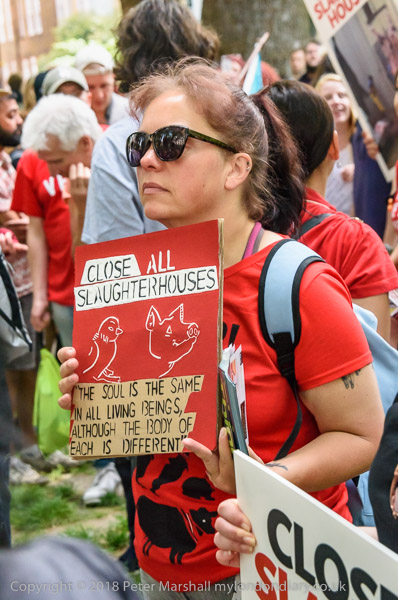
Vegans march to close slaughterhouses

Veganism is a good thing, though not I think for everybody. But as many of us have said for years – and I think I first did myself speaking in public in the early 1970s – for the future of our planet we need to eat less meat, something which has this week been reinforced by the UN’s Intergovernmental Panel on Climate Change report, which clearly argues the case for this, though not suggesting we should entirely stop eating meat and diary products.

Meat production can be a very wasteful business, with large amounts of edible grains being fed to animals, particularly cattle, who use it to produce large volumes of greenhouse gas methane and only relative small amounts of meat. But animals can be raised on grass or other plant material which humans cannot directly eat, and on land which is unsuitable for growing useful crops, and traditional agriculture makes use of manure to keep soil fertile, avoiding the use of chemical fertilisers that degrade the soil, as well as also having a carbon cost in their production.

The industrial agriculture that includes much of the more horrific cruelty against animals is also largely the most polluting. Banning these practices would cut the environmental impact of farming, and also greatly raise the price of meat and eggs, and also reduce the consumption of these, though unfortunately impacting disproportionally on those on lower incomes who currently rely on cheap food produced by intensive farming.

One of the advantages of a vegetarian diet is that it can be extremely cheap, and the changes that are making vegetarian and vegan foods more culturally acceptable, and convincing us all that a healthy meal does not necessarily include meat or fish (or even eggs and cheese) are welcome. Though the kind of recipes with twenty obscure ingredients and hours of cooking time which seem to be promoted in the heavier press give vegetarianism an elitist ethos. We need simple tasty meals that are easily and quickly prepared as well as veggie fast-food chains. Chips are now almost always vegetarian, and go well with patties (and chip spice), cheese and onion pies, pickles, and more.

While we still eat meat we need to kill animals. Obviously slaughterhouses should be better run and avoid any unnecessary cruelty, and there is no excuse for some of the practices that are shown in pictures and videos. When I was young my aunt had chickens in a run behind the house, and as well as eating the eggs, there came a time when we ate the chickens. I think their deaths were quick and humane, and there was no unnecessary suffering, although clearly their lives were brought to an end (as, just as clearly they had begun) by our human choice rather than their own volition.

So I have mixed feelings about veganism. While I’m entirely happy with people choosing to be vegan – as many of my friends have – I think its universal adoption would be enviromentally disastrous. And though I’m against cruelty to animals there is something about the evangelical zeal displayed in some of the posters at the event which make me uneasy. Nature isn’t vegan, which many species preying on others, and many clearly carniverous. Evolution has I think (some argue the point) made us omnivores and, while I eat relatively little meat compared with most, I do so with a clear conscience.

Close all Slaughterhouses
______________________________________________________

There are no adverts on this site and it receives no sponsorship, and I like to keep it that way. But it does take a considerable amount of my time and thought, and if you enjoy reading it, a small donation – perhaps the cost of a beer – would be appreciated.

My London Diary : London Photos : Hull : River Lea/Lee Valley : London’s Industrial Heritage

All photographs on this and my other sites, unless otherwise stated, are taken by and copyright of Peter Marshall, and are available for reproduction or can be bought as prints.

To order prints or reproduce images

________________________________________________________
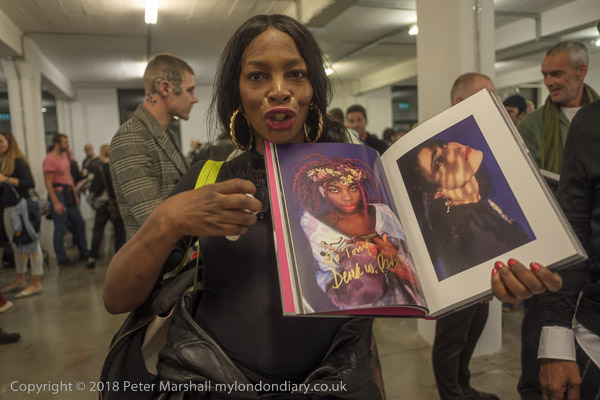
Derek Ridgers at Old Truman Brewery

20181004-d078

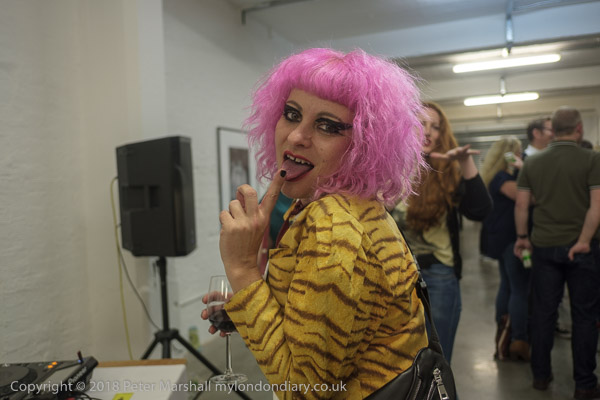
If you are in London this weekend, don’t miss the ‘pop-up show’ by Derek Ridgers at the Truman Brewery, only until Sunday. I went to the opening on Thursday evening and couldn’t resist taking a few pictures – some here but many more on Facebook.

20181004-d082

As well as some of the pictures of well-known pop stars he took for the New Musical Express and other newspapers and magazines, there are some of the powerful portraits of skinheads and others, noncommissioned work that is a part of his important documentary of youth culture back in the 1980s and 90s.

20181004-d115

I’ve mentioned before that Derek and I both belonged to a small group of photographers who met regularly in West London to criticize each others work, in a no-holds barred way that quickly sorted out a few weaker souls who came but couldn’t stand the heat. We organised a number of shows together at the Orleans Gallery in Twickenham and the Watermans Arts Centre in Brentford, inviting a number of other photographers to take part.

20181004-d102

Slightly fewer of the pictures than I had hoped for came out sharp, as somehow the Fuji seems to have ignored the exposure setting I made caerfully at the start at the session, telling it to use Auto-ISO from a minimum ISO400 up to ISO3200, with a minimum shutter speed of 1/200s.

20181004-d097

Although the settings appear to be made correctly, halfway through the evening the camera decided to work at ISO 200 and let the shutter speed drop as low as was needed, and I failed to notice the change.

Here are the details:

Fri 05 October 11-9pm
Sat 06 October 11-6pm
Sun 07 October 11-6pm

Curated by FAYE DOWLING  – Presented as part of ARTBLOCK at the Old Truman Brewery

The Derek Ridgers Pop Up celebrates the publication of the artists monograph ‘Derek Ridgers: Photographs’ published by Carpet Bombing Culture 28.09.18

A series of special limited editions prints – signed and numbered by Derek will be available throughout the event.

Old Truman Brewery, Brick Lane
G4 Gallery Space. Entrance at Ely’s Yard,
15 Hanbury Street. E1 6Q

More pictures on Facebook

______________________________________________________

There are no adverts on this site and it receives no sponsorship, and I like to keep it that way. But it does take a considerable amount of my time and thought, and if you enjoy reading it, a small donation – perhaps the cost of a beer – would be appreciated.

My London Diary : London Photos : Hull : River Lea/Lee Valley : London’s Industrial Heritage

All photographs on this and my other sites, unless otherwise stated, are taken by and copyright of Peter Marshall, and are available for reproduction or can be bought as prints.

To order prints or reproduce images

________________________________________________________
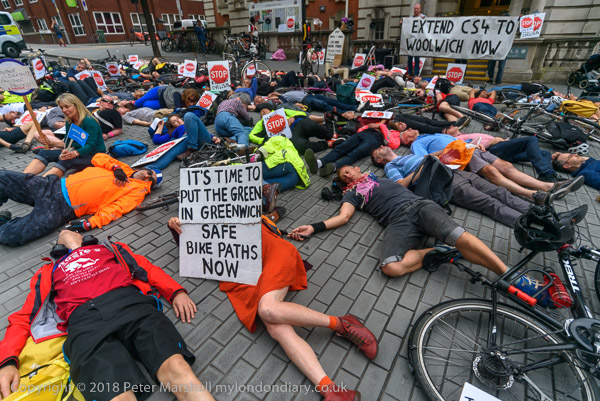
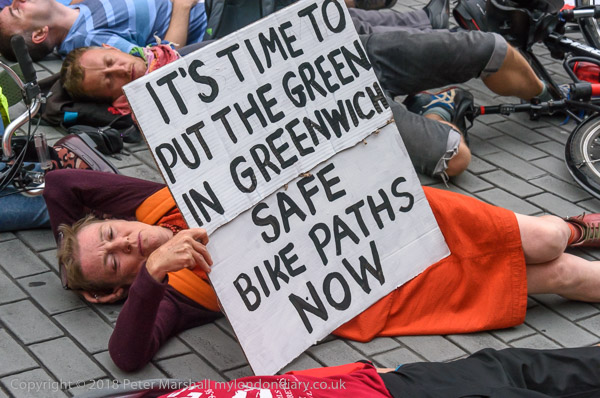
Put the Green in Greenwich

Though I’m not a Greenwich resident, I have taken an occasional interest in politics in this Labour-dominated council (currently 42 Labour and 9 Conservative councillors) because of various developments in the area where several of my friends live or lived.  One of my main projects in the 1990s was on the Greenwich Meridian in London (you can read more about it and see some picture on the Urban Landscapes site) which were for some years on a leading Greenwich site, and the borough has one of the best independent news sites, the 853 blog, which tirelessly comments on local matters and in particular the local council sheenanigans. As the blog claims, it really does do all the kinds of things that good local newspapers used to do, but most are now part of huge enterprises which largely regurgitate press releases and don’t employ local reporters with local knowledge and time to investigate.

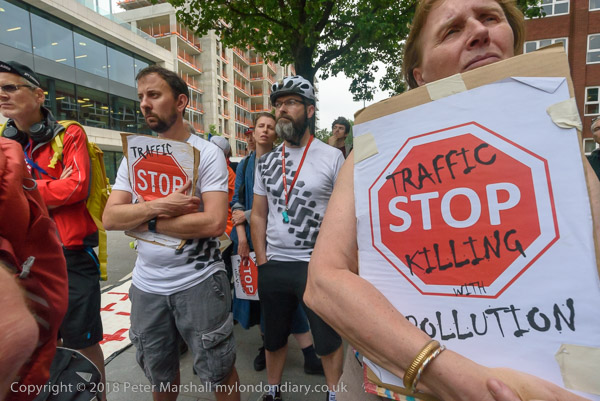
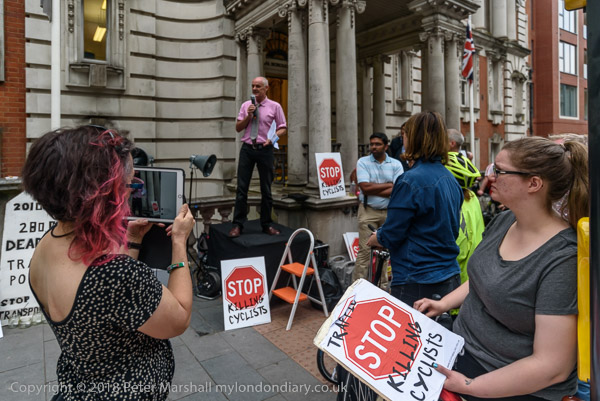
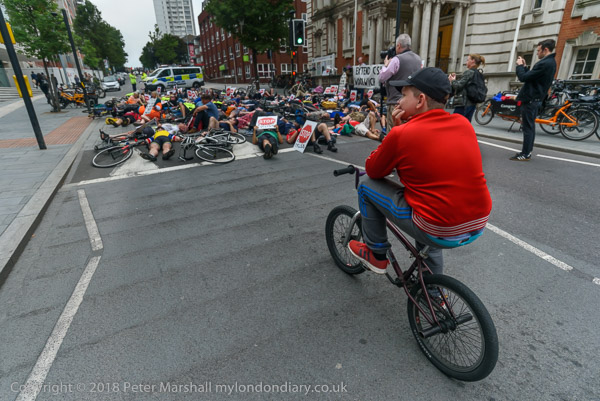
The protest outside Woolwich Town Hall (the HQ of the London Borough of Greenwich) in May by ‘Stop Killing Cyclists’ came after Edgaras Cepura was killed cycling around the junction of the A206 and the Blackwall Tunnel approach. Another cyclist, Adrianna Skrzypiec, had been killed at the same place nine years earlier, and there have been many other incidents when lorries and cars have hit cyclists in the area, notoriously unsafe for cycling.

It should by now have become a part of Cycle Superhighway 4, which was planned to go all the way from Woolwich through Greenwich to London Bridge, but pressure from Greenwich Council led to all of its route in the borough being axed, and when complete it will now end at the borough border. I’m reliably informed that the reason plans for Greenwich were dropped was a matter the then Woolwich council leader’s personal antipathy to Boris Johnson’s former cycling commissioner Andrew Gilligan, and the council certainly gained a deserved reputation for dragging its feet over any provision for safe cycling.

We still haven’t got CS4, and last week the third cyclist was killed this year on the route where it should be. Under Boris Johnson, TfL (Transport for London) in 2014 published a list of 33 places for which “substantial cycle infrastructure improvements” were needed, including the A206/Blackwall roundabout, but nothing has been done there. London Mayor Sadiq Khan has said that the plans still exist and they still have a date when they should take place, although the junction was left out of a more recent list from TfL.

Safer cycling isn’t just about saving the lives of cyclists. It also makes a great improvement to the health of the city’s population. The danger faced by cyclists on city roads is a major factor stopping many from using their bikes in the city, when for many journeys it would be the most convenient way to go. Making roads safer means more people use bikes, reducing the pollution – mainly from traffic – that causes almost 10,000 early deaths a year in London, as well as huge suffering from lung diseases. For those who take to their bikes, the exercise makes them healthier, both improving their lives and saving public funds. More people on bikes means fewer cars on the road, reducing congestion. Everyone wins.

I think changes in Greenwich Council have given it a more positive attitude towards cycling, and hope they will now be urging Sadiq Khan to get on with the job. But he has as yet shown little drive towards making the streets safer, and many other councils are still dragging their feet over the issue. Protests such as this by ‘Stop Killing Cyclists’ are vital to get things moving and add great support to the work of other organisations including the London Cycling Campaign.

Coming up shortly on October 13th 2018 is the ‘National Funeral for the Unknown Cyclist-Pedal on UK Parliament‘ organised by Stop Killing Cyclists, with rides from various parts in and around London organised by London Cycling Campaign members, IBikeLondonThurrock Cycling Campaign and others to Lincoln’s Inn Fields from where the funeral procession will proceed to Parliament Square for a rally and die-in.

______________________________________________________

There are no adverts on this site and it receives no sponsorship, and I like to keep it that way. But it does take a considerable amount of my time and thought, and if you enjoy reading it, a small donation – perhaps the cost of a beer – would be appreciated.

My London Diary : London Photos : Hull : River Lea/Lee Valley : London’s Industrial Heritage

All photographs on this and my other sites, unless otherwise stated, are taken by and copyright of Peter Marshall, and are available for reproduction or can be bought as prints.

To order prints or reproduce images

________________________________________________________

Senate House protest

Senate House at the University of London, a tall slab designed by Charles Holden as the start of a larger scheme for the university in the 1930s continues the Orwell theme of a few posts ago.

During the Second World War, the building was taken over as the Ministry of Information. George Orwell’s wife Eileen worked there and it was the inspiration for the Ministry of Truth in his ‘1984’, published four years after the war ended. (It also inspired Grahame Greene a few years earlier, writing his Ministry of Fear and the film version by Fritz Lang in 1944.) Somewhere inside that vast hulk was Room 101, though what happened there was prompted by Orwell’s experiences of long and tedious meetings in the Conference Room of another iconic 1930s builing, the BBC’s Broadcasting House.

Senate House is the administrative centre of London University, part of a block that extends along Malet St and to Steward House in Russell Square, and it is a location I’ve visited many times over the years, including for various conferences and while working as an assistant examiner.

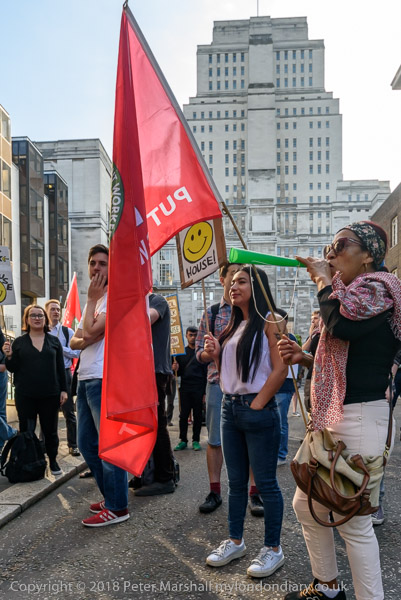
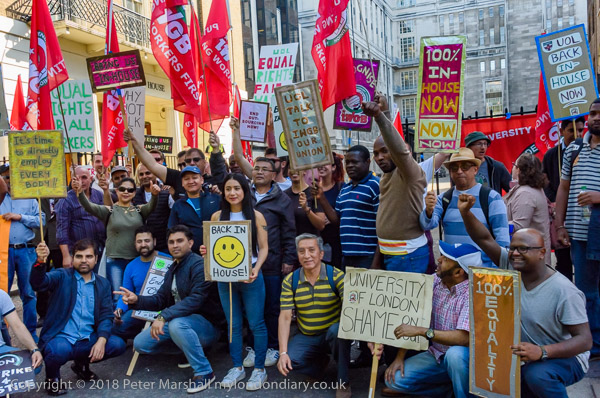
But my visits in recent years have been rather noisier, accompanied by cleaners and other low-paid workers, campaigning for a living wage, for decent conditions of service, and most recently to be brought back ‘in-house’, to be directly employed by the university rather than at the non-existent mercy of contracting companies, always out to squeeze maximum profit by exploiting them.

Slowly, slowly, all of these campaigns have reached a satisfactory conclusion. The University management know they have no leg to stand on and cannot support the way these companies treat their workers – and the members of the university – staff and students – let them know that they support the workers.

The delaying tactics continue – and it took the workers at SOAS next door to the Senate House ten years of protests to finally be brought back in house this year. The staff serving Senate House and the nearby University Halls – cleaners, porters, security etc – know they need to keep up the protests to keep the managment on its way to their goal.

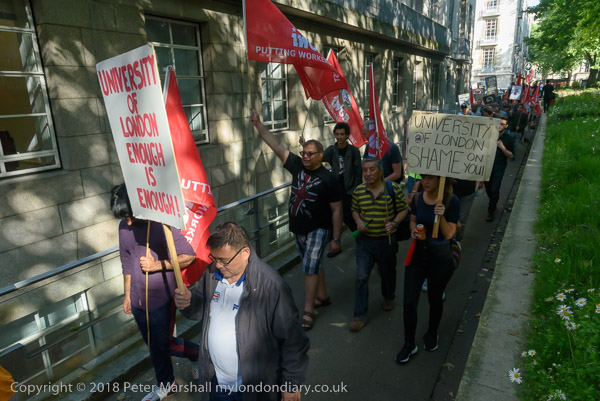
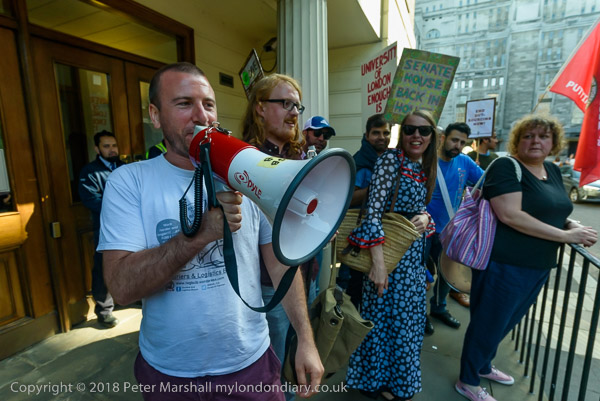
At this protest, the workers didn’t actually go inside Senate House, though the rattled the gates at the bottom of the block from both sides, and walked all around the building, blowing vuvzelas, speaking through a powerful megaphone and shouting slogans to make their presence felt. The University had employed extra security staff for the occasion as many of the usual secuirity officers were taking part in the protest which came at the end of a one-day strike by cleaners, porters, security officers, receptionists, gardeners, post room staff and audiovisual staff.

The event was organised by the IWGB (Independent Workers OF Great Britain) University of London Branch, and they were supported by other trade unionists, including some from United Voices of the World, SOAS Unison and the UCU, and by ‘Poetry on the Picket Line’. As at a many other workplaces, the management has failed to recognise the union to which most of the staff now belong, perferring to stick to old agreements with more traditional unions who have often done very little to support low paid workers and have lost credibility. As well as getting better conditions for the workers the IWGB and other grass roots unions are also fighting for union recognition and an end to discrimnation against union members and activists.

More pictures: University of London staff in-House now

______________________________________________________

There are no adverts on this site and it receives no sponsorship, and I like to keep it that way. But it does take a considerable amount of my time and thought, and if you enjoy reading it, a small donation – perhaps the cost of a beer – would be appreciated.

My London Diary : London Photos : Hull : River Lea/Lee Valley : London’s Industrial Heritage

All photographs on this and my other sites, unless otherwise stated, are taken by and copyright of Peter Marshall, and are available for reproduction or can be bought as prints.

To order prints or reproduce images

________________________________________________________
Protest condemns cold-blooded killing

Videos showing Israeli snipers in a carefully planned exercise shooting unarmed Palestinian protesters several hundred yards from the separation fence they were protesting against, including those clearly running away from it shocked the world. So I was not surprised to see a large crowd at the protest at Downing St, even though it was on a Monday evening, seldom the best time for demonstrations.

Nor was it any surprise that quite a few of those at the protest, including some of the speakers were Jewish, although the voices of those opposed to the Israeli government seldom get much time on our mass media, who often seem to accept the views of some Zionists that any criticism of Israel is anti-Semitic.

Before the Second World War, historians (including Jewish historians) tell  us that Zionism wasn’t particularly widely accepted among the Jewish community, and there are still those who condemn it on religious grounds as well as those who criticise the actions of the Israeli state on political and humanitarian grounds.

I’ve photographed many pro-Palestinian protests over the years, and almost all have included Jewish protesters, and the protesters have always been clear that the protests were against the actions of the Israeli state and Zionism and were not against Jews. When people have on a few occasions expressed anti-Semitic opinions it has always been challenged, and  has been made clear that these are not acceptable, and people have been asked to leave. But today – as on almost every such protest – there were no such views.

After speeches at Downing St, the protesters marched to protest in Old Palace Yard, inf front of Parliament. They were calling for and end to the killing and an end to UK arms sales to Israel.

Here there were more speeches, and those killed were remembered, with their names being read out. Among the Palestinians taking part in the protest were some holding up the keys to their family homes in Palestine, which they were forced to leave in 1948.

A few months earlier, some celebrated the 100th anniversary of the Balfour Declaration, which was important in paving the way for the setting up of a state of Israel:

Dear Lord Rothschild,

I have much pleasure in conveying to you. on behalf of His Majesty’s Government, the following declaration of sympathy with Jewish Zionist aspirations which has been submitted to, and approved by, the Cabinet

His Majesty’s Government view with favour the establishment in Palestine of a national home for the Jewish people, and will use their best endeavors to facilitate the achievement of this object, it being clearly understood that nothing shall be done which may prejudice the civil and religious rights of existing non-Jewish communities in Palestine or the rights and political status enjoyed by Jews in any other country.

I should be grateful if you would bring this declaration to the knowledge of the Zionist Federation.

Yours,

Arthur James Balfour

Unfortunately although the “national home for the Jewish people” has been established, the “the civil and religious rights of existing non-Jewish communities in Palestine”  have clearly been and continue to be subject to extreme prejudice. Including being shot for taking part in peaceful protest for those civil rights.

More pictures at: Free Palestine, Stop Arming Israel
______________________________________________________

There are no adverts on this site and it receives no sponsorship, and I like to keep it that way. But it does take a considerable amount of my time and thought, and if you enjoy reading it, a small donation – perhaps the cost of a beer – would be appreciated.

My London Diary : London Photos : Hull : River Lea/Lee Valley : London’s Industrial Heritage

All photographs on this and my other sites, unless otherwise stated, are taken by and copyright of Peter Marshall, and are available for reproduction or can be bought as prints.

To order prints or reproduce images

________________________________________________________
August 2018 complete

August was a rather different month. I was away for the first week, but have put my pictures from my visits to Hornsea and Manchester on this page, although they are clearly not London. I was away for another holiday at the very last day of the month, but those pictures will be posted with the rest from the holiday next September.

Things are usually quieter in London in August, as so many people are away on holiday. And I had a few days off for various reasons.

Aug 2018

Capital Ring: South Kenton to Hendon


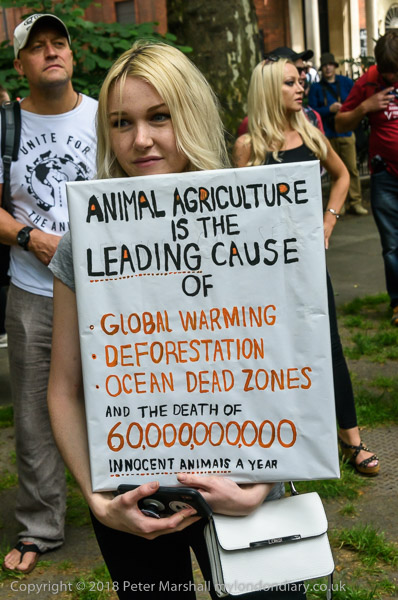
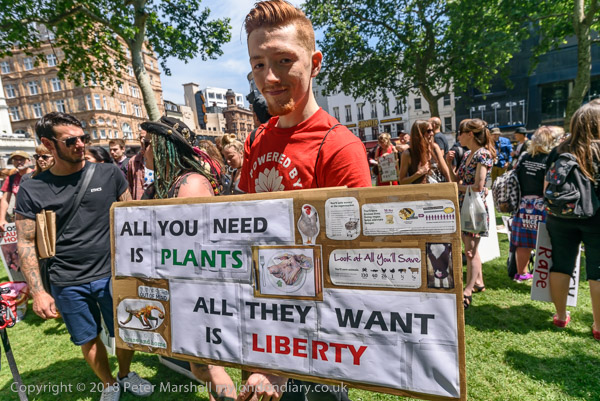
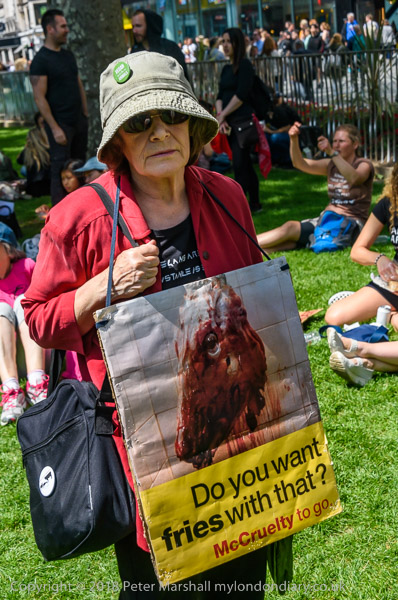
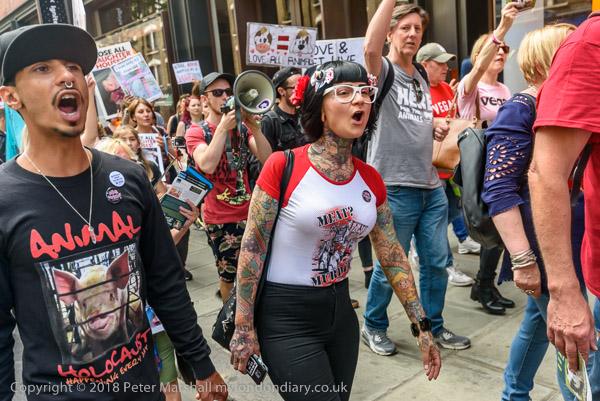
Thousands March for Animal Rights
Gunnersbury Park & Brentford


Free Bobi Wine – Ugandans protest
African Holocaust/Slave Trade protest
Vegan and Falun Gong protests
‘Stay Put’ monthly #Sewol protest
Justice for Marikana vigil
Free Lula – Brazilians for Democracy & Justice


Attack on Bahrain Embassy hunger striker
Release Bangladeshi opposition leader
Justice For Marikana – 6th Anniversary
Solidarity with Bookmarks


Free Shahidul Alam
Free Bahraini Human Rights activist


Ministry of Justice cleaners protest
Council cleaners demand a living wage
Protest murders in Colombia
Hiroshima Day

Manchester Visit 

Ancoats – Saturday
Central Manchester – Friday


St Johns Quarter
Oxford Road to Castlefields
Mersey Walk &, Fletcher Moss
Manchester to Didsbury
Manchester: Canal walk
To Stockport & Bramhall Hall
Science & Industry Museum
Manchester: City Centre – Thursday
Manchester: Oxford Road
Manchester: City Centre – Wednesday

Hornsea, Flambororough & Beverley

London Images

Remembering 1984

‘1984’ means different things to different people. For Google the the first 100 results are mainly about George Orwell’s novel, published in 1949 and set 35 years into the future largely in London in a post-nuclear war England which is in some respects rather chillingly close to what we now accept at normal.

Of course technology has advanced rather differently from that foreseen by Orwell, but we have come to take for granted something approaching the total surveillance, both from CCTV cameras in every shop and street and also through our willing participation in the internet and through the use of mobile phones and card-based payments. The tracking of our thoughts, movements and actions is less obvious than he envisaged but considerably more detailed, though largely carried out in the first instance by commercial organisations such as Google who monitor every click you make; though behind them sit the huge computers of GCHQ, sifting and analysing the whole of the internet. As you read this, Big Business as well as Big Brother is watching you!

But sinister though this sometimes seems, especially to some of my more tinfoil-hat wearing friends, it still represents more of a potential than an actual threat, used mainly to send us advertisements for things we have already bought.

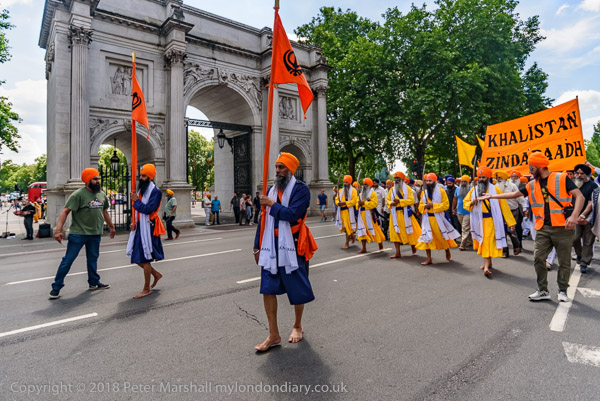
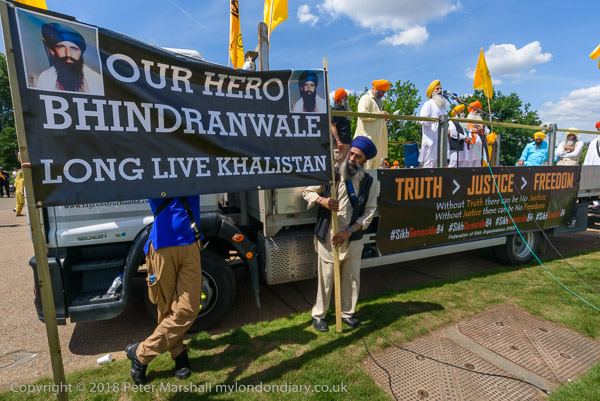
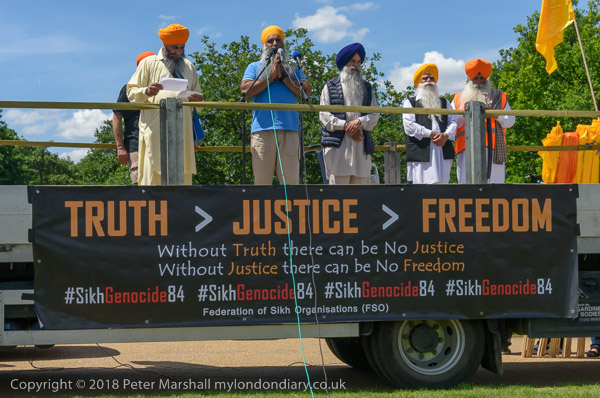
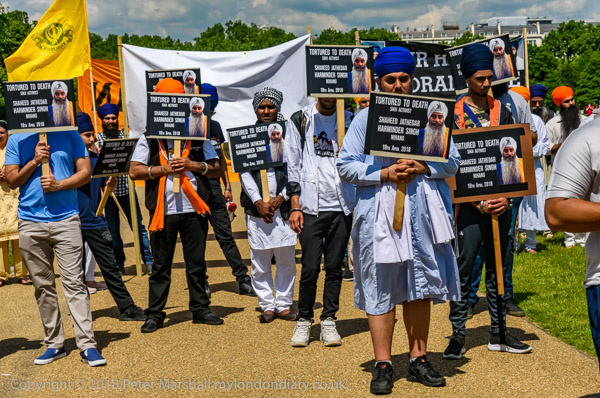
But for some people, 1984 has a different and far more sinister ring. Sikhs remember it as the year when India turned upon them, the Indian Army killing thousands attacking the Golden Temple complex and the Indian government spurring on mobs to continue the carnage after the assassination of Indira Ghandi at the end of October that year. The ‘Sikh Genocide’ which began at Amritsar was the second massacre in that city, the first being in 1919 when the British Indian Army opened fire on an peacefull protest in the Jallianwala Bagh Garden close to the Golden Temple, a key event in the rise of Indian nationalism that eventually led to independence and partition.

That partition of the Indian subcontinent by the colonial power at independence in 1947 was bound to result in a bad deal for the Sikhs, who were a small minority in the country and had no region in which they were a majority. They trusted the Indian National Congress and its promised more than those of the Muslims, but few of those promises were fulfilled. There are some problems for which there is no satisfactory solution and India in the 1940s was certainly one of them, though many would argue that better solutions could have been found. And given the current domination of India by Hindu nationalists, along with the long term problems of Pakistan, Bangladesh and Kashmir, it might be difficult to argue that Britain did much of a job back then.

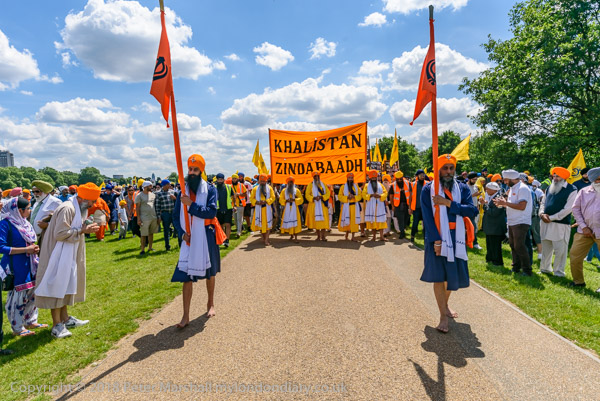
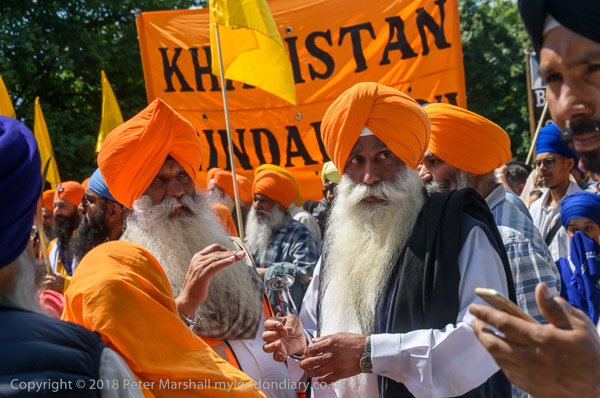
Though history is history and can’t be changed, it continues to reverberate, and the events of 1984 remain a vital issue for many Sikhs, including many who were not even born 34 years ago. This annual march has sometimes attracted the attention of the UK police, keen to crack down on the support for Babbar Khalsa, an international group which, according to Wikipedia, “wants to establish an independent country for Sikh religion called Khalistan, and uses bombings, kidnappings and murders to accomplish their goals” and is banned as a terrorist organisation in India, Canada, the EU, the UK, USA and Japan.

Of course many in the UK who support the foundation of Khalistan are against terrorism, and though there were speakers and banners calling for Khalistan this does not imply support for Babbar Khalsa and their activities in India or elsewhere.

The march, with a large banner, ‘Khalistan Zindabaahd’, began by getting lost, failing to turn right as it left Hyde Park, led as usual by the standard bearers and ths five Khalsa with swords raised representing the ‘Five Blessed Ones’, who clearly had not been informed of the details of the route. The police who would normally have led them had not arrived to do so (those government cuts have meant much less policing of most protests) and the processsion ended up going around Marble Arch and then returning into Hyde Park to wait for the police to arrive and guide them. I think those leading the protest had come from Birmingham and were unfamiliar with the area.

Eventually the march made a second start, going down Park Lane with the police in attendance, and I left them as they turned onto Piccadilly to march down towards Trafalgar Square for a rally.

______________________________________________________
There are no adverts on this site and it receives no sponsorship, and I like to keep it that way. But it does take a considerable amount of my time and thought, and if you enjoy reading it, a small donation – perhaps the cost of a beer – would be appreciated.

My London Diary : London Photos : Hull : River Lea/Lee Valley : London’s Industrial Heritage

All photographs on this and my other sites, unless otherwise stated, are taken by and copyright of Peter Marshall, and are available for reproduction or can be bought as prints.

To order prints or reproduce images

________________________________________________________