St Patrick comes to London

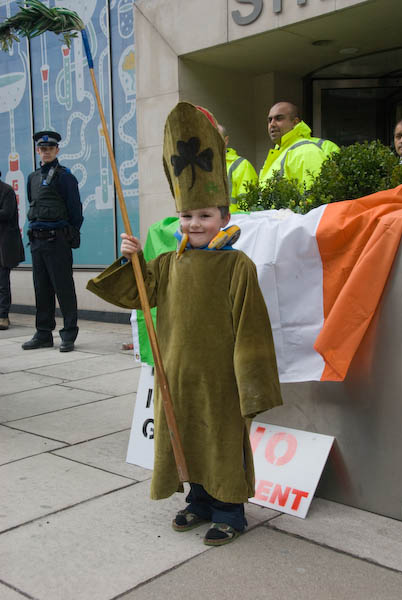
St Patrick outside Shell HQ

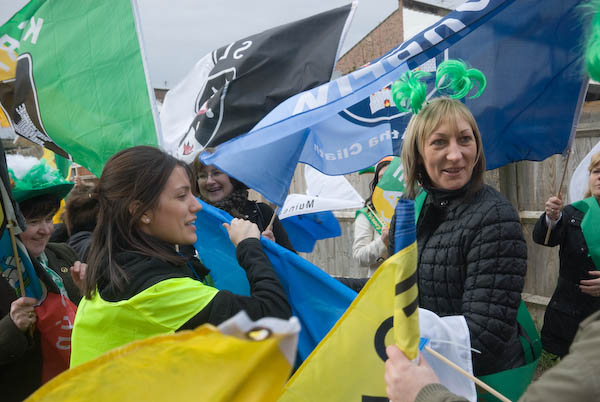
St Patrick came to London, bringing with him a rather large pipeline, which his friends from environmental and social justice movement Gluaiseacht tried to take into the Shell HQ near Waterloo.

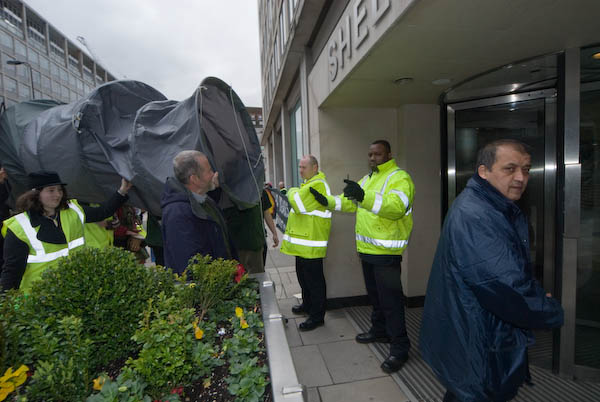
Pipeline at Shell HQ

Shell have the major share in the Corrib Gas Project in Mayo, Ireland, given away at a bargain price by the Irish government, and the associated high pressure pipeline and refinery will pollute the local countryside. Around half the Irish protesters were from Mayo, and they brought the pipeline to Shell’s HQ to remind them, in the words of one of the many songs sung during the protest, ‘Shell Sells Suicide’, that “they forgot about the will of the people, and the people of Mayo say “No, no, no, no, no, no, no… ” There was music and dancing too, and despite a chill wind around those drearily Soviet-style blocks of the Waterloo steppes it felt good, as you can I think see from the pictures.

Brent St Patrick’s Day Parade

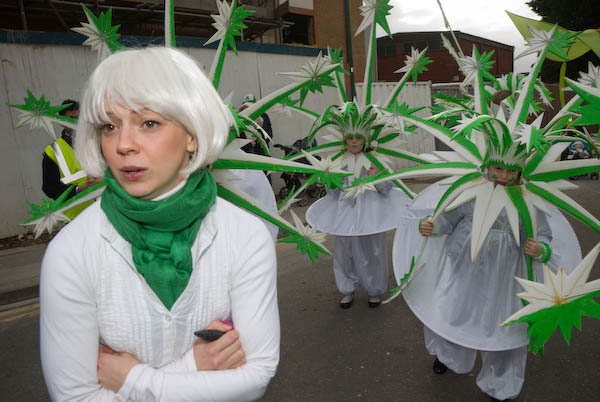
Another St Patrick, slightly older, was at Willesden Green for the Brent St Patrick’s Day Parade later in the day, and you can see his picture on My London Diary along with others from the event. I have to admit I enjoyed photographing the women at the event more than the saint, and here are a few of them – more of course on MLD.

Brent St Pat's Day Parade
Sorting out the Irish county flags
Brent St Pat's Parade
Waiting for the start of the parade
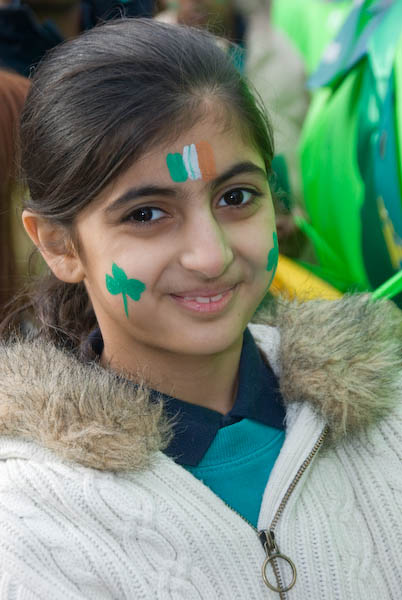
Brent - Celebrating difference

I think this last image says something about one of London’s most culturally diverse Boroughs, which celebrates Diwali, Eid and other festivals as well as St Patrick’s Day.

Tibetans protest in London

Looking at the work by some of the great Magnum war photographers makes me realise more strongly than ever that I’m not cut out to be a war photographer. Cowardice is one reason, though anyone who doesn’t have a healthy dose of this in their make-up is perhaps unlikely to survive long. But I think that perhaps I’m rather to timid a guy for the job, and, as I got a reminder on Monday, too ready to panic under pressure.

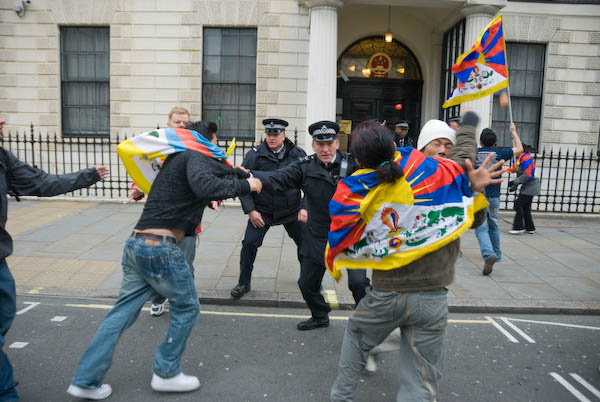
I was photographing the Tibetan protest opposite the Chinese Embassy, timed to coincide with the Chinese government ultimatum to Lhasa protesters to give themselves up or face serious reprisals (whereas one suspects that anyone who did give themselves up would simply be beaten up, tortured, imprisoned and quite likely shot.)

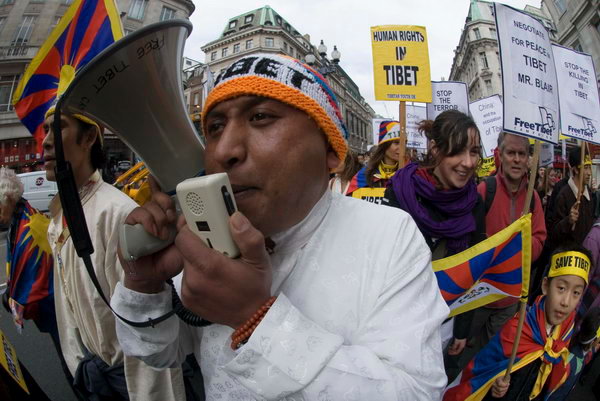
I’d arrived rather late, having been taking pictures at Willesden Green and suffering a slight delay on the underground, so had missed the silence at 4pm but it probably wouldn’t have made a good photograph. It was certainly a very noisy even by the time I arrived, and I spent quite a while mingling with the demonstrators shouting at the embassy across the road, photographing with both a semi-fisheye and the ultra-wide end of the 12-24mm.

Where I wanted to be – and along with other photographers really needed to be was in the empty area just in front of the line of barriers in front of the protest. But that nice empty traffic-free area was being guarded by 3 policemen with orders not to let the press in, though I did sneak a couple of images from close to both ends.

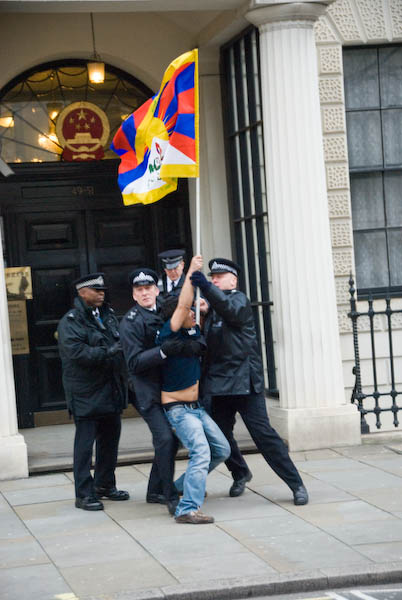
Police like to keep things simple. Nice neat lines, two sides – cops and robbers , or in this case, cops and protesters. Despite those nice “agreed guidelines”, photographers are just a nuisance. I was just wondering whether to make a complaint to the officer in charge or just go home (it was around 5pm, the light was beginning to fail, and I’d had a long day, so the latter seemed preferable as although I think we should complain on principle, in practice it never gets you anywhere) when a Tibetan guy with a flag rushed across the road in front of me and made across the road for the door of the Chinese Embassy.

Tibetan Flag at Chinese Embassy

So of course I rushed after him, and got a shot – if from a little too far away – of him waving the flag as he was stopped by the four officers on duty. ISO 800, 1/125 at f4.8 – wide open – at 60mm (90mm equiv) on the 18-200. Almost sharp too.

Behind me I were other Tibetan youths who had knocked down the barriers and followed him, and I was able to get into better position as police and stewards tried to stop them.

Tibetans rush towards the Embassy

This is wide open at 18mm (27mm equiv), and 1/125 again, and sharp enough to read both officers’ shoulder numbers, and the little motion blur probably improves it.

There were a few decent frames in the chaos that followed, but looking back though the whole shoot I seem to have made too many exposures at the wrong time, got far too much camera shake (though of course some caused by being pushed in the crowd) and taken far too little thought. In a word, panic.

Fortunately there was enough left to make a decent story, or at least I think so – you can see it in My London Diary.

Of course other photographers also panic and get things wrong, though they may have considerably better reason to do so. Robert Capa on that D-Day beach had an incredible hail of unfriendly kinetic activity inches above his head, and its hardly surprising he didn’t raise it too much. I often wonder quite how much of the distress that lifts those images out of the norms of photojournalistic syntax into their powerful expressionism was the result of a quaking photographer rather than of the melting admiration of the unfortunate darkroom technician. When ‘LIFE‘ ran them in 1944 with a caption about the ‘immense excitement‘ of the moment making ‘photographer Capa move his camera and blur‘ it quite likely told a little of the story, although ‘excitement’ was probably not the most appropriate word. Capa after all was human, and like most of the rest of us would have been shit scared.

Stop the Wars

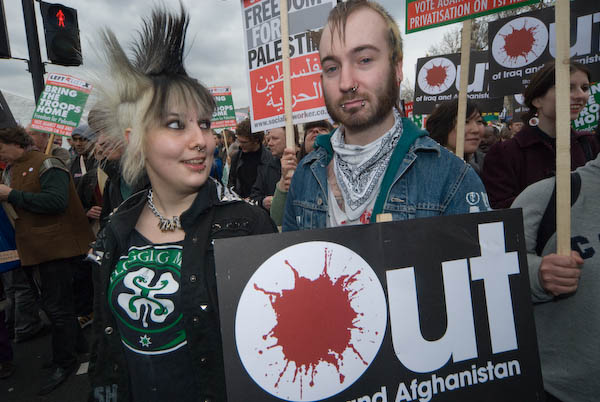
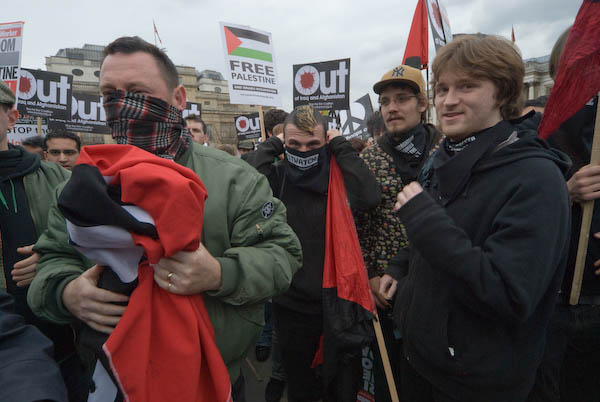
Saturday’s anti-war demonstration in London was a large one, with estimates of 50,000 by the organisers. It took roughly 40 minutes to pass me going over Westminster Bridge, and by the time I’d photographed the final protesters opposite Westminster station I had to run the hundred yards or so to catch up with the head of the event going round Parliament Square. They had arrived there by walking a roughly 2km circuit, coming back across the Thames over Lambeth Bridge and up Millbank.

It was remarkable too for the range of different people and groups supporting it, many adding their own causes to the general aims of getting our troops back from wars in Afghanistan and Iraq, not going to war with Iran and ending the Israeli seige of Gaza.

I tried to reflect the whole range in my pictures, though I’m sure I missed some. And although thankfully the police did largely leave the conduct of the demonstration to the march organisers, the event did show the continuing fascination of FIT teams with the anarchist fringe, which only serves to encourage them. The only real clash, when four were arrested on what seems a very dubious pretext, predictably came when I was taking a break from the event as little seemed to be happening.

Although I’ve written a little on My London Diary about the event, mostly I’ve just put up pictures, roughly in chronological order, that cover the event. It was a big event, so I took a lot of pictures and there are rather a lot on line, perhaps about one in ten of what I took.

Thinking again about Winogrand, he liked to keep his work for a couple of years before he looked at it and selected the pictures that worked. Although nothing on My London Diary is in the same league, my serious edit will also be in a few years time. For the moment the site is really more like my digital version of contact sheets, as the name suggests a diary of how I saw things in London.

Narrative and Photography

ere’s another quote from the Garry Winogrand TV programme I mentioned recently (and if you haven’t watched it yet, I’m sure you will find it of interest.)

There isn’t a photograph in the world that has any narrative ability, any of them, they do not tell stories; they show you what something looks like… to a camera.”

Garry was of course right, but also wrong. Right from the point of view of making a photograph (almost certainly all he was interested in.) As he goes on to say “the thing has to be complete in the frame … it’s a picture problem, it’s part of what makes things interesting. A piece of time and space is well described, but not what is happening.”

But when we view all or most photographs we see them in a narrative manner. We supply a narrative context. And although that narrative may not be true to the time and space from which the photographer wrenched his moment, it does bear some relation to it. Although the photograph doesn’t determine the narrative, there has to be some kind of consonance between the image and it.

One of photography’s most famous images is of a man leaping from a plank in the Place de l’Europe in Paris, behind The Gare St Lazare in 1932. It’s ‘decisive moment‘ is because of our narrative completion with the splash of failed pride, although the picture itself is complete in a Winograndian sense in its frame (one of Henri Cartier-Bresson‘s few cropped frames.)

The set of pictures I took outside Holloway prison on Jan 16 have no claims to photographic fame, though they are perhaps a good illustration of being in the right place at the right time (and almost getting the exposure right.) Taken individually they could be anchored to a narrative in various ways, but as a sequence they tell more of a story.

Pauline Campbell’s daughter died in Styal prison in 2003. Sarah’s death led to her campaigning around the country on behalf of women who have died in prison – now more than 40 deaths since Sarah. After nearly four years of her campaigning the Home Office “finally admitted responsibility for the death of my daughter Sarah Campbell, including liability for breach of Sarah’s human rights under the European Convention on Human Rights.”

In January Pauline organised a protest to mark the death the previous month in Holloway of Jamie Pearce (later she found the prison authorities had spelt her name incorrectly – she was Jaime Pearce.) As a part of this she attempted to stop vans arriving at the prison with prisoners and talk to the drivers, and police were determined to prevent this picketing.

I took 6 frames of one incident as it happened and several afterwards which were related. Because of the sunlight coming more or less directly toward the camera (giving flare in some images) I was shooting using flash, and there was a variable delay between shots as the flash recharged. (Longer than usual as my SB800 had died and I was using the SB80DX, which is slower to recycle and less smart with the D200.) One of the minor advantages of digital is that is does record timings of pictures in the EXIF data, particularly pertinent in this case as I rename images on import to Lightroom including a sequential number – and in this case these are not in the correct order.

On Indymedia I published six, and they were also used in a centre page spread in ‘The News Line’, together with another picture from the event and my ‘Indymedia’ report. ‘The Big Issue (North)’ used a single image. Here they all are, although the times are all an hour out, as my camera was set incorrectly – it actually happened at around 15.34:
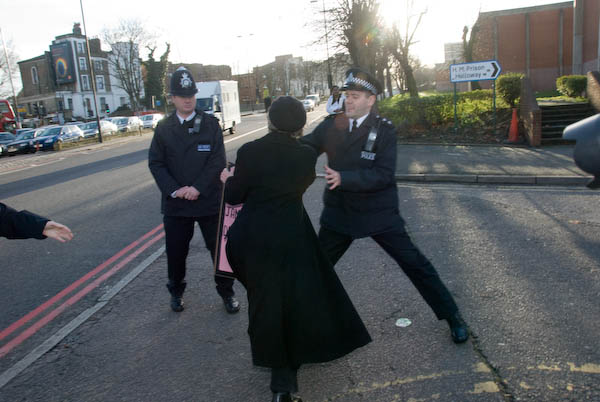
Image 1
Frame 1. 14.34.28 Pauline sees the van approaching and tries to run through the police line…
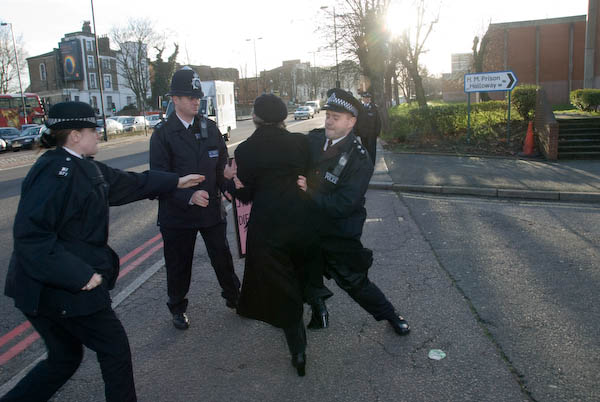
Image 2
Frame 2. 14.34.28 … but is intercepted by the senior officer…
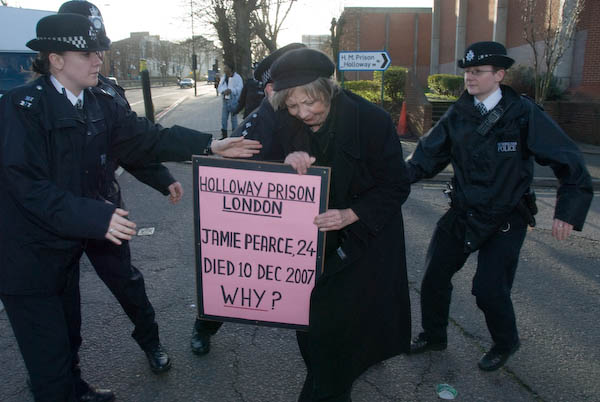
Image 3
Frame 3. 14.34.30 … who starts to push her back, while a woman officer holds out a hand in front of her.
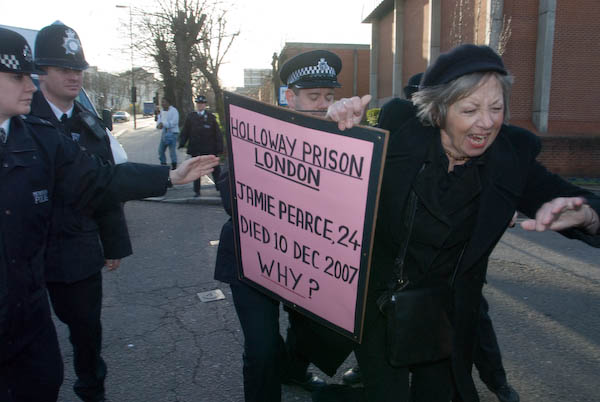
Image 4
Frame 4. 14.24.31 Pauline falls towards my right
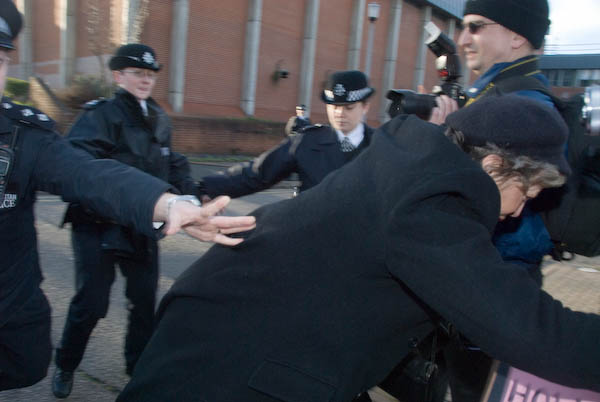
Image 5
Frame 5. 14.34.31 … while I move round to show the hand pushing her…
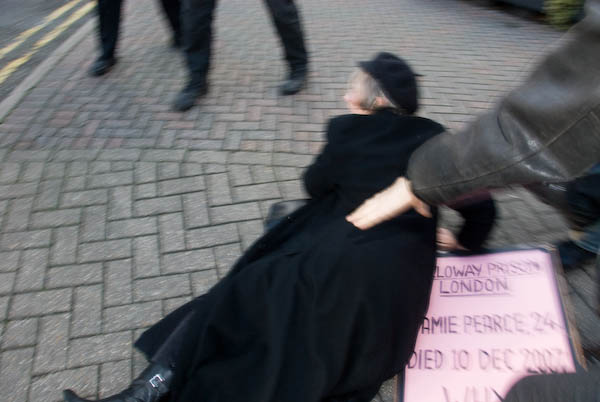
Image 6
Frame 6. 14.34.33 … and she has landed on the pavement.

There should have been more than six images, but I was pushed me out of the way by police between the 5th and 6th images. I took a frame of her being helped on the ground, but wasn’t allowed tot really get where I needed to be, then I saw the officer who had pushed here, apparently reacting to what he had done, taking two pictures before he noticed and turned away.

Image 8
Frame 8. 14.34.42

Image 9
Frame 9: 14.34.42

No one picture really tells the story, though some suggest more than others. Taken together they are fairly convincing, in particular I think Frame 3, which shows that only one officer was pushing her – and another holds out her hand to try to stop her falling, and Frame 5 where I’ve moved round pretty fast to show the hand in the middle of her back.

The best picture – the most dramatic frame – is 4, shows Pauline from the front falling towards the camera, but clearly it doesn’t tell the whole story.
Close Down Yarl’s Wood

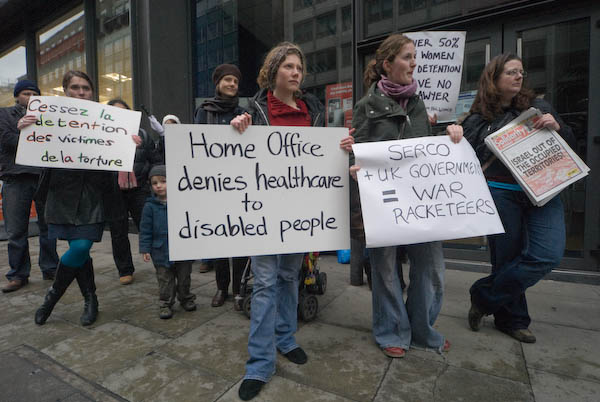
The last of three events linked to International Women’s Day I attended was a picket close to the offices of SERCO, organised by Feminist Fightback, All African Women’s Group and Black Women’s Rape Action Project. Unlike the Million Women Rise march, but as also the Dignity! Period rally, this involved both women and men.

Few people recognise the name SERCO, though increasingly around the world it is running their lives. Around the world, governments are turning to SERCO to run what used to be public services – hospitals, prisons, schools and even military services. Increasingly what used to be public is being sold off and run for profit. When they think of a way to charge for the air that you breathe, it will be SERCO – or another company like it – collecting the cash.

In the UK, if you go to prison it may be run by SERCO, and you will be taken there in a SERCO van. SERCO also own and run Yarl’s Wood Immigration Removal Centre, where around 400 women and children seeking asylum are imprisoned.

Around 70% of the women at Yarl’s Wood at any time claim they are survivors of rape. Conditions are appalling, with inadequate food, racist and sexist abuse, and profiteering from the sale of essential items. Apparently SERCO were forced to investigate claims that women there weren’t getting the miniscule government allowance of 71p a day passed on to them, and according to the women they have at times been prevented from contacting their lawyers.

Women there have responded with hunger strikes as well as letters and petitions to Gordon Brown and others demanding investigation of their treatment.

SERCO London picket

SERCO have a Research Institute in London in a court off High Holborn, and a picket there after the Million Women Rise event on Saturday March 8.

Around 40 people turned up to demand the immediate closure of Yarl’s Wood and an end to the criminalisation of rape and torture survivors. They also called for an end to SERCO and other private companies profiting from the oppression and misery of others.

Detention centres such as Yarl’s Wood are in any case a nasty stain on British justice, going against all our long-held principles of fair trial and the opposition to arbitrary detention dating back at least to the time of Magna Carta, signed a short distance from where I live.

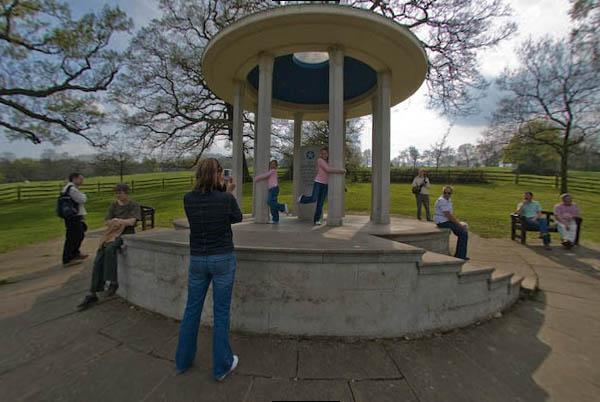
American Bar Memorial to Magna Carta, Runnemede
American Bar Memorial to Magna Carta, Runnemede (more pictures)

That such centres should so badly treat those held inside them for the profit of their shareholders is reminiscent of the worst days of the slave trade – the abolition of which we celebrated last year.

Million Women Rise

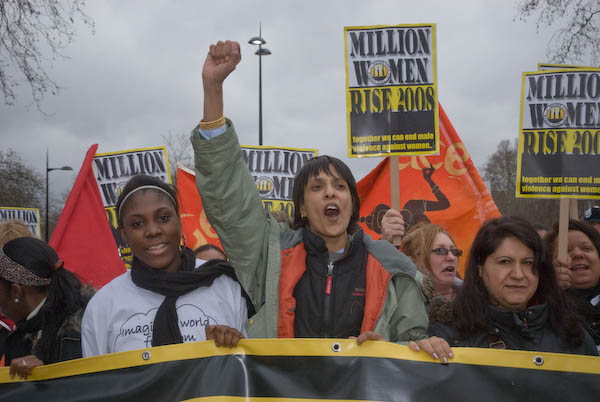
Just over a week ago I photographed the London march of the ‘Million Women Rise‘ campaign on International Women’s Day, March 8. The weather was dull but the several thousand women who took part in this all-woman event were generally exultant. The banner at the front of the march proclaimed ‘Million Women Rise – together we can end violence against women …’ and it was aimed at all forms of male violence against women, and supported by women from a very wide range of groups.

Million WOmen Rise - Start of march

Behind it there appeared to be a remarkable solidarity between very disparate groups, with women from all kinds of organisations (and none), including the WI (Womens Institute) and X:Talk (offering free English classes for sex workers) all taking part in an event dedicated to the dignity of women across the world.

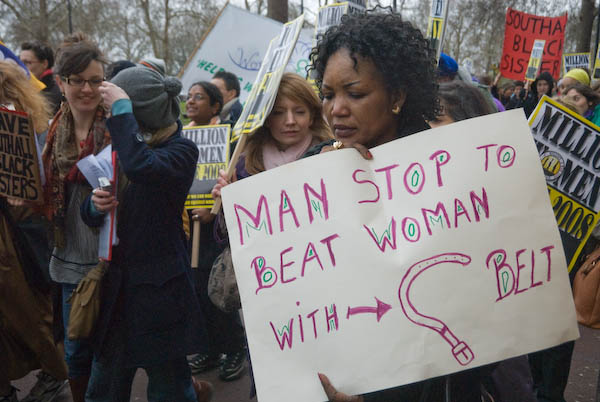
Of course there were many placards, banners and T-shirts from all of the organisations, but what moved me most were those women carrying obviously very strongly personally felt statements against male violence.

Man Stop to Beat Woman with Belt

This was an all-women march and to respect this I had to work from the sidelines. Normally I like to photograph from the middle of things as much as possible. I did feel a little of an outsider, though it was good to be waved at and greeted by many of those who knew me from other events I’ve photographed over the years – including at previous International Women’s Day events that have welcomed male support.

I photographed the march as it entered Trafalgar Square, and then decided I needed a rest rather than stay to hear the speeches, and made for a nearby pub, getting there just before it became crowded with marchers. I wasn’t sure if a ‘Shropshire Lass’ was the most appropriate beer for the day, but can report it’s a very decent blonde bitter.

Later I was dismayed to hear that at least one of those expected to speak had been prevented after the organisers had read her draft text. This kind of censorship didn’t seem to be at all in the spirit of the event.

Photographing the World – in London

Last night I dreamed I was presenting a show of my work to my wife and grown-up son in a curiously expanded version of my front room. These were a set of pictures that had been put in the corner and forgotten for a long time, several large prints mounted on polystyrene that was beginning to fall to pieces. But the most curious piece was a large black cloth-bound bible, which, when you opened it, it kind of folded out to give not a book, but a small prospectus of the show, four prints.

The only picture I remember well was a landscape image. From the cathedral tower visible in the distance we worked out that it was taken near Chichester. A metal fence ran across the foreground, but on closer inspection you could see that only part of it was an actual fence, and the rest was a shadow of a fence. The posts (and shadows) divided the space into a number of vertical strips, and if your eye continued up the print, across the fairly flat scrubby landscape, you could see that various features in the distance echoed this division, fitting neatly into the strips across the image. It was a subtle but powerful image, taken in such an ordinary place. Another image was more striking, I don’t remember its details, but it reminded me of Giacomelli or Fontana, some kind of more clearly graphic – and perhaps Italian – landscape. (I showed work in the same festival as Giacomelli in Poland in 2005 – five years after his death; two years later I was back speaking at the same festival and Fontana’s work was showing – but he didn’t come. I’m not a great fan of either man’s landscape work, so why should I dream of having done something like it?)

Several of the pictures had been bent or folded, or otherwise damaged, partly by attempts to push a vacuum cleaner into the (non-existent) corner where they were stored. The overall title of the show, as the ‘bible’ stated was something like ‘Photographs Around the World‘.

I woke up and gradually realised that it was all a dream, and that I hadn’t actually taken these pictures, and I felt distinctly disappointed. I did go to Chichester last year, but the scene didn’t resemble anything I remember as we walked around the area there.

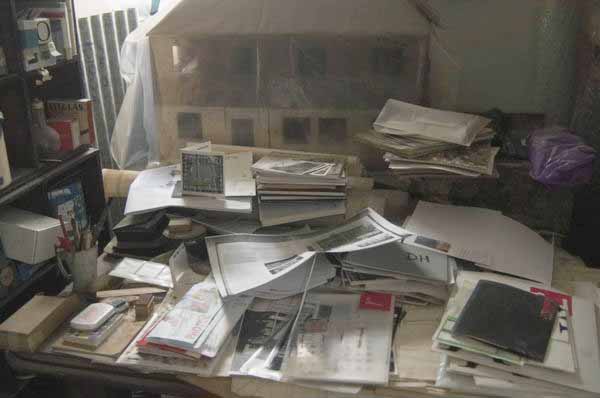
Well, I’ve no idea what this dream meant (if dreams mean anything) but there was perhaps a slight connection with part of the work I’d been doing the previous day, which included preparing some images of rather untidy artists studios for use in the final issue of the magazine ‘Art and Cities‘, due out shortly. But the title of the ‘show’ rather interested me, as I have a well-deserved reputation for seldom photographing anything beyond the reach of a Travelcard.


A corner of David Hepher’s studio in Camberwell

I’ve long felt that living in London you don’t have to travel, because the world comes to you. So, as yesterday’s post here showed, on Saturday I started by photographing a demo about Tibet. I left that as it passed Trafalgar Square to catch the Rally for Dignity and Democracy in Zimbabwe organised by ACTSA as a part of their Dignity! Period campaign to provide sanitary pads for the women and girls of Zimbabwe. Mugabe’s madness has destroyed the economy and caused unbelievable levels of inflation, making such essential supplies unobtainable.

For various reasons the rally, held on International Womens Day, was very badly attended, despite high level trade union support – with the TUC General Secretary coming to speak. Probably many who might otherwise have attended were instead at Hyde Park for the start of the Million Women Rise march in London.


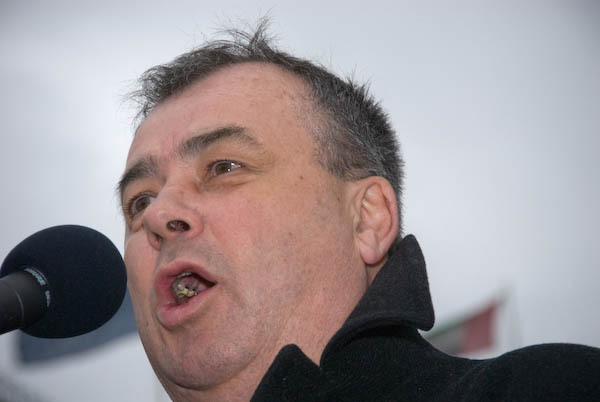
Brendan Barber speaking in Trafalgar Square

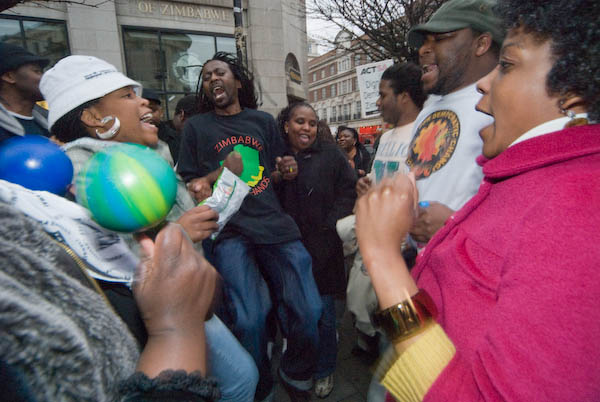
Later that afternoon I also called in at the regular weekly Zimbabwe Vigil, started in 2002 and continuing to protest at human rights violations in Zimbabwe. As usual there was drumming and dancing as well as handing out of leaflets.

Peter Marshall

Déjà Vu?

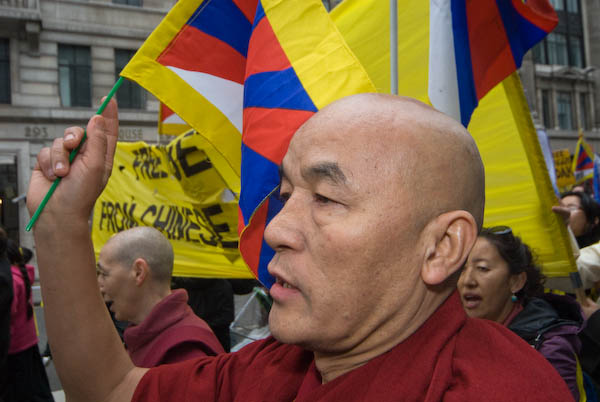
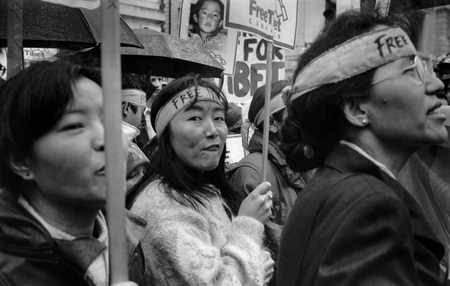
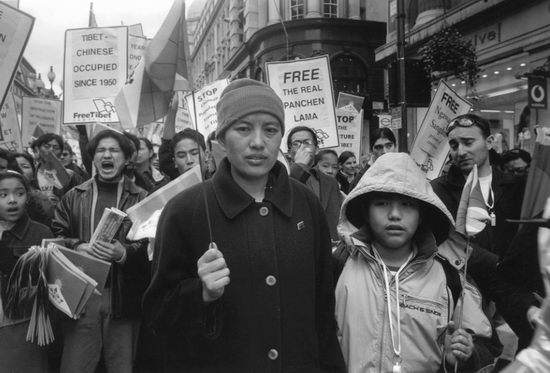
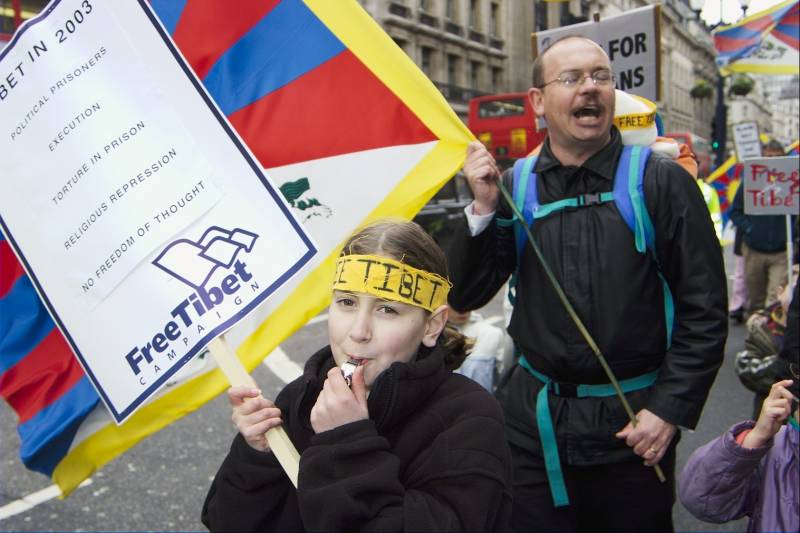
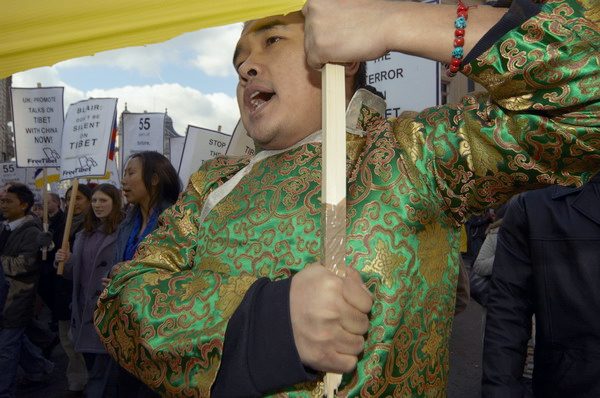
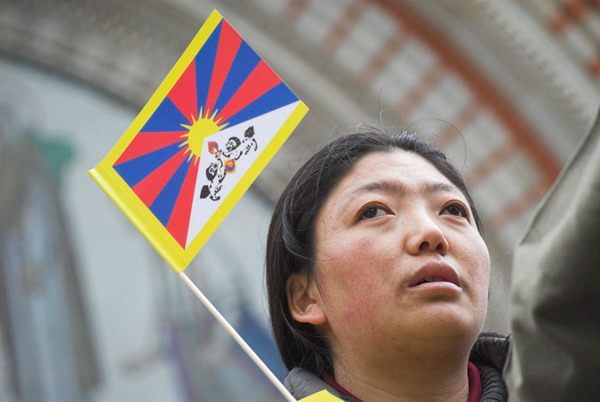
Saturday morning started for me opposite the Chinese Embassy, where supporters of a free Tibet were demonstrating on the 49th anniversary of the Tibetan uprising. I haven’t photographed there all of those 49 years, but it sometimes begins to feel a little like it, and this and the ensuing march through the West End certainly felt like watching a yet another repeat. All over again!


more 2008 pictures

Photographically it brought to mind two people, both in their different ways important teachers, although for me only at second-hand.

Alexey Brodovitch was art director of Harper’s Bazaar from 1938 to 1958, and among the photographers he nurtured there were Irving Penn, Richard Avedon and Hiro, while his classes in New York (and New Haven) drew Diane Arbus and Tony Ray Jones and a whole generation of New York based photographers. One of the many whose work you may not know well, but has a great web site with work from 60 years of photography is George S Zimbel.

Brodivitch used to insist to photographers “Surprise me!” and told them that if they looked into the viewfinder and saw something they had seen before not to take the picture.

The other person who came to mind was Garry Winogrand (and it was Zimbel who turned Winogrand on to photography), whose work has always interested me greatly. Again I never met him, though I’ve used film of him in teaching (and a piece in The Online Photographer last summer included links to a TV video on him from 1982 and the recollections of O C Garza who studied with him at the University of Texas in the mid 70’s – both well worth looking at.)

In the video, one of several comments by Winogrand is “You don’t learn anything from repeating what you know … in effect … so I keep trying to make it uncertain

Saturday with ‘Free Tibet‘, too many things seemed familiar and I had problems with making things uncertain as I struggled with what Winogrand described as “the battle of form versus content.” But too many of my images were merely safe – and as he also said, “Most everything I do doesn’t quite make it. Hopefully you’re risking failing every time you make a frame.” Perhaps as usual I wasn’t risking enough.

You can see more of my pictures from 2008 on My London Diary, as well as some from previous years:

Free Tibet: 2000

Free Tibet 2001


Free Tibet 2002


more 2002 pictures

Free Tibet 2003

more 2003 pictures

Free Tibet 2005

more 2005 pictures

Free Tibet 2006

more 2006 pictures

Free Tibet 2007

more 2007 pictures

Looks like I had a year off in 2004!

Peter Marshall 

Desert Massacre Remembered

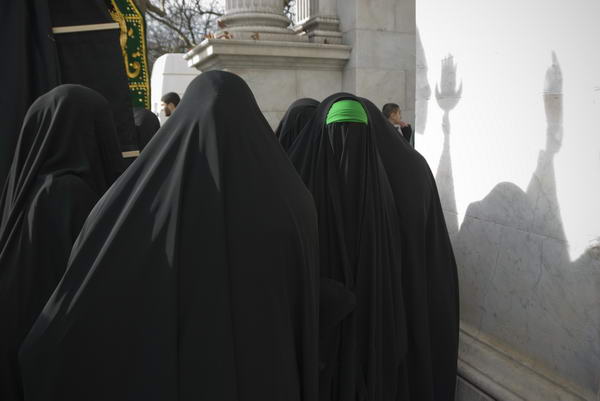
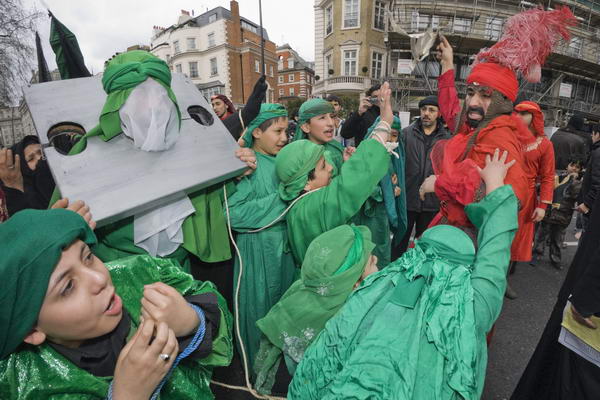
The martyrdom of the Imam Hussain and his 72 companions at Karbala, facing an army of 40,000 and choosing to die with honour rather than to live in humiliation in 61AH (680 AD) is celebrated by Shia Muslims around the world. Their 40 days of remembrance and mourning begin with Ashura and end with the Arbaeen procession which took place at Marble Arch in London last Sunday.

The 72 martyrs of Karbala were all decapitated, and their heads paraded impaled on spears on a long march through towns and villages to the city of Damascus, 750 miles away, as a warning to others not to rebel. The captured women and children were forced to march along with them.

It is impossible not to be impressed by the fervour of those taking part in the events, and their devotion to the Imam and the ideals that he stood for. It is also a colourful event, with costumes and golden shrines as well as a decorated horse, and some intense performances.

More pictures

Trafalgar Square, 20 to 1

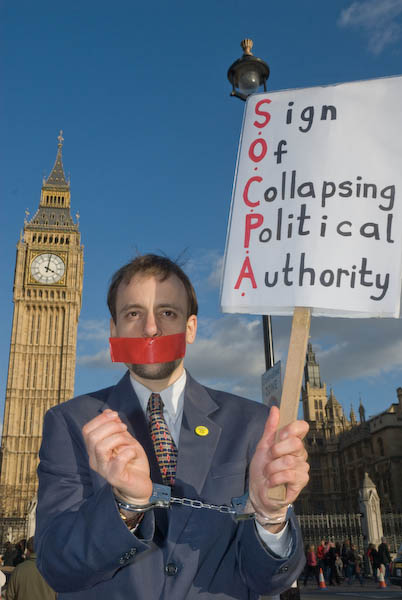
The Met obviously thought that the second ‘Freedom to Protest‘ event scheduled for Saturday afternoon posed a great threat to their credibility, although surely even they can’t have felt it was any kind of real threat to public order. But in January they had been caught a little with their pants down – and it wasn’t going to happen again. Police outnumbered the small group of demonstrators who gathered in Trafalgar Square by at least 20 to 1, and there were many more extra on duty in Parliament Square and elsewhere across Westminster.

So we had hundreds if not thousands of extra police on duty around Westminster, costing us many thousands of pounds to save a little face for the police. And in the event, a demonstration that was just a little street theatre and would have best been completely ignored by the farces of law and order – a typo on my part that actually became reality when the FIT phtoographer ran scared, chased by a protester with a shopping trolley offering free cakes, taking refuge by running up the stairs of the National Gallery.

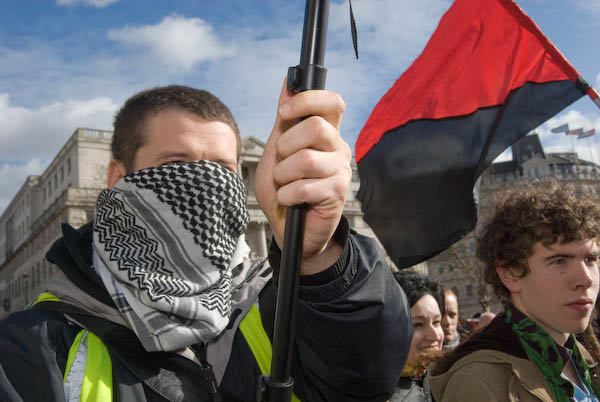
The only other real action by police I’m aware of was to stop and search a young protester walking down Whitehall, making him remove his balaclava. They appear to be using law against terrorism to impose their fashion sense.

He was on his way to join the continuing anti-war protest in Parliament Square, where Brian Haw will have been for 2500 days early next month. Eventually a small group of the protesters did walk there without apparently being noticed, although the police did trail them as they walked out of the square all the way to a pub on the Horseferry Road.

More pictures from the day on My London Dairy.