Another Clapham Celebration

The SS Empire Windrush, which brought the first major group of Caribbean settlers from Jamaica to England in 1948 sank in the Med near Algiers around six years later, but a major monument of those times that have changed our country so greatly over the last 60 years remains.

Many of the 492 who arrived on the Windrush came with a suitcase and their hopes but little more. Many had served Britain in the armed forces, sometimes based in this country, and some few had places they could go to, but most were urgently in need of somewhere to stay while they sorted out jobs and a place to live.

One of the deep shelters, built for government use in the early 1940s and later opened for use as a public air-raid shelter in 1944 was pressed into service, quickly being adapted to provide basic living accomodation. This shelter still survives (along with the other London deep shelters) and the surface buildings are on the edge of Clapham Common near to Clapham South station.

The nearest labour exchange to the shelter was in Brixton, about a mile walk, and led to the area becoming the home of the Caribbean community in England. So it seemed an appropriate place to be celebrating the arrival of the Windrush, 60 years ago on Sunday.
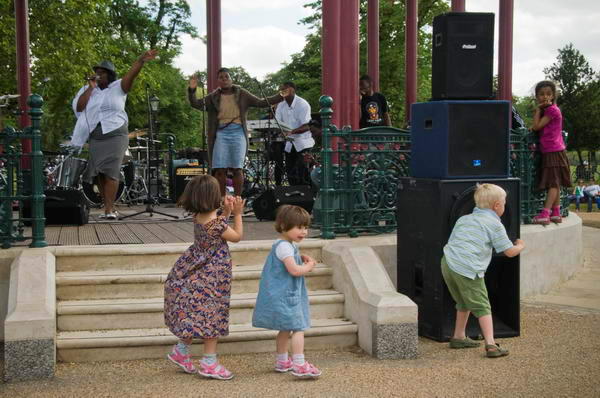
Windrush celebration
Children listen to Four Kornerz and the Churchboyz at Clapham Windrush celebration

Although a small group walked from the deep shelter, the actual celebration took place a quarter of a mile away at the bandstand in the middle of Clapham Common, and was organised by Christian Aid, together with the Windrush Foundation and local churches. With speeches and gospel music it was more an aural than a visual event, although the children taking part in their own way made it rather more interesting.

One local church, Holy Trinity Clapham, played a major part in the event, as it had done in the celebrations of the 200th anniversary of the Act abolishing the slave trade.
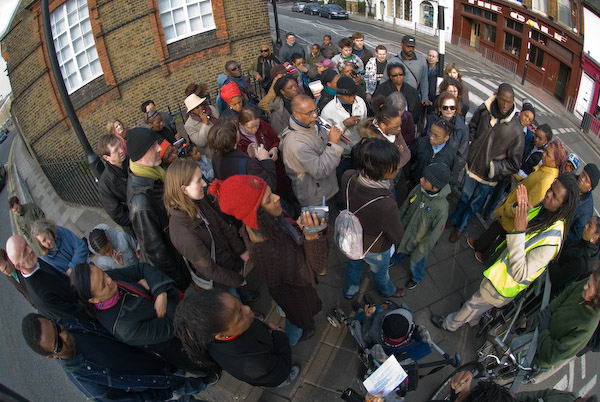
A commemoration walk last March started there, where worshippers in the ‘Clapham Sect‘ at the centre of the movement had included William Wilberforce, Granville Sharp, John and Henry Thornton, John Venn, Zachary Macaulay and others, and went around the area stopping at notable sites associated with them, including the probable site of the ‘African Academy‘ in the picture above.
Rathayatra London Juggernauts

Rath Yatra

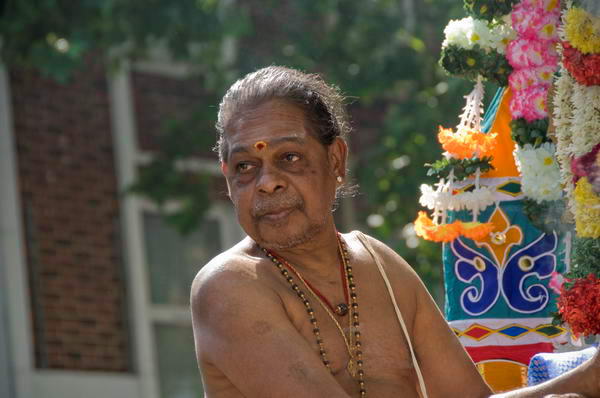
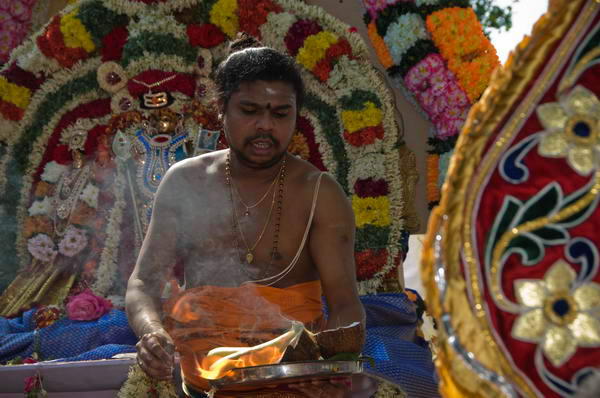
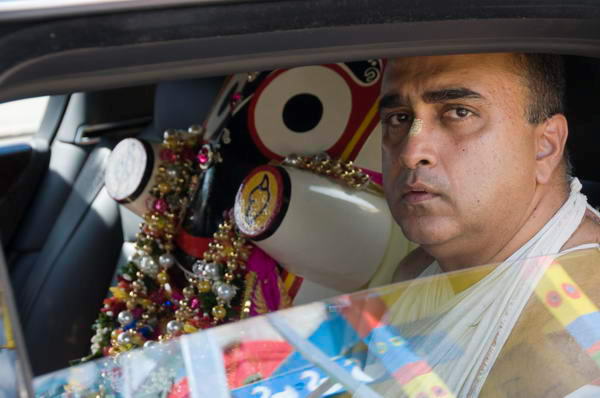
Jagannatha, whose name means ‘Master of the Universe‘ is a form of the Hindu deity Krishna was one of three deities who were carried on large chariots through central London by the International Society for Krishna Consciousness (better known as the Hare Krishna) last Sunday.

Subhadra

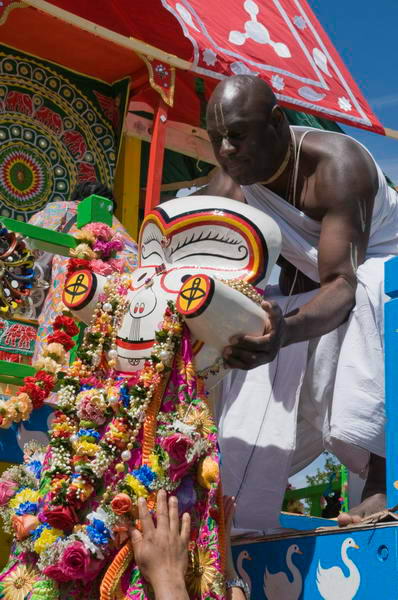
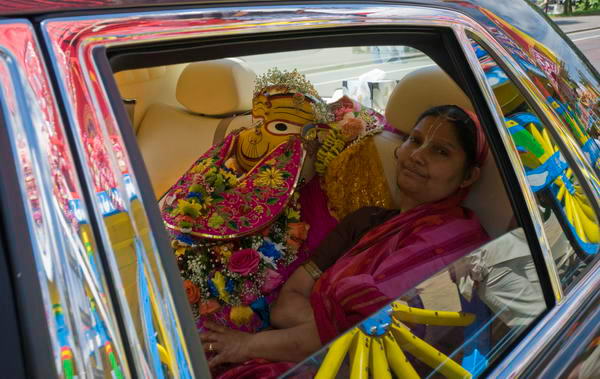
His half-sister Subhadra , again seen in the back of a car, was on the second of the large chariots in the Rathayatra procession, while the picture below shows brother Balabhadra beig caerfully lifted up to be installed onto the third of the chariots.

Balabhadra

The festival follows the pattern followed for perhaps more than a thousand years at Puri in Orissa on the Indian east coast, and the giant wooden chariots used there to carry Jagannatha gave us the word juggernaut.

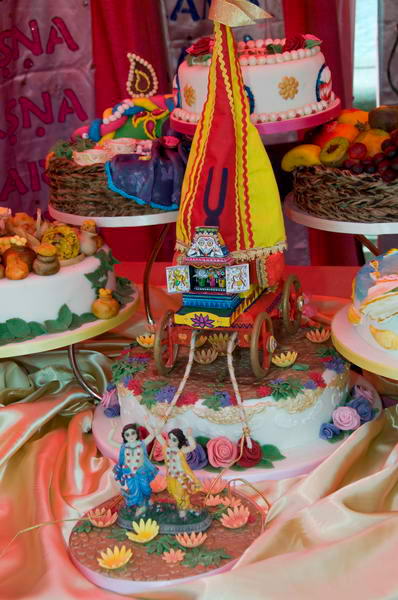
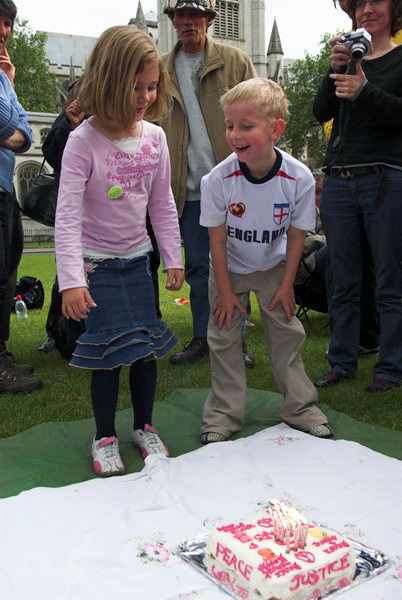
Unlike the huge diesels that power juggernauts along our motorways, these chariots are pulled by hundreds of people on two ropes in front of them. It takes a little more ‘horse-power‘ than the couple on this cake are showing:

ISKCON organised their first Rathayatra in the western world in San Francisco in 1967, and two years later held the first Hare Krishna procession London, making this year’s the 40th. You can see more pictures of the 40th London Rathayatra Chariot Festival

on My London Diary, as well as pictures from the Rathyatra festivals in 2001, 2004, and 2005.

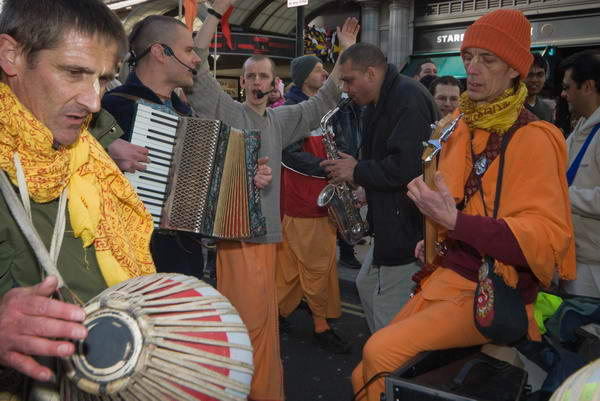
Another Hare Krishna procession in London I’ve photographed is the Gaura Purnima Procession, which I went to again in 2008.

Gaura Purnima
Gaura Purnima Procession, 2008 close to Leicester Square

Love Music, Hate Racism, fed up with stewards

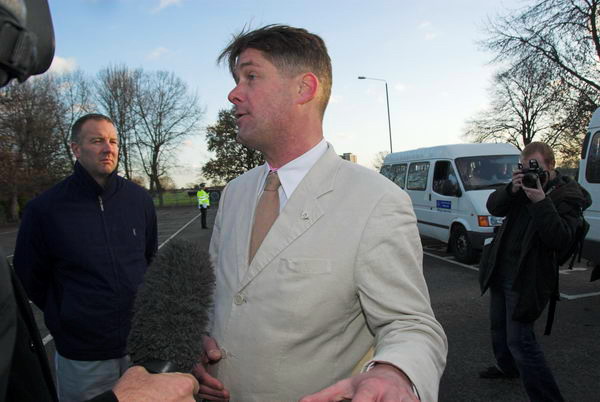
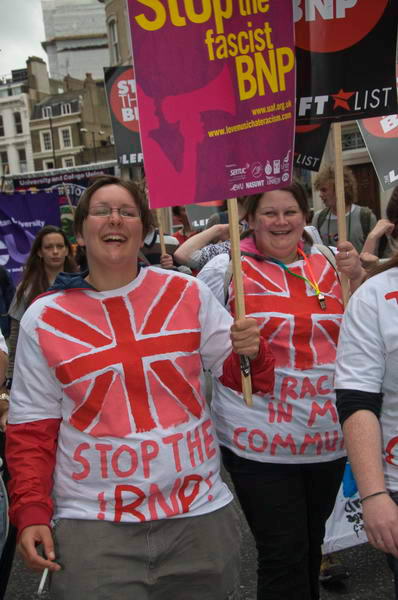
Last Saturday I went to photograph a march against the BNP, who gained a seat on the London Assembly in the elections last month. I’d photographed the man who was elected, Richard Barnbrook, speaking at an outdoor BNP meeting in Dagenham a year or so ago, and detest his politics.

Barnbrook (C) Peter Marshall
Barnbrook speaks to media at BNP rally in Dagenham, Dec 2006

It struck me when I was taking pictures on Saturday that although the people in the demonstration were considerably more open and friendly than the small worried looking crowd in Dagenham, I was getting a lot more hassled by the stewards at Love Music Hate Racism‘s Stop the BNP march. Officiousness and threatening behaviour is no way to get good treatment from the media.

Although billed as a carnival parade, Stop the BNP was more a boring political march. If there was a samba band it was in hiding. For me the tone was set when a steward came up to the band who were just about to start playing and rather grudgingly allowed  them to do just one number before the march had to move off.

LMHR march

It wasn’t a huge march, and quite a few of those on it apparently left before the rally in Trafalgar Square (including me.) Although I’m dead against the BNP, I’m not really sure that this march was worthwhile. The Love Music Hate Racism campaign needs to convert hearts and minds not bore them. It should have been a carnival parade but was just another rather dull march.

More pictures on My London Diary as usual.

World Naked Bike Ride

I wasn’t sure if I wanted to photograph Saturday’s World Naked Bike Ride in London again. I wrote at some length last year about its ‘photography’ policy and my objections to it – it seems to be a blatant attack on the freedom of the press in particular and on individual freedoms at a time when both are under considerable fire from the law and order fascists. I won’t repeat myself – it’s still on line. But if you take part in a public event and want to hide your identity or blushes, as  I’ve said before, the answer is simple:

don’t shoot the photographer; wear a mask.

I also wrote a shorter piece about news values and nakedness after last year’s ride. There is a paragraph I rather like in it, so here it is – though you can of course use the link to read the rest.

10,000 marching for Palestine. Perhaps 3,000 Orangemen and women. A thousand or so naked or near naked cyclists. No contest, not even for the BBC. When I switched on Radio 4 for the 10 o’clock news there was only one London event. And there was no one there wearing a burkha.

Definitely not a burkha, but she made me think of both of my comments from last year.

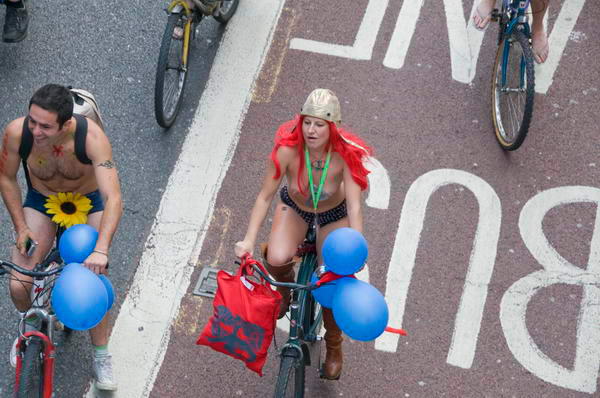
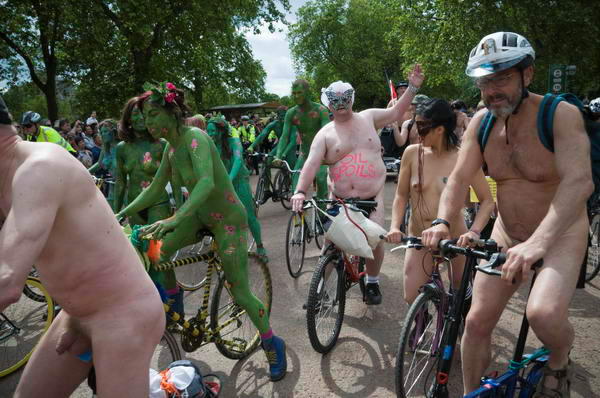
But the World Naked Bike Ride is in several ways an interesting event, although as in previous years while bodies are very much on display environmental messages seemed at times to be rather well-hidden, leaving many of the public along the route bemused.

The two young women standing next to me at the start weren’t commenting on the state of the planet or the strangulating grip of car culture but that they had never seen so many penises before, and they were certainly glorious in their diversity. We speculated together briefly on whether the ride showed a greater proportion of circumcision than among the general public and if so why that should be and other major penis-related issues.

Later I was in the middle of a group of young men who loudly expressed the view that the whole event was “f**king out of order, innit” and that it should not be allowed, but most of the people standing around me as I photographed seemed startled but generally amused by the ride, even if few realised what it was about.

According to the web site, it is a “peaceful, imaginative and fun protest against oil dependency and car culture. A celebration of the bicycle and also a celebration of the power and individuality of the human body. A symbol of the vulnerability of the cyclist in traffic.”

I don’t know how many cyclists took part – it seemed roughly the same size as in previous years, and my guess would be a thousand or two. Of course it wasn’t just cyclists, there were some skateboards and roller blades, and some odd sort of curved metal thing. Surprisingly only two unicyclists – you have to be an exhibitionist to ride a unicycle, so I’d expect rather more. (Perhaps they are all away in Nova Scotia keeping most of their clothes on and ‘Riding the Lobster‘ along with one of my sons?) One of them was riding with the slogan “One Love, One Wheel” on his chest.

Cyclists take up quite a bit of road space compared to marchers, so it is certainly more impressive than a march with the same number of people, and of course the bared flesh greatly adds to the impact.

More pictures on My London Diary, though as always only a fairly small fraction of those I took. If you were on the ride and would like your picture (if I took one) email me and I’ll send one if I can.

Partying on the Tube

One of the downsides of living out on the edge of the city is that it can be hard to travel home very late at night. My last train leaves shortly before midnight on a Saturday and it’s then seven hours until the next. The hourly all-night bus service which used to serve us now drops me around 4 miles away.

So I tend not to photograph things that happen very late at night, and missed the Circle Line tube party on 31 May to mark Boris’s alcohol ban starting the next day.

I’m not a fan of the ban, though I would like the Underground to be safer for both passengers and staff. The ban will inconvenience tourists and others who occasionally like a cool beer as an antidote to the often stifling heat on the tube as they go from one of London’s attractions to another, or who like to relax a little on the way home from work, while I suspect that travel police will continue to largely turn a blind eye at large drunken groups of football supports and others who can be a real nuisance, whether or not they are actually drinking on the train. There are simply not enough police around to control them and adding an extra area of friction between them and the police is hardly likely to improve matters or manners.

Tube Party

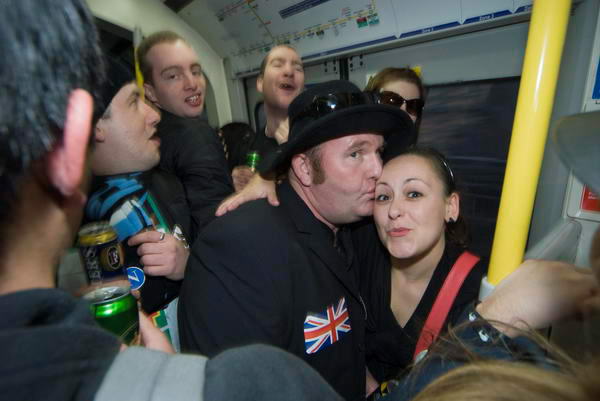
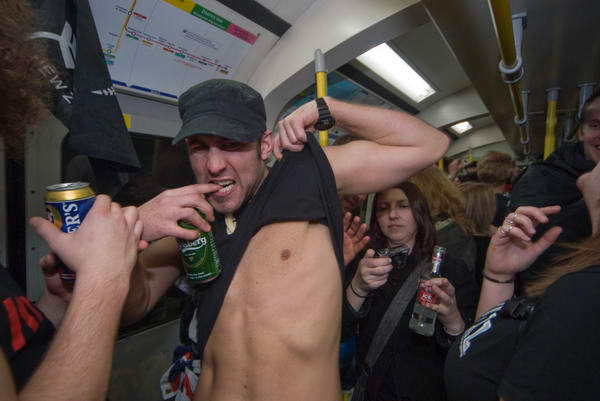
I was reminded about the ban yesterday, as I was at last getting some of my pictures from another Tube party earlier this year ready to go into the stock libraries, something that tends to get on top of me (adding the captions, keywords and so on is a really tedious chore.)

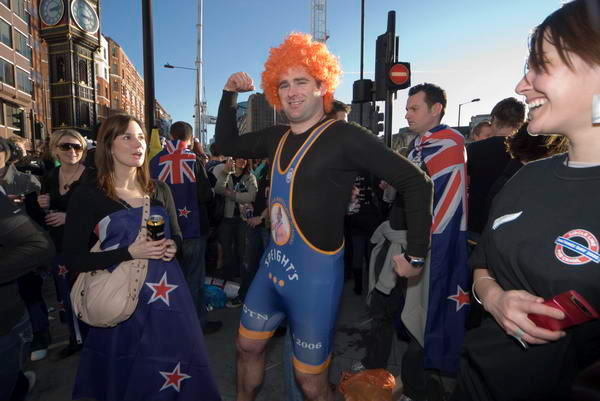
Unless you are a New Zealander you will probably not know about the Treaty of Waitangi, a rather curious agreement signed by some Maori chiefs and British representatives in 1840. We used it to legitimise a takeover of the country, although in more recent years the Maoris have found it a way to claim some limited and belated reparation, and Waitangi Day is now celebrated as the New Zealand national Day.

Circle Line Pub Crawl - Waitangi Day

The main celebration in London over the past few years had been the Circle Line Pub Crawl, starting early at a pub near Paddington and leaving the train at every station along the line for another beer or two, arriving at Westminster and Parliament Square around tea-time (though little tea is in evidence.) There the square is packed with a heaving mass of Kiwis, some of whom strip to the waist and perform a noisy Haka before making for the station and the next stop and pub, although relatively few make it to the official end of the party at Temple station, having mostly by then dispersed to other pubs around Whitehall and Strand.

Despite approaching 10,000 distinctly unsober participants, it all seemed very good-natured, and although a slight inconvenience to some travellers (who might be advised to change to the District line services serving the same stations but totally ignored by the party-goers) does little or no harm while giving a little free entertainment to Londoners. Much of the inconvenience seems to be caused by official over-reaction including the temporary closing of some stations and stopping (or non-stopping) of some Circle line services, when a more intelligent response would be to put on extra trains and work the participants through the system as rapidly as possible. “We’ve got a crowd on the platform, so lets stop the trains and close the station” really doesn’t make a lot of sense.

Circle Line Pub Crawl - Waitangi Day

It’s an event that already waves a digit to numerous by-laws, including those on drinking in public places such as Parliament Square, and I wonder if Boris’s tube ban will have any impact on it, other than perhaps to add brown paper bags to the already quite impressive dress code.

Circle Line PUb Crawl

By the time you read this, you should be able to buy some of the pictures through Alamy, as well of course as directly from me – and there is a wider range of pictures on My London Diary which takes you through the day telling the whole story of the event as I saw it.

Tour of Religions

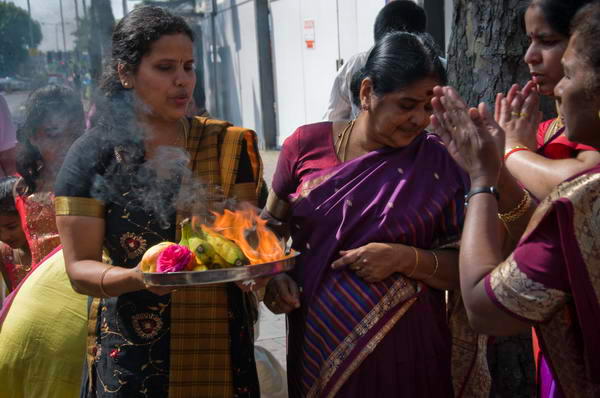
I’d taken things a bit easy on Saturday, only walking from Trafalgar Square at the top of Whitehall to Parliament Square at the bottom. On Sunday I made up for this, starting down in the deep south at Thornton Heath, with a chariot festival by Hindus from the temple in Thornton Road, originating from the Tamil areas in south-east India and Sri Lanka.

They were dragging a chariot containing a statue of the Lord Muruga and people were coming up with offerings of fruit on trays, which were blessed by the god and returned with flames licking around them.

When the procession turned off the main road I jumped on a bus that had been held up behind it, hoping for a rapid journey to Brixton. Unfortunately we crawled slowly until after we had cleared some minor roadworks on Streatham Hill. From Brixton, the next bus took me to the Oval and Kennington Park.

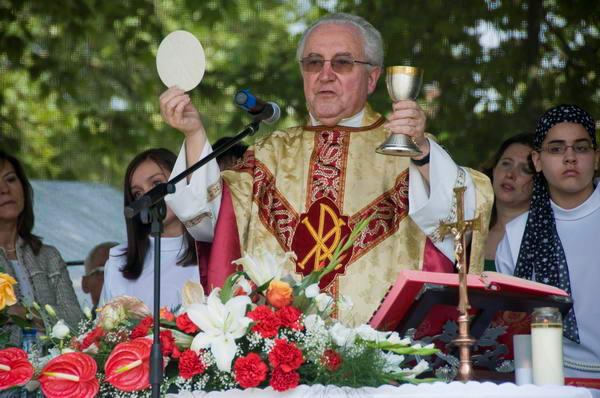
Catholic Mass, Portugal Day

The area around here has the largest Portuguese population outside of Portugal, and most of them would be along here later in the day to eat, drink and celebrate being Portuguese and the greatest of Portuguese poets, Luís de Camões, who died on 10 June, 1580. The event started with an open-air Catholic mass, and I left as this was drawing to a close to catch a 436 ‘bendy bus’ to Marble Arch.

Although a possible danger to cyclists – such as the new Mayor of London, Boris Johnson, these really offer a fast and efficient service on routes such as this. A major plank of Boris’s election manifesto was the scrapping of these and their replacement by some mythical updated Routemaster, but I think on suitable routes this would be a loss.

At Marble Arch, Sikhs were holding a rally before a march to remember the Indian massacres of 1984, and to call for the establishment of an independent Sikh state of Khalistan.

Sikhs on the march

I finally ended up at some kind of Korean festival in Trafalgar Square, which seemed to simply be a rather boring sell of Korea as a tourist destination. I’d hoped it might be a festival for the many Koreans who live in London, particularly around New Malden.

Sikhs on the march

Sikhs on the march

Saturday in Westminster

Knife crime has been this year’s big news story so far as our inner cities are concerned, with every incident involving a youth and a knife being front-page. Of course there are too many people being killed and injured, but that’s been the case for some time. Last year I went to two community-based marches, one in Brent and the other on ‘murder mile’ in Clapton, against gun and knife crime, both largely organised and supported by families who had suffered the loss of one of their own sons. Most of those cases hadn’t made the national news.

So its good news that more attention is being paid – so long as it leads to measures that will really have some impact on the problem, and not just a knee-jerk upping of penalties and policing.

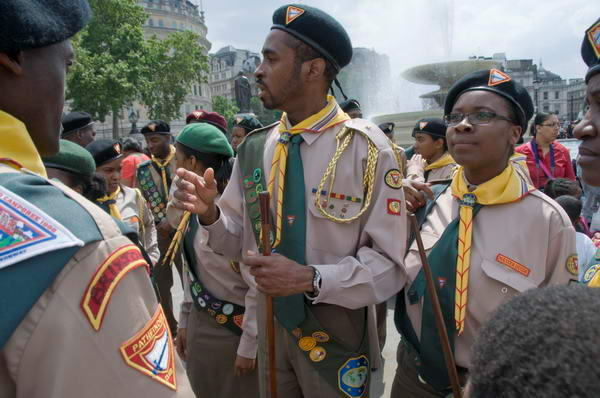
The Seventh Day Adventist Church has a great following in black communities where the problem is most severe, and on Saturday I photographed a march that was organised by their youth movements. The most visible part of these were the Pathfinders in their military-style uniforms, but there were many others.


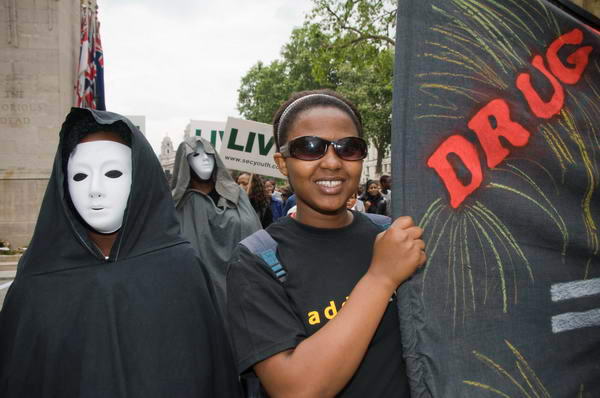
A grim equation: Drugs, Knives, Guns, Gangs = Death

One of the placards some marchers carried was just the message for Brian Haw, standing in Parliament Square as the march passed on its way to Kennington Park.

I stopped off there to join the Peace Strike, and listen to the singer/songwriter Harry Loco who had come from Holland to perform there.

Earlier in the day while waiting for the Adventist march to start I’d also taken a few pictures of the Rock Against the Blockade activists leafleting and collecting signatures in support of the ‘Miami Five’, Cubans imprisoned by the USA for infiltrating right wing terrorist groups among the Cuban exiles in Florida who carry out illegal terrorist attacks on Cuba. These prisoners have just lost an appeal against their conviction.

Smash EDO

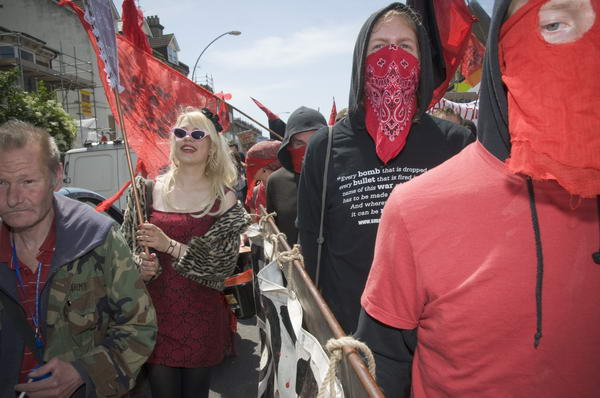
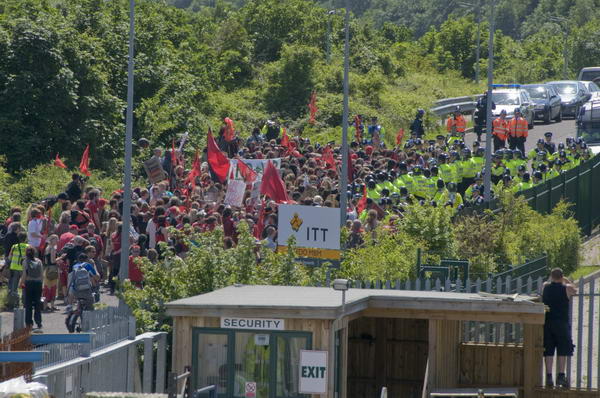
Brighton residents who had marched against the war in Iraq formed ‘Smash EDO‘ in 2004 when they learnt that a factory in their city, EDO (since taken over by ITT and now known as EDO/ITT) was responsible for making guidance systems and other components that made the bombing of Iraq possible. They began a continuing series of regular demonstrations against the company that was profiting from killing people there.

As well as regular weekly ‘noise’ demonstrations, they have organised other events and meetings around the country, and made a film, ‘On The Verge’ about the campaign. They successfully fought an injunction by EDO that would have prevented demonstrations and got the local council to pass a motion upholding their right to peaceful and lawful protest following some very questionable police activity and arrests during demonstrations.

On the Lewes Road
Around 600 marchers walked and danced along the main road towards EDO

On Wednesday I went to Brighton to photograph the ‘Carnival Against the Arms Trade‘ which Smash EDO had organised. It started as a lively fun event, but got a little out of hand when police tried to stop the marchers before they had reached the EDO factory.

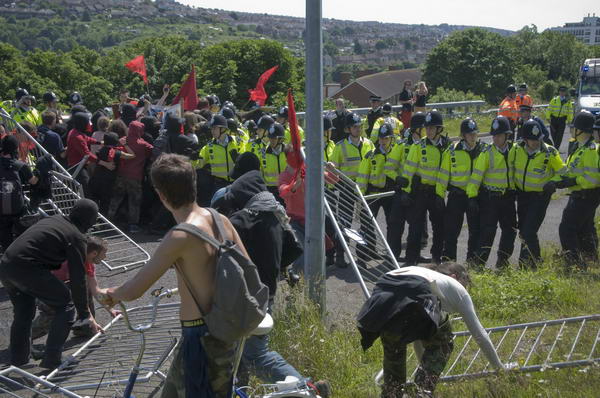
Police tried to stop marchers

The marchers pushed over the police barriers and past the police who made only token attempts to stop them at that point. At two other points in the remaining two hundred yards or so the police again made a rather half-hearted line across the road, delaying the march slightly until people again pushed through to the factory gates.

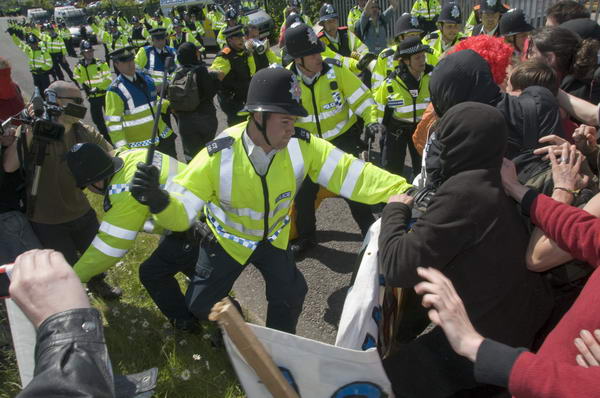
Batons were used

Although there had been a little pushing and shoving, and police had certainly extended and used their batons, I only saw banners rather the demonstrators being hit and in general tempers had remained fairly cool and behaviour relatively restrained, rather as if in a slightly unruly rugby scrum, although with rather more shouting. There were a lot of police, but most were just standing and watching their colleagues getting pushed back

Eventually around 300 of the marchers reached the gates (others had waited further down the hill or gone home), which were protected by a triple line of police, with more in reserve. I went back and up the hill to get an overall view and discussed the situation with some of the others around.

It looked like stalemate
It looked like stalemate – but how wrong could I be!

The general opinion was that little further was likely to happen. The factory was surrounded by a high and secure fence and there were more than enough police to hold the demonstrators at bay, with now quite a few taking a rest further down the hill.

So I thought I’d more or less done all I could and walked down the hill to catch a bus. Maybe get home and file some pictures…

But apparently as soon as my back was turned, someone mysteriously opened a gate and demonstrators rushed in, soon followed by police. A few windows were broken and there was considerable violence, with police using batons and pepper spray as well as bringing in police dogs. It seems just a matter of good fortune that nobody appears to have been seriously injured.

Ten people were arrested, mainly for minor offences, though they were all held for 30 hours before being released on police bail without charges being laid, to return to the custody centre in early August. While they were being held, police raided a number of their homes and seized several computers, mobile phones and clothes.

You can see more of my view of the events on My London Dairy, and reports mainly about what happened after I left the scene early on Indymedia. I should have stayed until things were more obviously over, but it was a nice day and I had other things I wanted to do!

Seven Years in Parliament Square

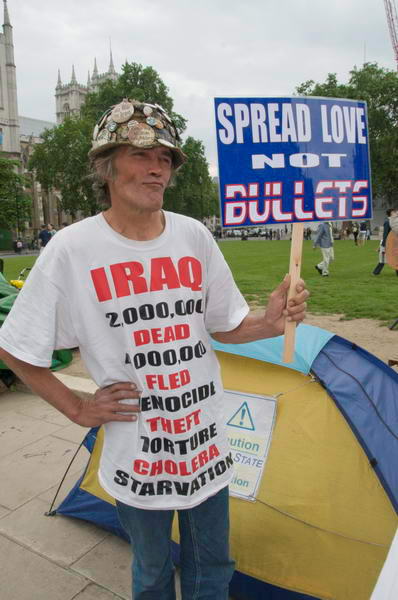
Brian Haw started his one man protest in Parliament Square on 2 June, 2001. Despite police harassment and vigilante attacks (ignored or even encouraged by police) not to mention an Act of Parliament designed to get rid of him, he is still there seven years later.

I can’t remember when I first saw him there, or when I first photographed him, but I have many pictures from over the years. You can of course read more about him and the Parliament Square Peace Campaign on the Parliament Square web site.

I was among those who went along on Sunday afternoon to mark the occasion, joining him and his regular supporters in the square. Brian himself was marking it by fasting and praying until Monday 2nd.

You can see a few more pictures on My London Diary. It was a dull, drab day with not a lot happening – as must have so often have been the case over the 2561 (and counting) days that Brian has been there.

This was at the 5th anniversary in 2006:

2006 Parliament Square

And one from the 6th anniversary:

Over the years Brian has seen and taken part in many of the political protests in Parliament Square and around:


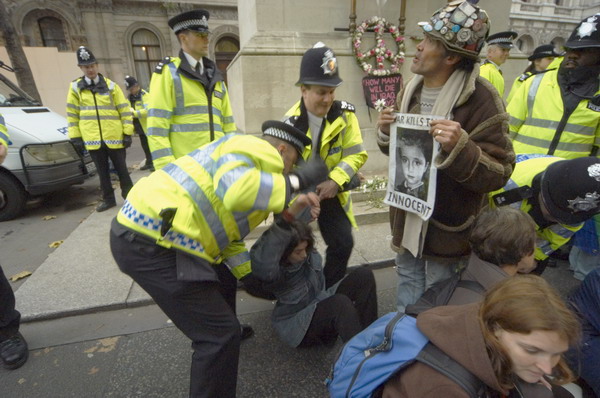
With peace protesters at the Cenotaph in 2004. Brian holds a placard “War Kills the Innocent” in front of Cenotaph in Whitehall, where the Code Pink wreath reads, “How Many Will Die in Iraq Today?”.

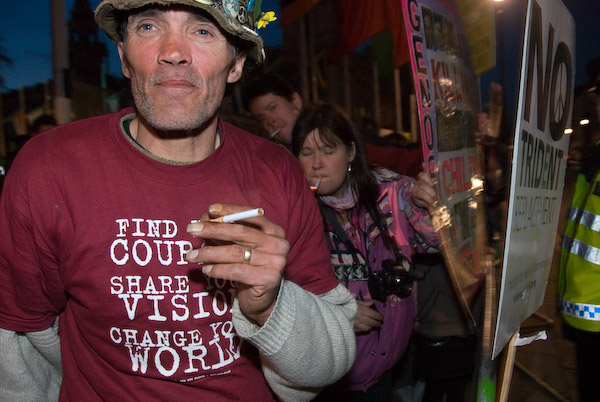
My favourite picture of him was taken during the rally against the replacement of Britain’s Trident nuclear missiles in March 2007.

Brian Haw

Brian’s T-shirt in this picture carries the message “Find Your Courage; Share Your Vision; Change Your World” which seems so appropriate. It – and the quote – was produced by US disablement activist Dan Wilkins, who was delighted to see Brian wearing it when I sent him a copy of the picture.

Humans say NO to Heathrow

NO to a third runway at Heathrow

I took this picture with one hand on the camera, the other holding a large sheet just like those in the picture, taking part with around 2600 others in the large human ‘NO’ that was being recorded live on BBC News TV when I made this picture. I checked to make sure that my own ‘NO’ was the correct way up, but not everyone was so careful, not that you could have seen in the view from the cherry-picker or helicopter.

It was an event at which most of the protesters were local people, many who will lose homes if the runway goes ahead. Of course they will get compensation, but the terms are often far from fair financially. Some have long links with the area, many with parents or spouses and other relatives buried in the Cherry Lane Cemetery, opened in 1936, which may be covered by a spur road to the airport if plans go ahead.

Activists on the March
Activists on the march from Hatton Cross to Sipson

The march and rally attracted support from MPs of all parties with constituencies under the flightpath. Surprisingly one of the closest boroughs to Heathrow, Spelthorne (until 1995 boundary changes it included the site of Terminal 5) where I live supports the development – along with its MP. This will probably change once the plans for the fourth Runway through its centre are leaked!

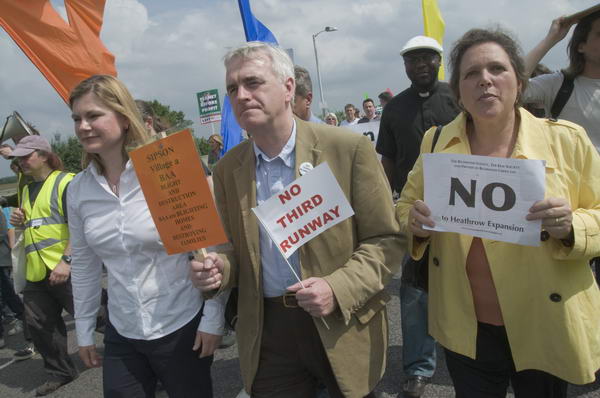
MPs Justine Greening (Con, Putney), John McDonnell (Lab, Hayes & Harlington), and Susan Kramer (LibDem, Richmond Park)
MPs Justine Greening (Con, Putney), John McDonnell (Lab, Hayes & Harlington), and Susan Kramer (LibDem, Richmond Park) at the front of the march in Sipson
I’ve written about the proposed development and Saturday’s demonstration on My London Diary as usual.