US Election Special

In my inbox this morning was a message from Ricken Patel and the team at Avaaz.org, “a community of global citizens who take action on the major issues facing the world today.” In it they reminded us of some of Obama’s election pledges, and here is their list, with some related images from the streets of London:

Rt Click, View image to see larger
Campaign against Climate Change Kyoto Climate March, London, 12 Feb, 2005

  • Reduce the US’s carbon emissions 80% by 2050 and play a strong positive role in negotiating a binding global treaty to replace the expiring Kyoto Protocol


Stop the War march, London. Sat 15 March, 2008

  • Withdraw all combat troops from Iraq within 16 months and keep no permanent bases in the country


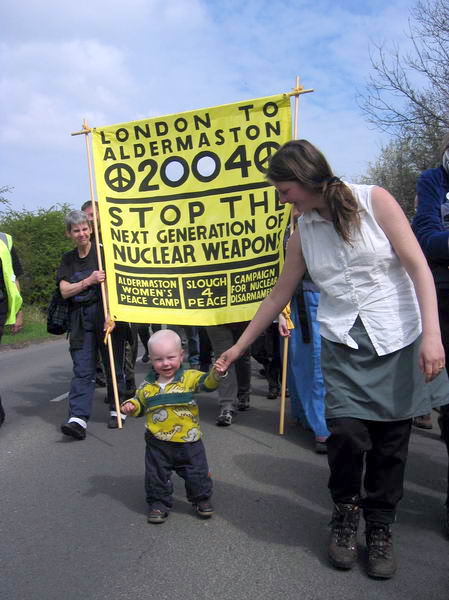
Approaching Aldermaston, April 2004

  • Establish a clear goal of eliminating all nuclear weapons across the globe

Rt Click, View image to see larger
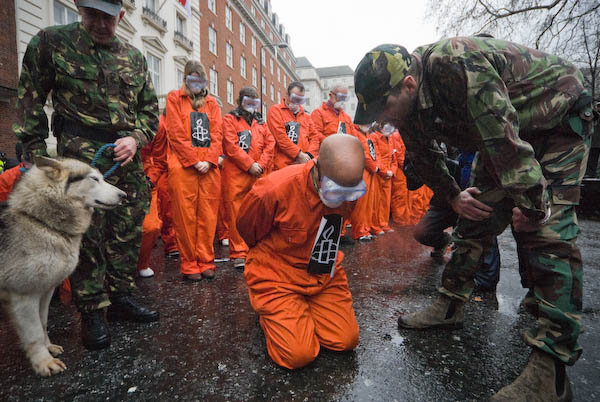
Amnesty International at US Embassy, London mark 6 years of Guantanamo shame, Jam 2008

  • Close the Guantanamo Bay detention center
  • Double US aid to cut extreme poverty in half by 2015 and accelerate the fight against HIV/AIDS, tuberculoses and Malaria

Rt Click, View image to see larger

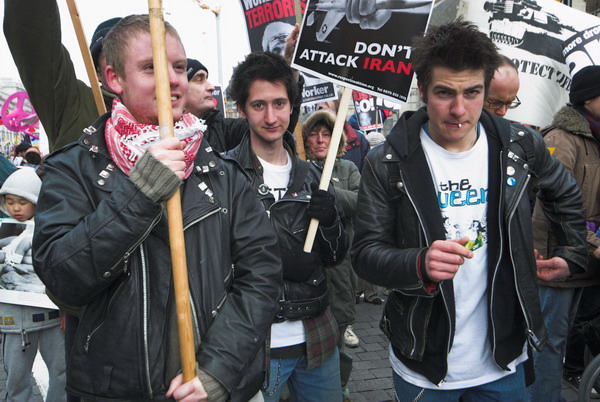
  • Open diplomatic talks with countries like Iran and Syria, to pursue peaceful resolution of tensions
  • De-politicize military intelligence to avoid ever repeating the kind of manipulation that led the US into Iraq

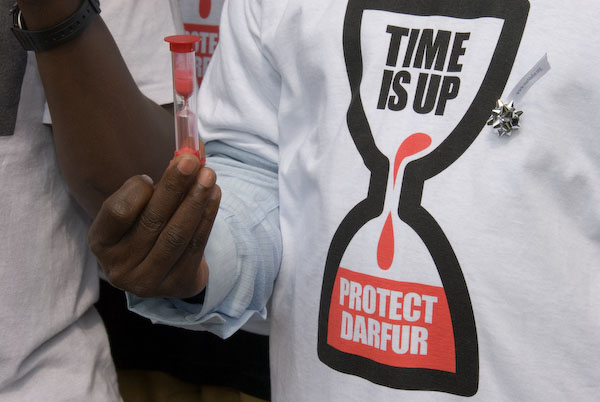
Time running out for Darfur

  • Launch a major diplomatic effort to stop the killings in Darfur
  • Only negotiate new trade agreements that contain labor and environmental protections
  • Invest $150 billion over ten years to support renewable energy and get 1 million plug-in electric cars on the road by 2015

Obama provides a welcome new chance for the USA; perhaps the world’s last fragile hope of avoiding global disaster.

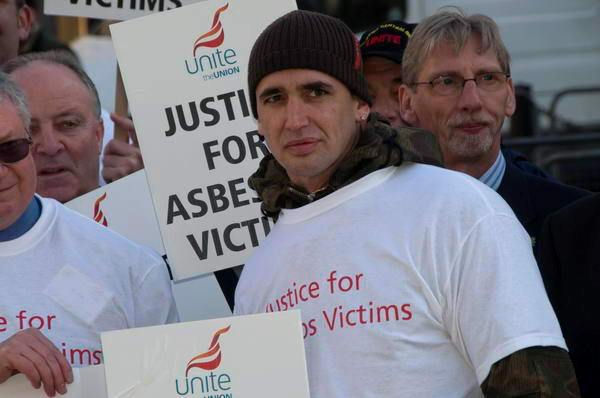
Justice for Asbestos Victims

Some events (even when you are at the right place at the right time) are difficult to photograph because visually they are not very exiting of different. It doesn’t help when the issues involved are complex so that it is not easy to decide on a point of view to take.

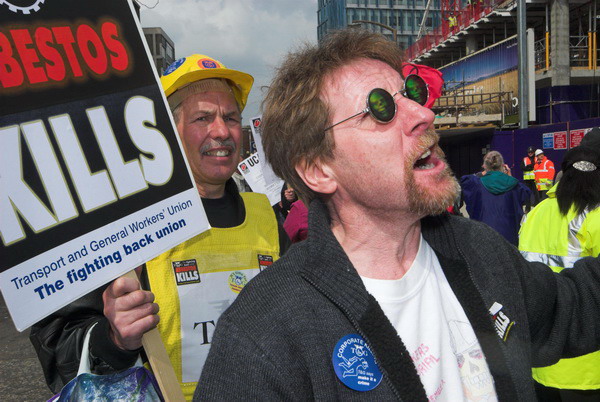
The ‘Justice for Asbestos Victims‘ rally was organised by trade unions representing people who had worked with asbestos.  As we all know, asbestos is dangerous stuff, exposure to it killing many workers, and it is also clear that many employers have been negligent and failed to take reasonable precautions to prevent people working for them being exposed to its dangers.

The demonstration was over a decision by the Law Lords that compensation should not be awarded for pleural plaques,  a form of irreversible lung damage caused by exposure to asbestos, because in themselves these do not normally materially affect people’s physical health.  People with them are however likely to develop more serious, often fatal conditions – for which damages are awarded. I think the employers should be liable for their negligence in exposing workers and that the pleural plaques provide clear evidence that this has occurred.

Rt Click, View image to see larger

Several other photographers present were working for the unions concerned who would probably be happy  with some fairly tedious group pictures showing workers and MPs and a few banners – and they proceeded to set these up.  It all helps to make a living, but I wanted to find something more, and don’t really think I managed it.  The picture I took at the International Workers Memorial Day march in April 2006 was considerably stronger – but then its message was clearer too.

Rt Click, View image to see larger
Asbestos kills

Getting Pictures and Missing them

F8 and be there’ is the traditional advice for photojournalists, but something I’ve rather been ignoring in the last few days.

Well, the ‘f8‘ went some time back when I discovered the freedom of the  flexible program ‘P‘ setting along with ‘auto ISO‘ on the Nikon D200 (and now the D300.)  Now 99% of the time I rely on the camera to choose an appropriate setting within the fairly wide parameters I set, only bothering to think about that side of things when I know I need considerable depth of field or I’m shooting something moving really fast and have the luxury of time to think about it.

Using auto ISO is just a matter of choosing a suitable base ISO for the light conditions, along with a maximum ISO for me limited by the noise characteristic of the camera – ISO 1600 for the D300 is, so far as I’m concerned, the highest rating  where images are generally usable without any special processing to reduce noise.  It would be nice to have a system that allowed you to set a minimum shutter speed to use which was dependent on the focal length in use, perhaps following the good old ‘1/focal length*‘ rule, but you have to choose a single shutter speed. My usual compromise is 1/100th, which, thanks to the 18-200mm having vibration reduction, is generally fast enough to get usable results at the long end.  But when I’m working in low light and only using wide-angle I  happily choose a speed such as 1/30 or even slower.  With auto-ISO on and 1/100th set, you do get down to these slower speeds with the lens wide-open at the maximum ISO (1600 in my case) which is probably exactly when you want them in any case.

As I understand it, the camera uses the base ISO you set, varying aperture and shutter speed until it runs out of light at full aperture and your minimum shutter speed, then increases the ISO to keep exposure correct until it reaches the maximum ISO. Then it will let the shutter speed drop below the minimum set.   Using fill-flash complicates matters slightly as with that I set a minimum 1/60 second. Anyway, everything usually seems to work pretty well for me however it does it.

Around 1/60 – 1/100th is quite a nice speed for shooting, allowing just a little movement in images which can give them more life.
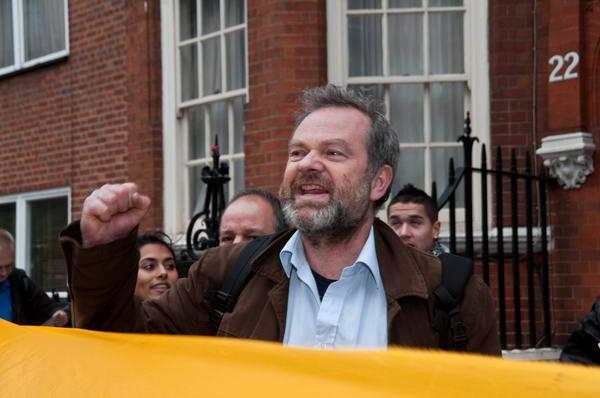
Rt Click, View image to see larger

This picture of a man demonstrating opposite the Colombian Embassy in London on the day of the general strike there (text and more pictures at Support the General Strike in Colombia on My London Diary) is a good example.  Looking at the picture at a normal size, it is clear that this man is waving his fist, not just holding it up in the air, though this may not be apparent at this scale.  I was using balanced fill flash (at -1/3 stop) , so the shutter speed was 1/60 and the aperture f5.6 at ISO 400 (my base ISO at that point.) It was taken with the 18-200 at its widest setting (where the max aperture is f3.5)  and just after 5pm on a dull evening as light was beginning to fade. The fill lifts the central figure slightly from the background and adds a sharp definition to the slightly blurred fast moving fist.

I don’t think I could have made better choices manually – and certainly not in the time available. Leaving the camera to handle things usually gets them done better and lets you get on with taking pictures. But of course it is important to know when and how you do need to take over from the automatic systems, even when such interventions now need to be rather less frequent as systems improve.

Of course, pictures aren’t complete until you –  or the camera – processes them. The in-camera jpeg doesn’t look quite the same as the above image. That’s an area where I don’t leave it on automatic, but take the data and handle it how I want in Lightroom.  Of course part of that is automatic – camera calibration setting, various presets, but on top of that there are various manual adjustments.  For example the flash rather washes out the bright yellow banner – the closest object to it – and a little burning in takes that back to an appropriate level, and the central face was also just a little too bright.

At that event I was obviously there, although ‘be there’ is perhaps more about standing in the right place at events. Often it’s a matter of working out what is likely to happen while you watch what actually is happening, and the pictures of the de Menezes family outside Downing St are a good example of where I made the right decisions. Of course there are many times I get it a little wrong too, but if you don’t think ahead you are less likely to get it right.
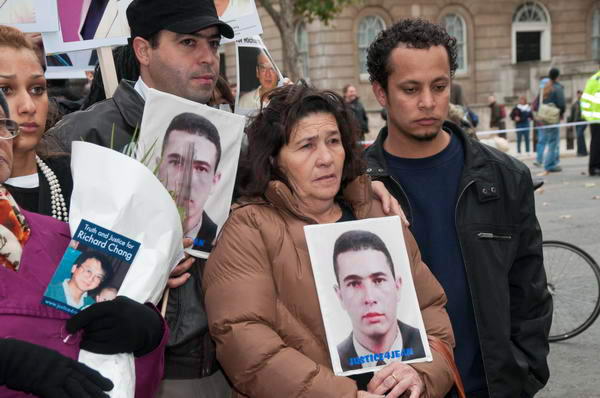

More pictures on My London Diary

And on Monday, I went to the ‘Big Blockade’ at Aldermaston knowing that I would be too late to ‘be there’ for the major events that were taking place.  But I think there are still a few interesting pictures even if I missed the real excitement. (More on My London Diary.)
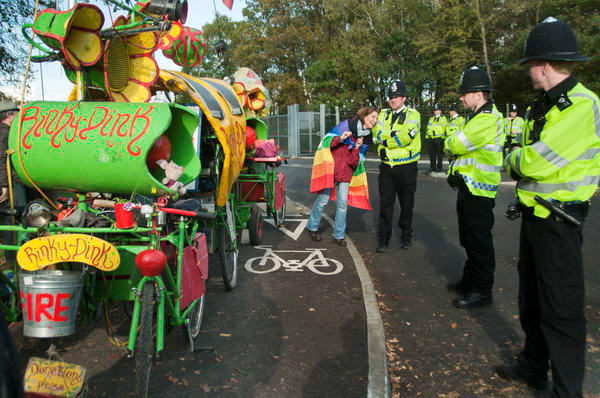
Rt Click, View image to see larger

But on Tuesday I managed to take not being there to new levels, turning up at entirely the wrong location for a photo-call, having neglected to read my diary properly before I left home.  It’s perhaps a pity that this aspect of photography can’t be made more automatic.


*There is some highly technical debate as to whether with DSLRs one should use the actual or equivalent focal length. Which I think is pretty stupid considering it’s only a very rough rule of thumb.  Whichever suits you is surely the answer.
Justice for Deaths in Custody

Rt Click, View image to see larger
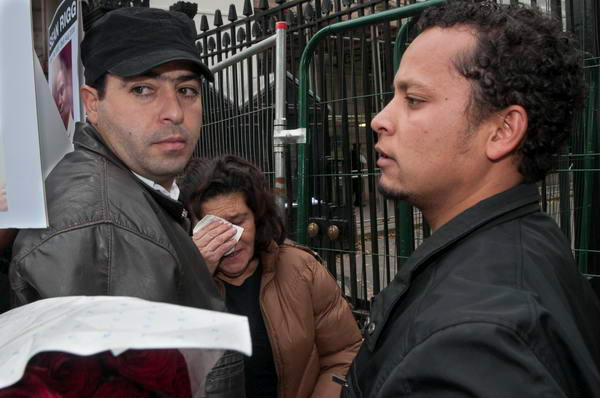
Family and friends call for justice for Sean Rigg, who died in Brixton Police Station this August

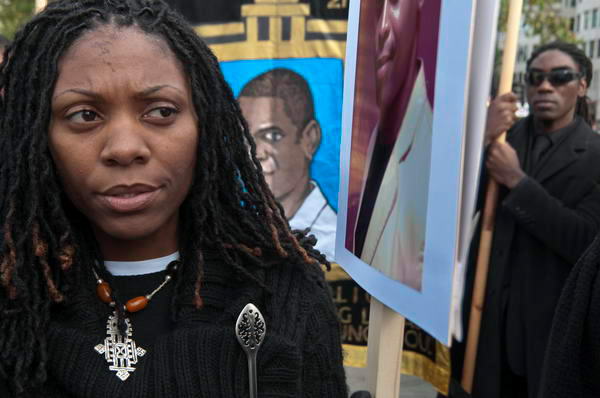
Being in police custody or prison should really be the safest possible of situations, but unfortunately as the over 2500 names on the list carried in Saturday’s demonstration by the United Families and Friends of those who have died in custody shows this isn’t the case.  It isn’t even easy to get the figures and the names, and even this long list covering the years since 1969 is far from complete.  Last year there were 182 known deaths – and at that rate the list would be three times as long.

The police, the prisons, secure psychiatric units, immigration detention centres all have a duty of care for the people in them, but it a duty in which they too often fail.  Some of those 182 will be people known to be likely to commit suicide who were not adequately supervised, others those who were restrained in a manner that caused their death.

One of the names on the long list was a young Brazilian man who took a bus to Stockwell station and walked through the barriers and down the escalator. He didn’t know that his perfectly innocent and ordinary movements were being followed by a surveillance team, even though they were very close to him as he entered the station.

While I was writing my post about this year’s United Families and Friends march, I watched the CCTV footage from the station on that morning, showing nothing untoward until about a a minute after he made his way to the platform, when three armed men jumped over the barriers and rushed down.

Someone had blundered, with the result that these men were sent to gun down an innocent man. The Met’s response was to try to cover up in various ways for the mistake, and even at the inquest they are still clearly doing so.  The order that was given was clearly a gross error which should have led to the immediate dismissal and almost certainly criminal charges against the senior officer concerned, but it also highlights a ‘shoot to kill’ policy that I think has no place in a civilised society. It remains to be seen what the inquest will determine.

When Maria Otonia de Menezes came to lay flowers at the gates of Downing St, I was there with others photographing and filming. Earlier, along with other photographers I’d been asked to give the family a little space as they were finding it difficult, and I’d immediately stopped taking pictures and turned away to photograph other things, although some others took no notice of the request. But when it came to the actual pacing of the bouquets and photographs my job was to show the grief and anger of the de Menezes family and others whose sons, brothers, fathers had died to the best of my ability.  At times I found it hard to keep taking pictures, but that after all was what I was there for, and I owed it to these people to do it as well as I could.

Rt Click, View image to see larger

More pictures and text about the demonstration on My London Diary

Guy in Hospital

Not an early Nov 5th story, but a kind of follow-up to my recent post Police attack Photographers where I mentioned that a photographer was attacked by a police dog.

On photographer Marc Vallee’s blog, in the post Guy Smallman in Afghanistan, you can read about another incident in which the same photographer was injured. I’m not quite sure why, but the words that Oscar Wilde put into Lady Bracknell’s mouth about losing parents came into my mind.  Guy certainly has suffered misfortune, but I think it is more a matter of working in dangerous places rather than carelessness.  And being rather cautious, as I tend to be (unkind people might call it timid) is seldom the best way to get good pictures. (You can see more of the Swiss incident in which he was injured on PigBrother.)

Elsewhere on Marc’s blog you can read a lot more about the problems that photographers have with police harassment. On Tuesday he was in the committee room when NUJ Gen Secretary was giving evidence to the Joint Committee on Human Rights and he gives this link to the long video of some of the proceedings. As he says, parts of it make interesting viewing, though there is a lot best fast-forwarded.

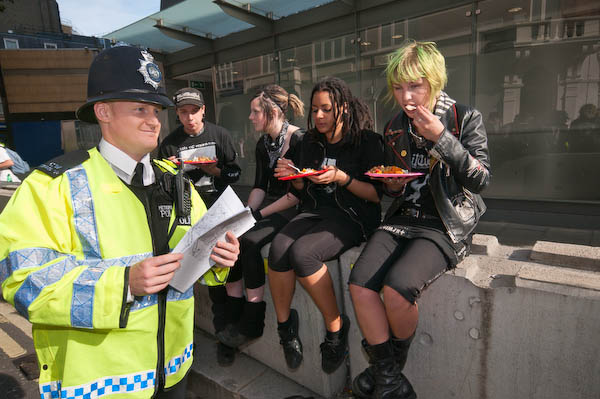
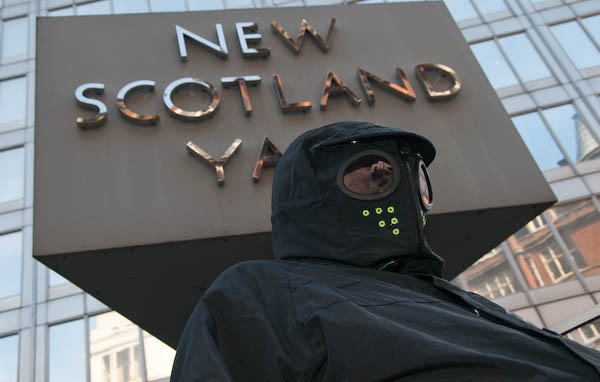
Here in London, the police appear to have been easing off recently, especially over the SOCPA restrictions on demonstration.  On October 11, ‘People in Common‘ and others, including FitWatch, staged a Freedom not fear 2008 event outside New Scotland Yard, although a smiling officer handed out the usual maps and warning, it seemed clear that while reminding people of the law they had no real intention of enforcing it.

Rt Click, View image to see larger in Firefox
A warning that eating in the SOCPA  zone could be an offence

But perhaps the strangest thing about the demonstration was the little person I photographed trapped inside the hood of a large black suit

Rt Click, View image to see larger in Firefox
See the detail view below:
detail

More about that demonstration – and more pictures on My London Diary.

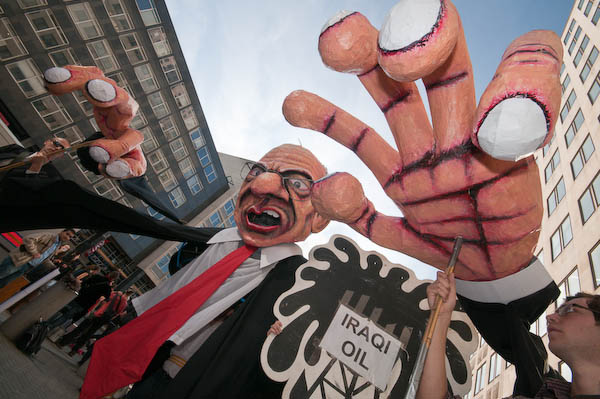
Cheney & Iraqi Oil at Shell UK

It’s good when someone actually comes up with a visual idea for a demonstration that you can photograph; too often you really get things that would only look good from a helicopter. Actually it’s usually better if people don’t try to be too clever, but give us something a little out of the ordinary in the way of masks or makeup or costumes or props that we can play around with and find a different way to photograph.

Firefox: Rt click and 'View Image' to see it larger
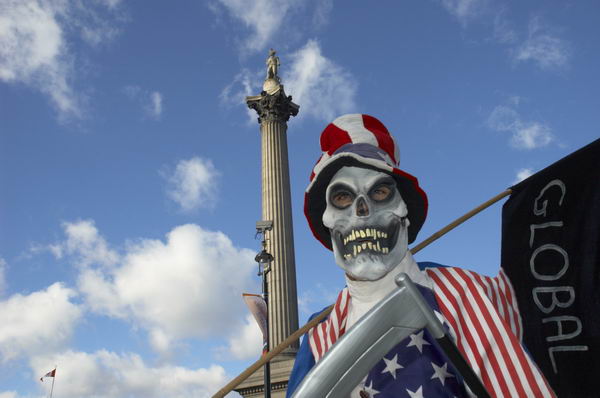
Dick Cheney, Iraqi Oil and the Shell Centre (right)

So although a giant Dick Chaney was a nice idea, and he was very well produced, and we all had some fun photographing him, I have a feeling that every other photographer there will have produced a picture more or less like mine. But perhaps not quite.

100 Days to stop Bush & Cheney’s Iraq Oil Grab! was of course a protest about a very serious issue, basically the pay-off US and UK forces were sent to Iraq to bring home. Forget WMD, Iraq was about another three letters, OIL, and Cheney with his friends at Shell and BP are now getting down to wrapping it up and bringing the swag home.

It’s a simple plan. A nationalised oil industry belonging to the Iraqi people (even if much of the proceeds went into palaces for the president) does nothing for multinational oil companies. So you invade, topple Saddam, put a puppet government in his place and send them your “oil experts” to draft natural resources laws that hand out the oil to your friends. 

I photographed the demonstration outside Shell’s UK Offices in Waterloo, before it set off for the BP offices and then the US Embassy at Grosvenor Square. There is some opposition to the proposed handover in the Iraqi Parliament – and rather more among the Iraqi people. If the give-away goes ahead I think we can forecast further trouble in the Middle East after US forces finally pull out.

Lords Fail Chagos Islanders

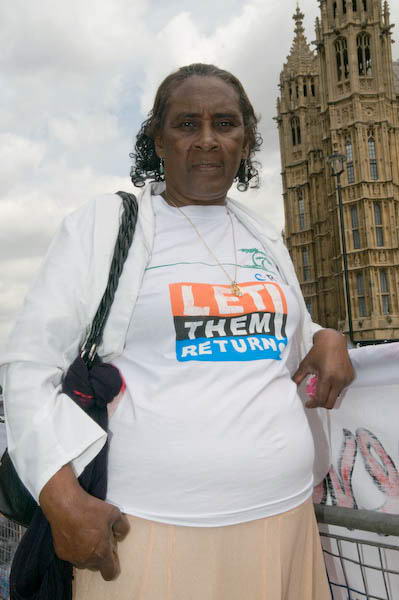
I wrote briefly about the disturbing case of the Chagos Islanders in May 2007, having met them at the May Day March in London. They were turfed off their homeland in the late 1960s by the Wilson government so we could give the US the island of Diego Garcia to build a huge military base. (The picture of them is in the middle of this page if you don’t want to look at the rest of the pictures from May Day.)

Rt Click, View image to see larger

Earlier this year they were picketing the House of Lords where an appeal was being heard on their case. Our Labour government, having lost over the fundamental justice of their case, and lost an appeal in the High Court, had decided to take the matter to the final stage possible in this country, appealing to the House of Lords.

Today’s judgement, reported on the BBC web site, appears to be a matter of politics and pragmatism rather than justice.

It’s hard not to agree with John Pilger, quoted by the BBC, who described it as a political decision which upheld an “immoral and illegal” act. The case seems likely to go to the European Court of Human Rights, where perhaps justice will prevail over politics.

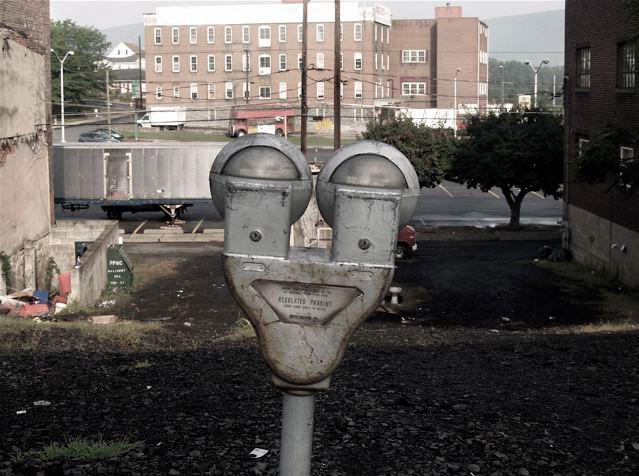
Northeastern Pennsylvania – Urban Landscapes

Philip A Dente writes that in his pictures of towns in Northeastern Pennsylvania he tries to “to demonstrate the feeling of a continual loss of the past through the disruptions of the present.”

Rt Click, View image to see larger
Pittston (C) 2008, Philip A Dente

Visually we see this in many images where we see through gaps or past obstructions giving a layering of planes and also in the softish light and muted colours that appeal to him. The pictures are his account of “an exciting journey …. in the context of vision and emotions.”

Philip is the latest photographer to be added to the Urban Landscape web site I run with Mike Seaborne, the full international eleven now being:

John DaviesPhilip A Dente , Lorena EndaraBee Flowers, Nicola Hulett,   Peter Marshall, Paul Anthony Melhado  Neal OshimaPaul RaphaelsonMike Seaborne and Luca Tommasi.

Although I feel it’s a strong team, new players are always welcome, but sometimes it takes us rather a long time to come to a decision.  One key problem is always to decide whether a particular body of work fits our concept of ‘urban landscape‘. It isn’t just a matter of pictures taken of cities or areas of cities -whether pretty or gritty, and there seem to be quite a few groups now on Flickr and elsewhere dedicated to one or other of these.

Nor is it straightforward architectural images. Last year in Brasilia I talked about this distinction – and you can read my thoughts in the excessively literally titled post
Architecture and Urban Landscape photography

You can also of course read  the page from which that post quotes on the urban landscapes site where there are some more picture examples, which also has a page of advice for contributors. As well as showing urban landscape projects we would also be interested in essays related to the area – but do read the advice before contacting us.

Of course as well as appropriateness, quality of work is also important and an even more subjective area, and not one that is easy to write about.  It’s something that perhaps comes across more obviously not in individual images but in a body of work, and is more about the visual thinking that this demonstrates than the technical aspects of making and presenting work or the ability to write a polished academic statement  (indeed many of the better photographers suffer from dyslexia.)

Mike Seaborne and I are the initial selectors of work, but if we have any doubts or are unable to agree, then we seek the advice of whichever of the others with work  already on the site seems most appropriate.

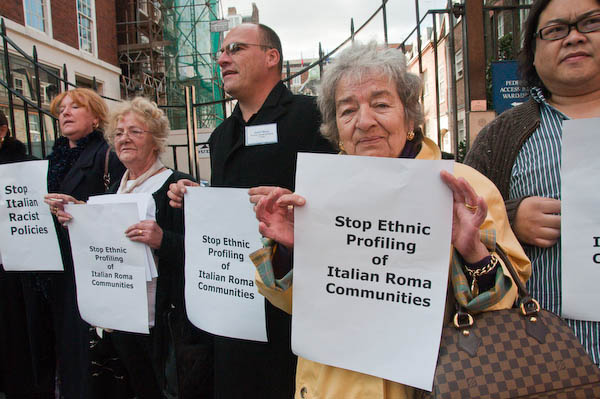
Italy’s Ethnic Cleansing

Rt Click, View image to see larger

The problems facing the Roma in Italy were highlighted in July this year when media published pictures of holiday makers sunbathing on a beach near Naples ignoring the bodies of two drowned Roma teenagers.

In May 2008, the right-wing Italian government led by Berlusconi introduced a whole range of repressive measures to deal with what they describe as the “gypsy problem“. The measures remind many of the fascist policies under Mussolini – when Italian Roma were stripped of their citizenship and many died in concentration camps. They include dismantling all Roma camps and fingerprinting all Roma – children as well as adults.  Almost all of the Roma are actually Italian citizens. There have since been more or less daily reports of arrests, evictions and other attacks on the community, both by police and by criminals inspired by the government campaign.

Several camps have been burnt to the ground after Molotov cocktails where thrown into them, and many Roma have been left homeless. Forcible evictions from the camps by police have started and many Roma have been arrested.

There are around 150,000 Roma in Italy, less than 0.3% of the Italian population – a lower proportion than in many other European countries. Most of them live in desperately poor conditions in squatted camps around major cities.

Sentiment against Roma has also been hardened by the Italian population’s confusion between them and the mostly non-Roma Romanian migrants who continue to arrrive in Italy and the Roma are scape-goated for crimes committed by these often desperate Romanian refugees – another problem the rigth-wing government has exacerbated rather than attempting to solve.

Around 20 people, many of them Roma, met at the gates of the Italian Embassy in London at Friday lunchtime (17 Oct) to protest against the human rights abuses in Italy which constitute ethnic cleanisng of the Roma. A deputation of four, including Peter Mercer, MBE, the Chair of the National Federation of Gypsy Liaison Groups were allowed into the Embassy to give their views.

Catherine Beard of the UK Association of Gypsy Women and European Forum delegate had brought back a distinctive ‘Against Ethnic Profiling‘ t-shirt from Europe.

Rt Click, View image to see larger

After the vigil outside the embassy, a number of the protesters went on to a meeting at the House of Lords.

A few more pictures from the event on My London Diary.

Police attack Photographers

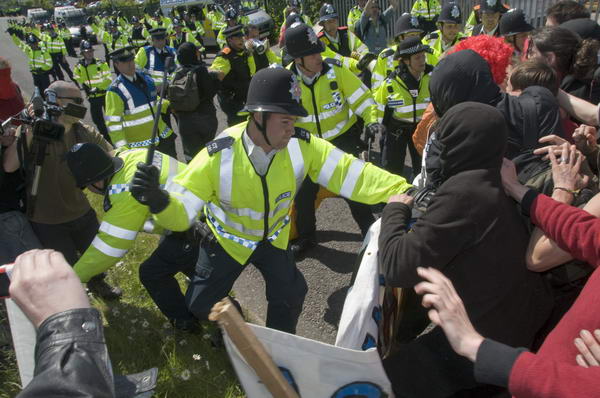
I wasn’t feeling too well last Wednesday and didn’t feel up to going to Brighton to photograph the Shut ITT! demonstration there, a follow-up to Smash EDO’s ‘Carnival Against the Arms Trade‘ which I photographed last June. Had I made it his time there seems to have been a pretty good chance I would have ended the day with at least minor injuries from police action.

Rt Click, View image to see larger
Police use batons on demonstrators outside EDO in June 2008

In June the policing had got pretty heavy-handed, and apparently even more so after I had left early thinking the demonstration was more or less over, when for some unaccountable reason the protesters were actually let on to the factory site and there was considerable mayhem all round.

This time things were tougher still, and not just for the protesters but also for photographers. On his blog,  Jason Parkinson writes  about the police actions:  “I am sick to death of seeing my work colleagues getting hurt while trying to do their job” and talks about “a continuous pattern of abuse, ignorance, intimidation, harassment, surveillance and violence” directed at journalists, particularly photographers and videographers who need to be very much in the thick of things to get their pictures.

Two other photographers, Marc Vallée and Jonathan Warren have described how they were filmed and questioned before the start of the event, and told they were not allowed to photograph in the area where protesters were arriving.

Later, Vallée was assaulted by police (again!) and another photographer was bitten when a police dog was set on him, requiring medical attention. At least one photographer was pepper sprayed.

In my camera bag I carry a copy of the Guidelines for reporters, photographers and news crews for dealing with police at incidents published by the BPPA, CIoJ and NUJ in association with the Metropolitan Police, which on their reverse carry the Met’s guidelines for officers. As it states, these guidelines “have been agreed at senior levels by all parties.  Please use them in a spirit of mutual professional respect to resolve any problems.”

These guidelines were adopted by all police forces in Britain in April 2007. They lay down general principles that recognise the law, the duty of the media to report from the scene of incidents, and the police duty to help them in doing so where possible.

These guidelines are simply not being followed so far as the policing of protests is concerned. As Jason ends his blog post:  “There is no excuse to baton a photographer, no excuse to pepper spray a photographer and absolutely no excuse to use a dog as an offensive weapon against a photographer.” This isn’t my idea of “mutual professional respect.”