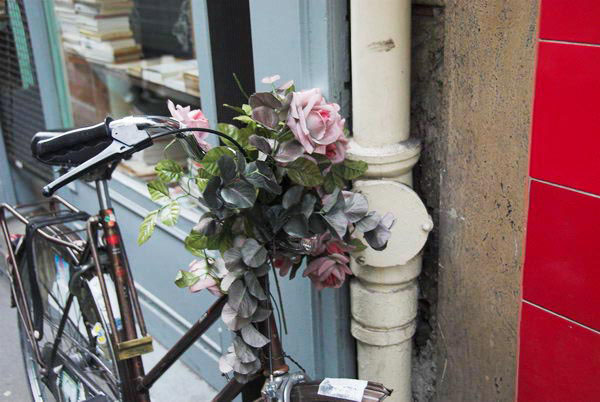
Cérémonies du 11 novembre

We hadn’t realised that the French still hold their major commemoration of the First World War on armistice day, November 11th, and that it is a bank holiday there – unlike in Britain, where remembrance day is largely celebrated on the nearest Sunday (we officially moved it to that date in 1939 so as not to hamper the war effort), as well as a number of related events at the weekends around – such as the War Widows that I’d photographed on the previous Saturday (8th Nov.)
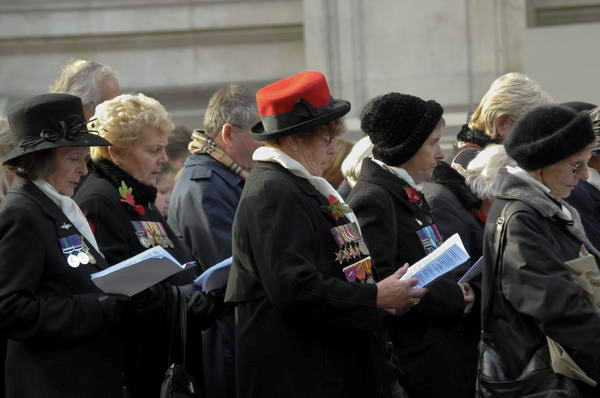
war widows at Cenotaph

I’d planned a walk around one of my favourite areas of Paris – Belleville and Ménilmontant in the north-east – calling in at a few shows on the route, but by the time we’d got to the fifth place that was closed we were beginning to get the message.  And also rather tired of walking, so we went into the café opposite the town hall in the 20e where I sat down to enjoy a Blonde (the only beer on their list I hadn’t tried before)  while Linda tried to warm herself up with a hot drink.

Rue des Cascades

Suddenly we heard the sound of a brass band, and then saw out of the window an approaching procession, and I picked up my camera and rushed out, leaving Linda to guard my camera bag and half-finished beer.

Coming across the place and going down the street towards the back of the town hall was a military band leading various dignitaries with red white and blue sashes,  a couple of banners, a group of children and a small crowd of adults. It was the l’UFAC (Union française des associations de combattants)  and the  Comité d’entente des associations d’anciens combattants et victimes de guerre along with other associations of patriotic citizens commemorating the 90th anniversary of the official ceasefire (at the eleventh hour of the eleventh day of the eleventh month) in 1918, although they were doing it a few hours later in the day.

The parade (which I later found had started at the  Père-Lachaise cemetery just down the road) came to a halt at the back of the town hall where there was a memorial to a Brigadier killed in the liberation of Paris in August 1944. Although the November commemoration in France is for the First World War, there were also groups at the parade remembering the French Jews who were deported and mainly died  in labour and concentration camps in the Second World War.

As an outsider whose oral French is pretty poor it was a little difficult to understand the finer details of the ceremony that followed, in which flowers and a large wreath were laid, and also I found it rather difficult to know exactly how I should behave in photographing the event. I also soon realised I had made a big mistake in not bringing my camera bag in my haste, as the card in the camera was full and after taking a handful of pictures I had to start deciding which images could be deleted so I could continue to shoot.
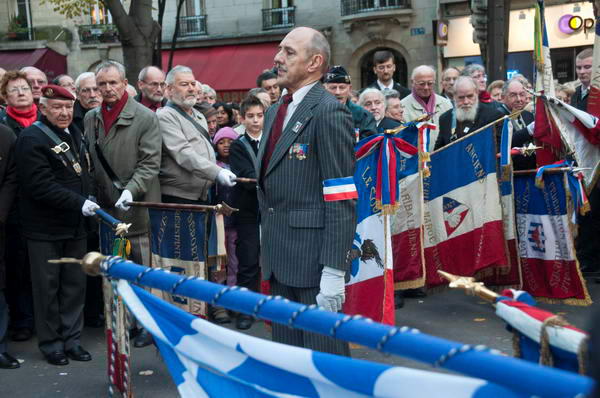
Nov 11

There were a couple of French photographers  – perhaps from the local press – there, but all they were doing was standing around looking rather bored, and I decided in any case that they were not where I would want to photograph from. You can see a few more photos of the event on My London Diary.

After that they all went into the courtyard of the town hall (another place I’d been hoping to see a show)  and I went back to finish my beer.  Then we decided to take the short walk down to the cemetery and have a walk through there – one place at least that was still open. Again, more pictures of this on My London Diary.
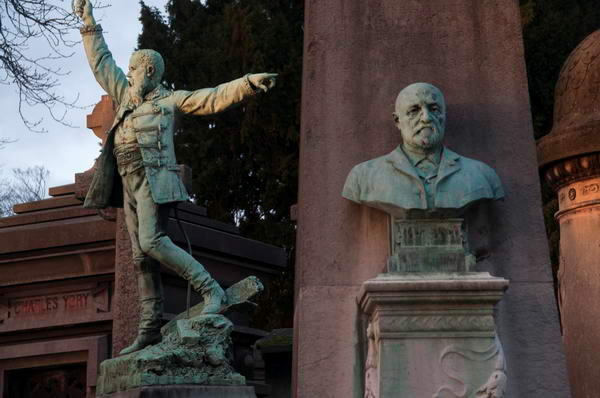
Pere-Lachaise

BNP Address List – Identity Crisis

A couple of days ago, a list of addresses of people connected to the BNP was made public on the web – and I guess most of us now have seen a copy, even though it is no longer on the blog where it was posted. A quick ‘google’ will let you find both the original list and also a number of sites where you can do on line searches by location, postcode,  etc as well as mapped data. The BNP list contains a Peter Marshall (who is presumably the Peter Marshall  also listed on a BNP web site as the BNP candidate for the Central Ward in the 2008 Barnsley Metropolitan Borough Council local elections) but it certain isn’t me.


NF marchers in Bermondsey, April 2001

Among several people who made the list available on their own web sites for a while was a photographer Peter Marshall, (or Pete) who covers some similar events to me, but is based in the Birmingham area. When his name was published in the papers, somel people assumed it was me.  There is yet another photographer of the same name who works as a wedding photographer – and doubtless others. c

Peter Marshall just happens to be a very common name. Here are just a few more of us found in a quick search on Google:

  1. Peter Marshall, academic, activist, author of books on William Blake, William Godwin, a history fo Anarchism and much more
  2. Peter Marshall  a Scottish-born Presbyterian  who was chaplain to the US Senate during the Second World War.
  3. Peter Marshall, son of No.2, also a USAmerican preacher, who got to petermarshall.com before me
  4. Peter Marshall USAmerican singer game show host
  5. Peter Marshall UK television announcer who hosted Sale of the Century years ago.
  6. Peter Marshall “one of the greatest squash players of all time.”
  7. Peter Marshall a leading USAmerican swimmer.
  8. Peter Marshall, Commissioner of the City of London Police around 1980
  9. Peter Marshall, a photographer based in the Birmingham area
  10.  And then there is me! One of my various domains is peter-marshall.com which has some old pictures of Paris I took in the 1970s. But I’m I hope rather better known for My London Diary.

I think I was possibly given the name Peter after No. 2 on the list, but so far as I know am not related to any of the others. My own personal details have been on the web since 1995, but were very definitely not in that BNP list.


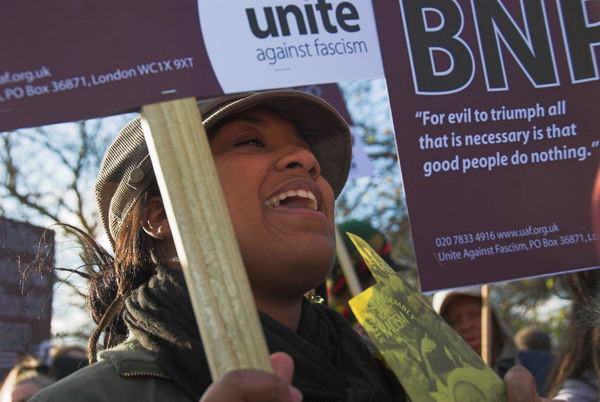
Unite against the BNP Rally – Dagenham, Dec 2006

Do I have any connection with the BNP?  Well, I have photographed a number of right wing demonstrations – as have most photographers who cover events on the streets. You can see my coverage of both the demonstration against the BNP and the BNP meeting addressed by Richard Barnbrook at Dagenham in December 2006 on My London Diary. But I’m clearly opposed to them and their policies.
Goodbye Carte Orange

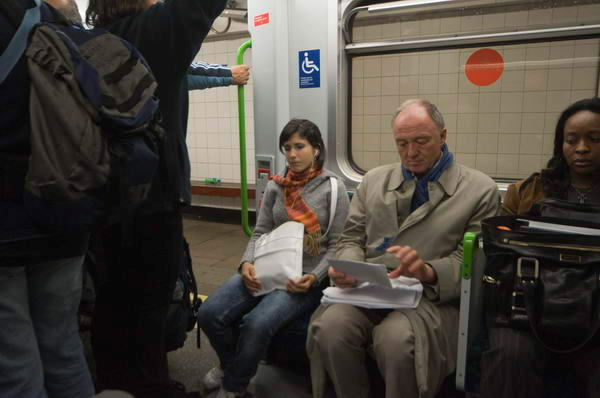
I can still remember standing in a photobooth in Montreuil around 1983 and  posing for the picture that went on my first Carte Orange, although I’ve had several since then having lost them or left them at home when coming to Paris.

For years, coupled with a Coupon Hebdo bought on a Monday it’s provided a cheap and easy way to get around the city – a week’s totally unlimited use of buses, Metro, RER and other trains at any time of day or night for a ridiculously cheap 16.80 Euro – a little less than £14 even at the current bad rate of exchange for travel within the city itself. For longer stays a monthly coupon offers even better value, and even if you are staying in the suburbs tickets to cover the outer zones as well are great value.


The impressive (if impractical) Ville Savoye, around 29km from the centre of Paris

A couple of summers ago we explored some of the haunts of the Impressionists on the banks of the rivers in greater Paris – the Seine of course, but also the Marne and the Oise, visted Le Corbusier’s Ville Savoye at Poissy, went to Pontoise and more as well as travelling around the city whenever we wanted. The ticket covering Zones 1-5 cost around £25. The cheapest way we could have done this in London would have cost around half this per day.


Le passe Navigo Découverte (from the RATP site)

However, though I feel a little sadness at the disappearance of these tickets with their reflective metal strip along the edge at the end of this year, it won’t greatly alter the cost of travel as they are being replaced with ‘Le passe Navigo Découverte’, although this will add an initial cost of 5 euros, but can then be charged with a weekly ticket at the same cost as the Carte Orange. Those who live or work in the Paris area can get a free personalised Carte Navigo, which have already been in use for some other fares for some years.

We certainly got our money’s worth out of the Carte Orange, travelling around to try and find the various shows, as well as doing a little of the tourist trail as going to find some new places to eat. I love walking around Paris (and we did a lot of it) but it’s good not to have to worry to much about where you are going, knowing you can just jump on a bus or on the Metro anywhere to take you back to the hotel when you get tired. Last year there was a transport strike, and although I enjoyed photographing the accompanying demonstration, it’s really better when they are working.


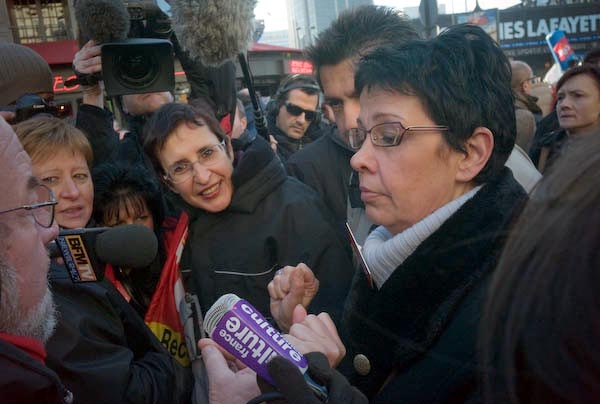
Media scrum around the front of the march, Nov 2007, Paris

Hopefully it won’t be too long before London catches up again by making Oysters usable on the overground railways and also in the whole of Greater London including those suburbs left outside the old GLC area on political grounds in the sixties.  But somehow I don’t see us matching either the fares or the service in Paris

Paris Photo Party

Paris Photo is of course only a front. Why so many photographers and others go to Paris in mid-November is to attend Millie and Jim’s Paris Photo Party.

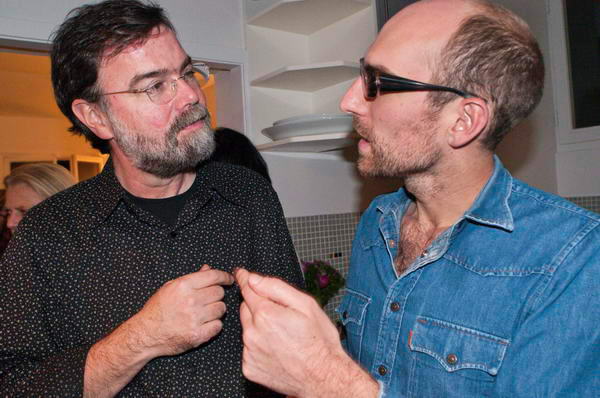
party

If you’ve any interest at all in photography, you will be a fan of Jim Casper’s  lensculture web site and blog and, like me, look forward to each new issue of this online magazine devoted to “international contemporary photography, art, media, and world cultures” with keen anticipation.

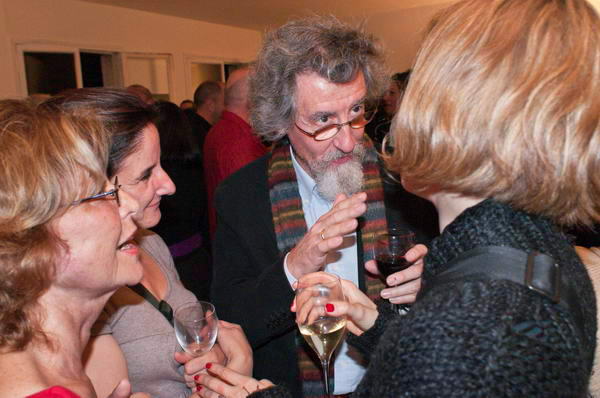
party

For me it was a great opportunity to further my scientific researches into the effect of champagne on photographic reflexes and I took the utmost advantage of the situation, although my results were somewhat inconclusive, and further work on the problem is clearly needed.

party

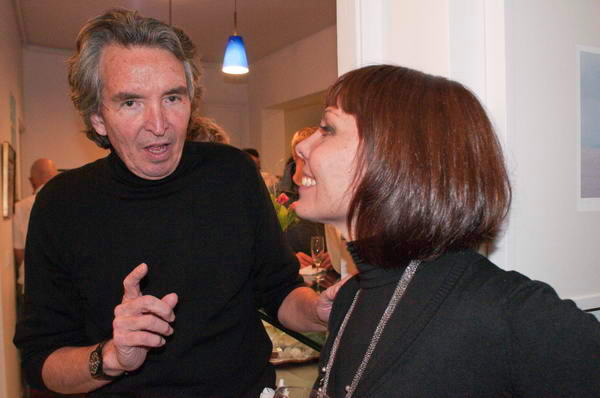
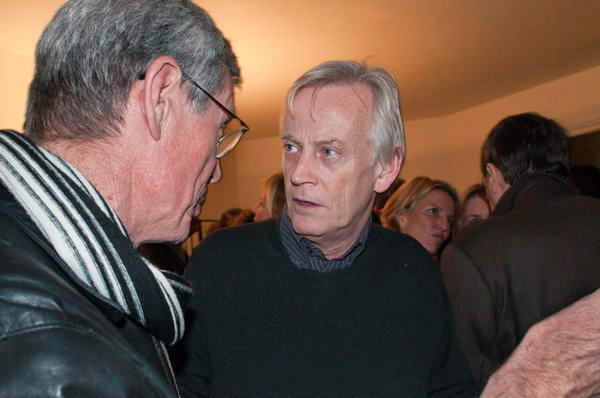
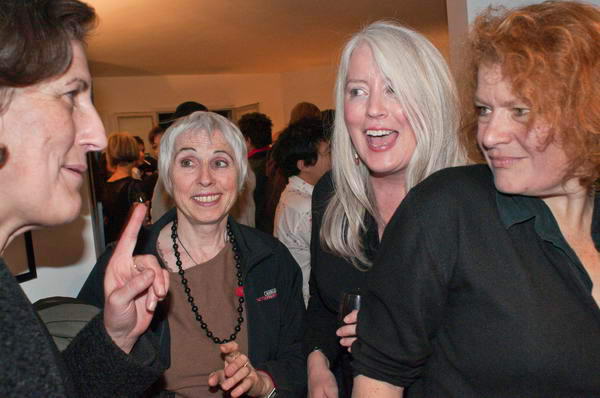
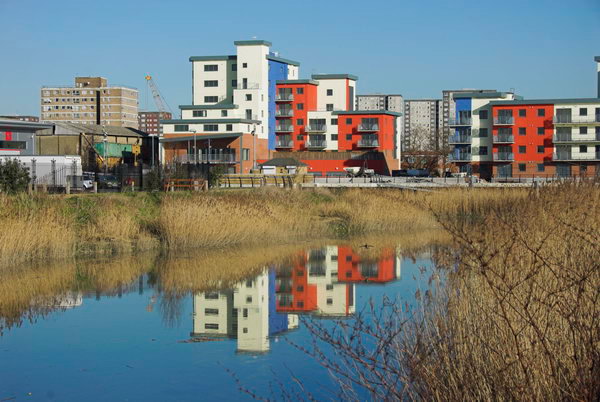
I’ve decided not to put names to the pictures, but you may well spot some familiar faces from photography, film and publishing. The photographers included several whose work was on show in Paris. There are more pictures from the party in a special Paris2008 supplement to My London Diary.
party

The party was still going strong – with people still arriving – as I left around 23.30 to take the Metro across Paris to my hotel. It kept going for me too on the Metro as I had an animated conversation about photography with a number of young women I met there, ending as we walked through the lengthy passages under the Gare du Nord to change to different lines – fortunately their English was considerably better than my French.

party

View
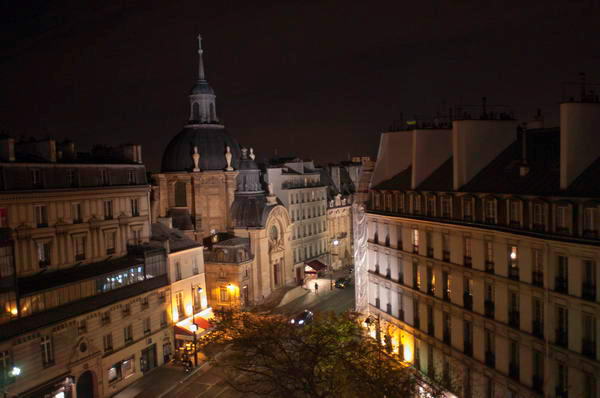
Smokers enjoy this view from the balcony

In the days after the party I went to several shows I might have missed if  I hadn’t met the photographers there – because there is just so much happening in Paris with many interesting shows as well as those included in the ‘Mois de la Photo’ and the ‘Photo-Off’.

Catherine Cameron was showing work at Galerie Plume in rue Montmorency in the IIIe – you can read more about her and the show in Lensculture.

And on Saturday I went to Galerie Blue Square in rue Debelleyme, also in the IIIe, to see the remarkable images from the Global Underground project by Valera and Natasha Cherkashin.  I intend to write more about this in a later post.

Paris and London: MEP & PG

Late yesterday I got back from a week in Paris, and one of the highlights of any trip there for a photographer has to be a visit to the Maison Europeene de la Photographie (MEP) .

I’ll write in more detail about some of the things I saw there in other posts, but what really struck me – yet again – was the complete difference in outlook between the MEP and our London flagship The Photographers’ Gallery (PG).

Of course we can hope that some things may change when the PG moves to more extensive premises shortly, but the biggest difference so far as photography is concerned is one of attitude. The MEP clearly believes in photography, celebrates it and promotes it, while for many years the PG has seemed rather ashamed of it, with a programme that has seemed to be clearly aimed at attempting to legitimise it as a genuine – if rather minor – aspect of art.  (It was something that worried photographers in the nineteenth century – but most of us have got over it by now.)

One important difference between the two spaces is that at the MEP you pay to see photography – 6 euros (3 for reductions) though Wednesday is something of a photographers’ evening as entry is then free to all. (A press card gets you in free at all times.) This charge doesn’t appear to put people off, and almost every time I’ve visited over the years I’ve had to queue anything from 5 to 20 minutes to get in. But it does make it a little more of an event to go there, and it does mean that the MEP has got to offer something people feel is worth paying for.


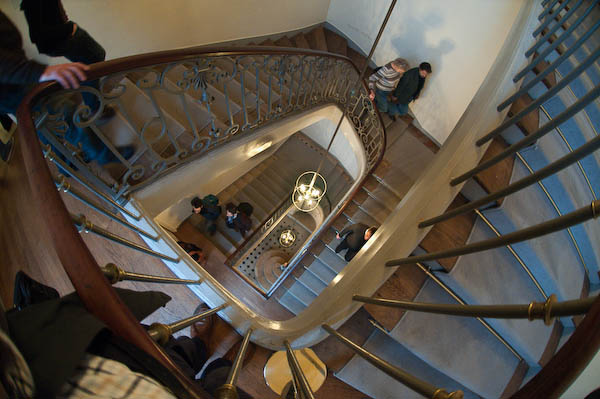
The staircase at the MEP

Of course the MEP does have a rather grand space with perhaps 3-5 times the size of the old PG, it also makes better use of it – at the PG half the space was usually largely wasted by being a coffee bar with a few pictures around the wall (and I think some other areas, such as the print room could also have been far better used.) And although I did sometimes enjoy meeting people in the cafe and having a coffee, I’d rather have been able to see a proper show and then pop across to the Porcupine or elsewhere to socialise (which of course I also did over the years.)

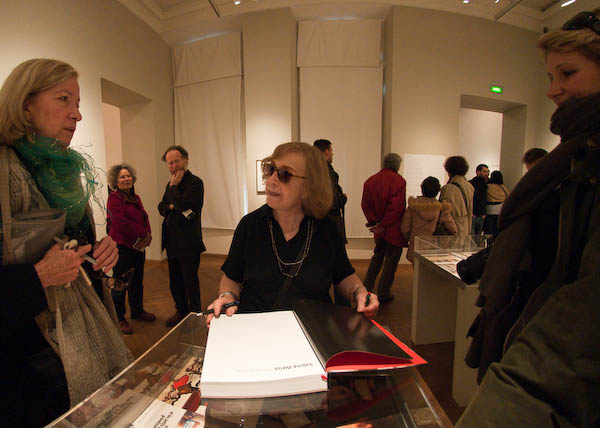
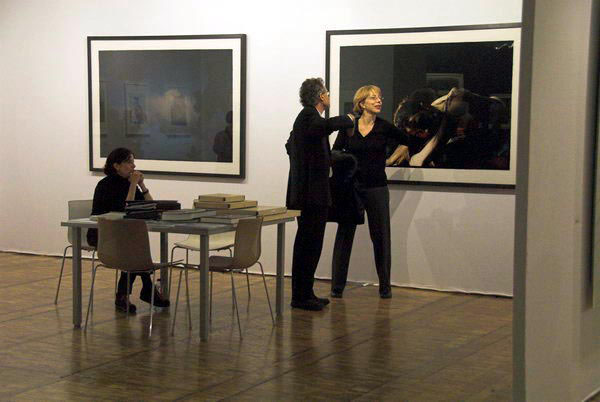
Sabine Weiss signs books in her MEP exhibition
Sabine Weiss talks to visitors and signs books at her MEP exhibition

This time, one floor of the MEP – perhaps around the total amount of exhibition space at the PG – was given over to a retrospective of the work of Sabine Weiss – which I’ll write about in another post. A Swiss-born photographer, she started her distinguished career in Paris and took arguably her best pictures there, so this was a particularly appropriate venue, although it would be nice to see this work in London too.

But one could also propose shows by a number of British photographers of similar stature who have so far been largely or entirely neglected by the PG. Not that I would want any gallery to be insular, but I feel major galleries do have a responsibility to promote work connected to their country and place, especially when like London and Paris they have played vital roles in the history of the medium.

Another floor of the MEP showed the complete photographic works of David McDermott and Peter McGough, two USAmerican artists who have made extensive use of various alternative printing processes (good salt prints, rather indifferent cyanotype and gum bichromates etc) as a part of an extensive lived re-enaction of life as late nineteenth and early twentieth century gentlemen. I don’t think they would want to be called photographers, but their work, as well as the interest of the processes concerned was witty and full of ideas, whereas some of the shows by artists at the PG seem very much one-trick ponies – including the last that filled the space adjoining the book shop.

Another, smaller space at the MEP covered the career of Turkish photographer Göksin Sipahioglu, who became ‘Monsieur SIPA, Photographe‘ after founding his agency when he came to Paris as a photographer in the 1960s.

Sipahioglu is a perhaps unfairly often thought of as a no-frills photojournalist who excelled at being there and getting pictures rather than for subtlety, but the work on show made me want to rewrite the lengthy piece I wrote about his work a few years ago.

Also showing in the MEP were a series of colour portraits  of artists in their studios by Marie-Paule Nègre, originally produced on a monthly basis for the Gazette de l’Hôtel Drouot to accompany interviews with the artists. While the theme is well worn, the images were well done and often had a freshness and interest. Which is more than I can say for Mutations II  / Moving Stills, a selection of videos made by European artists – part of the European Month of Photography – the short sequence of which I viewed had all the Warholian attraction of paint drying. However each did have its small group of apparently enthralled watchers.

Although of course curators play an important role in the exhibitions at the MEP (from a visit a year or two ago I recall an awesome show of the life of a single photograph by Kertesz) I get the feeling that photography at the MEP (and perhaps in France in general) is still very much based on the work of photographers. In the UK in the late 1970s the Arts Council made the fatal mistake of handing over the medium to curators and galleries, and we – as the PG evidences – are still suffering from it.

Poles Celebrate 90 Years

11 November 1918 was the end of the ‘Great War’, the war to end all wars. The war brought an end to Austro-Hungary, Germany was defeated and Russia was busy having a revolution. Out of the chaos came a new Polish state, and Polish Independence Day is celebrated every year on 11 November.

Rt Click, View image to see larger

Poles in this country got in early with a celebration on Saturday 8 Nov, and I photographed their march through Westminster to a rally in Trafalgar Square, attended by  Polish Cardinal Jozef Glemp,  Ryszard Kaczorowski, the last émigré President of the Republic of Polan, the Polish Ambassodor tot Great Britain and several thousand others.

More pictures on My London Diary

Rt Click, View image to see larger

Bee-keepers swarm in Whitehall

As you can read in My London Diary, I owe my very existence to the honey bee, although the only thing I’ve done to repay my debt to the species is to eat the honey others have stolen from them.

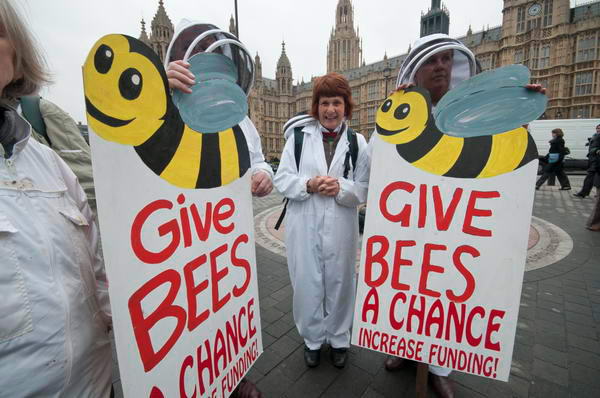
Beekepers at Parliament

But bees are much more important than just suppliers of honey. Bees play a vital role in the production of fruit and other foods, with around a third of our food supply dependent on their pollination.

The loss of our bees would be a catastrophe, but it seems increasingly a possibility with Varroa mites (which have killed a large propertion of our wild bees) developing resistance to current treatments which have saved those in hives, and the more recent and still unexplained colony collapse disorder which has caused huge losses of bees in the USA and is now in parts of Europe.

Bee-keeping was seen as an important source of home-grown food during the war. Afterwards interest gradually fell away but is now reviving, even in cities, where some people keep bees on rooftops as well as in gardens. The revival is a part of a greater interest in healthy foods and home growing that have seen more turning to allotments too.

Several hundred bee-keepers came to Westminster to lobby MPs for increased funding for research into bee health, and took a petition with over 140,000 signatures to Downing St.

More text and pictures on My London Diary

London gets what it deserves. Unfortunately

Ken a couple of days before the election
Ken takes the tube home a couple of days before the election in May

Londoners in May voted Ken out and a right wing idiot in, so should not be surprised at Boris’s plans to scrap most of the greatly needed improvements in public transport.

Too many other people have written about it for me to bother. As Diamond Geezer puts  it today in ‘Down the tube‘,   the new TfL “business plan has incinerated several slow-burning transport projects, each liberally doused with car-friendly petrol by our beloved Mayor.

Yesterday, DG commented on some of the missing projects in the Mayors ridiculous “Way to Go: Planning for better transport” which were doomed to disappear:

» Cross River Tram (bugger Peckham)

Peckham
I Love Peckham festival, 2007

» DLR extension to Dagenham Docks (bugger Dagenham)

Dagenham Docks
Train coming in to Dagenham Docks Station, 2003

» East London Transit (bugger Barking)

Barking
New Riverside Flats along the River Roding at Barking

» Greenwich Waterfront Transit (bugger Thamesmead)

Thamesmead
Thamesmead, 1994

» Thames Gateway Bridge (bugger Beckton)

Beckton from the alp
Beckton from  the Beckton Alp, 2008

There were of course a few things DG missed that Boris also had it in for – High Street 2012 to tidy up the London marathon route will perhaps not be greatly missed (except by DG.) Most important is the Croydon Tramlink Extension to Crystal Palace, a small, relatively cheap, straightforward  and useful tidying up exercise in South London, and the Oxford St Tram scheme (part of a larger scheme already scrapped in favour of Crossrail.)

Under siege: Islam, war and the media

 Rt Click, View image to see larger
Troops out of Iraq march, London , October 2004

One of the events I’ll miss because I’m in Paris is ‘Under Seige: Islam, war and the media’, a half-day conference organised by Media Workers Against the War at the London School of Economics on Saturday Nov 15 , with registration from 1.15pm for a 2pm start and the event ending at 6.30pm. You can find fuller details on line and can even book your ticket through a secure booking system.

Among those who have agreed to take part in plenary sessions and workshops are photographers Guy Smallman and Marc Vallée,  journalists and writers including Peter Oborne, Nick Davies, Uzma Hussain, Roshan Salih, Explo Nani-Kofi and Eamonn McCann.

Rt Click, View image to see larger
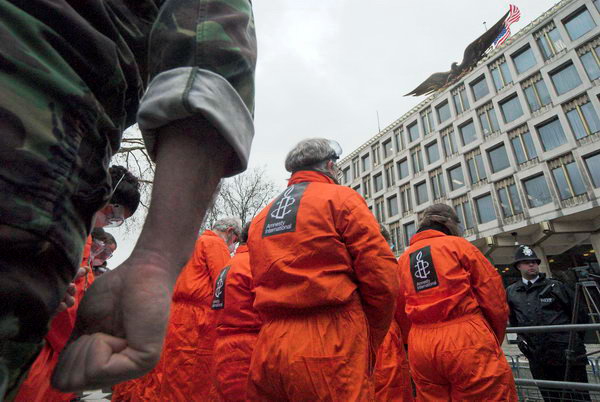
‘Close Guantanamo’ – Amnesty International protest at US Embassy in London, Jan 2007

Three people very much involved with Guantanamo Bay are campaigning solicitor Louise Christian, former prisoner Moazzam Begg and author of the Guantanamo Files, Andy Worthington. Others include Inayat Bunglawala of the Muslim Council of Britain, Lyndsey German of Stop the War, Jeremy Dear, General SSecretary of the NUJ and Mark Almond, lecturer in modern history at Oriel College Oxford.

The conference aims to  “examine what media workers and students can do to improve coverage of the “war on terror”, to bring critical views into the mainstream, raise the profile of the anti-war movement, and create our own sources of critical news and comment.”

Thinking of Paris

I’m getting down to thinking about Paris, where I will be next week for Paris Photo.  I’ll be one of 40,000 or so visitors to the rather stygian cellars below the city of light looking at the work of over thousands of photographers from around the world on the stands of 120 galleries, publishers and magazines from around 20 countries – just one of a thousand accredited journalists from 50 countries there. For as long as I can stand it before rushing up for air and perhaps a beer before diving down for more.


A quiet moment in Paris Photo in 2006

This is the largest and  most important trade show of the photography year for dealers and collectors, and a great opportunity to see work, even if so much is just the kind of large-scale expensive corporate wall-decoration that supports most of the gallery world these days.  Among that kind of stuff I’d be happy never to see again there will be plenty of really great work.

In particular I’m looking forward to seeing a great range of work from Japanese photographers, from1848 to the present day, including quite a few new names so far as I’m concerned. Of course there will be plenty of familiar work, including people such as Shoji Ueda, Ihei Kimura, Masahisa Fukase, Eikoh Hosoe, Shomei Tomastu, Hiroshi Sugimoto, Nobuyoshi Araki and Daido Moriyama, most of whom I’ve previously written about, but also much new to be seen.


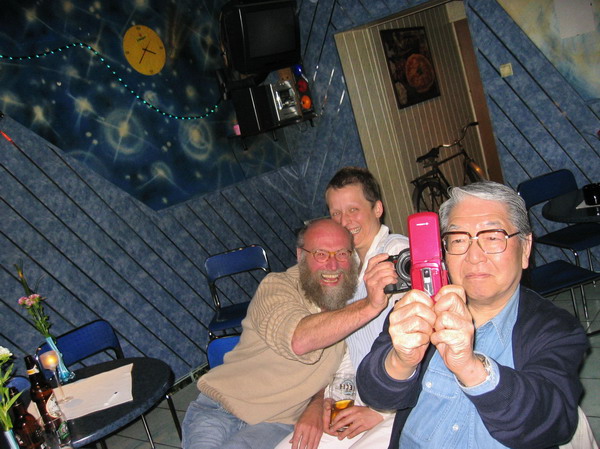
Eikoh Hosoe photographs me on a pink camera phone – one Japanese image I’m fairly sure won’t be at Paris Photo! But you can see more from this series here.

One of the best ways to get an idea of the range of work on show is to take a look at Lens Culture, always worth reading on photography and one of the partners of Paris Photo, which has a preview selection of more than 200 photographers from the show.

As well as the pictures, Paris Photo is also a good place to meet people and I’m looking forward to meeting some old friends and making new ones there. You can see my pictures from my visit there last year on ‘My London Diary‘.


A show in the ‘Off’ in 2006 by leading Chilean photographer Paz Errazuriz was one of the most interesting in Paris that year

But even if Paris Photo was not taking place, it would still be worth visiting Paris this month, for the great Mois de la Photo which takes place in November every even-numbered year. The web site is (as yet) only in French, but the listing of exhibitions and events you can download makes sense so long as you know (or look up) the days of the week in French.  There are around 90 exhibitions taking place with some in almost every district of Paris, and on top of this there is also a lively ‘fringe’, the Mois de la Photo-OFF, with a further 101 exhibitions (again the site is in French, but the listings are easy to follow and you can download an illustrated pdf of the shows.)

And of course there is the city of Paris itself – always worth a visit. The picture above is from those I took in 1973 – more here.

And in 2006, when I went to Paris Photo I also took a few pictures:


More pictures from 2006 from Paris (and Stains, a Paris suburb.)